How to protect your bank card from fraudsters
Many of us have long been accustomed to plastic bank cards and don’t forget to take them on trips. It’s very convenient, as you don’t need to look for a bank or exchange office to convert money into local currency. However, you need to use them correctly and not forget about basic safety rules. I think many of you have a few friends who have encountered fraud and lost money that was on their card. Or perhaps you yourself have been a victim of thieves?Today, we will give you some tips that will help you avoid these problems and keep your money safe and sound.1. Never keep all your money on the card. Transfer the amount from your current account to it as needed. Keep an amount on the card equal to your spending for 1 day. If a large purchase is planned, transfer the money to the card immediately before paying at the checkout. 2. Enable SMS notifications for all card transactions. This will allow you to react quickly and block the card.3. Write down the bank’s customer support number (it’s written on the back of the card) and call the bank immediately if your card is stolen. It’s most convenient to save the number in your phone’s contacts or put a note with the number in your documents.4. It is advisable to withdraw money only from ATMs located in places equipped with security and video surveillance: banks, government institutions, some shopping centers.If there isn’t one, then before using it, inspect the ATM. Fraudsters often install special reading devices on them — skimmers. This is an overlay on the keyboard and a device for accepting the card to read the PIN code and magnetic stripe.Skimmers look approximately like this:
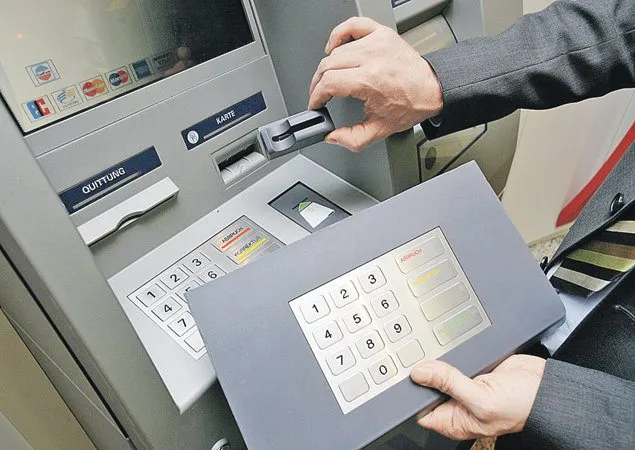
There should be no protruding parts on the ATM, especially those differing in color. There should be no foreign objects near the screen, such as stands with brochures (fraudsters mount cameras in them to read PIN codes).It’s quite simple to check if it’s a skimmer or not; skimmers are designed so that a fraudster can easily remove them. Try pulling on it or prying up the base of the keyboard; the skimmer will come off easily.If you have even the slightest doubt, do not use this ATM. Even better, call the bank and report the suspicious device.Recently, many ATMs have been equipped with an anti-skimmer, which looks approximately like this:
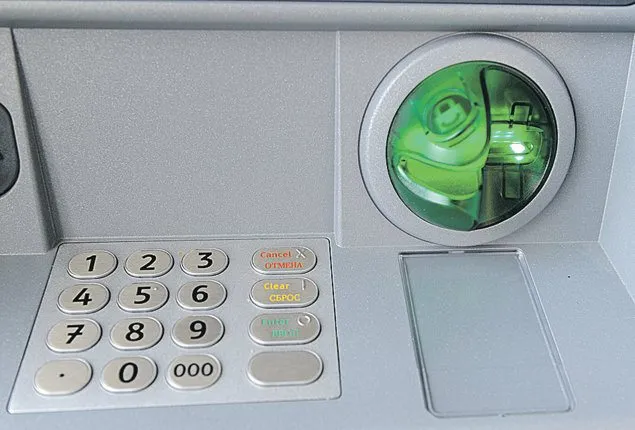
They are made of plastic and are always transparent so that the client can see that there is no reading device there. The anti-skimmer is designed so that no third-party device can be attached to it.5. ATM is not the only place where you can become a victim of fraudsters. In Europe, card data can be read in cafes, restaurants, and shops. To avoid this, never give your card to a waiter. Go with them to the cashier or ask them to bring a portable payment terminal.Fraudsters don’t necessarily need to read card information with a skimmer; simply writing down the card details is enough for online payments.6. Before signing the receipt, check the amount indicated on it. If a payment attempt failed, keep the receipt issued by the terminal for subsequent verification that this operation is not present in your account statement.There’s a trick that can help save your money. Many fraudsters know that inexperienced bank customers keep their PIN code on the card itself (scratch it on or tape it). Write an incorrect PIN code on the card. When the fraudster gets to the ATM and enters it, the first time they’ll think they made a mistake, look at the card, and enter it again… and on the third attempt, the card will be blocked.