Taking Off! A Report from the Pilot Training Center
According to carrier requirements and international aviation law, pilots operating civil airliners must refresh their knowledge and skills every six months at specialized flight crew training centers. One of the largest such centers in the world operates in Turkey. We visited the Turkish Airlines Flight Training Center in Istanbul to see firsthand how pilots are trained.
The training center is located in close proximity to Istanbul Atatürk Airport, Turkish Airlines’ home airport. Flight crews from not only Turkey’s national carrier but also other airlines train here: the training equipment is expensive, and not all airlines can afford it.
Inside the Tripod
The first thing that catches your eye when you enter the training center is the enormous multi-legged creatures, resembling combat robots from “Star Wars” or the tripods from “War of the Worlds.” These monsters on steel legs with pistons are flight simulators. In them, pilots hone their skills and try to cope with emergency situations. As soon as the cockpit door closes and the control wheel is in your hands, the feeling of virtuality instantly vanishes, and you no longer perceive the image before your eyes as just a display on monitors. I instantly transform into the pilot of a huge Boeing, who in the next few minutes must land a plane with a hundred passengers on board. The weather is not great, to say the least: rain is pouring down, fog obscures visibility, and the runway lights (RWY) are barely discernible. A pilot would probably say, “We’re going by instruments,” but I don’t understand anything about them, so with sweat on my brow, I nervously tug the control wheel. Of course, I miss the runway, and the image before me goes dark.
It is precisely for honing landings, takeoffs, or movements in severe weather conditions, as well as various emergency and routine situations, that the training center’s 10 simulators are designed, mimicking the cockpits of various Boeing and Airbus models—the most common aircraft in civil aviation. Each of these simulators costs over ten million dollars. Of course, there are simpler simulators too. They look like arcade games, similar to those in large shopping centers. There’s a control wheel, but no cockpit layout — everything happens in a regular classroom. Instruments and aircraft controls are displayed on large monitors, which also show what’s happening outside the “cockpit.” Full immersion cannot be achieved here.
What exact troubles await in a training flight is unknown. An instructor from the training center manually sets them each time from their workstation. They also monitor the pilots’ actions, correct their work, and evaluate the results.
Girls in Robes
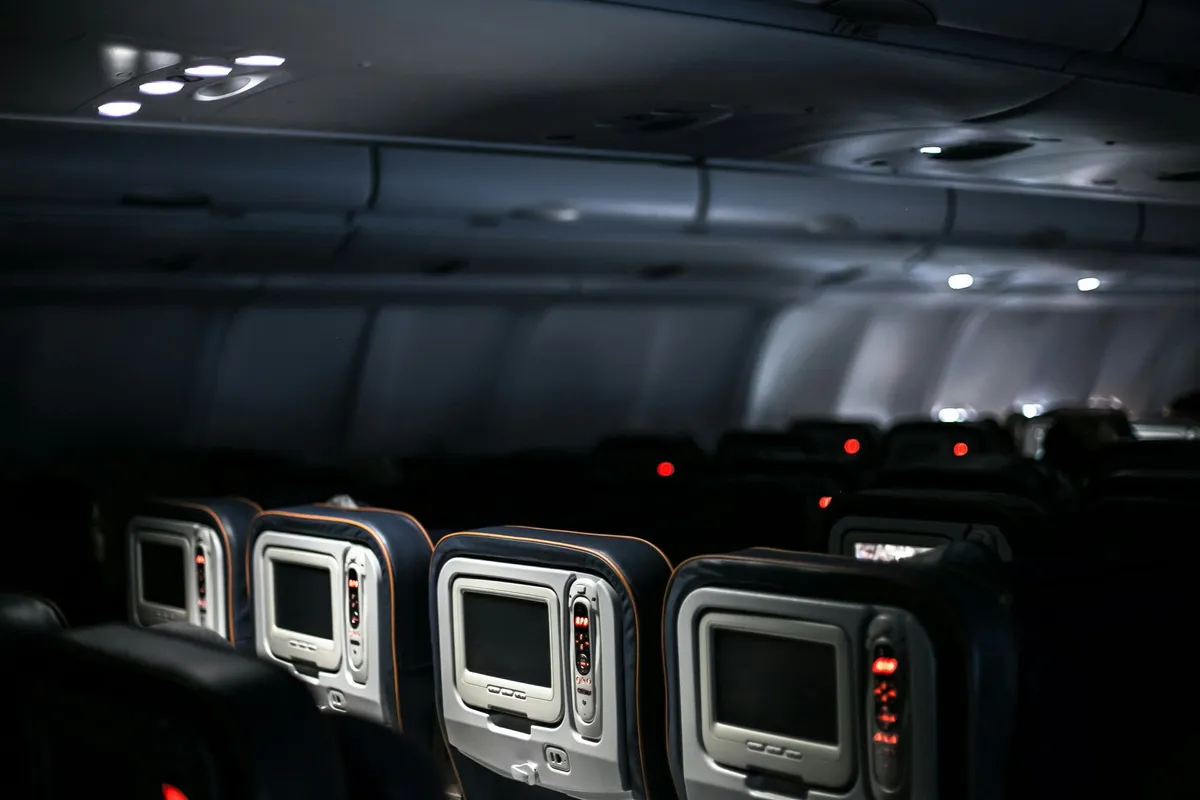
In another part of the rather large training center (its area is 15.6 thousand square meters), flight attendants train. Girls in identical red robes (similar to those of road workers) sit in a semicircle and listen attentively to the instructor — a woman of about forty-five who has worked as a flight attendant for half her life. In a few minutes, they will have to put on life jackets and practice actions in case of a ditching. Besides the pool, this large hangar also has several other simulators. We go to one of them, which simulates a passenger airliner cabin. I sit in a first-row seat by the emergency exit — my favorite, there’s always enough legroom here. A kind flight attendant (also a center instructor) conducts the standard pre-flight briefing: fasten seatbelts, do not recline seats, do not go to the lavatory during takeoff and landing, and if you do go, do not smoke there. The illuminated sign flashes, urging passengers to fasten their seatbelts, and the airliner begins its takeoff.
Outside the window, the airport building rushes by, the airliner shakes — the runway here is not the smoothest. We take off, the first few minutes pass quite normally — flight attendants roll out trolleys and begin service, but entering a zone of turbulence interferes with them. The plane shakes violently, and after a couple of minutes, smoke starts pouring from the overhead bins in the rear of the cabin. Apparently, someone still didn’t heed the flight attendants and smoked in the lavatory. The flight attendants urge passengers not to worry and to breathe through handkerchiefs or clothing — for some reason, the oxygen masks do not deploy. One of the flight attendants goes to the airliner’s cockpit to speak with the pilot. Returning, she reports that passengers have nothing to worry about, but the aircraft commander has decided to make an unscheduled landing at the nearest airport. A few more minutes later, we land at the airport of an unknown city. The landing cannot be called soft; the plane shakes considerably, though luggage doesn’t fall from the bins. I hear a distinct pop outside the porthole — one of the engines catches fire. Forgetting that I am in a training center, I genuinely worry. A pair of fire trucks is already rushing towards the plane. The fire is extinguished, and passengers are asked to evacuate the cabin.
In another emergency situation, we would have had to descend via inflatable slides. How to do this is also taught here. The main thing is to assume the correct position: sit facing the slide, hands in front of you, palms clenched into fists. This minimizes the chances of injury during evacuation.
***
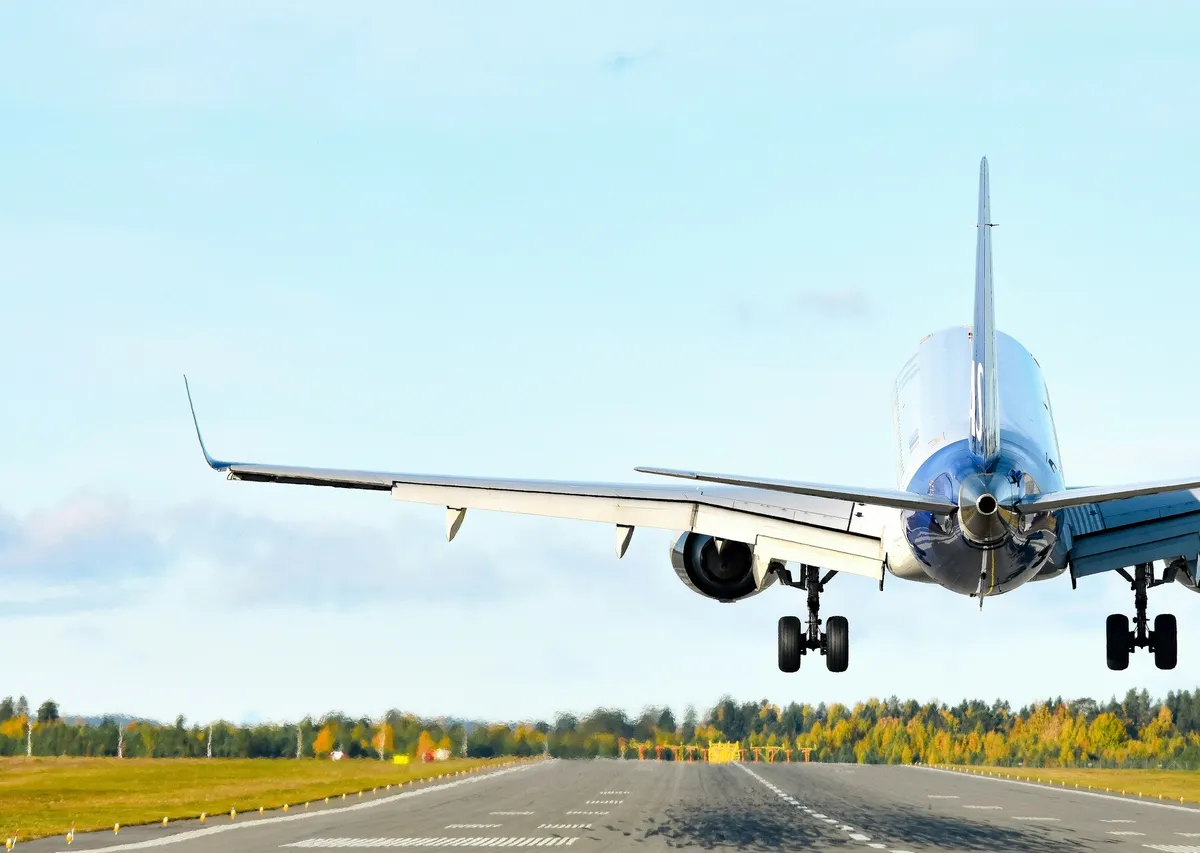
From the courtyard of the training center, adjacent to Atatürk International Airport, it is very convenient to observe the minute-by-minute landings and takeoffs of airliners. For me, this is new, but every pilot knows the way to the center like the back of their hand. Every six months, they temporarily part with actual planes and take the controls of simulators. Here, the cost of error is not as high.