Terrifying Secrets of Planet Earth
What to do if your adrenaline levels are rapidly dropping? “Get on a motorcycle or take a skydiving course,” say the “sporty” citizens. But what about those who skipped physical education classes for ice cream parlors in elementary school, those for whom the word “sport” is associated with tiresome torture? “Then horror movies!” cry the action lovers. Hmm… I don’t really believe in computer special effects, and no movie can replace real experiences. Especially since there are so many fascinating places in the world, beckoning with their beautiful horror!
Paris’s Underground Kingdom
Many tourists who come to Paris try to penetrate its heart. The waves of bustling Montparnasse cast travelers onto the left bank of the Seine, after which one can visit Notre Dame Cathedral, and then walk along the Seine embankment to Place de la Concorde, and from there go for a stroll along the Champs-Élysées, which lead to the Arc de Triomphe. Millions of feet have trodden this path, hoping that Paris would forever steal their souls and reveal its own in return. But it’s far more interesting to delve into the belly of this old romantic city.
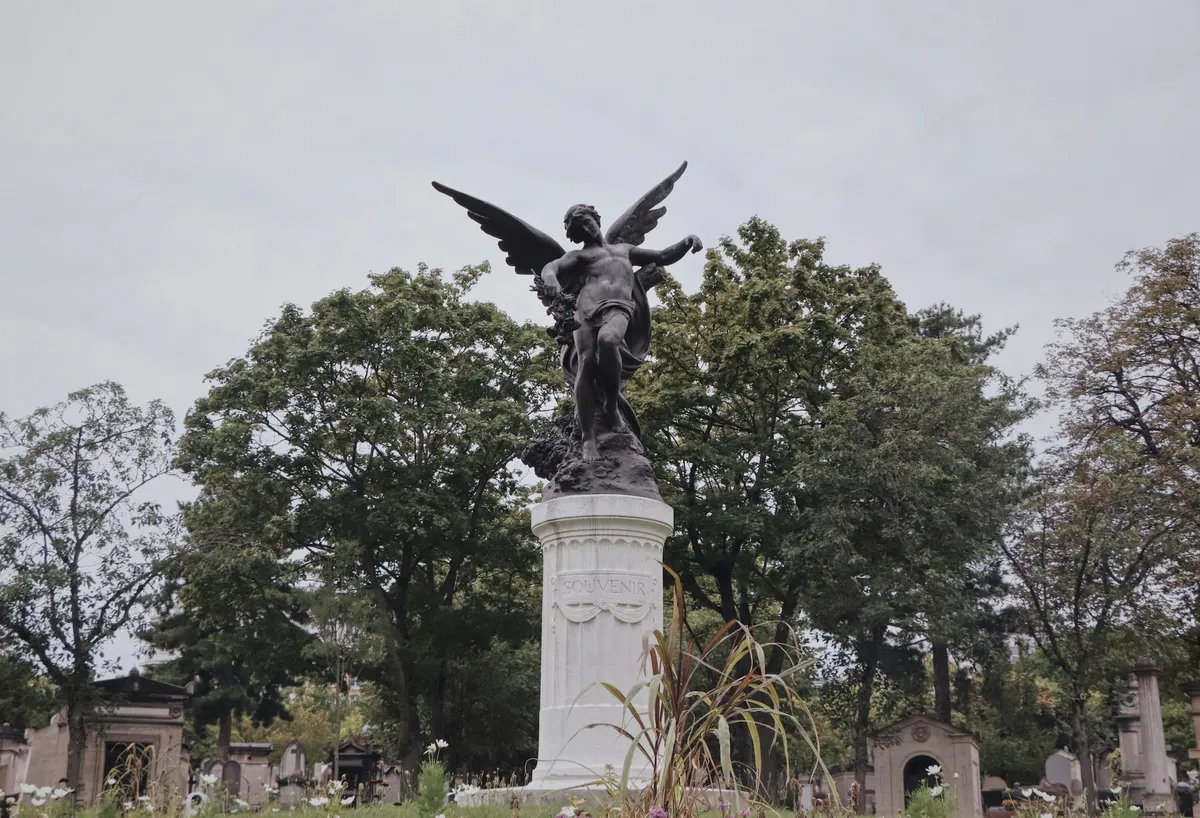
At Montparnasse Cemetery, among the graves of the world’s greats, a nondescript house is lost. This is the secret door to the underworld, separating the world of the dead from the world of the living. Dilapidated steps promise an exciting tour of the Parisian catacombs. Initially, they were dug to extract stone for building construction. However, in the 18th century, Parisians felt the tickle of death. There were no free burial plots left in the city, so it was decided to move remains from cemeteries to the catacombs. Bones were stacked against one wall, skulls against another. Perhaps someone will exclaim: “Sacrilege!” Perhaps, but people don’t change. This is confirmed by the fact that many who had the chance to visit Paris’s underground kingdom didn’t miss the opportunity to take a bone or a shard as a souvenir.
Death in Venice
The most beautiful places harbor the most terrifying secrets. Who would have thought that in old Venice’s wardrobe, among romantic dresses, a mourning shroud was hidden? While people revelled in carnival frenzy in St. Mark’s Square, on the nearby island of Poveglia, people exhausted by illness were dying. Even in the early Middle Ages, the world began to taste the rotten fruits of the plague; the infected grew in number, and panic settled in every home. Everyone touched by the hand of the Black Death was taken to Poveglia to spend their last days. The sick could not be buried fast enough, so bodies were simply burned. Century after century, the earth absorbed blood and ashes. Now, 160 thousand lost souls fly over the island.
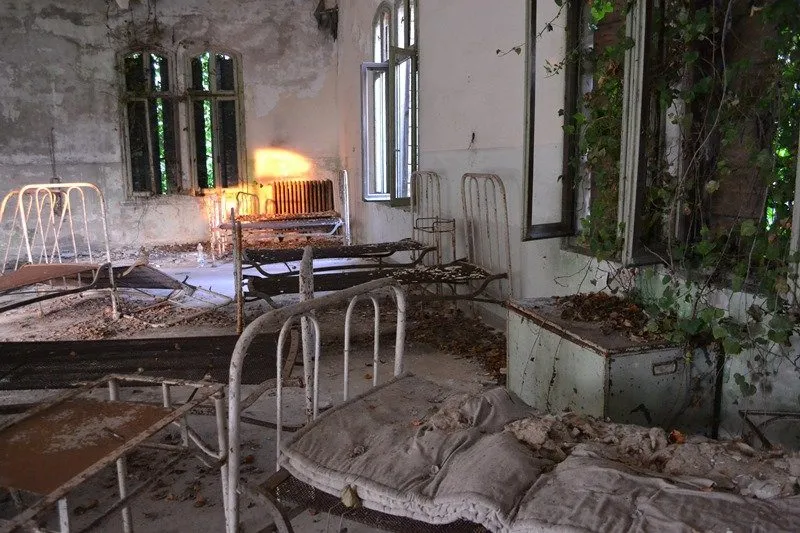
The story doesn’t end there. In 1922, a psychiatric hospital was opened on Poveglia. It’s unlikely anyone was cured there. Patients were tormented by screaming ghosts, causing them to lose their last drops of sanity. Under the guise of treatment, the chief physician of the hospital conducted experiments on the unfortunates with prohibited drugs and unceremoniously performed lobotomies with a drill and hammer. In the end, the Venetian Mengele himself went mad. He ended his life by jumping from the highest tower. Now the place is abandoned, locals stay away from the island, and hospital beds and fragments of medical instruments still lie scattered in the building.
Mystical Mexico
Mexico is simply made for lovers of mysticism and devilry. In Mexico City, there’s a place where you can meet real witches. This is the Sonora city market. Local sorceresses predict fortunes for anyone interested, and in between, they sell their potions. If you haven’t yet bought a couple of liters of snake blood or a few dried hummingbirds—welcome. A trip through Mexico is not for the faint of heart, and it’s best for people with unstable psyches to avoid the town of Guanajuato altogether. When the cemetery in this area could no longer accommodate the deceased, the city authorities decided to rebury them. Imagine their surprise when, instead of bones, mummified bodies were found deep in the earth! Mexican soils are so dry that tissues don’t decompose in them! A museum of mummies was opened specifically for these findings and operates to this day. About each exhibit, one can say: “Hmm, well preserved!”
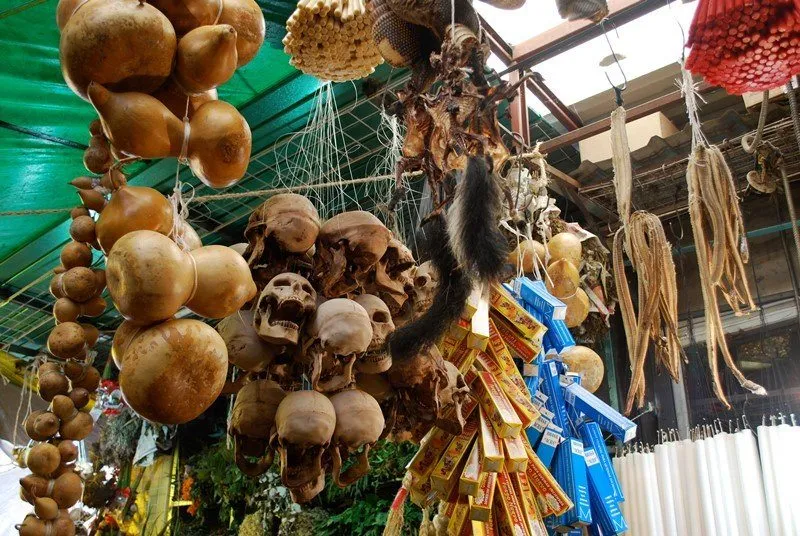 Mexicans have a special attitude towards death. This nation is alien to mournful memorial rites. Instead, on November 1st and 2nd, people participate in a lavish carnival, prepare favorite dishes of deceased ancestors, bake sugar cookies in the shape of skulls, and craft bright figures of female skeletons, affectionately named Catrina.
Island of Killers
On the southwestern coast of Brazil lies a picturesque island. One would want to spend a couple of weeks there in unhurried communion with nature. But nature does not wish it, and this place is forbidden to humans. The indigenous inhabitants of the island—lancehead snakes—do not allow outsiders into their territory, and any encroachment is punished by death.

The reptiles’ venom acts instantly, excruciating pain affects the entire body. Only one outcome is possible—death. It’s impossible to avoid a bite. Scientists calculated the island’s “population” density and made astonishing conclusions: there are one to five snakes per square meter. Therefore, an encounter with these deadly reptiles is inevitable.
Visiting Count Dracula
High in the Carpathian Mountains, near the Romanian town of Brașov, stands the impregnable Bran Castle, which has seen eight centuries. It is more commonly known as Dracula’s Castle. Historians agree that the “Transylvanian vampire” is merely a figment of the imagination of the Irish fantasy writer Bram Stoker. However, no one denies the existence of a real prototype for the famous bloodsucker.
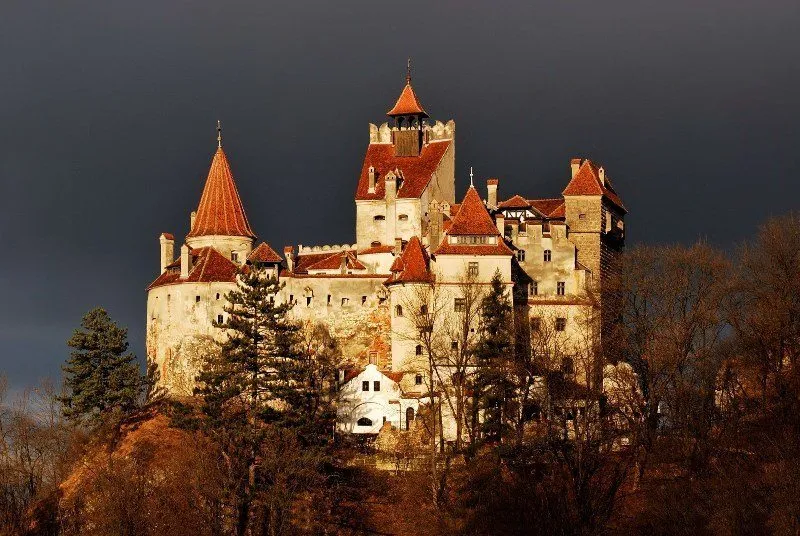
According to one version, Bram Stoker based the image of Dracula on the stern Count Vlad Țepeș, who ruled Wallachia (modern Romania) in the 15th century. The country knew no ruler more bloodthirsty than Țepeș. As a child, he endured the ordeal of a Turkish prison and avenged his lost childhood throughout his life. All Turkish soldiers who fell into the Count’s hands faced inevitable retribution. The cruel ruler impaled his enemies, earning him the nickname Țepeș, which means “the Impaler” in Romanian. However, Bran Castle was not Vlad’s permanent residence. Some scholars believe he stayed here several times for the night, while others suggest that the Count never appeared at the castle in his entire life. Nevertheless, people go to Transylvania for a terrifying and beautiful fairy tale that says: “In the backyard of Dracula’s Castle, an ancient well holds the heart of a vampire, and the 60-meter rock on which Bran stands conceals many underground passages twisted into an intricate labyrinth.” Dutch Tortures Today, The Hague holds the status of the most “just” city in Europe, as it is home to the International Court of Justice of the UN. But it wasn’t always so. In darker times, no one thought to write a Declaration of Human Rights, but the instruction manual for torture was known by heart by The Hague’s executioners. Criminals were not treated gently, and confessions were extracted with bone-breakers. The organs of uncooperative lawbreakers were cut out and preserved, skulls were dissected, and heads were mummified.
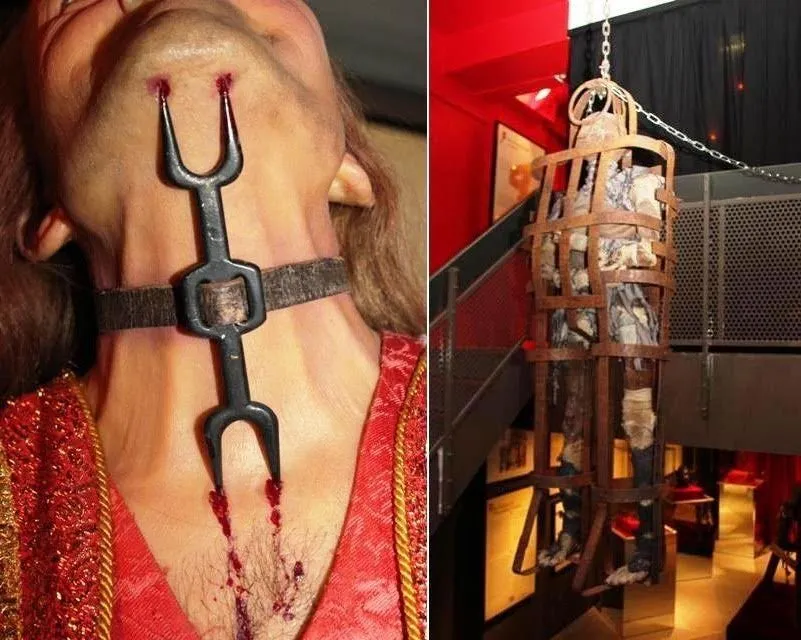
You can feel like a medieval wrongdoer in The Hague’s Museum of Torture (“Prisoner’s Gate”). All the devices are so terrifying that under the threat of their use, you involuntarily confess to crimes you didn’t even commit. For the most resilient visitors, the guide offers to try out the deadly instruments on themselves, not at full force, of course. However, there aren’t many volunteers. Most people are unable to go through even half of the halls, and particularly impressionable ones even faint. Black Hollow Every country has its own captivating, sad myth, embodying the people living in it. Bloody horror stories are not in China’s spirit. If something happens there, it’s a quiet nightmare behind seven locks.
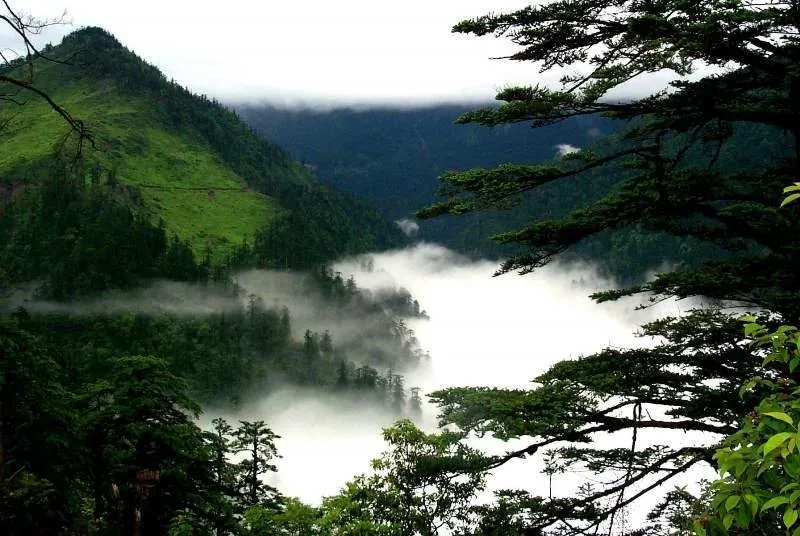
The place of Heizhugou is famous for its mysterious and anomalous power. People call this place nothing less than “Death Valley” or “Black Bamboo Hollow.” Here, at the foot of the mountains, a slow river flows, shrouded in dense fog. The hollow beckons into its embrace, promising magnificent views, and to admire them, some have paid with their lives. The thick haze of Heizhugou seems to dissolve people. Airplanes fall into this black abyss for no apparent reason, and those who go missing are never found. The anomalous zone rebelled in 1950. In just one year, over a hundred people were lost here, and a passenger Boeing crashed. No one from the crew reported that the plane was falling. The most interesting thing is that no technical problems were found during the investigation of the aircraft. 12 years later, the hollow swallowed an entire geological exploration group. Only the leader managed to escape. The man says that the fog suddenly filled the valley but dissipated within a few minutes… along with all members of the expedition. Despite the ill repute of the Black Bamboo Hollow, tourists from all over the world have been flocking here recently. Now, the Chinese organize colorful festivals there, selling trinkets and souvenirs; no one has gone missing for a long time. Who knows, perhaps the hollow has simply fallen into a pleasant slumber, like a sleeping Vesuvius. In general, it doesn’t matter what you take with you on a journey to mysterious and mystical places; a much more serious question is: “Who will be your travel companion?” People who doubt their mental strength should preferably travel with a more or less skeptical company, which will help impressionable individuals cope with the avalanche of mystical information.