The Journey of a Suitcase from Check-in to Retrieval upon Arrival
I think many people are curious to know what happens to luggage at the airport. We decided to show you the journey of a suitcase from check-in to its retrieval upon arrival. The first thing we do at the airport is check in for the flight and drop off our luggage. We place the suitcase on the conveyor belt, where it’s weighed, and if there’s no excess weight, a tag is attached, and it moves on. You’ll only see it again upon arrival.
Let’s take a moment to discuss the baggage tags attached by the check-in agent. They come in two types: with a barcode — the most popular variety, or RFID-based. This is a method of automatic object identification using radio signals stored in RFID tags. An RFID-based system has several advantages:
- Reading range of about 5–7 m
- 100% reading accuracy — the risks of luggage loss are minimal when using this system.
- High reading speed
- No direct line of sight to the object is required (a barcode label must be in direct sight of the reader)
Currently, RFID tags are used in almost all major airports worldwide. After check-in, bags proceed to security screening, which is a mandatory procedure in all airports worldwide.
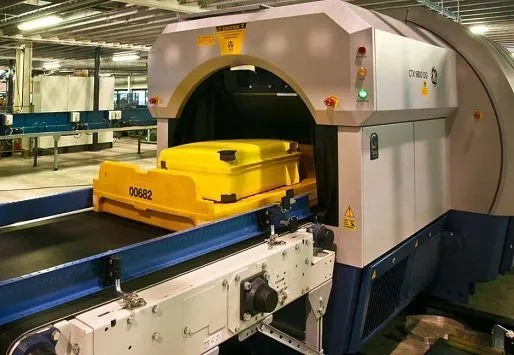
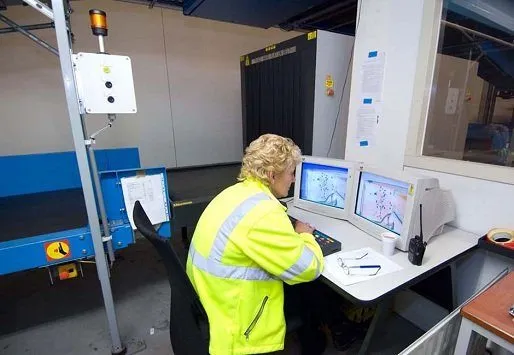
All luggage is scanned, and if suspicious items are found, the suitcase is removed from the belt and manually inspected. In this case, another tag or sticker must be attached to it, indicating that your luggage has undergone a manual inspection.
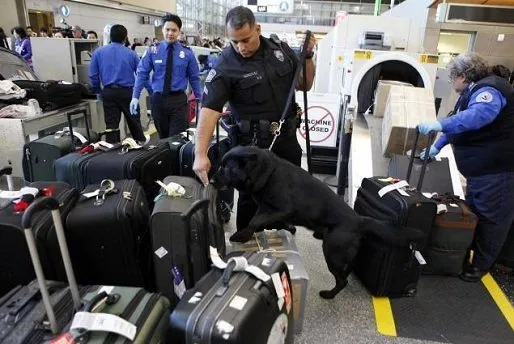
In some airports, all luggage undergoes another check — by specially trained dogs. They search not only for drugs but also for explosives, as well as food items, prohibited for transport.
Next, your suitcase is sent for sorting.
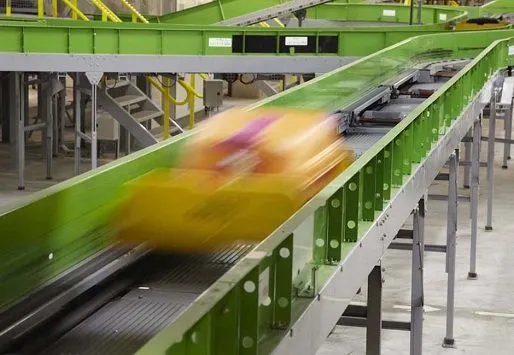
This is necessary for the luggage to get on the correct flight. As we mentioned earlier, barcodes or RFID tags are used for luggage identification.
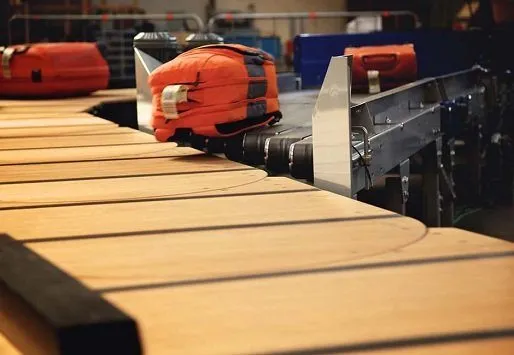
A special reader scans the information and sends the suitcase to the correct container.
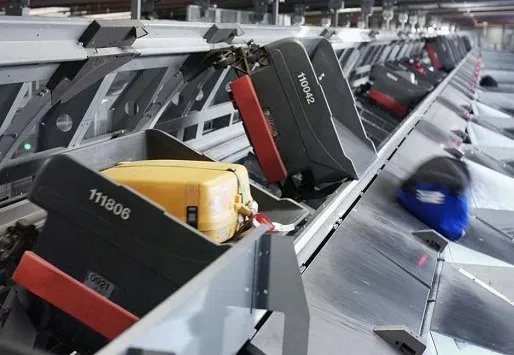
Before loading, it will be checked once more and loaded onto a cart.
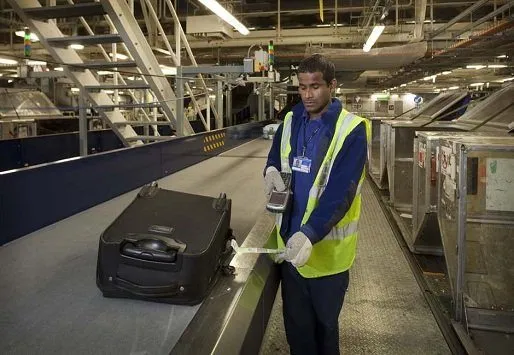
Typically, loading is done manually by porters. This is why some airports have strict rules regarding the weight of each piece of luggage. Some unions have ensured that porters should not lift bags weighing over 32 kg. For passengers, this means that in case of excess weight, luggage will have to be split into 2 pieces. So, when flying from a small airport, take an extra bag with you just in case, into which you can transfer items if there’s excess weight. More about excess baggage >>
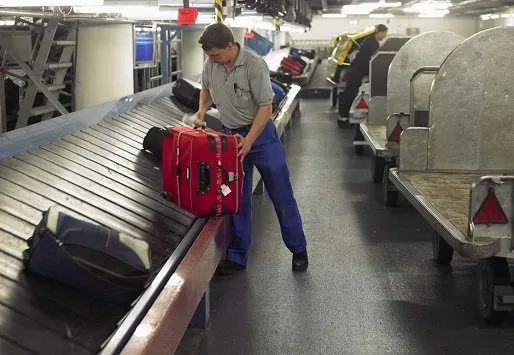
However, in some airports, loading is carried out by robots.
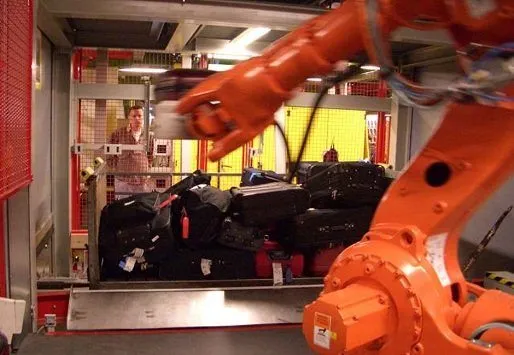
When the cart is fully loaded, it is sent to the aircraft, and the suitcases are loaded on board.
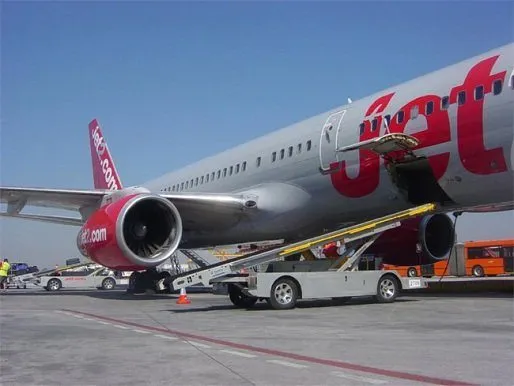
Upon arrival, the reverse procedure takes place. Luggage is unloaded from the cart onto the conveyor belt.
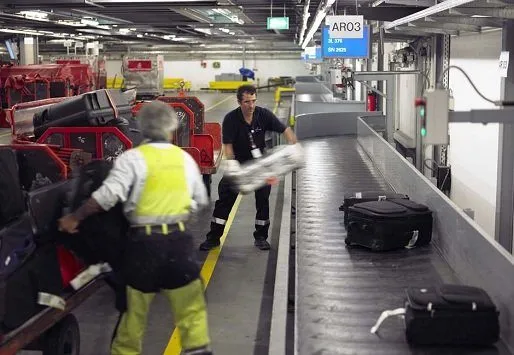
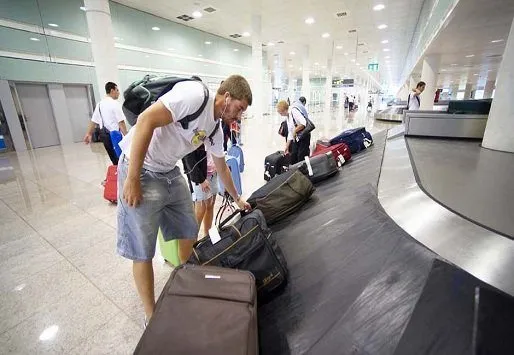
And transported in the right direction. If this is your final destination, the suitcase will be sent to the baggage claim belt in the arrivals area, where you will collect it.
If you are flying with a layover, it will be sent to storage or directly to the next flight if the connection is short. Temporary luggage storage is necessary if you are flying with a long layover. When you buy a single ticket from point A to point B, upon arrival at transit point C, you do not collect your suitcase; the sorting system sends it to storage until your next flight. In large airports, everything is automated, which reduces the likelihood of lost or delayed luggage.
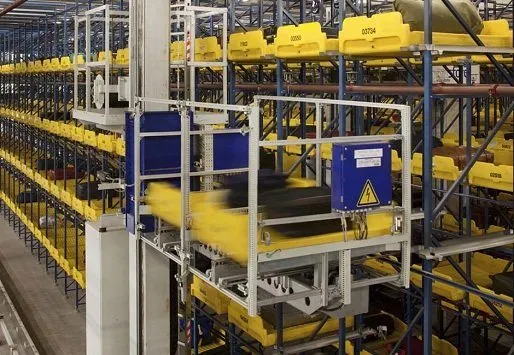
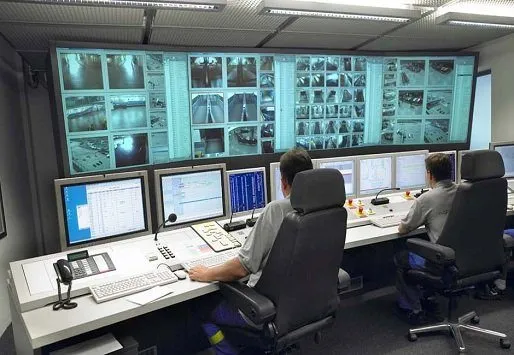
When it’s time for your plane to depart, the suitcase goes through sorting again and is loaded onto the correct flight. All this time, your suitcase is under close supervision by the baggage management service.
Images from: www.vanderlande.com