What Not to Do in Europe
As soon as you reach a conscious age, many things immediately become forbidden. But that’s nothing compared to what you shouldn’t do in Europe. Of course, you won’t be shot, but getting a fine is a matter of minutes. That’s why in our article, we’ve collected the most unusual prohibitions that are easy to violate unknowingly.
Don’t Walk Around in a Swimsuit
No matter which resort in Croatia, Italy, or Spain you’re vacationing at, the rule is simple: when you leave the beach, get dressed. You can’t walk around town in a swimsuit, even if it’s +35 degrees, even if your hotel is only 200 meters away. For disobedience, you’ll have to pay up to 120 euros.

Don’t Snack in the Street
Wait, we’ll explain everything now, and your bewilderment will pass. We’re talking about snacking near historical landmarks in Italy: for example, in Rome near the Spanish Steps and the Trevi Fountain, in Venice near St. Mark’s Basilica, and on the steps of other significant places. Even a simple coffee break with pastries can cost you a fine of 40–250 euros. Do you need that?

In Florence, they came up with a good idea: the steps of churches and cathedrals are often doused with water. No one will sit on something wet, after all. Brilliant!
Don’t Feed the Pigeons
This rule is especially relevant in Italy, particularly in Venice. This is because pigeons damage the unique mosaics of historical buildings with their droppings. Cleaning this up is also a costly affair. Therefore, if you don’t want to pay 50 to 200 euros, don’t feed the seagulls and pigeons in St. Mark’s Square.

In Vienna, feeding birds was banned for another reason. Authorities believe that all these flour crumbs can harm the health of pigeons. They want to maintain a healthy population, so they introduced a fine of 36 euros for feeding.
Don’t Wear High Heels
Girls, we appeal to you! If you’re going to walk around historical ruins in Greece, don’t bring high heels. The thing is, they damage the integrity of monuments (ruins are also monuments). Safety is secondary here. But overall, it’s an obvious thing.

Don’t Ride a Bicycle
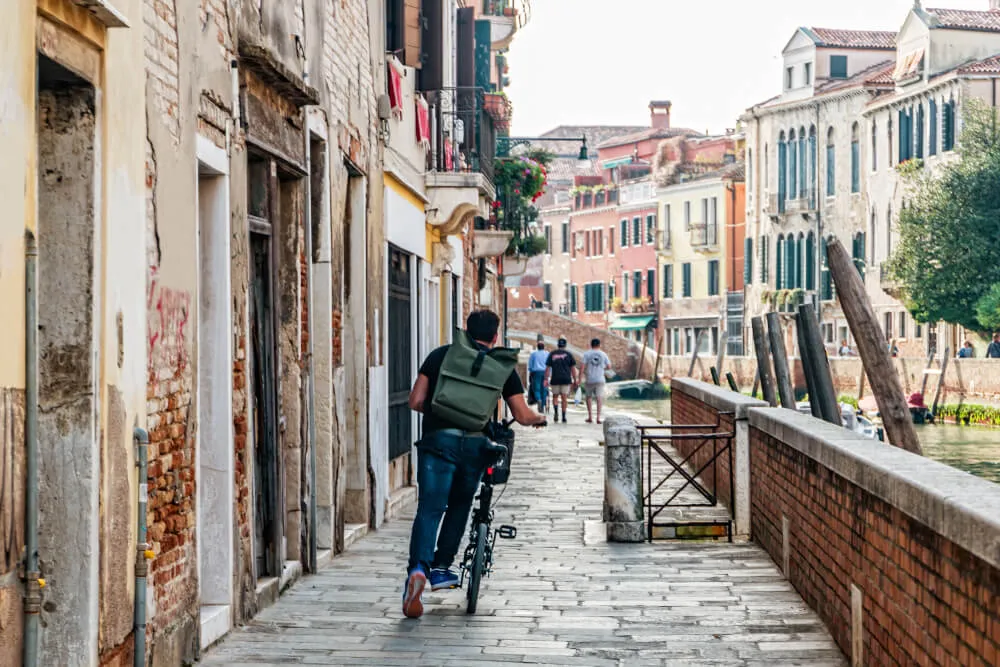
And the prohibition comes from Venice again. If you’ve been there, you know that the streets are so narrow that it’s impossible to ride a bicycle, even if you wanted to, especially during peak season. You can’t even push a bicycle next to you, otherwise, you’ll get a fine of up to 100 euros. Remember: the historical center of Venice is a completely pedestrian zone.
Don’t Use Google Maps
What? Yes. But we’re talking about the specific town of Baunei in Italy. The thing is, maps work extremely poorly in this area and lead tourists to who knows where. So much so that rescuers then have to search for travelers and help them get out of impassable thickets. The place is green, with a lot of forest, and getting lost with a crazy map is a piece of cake. So be careful.
Don’t Build Sandcastles
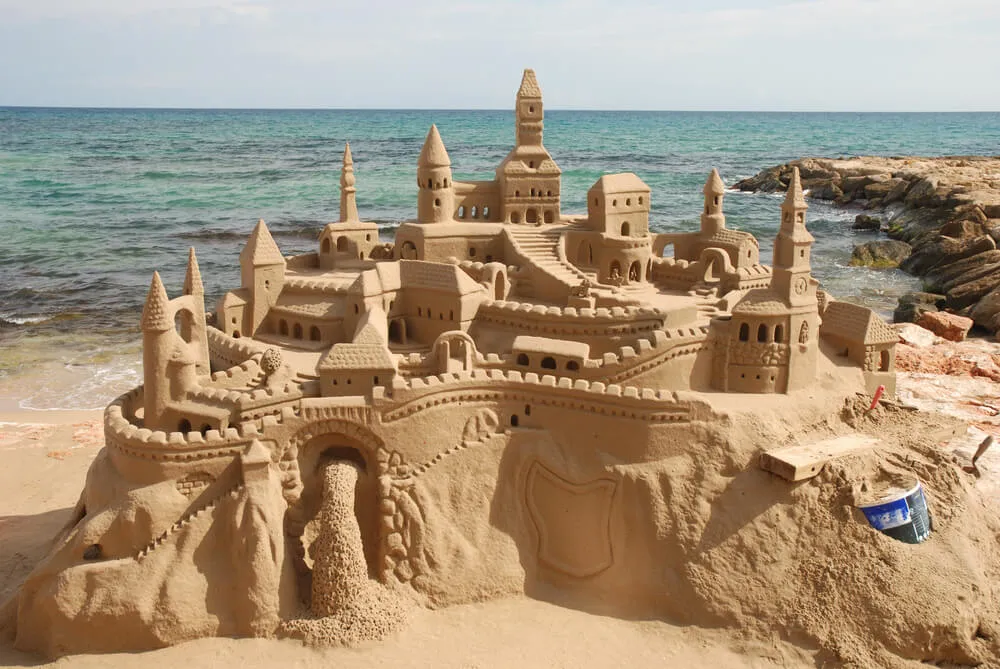
Well, this is a complete setup! What else is there to do on the beach if you’re tired of sunbathing and swimming, other than building a sandcastle? In short, if you’re going to the Magaluf resort (in Mallorca), keep this in mind. The reason is simple: the results of sand construction simply complicate the work of lifeguards. Also, the structures can spoil the beautiful views of Mallorca for other vacationers. But if your hands are really itching, then prepare 100 euros and note that the structure will have to be destroyed immediately.
And on another island — Tenerife — stone towers are prohibited. The reason for the ban is quite sweet. The thing is, beach pebbles are part of the ecosystem. Small algae can grow on these stones, which mollusks and crustaceans eat. And if you constantly move these pebbles and build something out of them, the algae get rubbed off, and the creatures have nothing to eat.
Every country has its own prohibitions, so if you’re going somewhere, be sure to study this issue. Perhaps actions familiar to you might cause bewilderment among others or even lead to a fine.