Roseau Travel Guide (Dominica)

Places of interest

About

Roseau is the charming capital and largest city of Dominica, known for its vibrant Creole atmosphere and picturesque location. Surrounded by lush green mountains and the Caribbean Sea, this city serves as the main gateway for exploring the "Nature Island," as Dominica is often called.

Located on the southwest coast of the island at the mouth of the Roseau River, the city is an important port and the country's economic center. The population of Roseau is approximately 16,500 people. The climate here is typically tropical and humid, with warm weather year-round, making it attractive for sun and nature lovers. The city's architecture is a colorful blend of French colonial style and modern buildings, many of which are decorated with bright colors and wooden balconies.
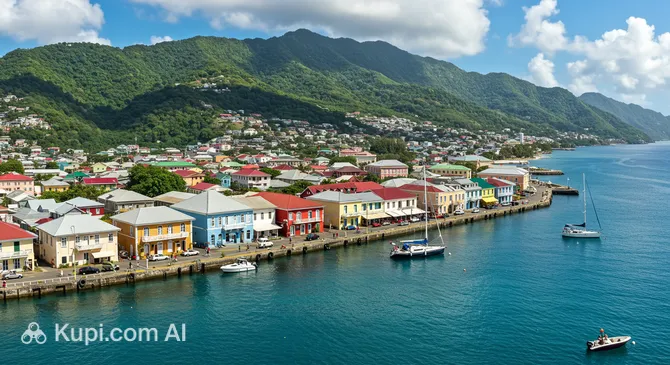
Roseau. Illustration.
Source: Kupi.com AI

Among the key attractions in Roseau, the Old Market Plaza stands out; once a center of the slave trade, it is now a bustling place where you can purchase local souvenirs, spices, and fresh fruit. Nearby is the Dominica Botanical Gardens, one of the best in the Caribbean, offering a peaceful walk among exotic plants and trees. Roseau also provides easy access to natural wonders such as the impressive Trafalgar Falls or the Morne Trois Pitons National Park, a UNESCO World Heritage site.

Roseau is not just an administrative center, but a place to immerse yourself in authentic Caribbean culture, enjoy the beauty of nature, and experience the hospitality of the locals. A visit to this city will undoubtedly be a bright and memorable experience for any traveler seeking adventure and tranquility.

You can find more interesting facts on the Roseau city history page.
Weather Overview

In Roseau, you can expect warm weather throughout the entire year. Average monthly temperatures range from 24.2°C in February to 26.7°C in September. Expect warm days and nights with minimal temperature fluctuations. Precipitation falls regularly, with the highest number of rainy days occurring between July and November, although rainfall amounts are generally moderate. For example, in September and October, about 5 mm of rain falls, while the number of rainy days reaches 19-21. The "driest" months in terms of rainfall are March and May (1 mm), but even in these months, there are 12-15 rainy days.

To get more detailed information about weather conditions, you can visit the Roseau climate page.

Average monthly temperature

Average monthly precipitation

Interesting Facts

Beyond its main attractions, Roseau holds many fascinating secrets and surprising stories that make it even more appealing to curious travelers. Here are just a few little-known facts about this Caribbean capital:

  • Origin of the name: Roseau got its name from the French, who named it after the reeds (in French, "roseaux") that grew abundantly along the banks of the river where the city was founded.

  • A living monument to a hurricane: In the famous Dominica Botanical Gardens, you can see a strange and touching symbol – a school bus crushed by a huge tree that fell on it during Hurricane David in 1979. It was decided not to remove it, and it has since become a monument to resilience and a reminder of nature's power.

  • French influence in architecture: Despite a long period of British rule, the architectural appearance of Roseau, especially its historical center, has retained many features of the French colonial style. Walk through the narrow streets, and you will notice characteristic wooden houses with carved balconies and bright shutters.

  • A capital on a volcano (almost): Roseau is located in the caldera of an extinct volcano, which explains the presence of hot springs and geothermal activity in the vicinity, such as the famous Boiling Lake, although the city itself is not under direct volcanic threat.

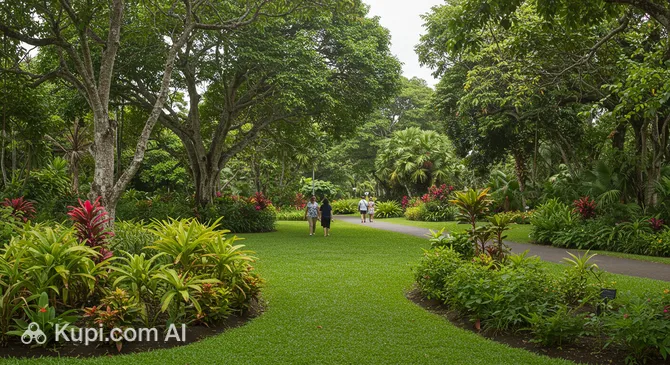
Dominica Botanical Gardens. Illustration.
Source: Kupi.com AI

Traveller photos:

How to Get There

A journey to the capital of Dominica is the start of an exciting adventure in the Caribbean. Since the city is located on an island, the main ways to get here are by air or sea. You can find out more about how to get to Roseau and plan your route by exploring the available options below.

The nearest air hub to the capital is Douglas–Charles Airport (IATA: DOM), also known as Melville Hall. It is important to note that there is no airport in the city of Roseau itself; this transport hub is located in the northern part of the island in Dominica, approximately 27.7 km from the capital. The road from the airport to Roseau is incredibly scenic but winding, so a taxi or transfer will take about 60–70 minutes. This is a small airport, mainly handling regional flights from neighboring islands.

Many travelers prefer to fly through large international hubs on neighboring islands and then reach Dominica by ferry or local airlines. One such hub is Martinique Aimé Césaire International Airport (IATA: FDF). It is located in Fort-de-France on the island of Martinique, at a distance of about 89.2 km in a straight line from Roseau. This is a large airport with significant passenger traffic, receiving flights from Europe and the USA.

Another popular transit option is Pointe-à-Pitre International Airport (IATA: PTP), located in Pointe-à-Pitre, Guadeloupe. It is approximately 107.1 km from Roseau. As with Martinique, you can reach Dominica from here by high-speed ferry, which arrives directly at the port of Roseau, or by a short flight.

For clarity, here is a summary of the main airports:

AirportPassenger trafficDistance
Canefield Airport20,0004 km
Melville Hall Airport100,00028 km
Les Bases5,00063 km
Martinique Aimé Césaire International Airport1.9 m89 km
Pointe-à-Pitre International Airport2.2 m107 km

There is no rail service on the island of Dominica. There are no train stations or trains in Roseau or its surroundings. The primary means of land travel are cars, taxis, and local buses. For travel between islands, ferry services are actively used, connecting the port of Roseau with Guadeloupe, Martinique, and Saint Lucia.

Main Attractions

Roseau, the capital of Dominica, offers tourists not only scenic views and a colorful atmosphere but also a number of interesting attractions that introduce the history and culture of the "Nature Island." A walk through the city will reveal both historical monuments and pockets of lush tropical greenery.

One of the main gems of Roseau is the Dominica Botanical Gardens. This vast green space is the perfect place for a peaceful stroll among exotic trees, bright flowers, and palms. The garden is famous for its collection of plants from across the Caribbean and the world. Of particular interest is the famous school bus, crushed by a falling baobab tree during Hurricane David in 1979 and left as a reminder of nature's power. This spot attracts both nature lovers and those seeking serenity in the heart of the city.

Dominica Botanical Gardens. Illustration.
Source: Kupi.com AI

Traveller photos:

Old Market Plaza is the historical heart of Roseau. Once a center for the slave trade, today it is a lively square where artisans sell souvenirs, spices, fresh fruit, and handmade crafts. Visiting the Old Market allows you to dive into the local atmosphere, chat with vendors, and buy authentic Dominican goods. It is a great place to feel the pulse of the city and its history.

Located near the Old Market in the old post office building is the Dominica Museum. It offers a fascinating journey through the island's history and culture. The exhibits cover the geological formation of Dominica, the life of the indigenous Kalinago people, the colonial period, and the culture and traditions of the modern population. This small but informative institution is a must-visit for those who want to better understand Dominica's unique heritage.

Roseau Cathedral, also known as Our Lady of Fair Haven Cathedral, is an important religious and architectural landmark. Built in the Gothic Romanesque style from volcanic stone, it impresses with its monumentality and beautiful stained-glass windows. The cathedral towers over the city and serves not only as a place of worship but also as a symbol of the locals' resilience, as it has been rebuilt several times after hurricanes.

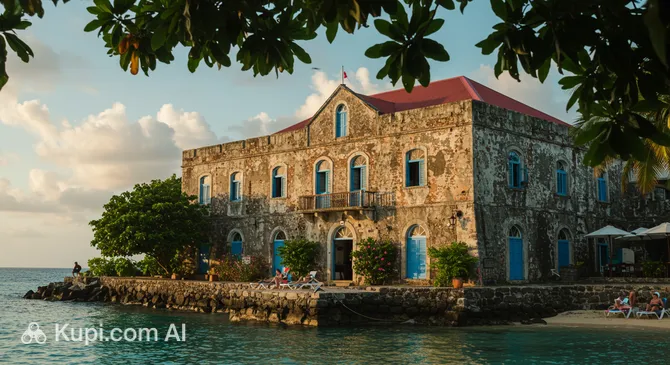
The historical Fort Young Hotel & Dive Resort occupies a special place in Roseau. Built on the site of an 18th-century British fort, it combines historical heritage with modern amenities. Tourists can not only stay at the hotel but also view preserved elements of the fortifications and enjoy views of the Caribbean Sea and the port. This place is of interest to those who value history, comfort, and a convenient location for exploring the capital and its surroundings, as well as for diving enthusiasts.

Fort Young Hotel and Dive Resort. Illustration.
Source: Kupi.com AI

Traveller photos:

Local Cuisine

The culinary scene in Roseau is a fascinating journey into the world of Dominica's Creole cuisine, where the main roles are played by the freshest local products, aromatic spices, and centuries-old culinary traditions. Here you will find vibrant flavors, hearty dishes, and the unique atmosphere of Caribbean hospitality.

Be sure to try several iconic dishes. Start with callaloo soup – a thick, aromatic soup made from dasheen (taro) leaves, coconut milk, and often with the addition of crab meat or other seafood. Don't miss the chance to enjoy the freshest fish and seafood, which are prepared here in many ways: grilled, stewed with vegetables and spices, or served as a rich fish broth. Another popular treat is "bakes," fried or baked dough balls that pair perfectly with saltfish, cheese, or jam. "Ground provisions" are also widely used – local root vegetables and fruits such as dasheen, yams, breadfruit, and plantains, which are boiled, fried, or added to stews.

To quench your thirst, try local drinks. Dominica is famous for its rum, which can be tasted neat or in cocktails. Refresh yourself with natural juices from exotic fruits like mango, passion fruit, guava, or soursop. Fresh coconut water directly from a young nut and local beer, such as Kubuli, are also popular. For non-alcoholic hot drinks, look for herbal teas and cocoa tea, made from local cocoa beans.

The food culture in Roseau is diverse. Locals often buy fresh products and spices at markets like the Old Market Plaza, where street food can also be found. You can eat at small family eateries offering authentic and inexpensive dishes or at more upscale restaurants, many of which are located in hotels. For instance, at the Fort Young Hotel & Dive Resort, you can find restaurants offering both local and international cuisine with a beautiful sea view. Street food is also popular – look for stalls selling fried chicken, bakes, and other quick and tasty snacks.

Travel Tips

Planning a trip to Roseau? Wonderful! To ensure your journey through the capital of Dominica goes smoothly and leaves only pleasant impressions, we have prepared some practical tips. They will help you better navigate on-site and enjoy everything this colorful Caribbean city has to offer.

  1. Clothing and Essentials:

    Roseau has a tropical climate, so choose light, breathable clothing made from natural fabrics (cotton, linen). Don't forget a swimsuit, a hat, sunglasses, and high-SPF sunscreen. Since Dominica is the "Nature Island" with frequent, albeit short, rains, a light waterproof jacket or umbrella will be very useful. For walking in the city and especially for excursions into the island's interior (e.g., to waterfalls), comfortable closed-toe shoes are a must. It is recommended to bring insect repellent. For visiting churches, such as Roseau Cathedral, choose modest clothing that covers shoulders and knees. Don't forget a universal adapter for electrical appliances (Dominica uses Type D and G sockets, 230V voltage).

  2. Transport in the City and Surroundings:

    The center of Roseau is quite compact and easy to explore on foot. For travel over longer distances, you can use local minibuses – this is the most common and inexpensive form of public transport. They run on main routes but do not always have a clear schedule. Taxis are also available; it is recommended to agree on the fare in advance, as meters are not always used. Popular ride-hailing apps are practically non-existent here. Car rental is possible, but keep in mind that driving on the island is on the left, and roads can be narrow, winding, and sometimes in less-than-ideal condition, especially in mountainous areas. An international driving license may be required for rental.

  3. Finances: Currency, Payment, Tipping:

    The official currency of Dominica is the Eastern Caribbean Dollar (XCD). US Dollars (USD) are also widely accepted in many tourist spots, but change will likely be given in local currency. You can exchange currency at banks or exchange offices in Roseau. Credit and debit cards (mostly Visa and MasterCard) are accepted at hotels, large restaurants, and some shops. However, it is always useful to have cash with you, especially for market purchases, minibus fares, and in small establishments. There are ATMs in Roseau, but check with your bank about withdrawal conditions and possible fees. A rough daily budget (excluding accommodation) might be $50–$100 depending on your plans. Tipping: in restaurants, it is customary to leave 10-15% of the bill if a service charge is not included. It is also customary to give small tips to porters and taxi drivers.

  4. Health and Safety:

    There are pharmacies in Roseau, but their hours may be limited, and not all are open 24/7. The main medical facility is Princess Margaret Hospital. It is highly recommended to take out travel insurance with good medical coverage before your trip. Roseau is generally considered a safe city for tourists, especially during the day. However, as elsewhere, follow basic precautions: do not leave valuables unattended, and avoid walking in poorly lit and deserted areas after dark. Use repellents to protect against mosquito bites, which can carry diseases like dengue. Drinking bottled water is recommended.

  5. Communication and Language:

    The official language in Dominica is English. Locals also speak Dominican Creole (Patois), which is based on French. English is widely spoken, and there should be no communication problems in the tourism sector. For local calls and mobile internet, you can purchase a SIM card from one of the local operators (e.g., Digicel or Flow) upon arrival at the airport or in communication stores in Roseau. Wi-Fi is available in most hotels, cafes, and some public places. Learning a few phrases in Patois, such as "Sa ka fete?" (How are things?), can be a nice gesture for the locals.

  6. Local Etiquette and Socializing:

    The residents of Dominica are generally very friendly and hospitable. A polite greeting ("Good morning", "Good afternoon") is always appropriate when entering a shop or addressing someone. Don't hesitate to ask for directions or advice – they will likely be happy to help you. Always ask for permission when photographing locals. In public places, try to behave with restraint. Dress modestly when visiting non-tourist areas or religious sites.

  7. What to Avoid:

    Try not to openly display expensive jewelry or large sums of money. Avoid entering into debates on political or religious topics unless you are sure of your knowledge and tact. Dominica is proud of its nature, so it is strictly recommended not to leave litter in unauthorized places, especially on beaches and in forests. Also, do not touch corals while swimming or diving.

  8. Additional Tip:

    Be prepared for "island time" – a slow pace of life. Not everything happens on schedule, and this is part of the local charm. Be sure to visit the local market in Roseau, especially on Saturdays, to buy fresh fruit, vegetables, and spices and to chat with the locals. This is a great way to immerse yourself in the island's authentic atmosphere.

We hope these tips help you plan an unforgettable trip to Roseau! Enjoy the beauty of the "Nature Island," its unique culture, and the hospitality of its people.

Entertainment & Nightlife

Roseau offers its guests a cozy and rather relaxed evening atmosphere rather than the bustling club life of large metropolises. Nightlife here is centered around spending pleasant time in local bars, restaurants with live music, and socializing to the sounds of the Caribbean Sea. The main focus is on authenticity and the opportunity to enjoy the local flavor.

Evening entertainment in Roseau can be found in several areas. The Bayfront promenade and adjacent streets come alive at dusk, offering a choice of small bars and restaurants where you can taste local drinks like rum and enjoy fresh seafood. Live music is often heard here – ranging from calypso and reggae to modern rhythms. The atmosphere in such establishments is usually very casual, encouraging conversation with both locals and other tourists.

Most bars and restaurants are open until late evening, especially on weekends. The dress code is generally casual, but a more elegant outfit may be required for dinner in more upscale hotel restaurants. The crowd is diverse: from locals relaxing after the workday to tourists exploring the city. Prices in bars and restaurants vary but generally remain affordable. To reach your destination at night, it is recommended to use official taxi services or arrange a transfer in advance, as popular ride-hailing apps may not be available here.

In terms of safety, the central and tourist areas of Roseau are considered quite calm for evening walks; however, you should always take standard precautions: stay on well-lit streets, do not leave valuables unattended, and use trusted taxis for nighttime trips. Many hotels, such as the Fort Young Hotel & Dive Resort, offer bars with a pleasant atmosphere for their guests and visitors to relax in the evening. While there may be few specialized nightclubs in the European sense in Roseau, local "rum shops" and small bars often become centers of evening fun with music and dancing.

As for daytime entertainment, Roseau also has much to offer. You can visit the Dominica Museum to learn more about the island's history and culture, or stroll through the magnificent Dominica Botanical Gardens, enjoying its rich collection of tropical plants. Theaters and large concert venues are less common in Roseau; cultural life is more focused on festivals and local events.

In general, evening in Roseau is an opportunity to immerse yourself in the slow Caribbean rhythm, enjoy delicious food, good music, and the hospitality of the locals. It is an ideal place for those seeking an authentic vacation away from noisy tourist centers.

Parks & Museums

Roseau offers its guests not only the charm of a Caribbean capital but also pleasant opportunities for outdoor relaxation and immersion into the culture of Dominica. The city's parks and museums allow visitors to better understand history and enjoy tranquility surrounded by tropical greenery.

The main green gem of Roseau is certainly the Dominica Botanical Gardens. This extensive and well-kept space is a true oasis of peace in the heart of the city. Here, you can stroll for hours among an impressive collection of tropical trees, exotic flowers, and rare plants from all over the world. The garden not only delights the eye with its beauty but also serves as an important site for the conservation of the island's flora. In addition to the rich botanical collection, the garden is famous for an unusual monument – a school bus crushed by a giant baobab tree during Hurricane David, symbolizing the power of nature and the resilience of the human spirit. Besides this magnificent garden, pleasant walks can be taken along the promenade or along the banks of the Roseau River, enjoying the views and fresh air.

To learn about the rich history and culture of the island, a visit to the Dominica Museum is a must. Located in a historic building near the Old Market, it offers exhibits covering the island's geology, the life of the indigenous Kalinago people, the colonial period, and modern cultural traditions. It is a great place to gain a deeper understanding of Dominica's unique heritage. Although Roseau does not have a large number of major museums, cultural heritage is also reflected in its architecture and religious sites.

Among the significant architectural and historical sites is the Roseau Cathedral (Cathedral of Our Lady of Fair Haven). Built from dark volcanic stone in a Gothic-Romanesque style, it is an important spiritual center and an impressive example of local architecture. Another iconic site is the historic Fort Young. Originally built in the 18th century to protect the harbor, today it is part of a hotel but has retained elements of the old fortifications, allowing visitors to touch the city's history while enjoying modern comfort and views of the Caribbean Sea.

For a more authentic experience, stop by the Old Market Plaza. While it is not a museum in the traditional sense, it is a living cultural space where you can see the works of local artisans, taste fresh fruit and spices, and feel the true spirit of Roseau. Occasionally, in small squares or local cafes, you may come across exhibitions by local artists or spontaneous musical performances, adding a special color to the city.

Getting Around

Getting around Roseau is fairly simple, especially given its compact size. The central part of the city is quite walkable, allowing you to enjoy its flavor. However, for longer trips or to reach the outskirts, there are several public transport options and alternative ways to get around.

The main form of public transport in Roseau and throughout Dominica is minibuses, also known as "route taxis." These are generally private microbuses that run on set routes, connecting the capital with other settlements on the island, as well as various districts within Roseau itself. They do not have a strict schedule; they depart when they have enough passengers or run with a certain frequency. Route numbers are usually displayed on the windshield.

The fare system in minibuses is very simple. Payment is made in cash directly to the driver when entering or exiting the bus. The preferred currency is the Eastern Caribbean Dollar (XCD), but US Dollars (USD) are often accepted, though you will likely receive change in the local currency. Fares are very affordable and depend on the distance; trips within the city usually cost only a few Eastern Caribbean dollars. No special transit cards, tickets, or mobile apps for payment are used in Roseau.

To use a minibus, simply go to one of the unofficial stops (often just popular gathering spots along the road) or just wave your hand at an approaching bus on the desired route. Before boarding, it doesn't hurt to check with the driver or conductor (if there is one) whether they are heading in your desired direction. To get off, just inform the driver in advance. Minibuses usually operate from early morning until evening, but the frequency decreases during evening hours and on weekends/holidays.

An alternative to public transport is taxis. They can be found at hotels, airports, the ferry terminal, and other busy spots in the city. Taxis are convenient for trips to remote areas, for transfers, or if you are traveling with luggage. It is important to remember that meters are rarely used in taxis, so it is strongly recommended to agree on the fare with the driver in advance before starting the journey. Rates can vary depending on distance, time of day, and the number of passengers.

For those who prefer complete independence in their movement, there is the option of car rental. However, you should consider the left-hand traffic, narrow and winding roads, especially outside the capital, and the need for a local driving permit or an international driver's license. Bicycle rentals and car-sharing are poorly developed in Roseau and are not common options for tourists. In the city itself, as already mentioned, many distances are easily covered on foot, which is a great way to get to know Roseau better.

Accommodation

In Roseau, tourists will find a variety of accommodation options catering to different budgets and preferences. Choices include budget guesthouses and apartments for independent travelers, as well as comfortable mid-range hotels and several resorts offering a wider range of services. Renting apartments or villas can also be a good option, especially for families or groups.

Most housing options are concentrated in central Roseau and along the waterfront (Bayfront). Staying here provides convenient access to main attractions such as the Old Market and the Dominica Botanical Gardens, as well as restaurants, shops, and transport hubs. Some hotels and guesthouses are located in quieter residential areas, offering a peaceful stay near the city center.

Among the well-known and conveniently located hotels is, for example, the Fort Young Hotel & Dive Resort. This hotel not only offers comfortable rooms and good service but also has a rich history, as it is partially located on the site of an old British fort, offering beautiful views of the Caribbean Sea.

Fort Young Hotel and Dive Resort. Illustration.
Source: Kupi.com AI

Traveller photos:

When planning a trip, especially during the peak tourist season (usually December to April) or during major local festivals, it is recommended to book accommodation in advance. This will allow you to get the best selection and more favorable prices. The most common booking methods are popular international online platforms and booking systems, as well as contacting hotels directly through their official websites or by phone. The price range varies from quite affordable options to luxury offers, allowing every traveler to find the best option according to their budget.

Nearby Cities

For those who wish to explore the surrounding areas, Roseau serves as an excellent starting point for day trips to several interesting nearby locations:

Information on specific nearby cities for day trips is currently being gathered. Generally, the region around the city of Roseau offers various attractions, and travelers are encouraged to check local resources for day trip options according to their interests.

Shopping & Souvenirs

Shopping in Roseau is an engaging activity for those seeking authentic Caribbean goods and souvenirs rather than chasing global brands. The capital of Dominica is not famous for giant malls but offers a unique shopping experience where you can find products from local artisans, aromatic spices, and bright items reflecting the island's culture.

Main shopping spots are concentrated in the city center. Stroll through the streets around Old Market Plaza, such as King George V Street and Great George Street, where you will find many small shops and stalls. Also, some shops are located along the Bayfront promenade, where you can combine shopping with a pleasant walk by the sea.

There are no large modern shopping centers in the European or American sense in Roseau. Shopping here is more intimate and traditional, with an emphasis on individual stores and local markets rather than large shopping complexes.

Markets play a vital role in the commercial life of Roseau. The Roseau Market (New Market), located near the waterfront, is the main place for buying fresh fruit, vegetables, fish, meat, and, of course, the famous Dominican spices. It is a noisy and colorful place where you can feel the true rhythm of local life. The Old Market Plaza, which has a rich history, is today more oriented towards tourists, offering a wide selection of souvenirs, handmade crafts, jewelry, and local delicacies.

From Roseau, it is worth bringing back unique souvenirs and goods that reflect the culture of Dominica. Pay attention to handmade crafts: woven baskets and hats made from natural fibers, carved wooden figurines, ceramics, and jewelry made from coconut shells or seeds. Local spices (nutmeg, cinnamon, vanilla, cloves), Dominican rum, and various hot sauces are very popular. You can also find beautiful batik, hand-painted fabrics, and paintings by local artists.

Most shops in Roseau are usually open Monday to Friday from 8:00 or 9:00 AM to 4:00 or 5:00 PM; many may close for a lunch break (approximately from 1:00 PM to 2:00 PM). On Saturdays, shops often work until noon (until 1:00 PM), and Sunday is usually a day off. Markets start their work early in the morning. The official currency is the Eastern Caribbean Dollar (XCD). US Dollars (USD) are often accepted in tourist areas, but change will likely be given in local currency. Credit cards (Visa, MasterCard) are accepted in hotels, some restaurants, and larger shops; however, for purchases at markets and small stalls, cash is essential.

The possibility of a VAT refund (Tax Free) for tourists in Dominica is limited in the traditional sense. However, in Roseau, there are duty-free shops, especially near the cruise port and at the airports, where you can purchase goods (e.g., alcohol, tobacco, perfume) without paying local taxes and duties. It is best to check the terms and assortment directly at the points of sale.

Reached the bottom of the page?

Looks like you know this route inside out

We use cookies and services to collect user information. This is essential for the functioning of the site and for marketing purposes. You can find out more in .