San Antonio de Palé Travel Guide (Equatorial Guinea)

About

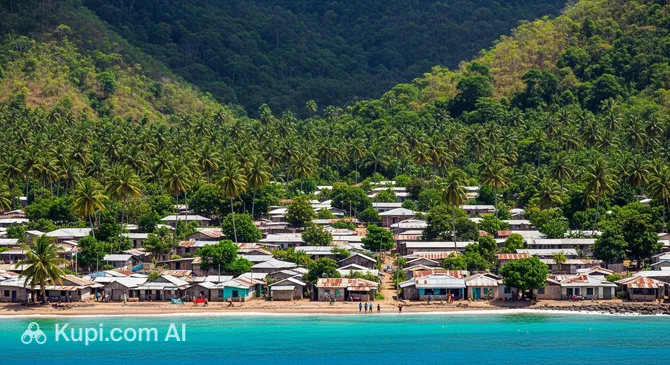
San Antonio de Palé is a charming and secluded city, serving as the administrative center of Annobón Province. Located on the volcanic island of the same name in the Gulf of Guinea, this corner of the world attracts travelers seeking tranquility and a connection with wilderness. Despite its modest size and a population of about 5,000 people, the city has a unique flavor and a cozy atmosphere.

San Antonio de Palé. Illustration.
Source: Kupi.com AI

Geographically, the island is remote from the mainland, giving it a special aura of isolation and mystery. Equatorial Guinea is rightfully proud of this region due to its stunning landscapes and unique ecosystem. The climate here is equatorial, warm and humid year-round, which promotes the lush blooming of tropical vegetation surrounding the city.

The region's cultural heritage deserves special attention. The history of San Antonio de Palé preserves traces of the colonial era and a blend of various traditions, which can be seen in the architecture of old buildings and the lifestyle of local residents. Among the main natural attractions of the surrounding area are the crater lake Lago A Pot, hidden deep within the island, and picturesque beaches ideal for leisurely walks by the ocean.

A visit to San Antonio de Palé will be a true discovery for ecotourism enthusiasts and those who dream of seeing unexplored routes in Africa. It is a place where time flows more slowly, allowing you to fully enjoy the beauty of the surrounding world.

Weather Overview

The climate in this secluded corner of Equatorial Guinea is distinguished by enviable consistency and mildness. San Antonio de Palé pleases travelers with warmth year-round, while there are two main seasons clearly distinguished here that should be taken into account when planning a trip. The temperature remains comfortable throughout all 12 months, varying on average from +23°C to +28°C.

The hottest period occurs at the beginning of the year: in March, the air warms up to +28.4°C. However, with the arrival of the calendar summer, a season of coolness and drought sets in. From June to September, the rains almost stop (precipitation tends towards 0 mm), and the temperature becomes most pleasant for walking, dropping to +23°C — +25°C. In contrast, the winter months, especially December and January, are characterized by high humidity: at this time, up to 25–30 rainy days per month are recorded.

Expect hot and humid weather with frequent rain from November to May and a drier, refreshing period from June to September. To choose the ideal dates for your visit, we recommend studying the detailed weather in San Antonio de Palé before booking tickets.

Interesting Facts

In addition to its picturesque landscapes, San Antonio de Palé holds many unique features due to its isolated position. The city and its surroundings are a true treasure trove for ethnographers and lovers of geographical curiosities.

  • "Happy New Year" Island: The city is located on an island whose name (Annobón) comes from the Portuguese Ano Bom, which translates as "Good Year." This name was given by navigators who discovered this piece of land exactly on January 1, 1473. Until that moment, the island was uninhabited.

  • Unique Language: Despite the fact that the official language is Spanish, local residents communicate in daily life in Fa d’Ambo. This is a distinctive Portuguese-based Creole language that developed here in isolation over centuries and is unintelligible to residents of the mainland.

  • Geographical Paradox: San Antonio de Palé makes Equatorial Guinea a unique African state. Thanks to this city, the country has territories significantly distant from each other: the capital Malabo is in the Northern Hemisphere, while San Antonio de Palé is deep in the Southern Hemisphere, beyond the equator.

  • Whale Sanctuary: Historically, coastal waters served as a station for whaling ships hunting humpback whales. Today, these marine giants still come to the city's shores during the mating season, making the region a potential center for whale watching.

How to Get There

A journey to Annobón Island is a real adventure that requires advance planning due to its distance from the mainland. Since the city is located on an island in the Gulf of Guinea, transport options are limited, and the main way to connect with the outside world remains air travel. You can learn more about how to get to San Antonio de Palé by exploring available routes and schedules.

The main air gateway for tourists is the local Annobón Airport (NBN). It is located directly within the city of San Antonio de Palé, just 1.1 km from the center. Thanks to this proximity, a transfer to anywhere in the city will take no more than 5 minutes by taxi or even on foot. This is a small airport that mainly receives domestic flights from the capital of Equatorial Guinea.

The nearest major international hub in the region is São Tomé Airport (TMS), located in the city of São Tomé. It is important to consider that this airport is in another country (São Tomé and Príncipe) at a distance of about 231 km from San Antonio de Palé. There is no direct land connection, so this option is only suitable for transit travelers planning a complex route through neighboring island states.

For clarity, here is a summary of the main airports:

AirportPassenger trafficDistance
Annobon7,0001 km
Sao Tome Island Airport120,000231 km

Railway communication on the island is completely absent. In addition to planes, San Antonio de Palé can be reached by sea. Ferries and cargo ships periodically run between the island and the mainland (the cities of Malabo and Bata); however, the schedule can be irregular, and the journey takes significantly longer than a flight.

Main Attractions

Although San Antonio de Palé is a small city, its remoteness and natural beauty make every walk here special. The main attractions are related to the unique volcanic landscape and the colonial history of Annobón island. Travelers come here not for world-class museums, but for the atmosphere of the edge of the world.

One of the most impressive natural locations is Lago A Pot. This freshwater lake fills the crater of an extinct volcano in the central part of the island. The path to it leads through thick tropical thickets, and the climb is rewarded with stunning panoramic views. This place is shrouded in local legends and is perfect for those who want to feel the primordial power of nature away from civilization.

In the city itself, it is worth visiting the Catholic Church of San Antonio. This modest but significant building serves as the center of spiritual and social life for the islanders. The church's architecture preserves features of the colonial era, and its simple white walls contrast sharply with the green palms and blue sky. It is a great place to get acquainted with the cultural heritage of local residents and their traditions.

For lovers of panoramic views and trekking, the climb to Pico Quioveo will be of interest. As one of the highest points on the island, the mountain offers a breathtaking view of the endless Atlantic Ocean and the rooftops of San Antonio de Palé. During the walk, you can see endemic plants and rare birds that live only in this isolated region.

Finally, the city's coastline attracts with its volcanic beaches. The shoreline here is distinguished by dark, sometimes almost black sand and bizarre rocky formations. These are not typical resort beaches with developed infrastructure, but wild and picturesque corners where you can enjoy the sound of the surf in complete solitude or watch the traditional boats of local fishermen.

Local Cuisine

The cuisine of San Antonio de Palé is a true reflection of island life, where the ocean plays the leading role. The gastronomic scene here is simple but incredibly natural: the diet is based on the freshest seafood caught by local fishermen just a couple of hours before being served. The isolation of Annobón Island has shaped unique culinary habits, in which the traditions of Equatorial Guinea are intertwined with available tropical resources.

The main delicacy that every guest must try is certainly fish, especially tuna and mackerel. They are prepared here in many ways: grilled over coals, baked in banana leaves, or boiled in rich broths. One of the signature dishes of the local cuisine is pepesup (Pepesup)—an incredibly aromatic and very spicy fish soup, which is considered a national treasure. As a side dish to fish, boiled or fried plantain, cassava, or sweet potato, which are grown right on the island, are usually served.

Among drinks, a special place is held by malamba (Malamba)—a traditional alcoholic drink made from sugarcane, produced by artisanal methods. It is a strong and sweetish drink that is an integral part of local celebrations. For those who prefer non-alcoholic options, the island offers an abundance of freshly squeezed juices from tropical fruits: mangoes, pineapples, and coconuts, the taste of which is much richer here than in usual supermarkets.

The food culture in the city is far from pretentious restaurants and haute cuisine. You won't find chain establishments here; instead, tourists can visit small family cafes where they cook "like for their own." Often the best way to get to know the local food is to buy the fresh catch right on the shore from the fishermen and ask to have it prepared at the nearest guest house. Such a meal accompanied by the sound of the surf will give far more impressions than a dinner in an expensive restaurant.

Travel Tips

A trip to San Antonio de Palé is a real expedition to one of the most isolated corners of Africa, requiring careful preparation. To ensure your holiday on Annobón Island goes smoothly and leaves only vivid impressions of unity with nature, we have compiled a list of the most important practical recommendations.

  1. Clothing and Equipment. Given the hot and humid equatorial climate, bring loose clothing made from natural, breathable fabrics (cotton, linen). Be sure to pack a light raincoat, as showers here can start suddenly. For hikes to the crater lake and walks on volcanic terrain, comfortable trekking shoes with a non-slip sole are vital.

  2. Finances and Cash. This is a critical point: bank cards are practically useless in San Antonio de Palé, and there may be no ATMs on the island at all. Bring a sufficient supply of cash (CFA francs), preferably in small bills, as change is often unavailable. Exchange currency in advance on the mainland, in Malabo or Bata, before flying to the island.

  3. Communication and Internet. Be prepared for a digital detox. Mobile internet and Wi-Fi here are extremely unstable, slow, and sometimes completely absent. If communication is necessary, purchase a local SIM card in the capital of the country, but do not count on high connection speeds. Download offline maps and translators in advance.

  4. Health and First Aid Kit. The assortment in the local medical post is very limited. Put together an expanded personal first aid kit: be sure to include remedies for stomach upset, antipyretics, antiseptics, plasters, and high-quality insect repellents. Drink exclusively bottled water and avoid ice in drinks.

  5. Getting Around the City. San Antonio de Palé is very compact, and the best way to explore it is on foot. There is no typical public transport or car rental services (like Avis or Hertz) here. If you need to get to remote beaches, you can try to arrange a transfer with local residents who own a motorcycle or pickup truck.

  6. Photography Rules. There are strict rules in Equatorial Guinea: it is strictly forbidden to photograph military facilities, police, the airport, the port, and government buildings. Violation of this rule can lead to serious problems with the police and confiscation of the camera.

  7. Local Etiquette. The islanders live in a separate community and value respect. Always greet people on the street (the Spanish "Hola" or "Buenos días" will do). Before taking a photo of a local resident or their home, be sure to ask for permission—this is not just politeness, but a necessary condition for conflict-free communication.

  8. Electricity. Power outages on the island occur regularly, and electricity is often provided on a schedule. Bring a high-capacity power bank (external battery) and, if possible, a small flashlight to feel comfortable in the dark.

Compliance with these simple rules will allow you to avoid household difficulties and fully immerse yourself in the unique atmosphere of the "edge of the world." San Antonio de Palé is a place where you need to slow down, forget about smartphones, and enjoy the sound of the ocean and the hospitality of the local people.

Entertainment & Nightlife

Entertainment and nightlife in San Antonio de Palé are fundamentally different from standard tourist expectations. Given that it is a small and isolated settlement, you will not find neon signs, multi-story nightclubs with world-class DJs, or fashionable cocktail bars here. Evening leisure in the capital of Annobón Province is an immersion into an authentic atmosphere of island tranquility, where the main settings are the endless starry sky and the sound of the Atlantic Ocean.

Small local establishments and open terraces, located mainly along the main road and near the coast, become the center of social life after sunset. The concept of a "nightlife district" is relative here: all activity is concentrated on a couple of central streets. The atmosphere in local bars is as democratic and relaxed as possible: it is customary to talk loudly, laugh, and listen to music, which is an exciting mix of African rhythms and Latin American melodies.

For a tourist, visiting such places is a great chance to chat with the locals. There is no dress code at all: shorts, sandals, and a light shirt will be appropriate everywhere. The crowd is very diverse but invariably friendly. The menu is dominated by simple drinks: local beer, soda, and, of course, traditional palm wine or malamba (sugarcane moonshine), which is worth trying for the full experience. Prices are very low, but remember an important rule: cards are not accepted here, so always have small cash with you.

In terms of safety, San Antonio de Palé is one of the calmest places in the region. Crime is virtually non-existent here, and night walks pose no threat. However, there is a practical danger: streets are often not lit, and power outages occur regularly. The main tip for "nightlife" on the island is to always bring a charged flashlight. There are no taxi services (Uber or official fleets) here, but the city is so compact that you can walk from any bar to your lodging in 10–15 minutes.

Daytime leisure in the city also lacks urban polish. There are no cinemas, theaters, museums, or amusement parks here. The main entertainment is related to nature and contemplation. During the day, you can watch fishing boats return to port, stroll among colonial ruins, or simply relax in the shade of palm trees. The absence of a typical entertainment industry is compensated for by a unique sense of detachment from civilization, which is why travelers come here.

Parks & Museums

In San Antonio de Palé, you won't find typical city parks with paved paths or classic museums with audio guides. This remote corner of the planet is itself a huge natural reserve and an open-air museum, where colonial architecture serves as the exhibits and untouched tropical forests serve as the green zones.

The role of the main city park here is played by nature itself, literally surrounding the residential quarters. The city's coastal zone is an ideal place for walks, replacing embankments for locals and tourists. Here you can relax in the shade of coconut palms, watching the power of the Atlantic Ocean. This natural space, where volcanic sand meets lush greenery, creates an atmosphere of complete peace and is ideal for meditative relaxation.

Immediately beyond the outskirts of the city begin the tropical forests of Annobón. Although this is not a fenced park in the traditional sense, this is where nature lovers go. The surroundings of San Antonio de Palé are rich in endemic plants and unique bird species, such as the Annobón white-eye. A walk along the paths leading from the city into the interior of the island will provide impressions comparable to visiting the best botanical garden, only created by nature itself without human intervention.

Speaking of cultural heritage, it is worth noting that there are no official museum institutions in the city. However, a walk through the streets of San Antonio de Palé replaces a visit to a historical gallery. The city's colonial architecture, represented by old buildings, many of which, unfortunately, are in various states of preservation, tells the story of the Portuguese and Spanish presence. These structures, with characteristic elements of European architecture adapted for the tropics, are living witnesses of the past.

The center of cultural and spiritual life, acting as a keeper of traditions, is the Church of San Antonio. This is not just a religious site, but also a kind of museum of the faith and art of the islanders. Inside the temple, you can see modest but significant decorations reflecting the syncretism of local beliefs and Catholicism. It is here, during holidays and services, that you can touch the living soul of the Annobonese people.

For those looking for authentic experiences, the best "museum" will be talking with the elders in the main square. Local residents carefully preserve oral traditions and legends about the island, whalers, and pirates. If you are lucky enough to strike up a conversation with one of the locals, you will learn much more about the history of this isolated region than from any guidebook.

Getting Around

The public transport system in San Antonio de Palé is fundamentally different from what residents of megacities are used to. Due to the miniature size of the city and its isolation, there are no familiar types of urban transport here: you will not find a metro, trams, or trolleybuses here. Moreover, there is not even a regular bus service with fixed routes and schedules.

The main and most reliable way to get around the city and its immediate surroundings is walking. The city is so compact that you can cross it from end to end in just 15–20 minutes at a leisurely pace. Most administrative buildings, guest houses, and shops are located within walking distance of each other, making the need for transport minimal for the average tourist.

If you need to get to remote beaches or transport heavy luggage, the role of taxis is performed by private cars and motorcycles of local residents. There are no official taxi services with "checkers," meters, or dispatchers in the city. Any trip is the result of a personal agreement with the driver, who can be found in the main square or asked to be called through the owner of your accommodation.

The payment system here is exclusively cash and negotiable. Forget about transport cards, validators, mobile apps like Uber, or contactless phone payments. Settlement is made only in local currency (CFA francs) from hand to hand. The price of the trip must be discussed and fixed before you get into the car or on the motorcycle to avoid misunderstandings at the end of the journey.

As for vehicle rental, familiar car-sharing services or international rental agencies (Rent-a-Car) do not exist in San Antonio de Palé. The only option to get a vehicle for personal use is to rent a car, scooter, or bicycle from one of the local residents privately. This requires knowledge of Spanish and the ability to bargain, while no insurance or official contracts are usually drawn up.

The airport transfer deserves a separate mention. Since the air harbor is literally on the outskirts of the city, many tourists walk to the center. If you have many things, the transfer is usually organized by the receiving party (hotel or guesthouse owners), meeting guests in a pickup truck or minibus. This is the most reliable method of logistics upon arrival on the island.

Accommodation

Where to stay:

The hospitality infrastructure in San Antonio de Palé is quite modest, which is to be expected for such a remote and isolated island. Here you will not find luxury chain resorts, five-star all-inclusive hotels, or familiar hostels with bright signs. The main accommodation stock consists of small family-type guest houses (pensiones) and a single large hotel that offers a basic level of comfort.

The choice of area for living is not an issue here: the city is so compact that any accommodation will be within walking distance of the ocean and the airport runway. The most attractive accommodation options are located along the coastline, offering guests a view of the Atlantic Ocean and the opportunity to fall asleep to the sound of the surf. Living in the center of the settlement will allow you to dive deeper into the daily life of local residents, although the level of privacy there may be lower.

The process of booking accommodation on Annobón has its own unique features and is fundamentally different from searching on popular aggregators. Online platforms are practically useless here, and it is almost impossible to find local hotels on the Internet. The most reliable way to guarantee a place to stay is to arrange accommodation in advance while still on the mainland, or to use the help of local guides who organize tours to Equatorial Guinea. Often, settlement issues are resolved the old-fashioned way—through personal contacts or phone calls in Spanish.

The price range can be described as medium, but often the cost may seem high relative to the quality of services due to the complex logistics of delivering resources to the island. Be prepared for fairly spartan conditions: electricity and water outages are common, so having air conditioning and access to a generator in the room is considered a sign of "luxury." Payment for accommodation is made exclusively in cash upon arrival, so be sure to have a sufficient supply of local currency with you.

Nearby Cities

For those who want to explore the surroundings, San Antonio de Palé serves as an excellent starting point for day trips to several interesting nearby places. Given the isolated position of Annobón Island, classic day trips here are limited to the island itself, every corner of which can be explored in a short time. One fascinating route is a trip to the small village of **Anganchi**. This settlement allows you to get acquainted with the authentic life of the islanders, far from modernity. Here you can see traditional dwellings and observe the work of local artisans. Another option for a mini-trip is the southern coast of the island, where picturesque wild beaches and rocky bays are located, ideal for picnics and secluded relaxation away from the "capital" bustle of San Antonio. Below is information about the nearest major cities in the country, which, although they are at a considerable distance due to the regional island status, are the main hubs of communication with the outside world:
CityPopulationDistance
Porto Alegre1,490,000188 km
Sao Joao dos Angolares3,605205 km
Neves10,068220 km
Santana10,290222 km
Sao Tome56,166228 km
These nearby destinations provide an insight into the diverse culture and landscapes of the region, connecting the secluded island with the life of the rest of the country.

Shopping & Souvenirs

General Overview: Shopping in the city of San Antonio de Palé is an experience far from typical trips to boutiques or outlets. In this secluded corner of Equatorial Guinea, trade is purely utilitarian and local in nature. You won't find branded clothing or electronics here; the assortment of shops is limited to basic necessities, food, and simple household items. However, it is this simplicity that allows tourists to touch the authentic lifestyle of the islanders, where every purchase is accompanied by lively communication.

Main Shopping Areas/Streets: There are no shopping districts as such in the city. All commercial life is concentrated along several central streets located near the coast and the runway. "Shops" here are small stores (tiendas), often part of residential houses. Walking through the center, you can find kiosks with drinks, canned goods, and household trifles, which serve as the main supply points for the local population.

Shopping Centers: Travelers should know in advance: there are no shopping centers, supermarkets, or malls in San Antonio de Palé. The island's infrastructure does not include major retailers. All shopping takes place in a "convenience store" format, where the choice of goods depends on recent deliveries from the mainland.

Markets: The heart of trade on the island is the local market. This is a colorful open-air place where residents sell what they have grown or caught themselves. Here you can buy the freshest tropical fruits (bananas, papaya, coconuts), vegetables, and, of course, fish. The fish market, which often arises spontaneously on the shore upon the arrival of boats, is the best place to see the gifts of the Atlantic and feel the true spirit of the island.

Souvenirs: Despite the lack of souvenir shops, you can bring unique things from San Antonio de Palé. Pay attention to the products of local artisans: woven baskets, simple wooden figures, or jewelry made from natural materials. An excellent gastronomic souvenir would be a bottle of homemade malamba (a traditional drink made from sugarcane) or a jar of local honey. When buying products made of shells or wood, make sure that their export does not violate the environmental regulations of the region.

Opening Hours and Payment: Shops and stalls work on a free schedule, usually opening early in the morning (around 8:00) and closing at sunset. In the afternoon, during the hottest hours, many close for a siesta. It is critically important to remember: bank cards are not accepted anywhere here. Payment is made exclusively in cash (CFA francs). It is recommended to have small bills with you, as sellers do not always have change.

Tax Free: The tax refund system (Tax Free) in San Antonio de Palé, as on Annobón island as a whole, does not apply. All purchases are made at the final price, which can sometimes be the subject of a little friendly bargaining, especially at the market.
Nearest cities

Reached the bottom of the page?

Looks like you know this route inside out

We use cookies and services to collect user information. This is essential for the functioning of the site and for marketing purposes. You can find out more in .