Turbulence… Why planes shake and why it’s not dangerous
Turbulence or buffeting is the oscillation of an aircraft caused by swirling wind currents, both downdrafts and updrafts.
Not all turbulence is the same. Ordinary buffeting, which occurs when flying through certain types of clouds, is not dangerous. The aircraft is designed to withstand the overloads that occur.
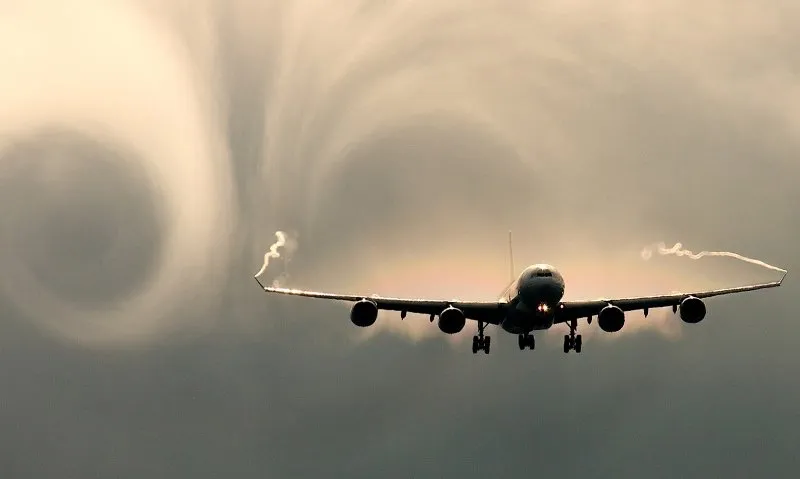
What causes turbulence and when does it occur?
Dangerous air eddies occur in thunderclouds—air currents within them can easily throw an aircraft into critical angles of attack, which can lead to serious trouble.
A pilot will never intentionally fly into a cluster of thunderclouds; they are clearly visible on a special radar in the cockpit, and if possible, the pilot will fly around them.
However, there are also eddies at the edges of a thunderstorm front, and these are not visible on the radar. Before a flight, all pilots undergo a briefing where they review the weather forecast and choose the optimal route. However, if a long flight is planned, it is impossible to accurately predict the presence of thunderclouds.
Another cause of turbulence can be jet streams. These are currents whose speed changes sharply in both horizontal and vertical directions. They usually stretch for several thousand kilometers. Most often, they can be found off the eastern coast of the USA.
Buffeting also occurs in clear skies, but the aircraft cannot always change its flight level due to heavy air traffic. Strict intervals must be maintained between aircraft to avoid collisions.
Sometimes passengers think that whether the plane shakes or not depends on the pilot’s qualifications and skills. This is a big misconception—the plane is on autopilot. Only during very strong buffeting, when pilot reaction is needed, is the autopilot disengaged and the plane is flown manually. What determines how strongly it will shake is the aircraft itself. The larger and heavier it is, the less turbulence is felt.
During descent, aircraft also encounter strong wind shear. Regulations for flight parameters in turbulence have been developed for the crew, and if they exceed these limits, the pilot is forced to divert to an alternate airport. Passengers do not see these deviations, and when the captain informs them about diverting to an alternate airport due to weather conditions, a slight tension arises in the cabin… Outside, everything is clear, the weather is fine, maybe the landing gear is faulty? Everything is in order; the pilot is simply following recommendations to ensure your safety.
But do not underestimate turbulence. Listen to the recommendations of the flight attendants and the illuminated signs, take your seat and fasten your seatbelt. During strong buffeting, injuries among passengers are not uncommon; someone might be thrown from their seat and hit the cabin corners or, more often, their head on the ceiling, leading to fractures.
There are no other dangers associated with turbulence; an aircraft will never fly into an area that could harm the aircraft.