Entry Rules for Russians to the Philippines
 Yasya
YasyaThe Philippines is an archipelago of seven thousand islands, which in 2026 remains one of the most desired travel destinations. However, the Philippine authorities are known for their bureaucracy, and entry rules are strictly observed here. In this article, we will cover all the nuances: from filling out the electronic declaration to choosing air tickets and payment methods.
Do Russians need a visa for the Philippines?
For most tourists from Russia, a maximally lenient regime applies. If your purpose is tourism, a short stay, or transit, no visa is required. According to bilateral agreements, citizens of the Russian Federation can stay in the Philippines without a visa for up to 30 days.
Nuances of the visa-free stamp:
- Upon arrival, a stamp with the arrival date is placed in the passport. The 30-day count begins the day after arrival.
- The stamp is absolutely free.
- Violation of stay terms (overstay) is punishable by serious fines and possible blacklisting, so you need to monitor dates carefully.
What to do if 30 days is not enough?
The Philippines is a country where time flows differently, and a month flies by unnoticed. If you are planning a winter stay or a long trip, you have two legal options:
On-site extension (Visa Extension). The most popular method. You enter with a free 30-day stamp, and then, a week before its expiration, you apply to the nearest Bureau of Immigration. Offices are available in Manila, Cebu, Boracay, Bohol, and other tourist centers.
The first extension is granted for 29 days (totaling 59 days). The cost of the procedure varies but usually amounts to about 3,000-3,500 Philippine Pesos (PHP). The price will be higher for each subsequent extension.
For extension, a passport and a completed application form are required. The process can take from a couple of hours to several days, depending on the office's workload (longer in Manila, faster in the provinces). The visa can then be extended for 1, 2, or 6 months, although the latter option is becoming less common. The maximum stay for a tourist is 2 years, after which it is necessary to leave the country.
After 59 days, you also need to obtain an ACR-I Card – Alien Certificate of Registration Identity Card, a certificate of alien registration, which is issued only at the immigration office. From the third time onwards, your stay can be extended on the e-services portal e-services.immigration.gov.ph.
Applying for a visa in advance. You can apply for a single-entry tourist visa (9A) at the Philippine consulate in Russia before departure. It immediately grants the right to stay for 59 days. This option is suitable for those who do not want to spend time visiting the immigration service. However, collecting documents and visiting the consulate often takes more time than visiting an office on the island, so most people choose the first option.
What documents are needed to enter the Philippines
Border control in the Philippines can be meticulous. Officers often ask questions about the itinerary, hotel bookings, and finances. To pass the border in a couple of minutes, prepare a complete set of documents.
International passport
The most important requirement, which many inattentive tourists "fail" on: the passport must be valid for at least 6 months at the time of your intended departure from the country. If your passport has 5 months and 29 days left until its expiration, you will most likely not even be allowed to board a flight in Russia or at a layover. The "6 months" rule is strictly enforced in the Philippines.
Return ticket or ticket to a third country
The second most important requirement. You must prove that you will leave the Philippines within the allowed 30 days (or 59, if you have a visa). The ticket must be paid for or confirmed. A simple reservation without payment is often not accepted. The departure date must fall within the validity period of the stamp. After extending your visa-free stay, return tickets are no longer requested.
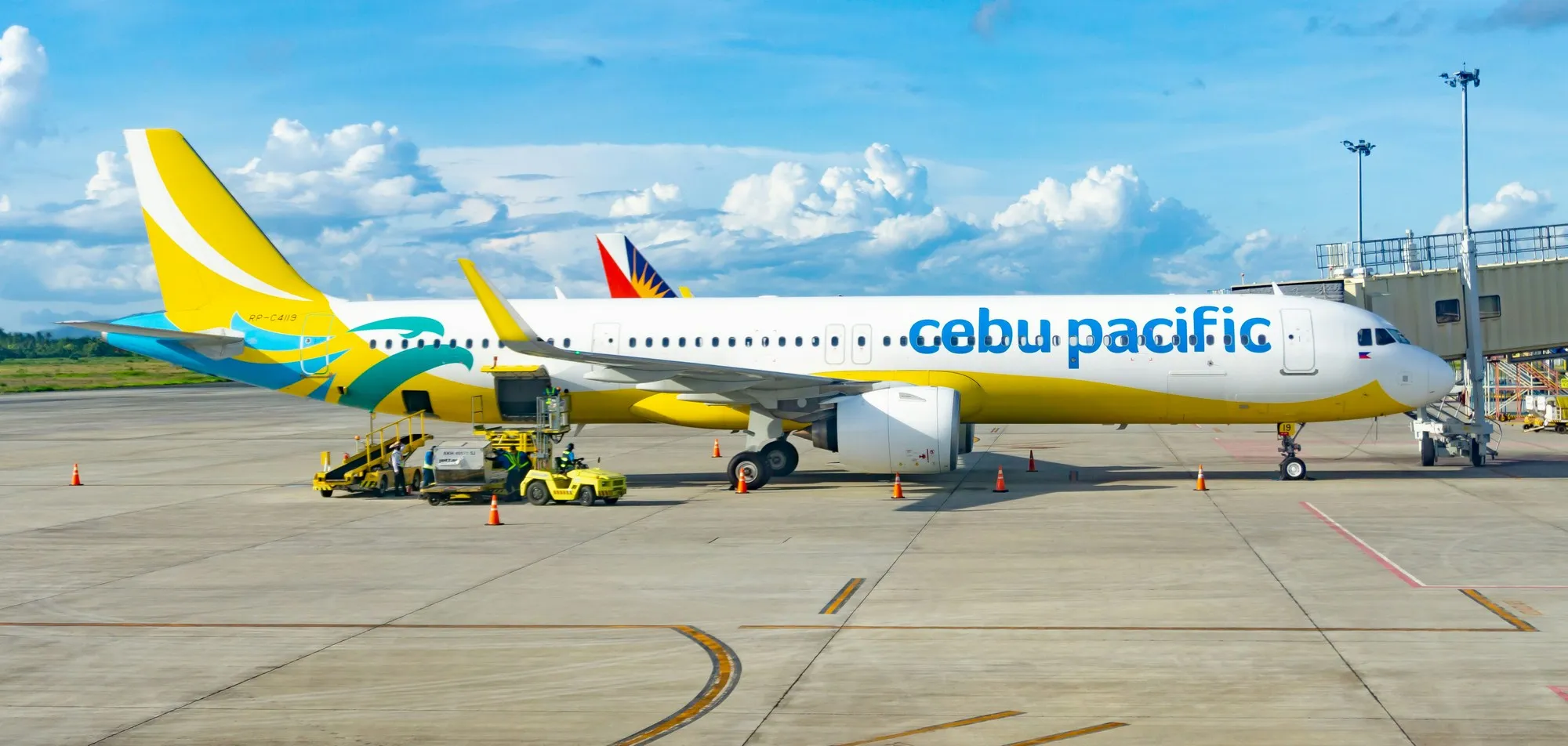
Loophole: if you don't know the exact departure date, you can buy the cheapest ticket to a neighboring country (for example, Kota Kinabalu, Malaysia, or Hong Kong) with a low-cost carrier like AirAsia or Cebu Pacific. Such a "throwaway" ticket can cost 20-30 $ and save your nerves.
eTravel (Electronic Declaration)
Paper immigration cards in the Philippines have been abolished. Now every arriving person must register in the eTravel system. It is filled out on the official website etravel.gov.ph or in the eGovPH app. This must be done no earlier than 72 hours before departure. The procedure is completely free. If the website asks for card details and payment of a fee – you have encountered scammers (a duplicate site). Close it and look for the official one.
You enter passport details, flight information, hotel in the Philippines, and health information (simplified). After completion, the system will issue a QR code. Save a screenshot on your phone or print it. A green QR code means everything is in order, red means additional sanitary control checks will be required. The code is scanned before passport control.
Proof of accommodation
Officers do not always ask for hotel bookings, but they have the right to. It is sufficient to have a printout or booking on your phone for the first few days of your stay. In the "address in the Philippines" field in eTravel, you must indicate a real hotel.
Financial guarantees
Officially, no specific amount is set, but an officer may ask about the funds you plan to live on. Cash, foreign bank statements, or simply a confident answer usually resolve the issue.

Entry rules for children
The Philippines takes child protection against trafficking very seriously, so entry rules for minors here are stricter than in Turkey or Thailand.
If the child travels with both parents. An international passport for the child and a birth certificate (original + notarized English translation) are sufficient. The translation is needed to prove kinship, as surnames in international passports may be spelled differently or be different.
If the child travels with only one parent. According to Philippine law, if a child under 15 travels without both parents, it may raise questions. However, in practice, if the child travels with the mother or father, problems usually do not arise.
- Take the birth certificate with an English translation.
- A notarized consent for departure from the second parent in English will also be useful (although it is not required for departure from the Russian Federation, Filipinos may ask for it if the surnames are different).
WEG (Waiver of Exclusion Ground) – the most complex case. If a child is under 15 and travels without parents (e.g., with a grandmother, aunt, coach, older brother), simple consent is not enough. The child is considered an "Unaccompanied Minor" from the perspective of Philippine law. A special document – WEG – must be obtained for entry.
This permit is issued by the Bureau of Immigration. It can be obtained in advance at the Philippine consulate or (risky, but possible) upon arrival at the airport. A fee (about 3,120 pesos) must be paid. Required documents: consent from both parents, copies of parents' and accompanying person's passports, birth certificate.
Important: without a WEG, a child under 15 traveling without a mother or father will not be allowed into the country and will be deported along with the accompanying person.

Which bank cards work in the Philippines
The financial issue in the Philippines is acute. The country is still heavily reliant on cash, and Russian cards are under sanctions.
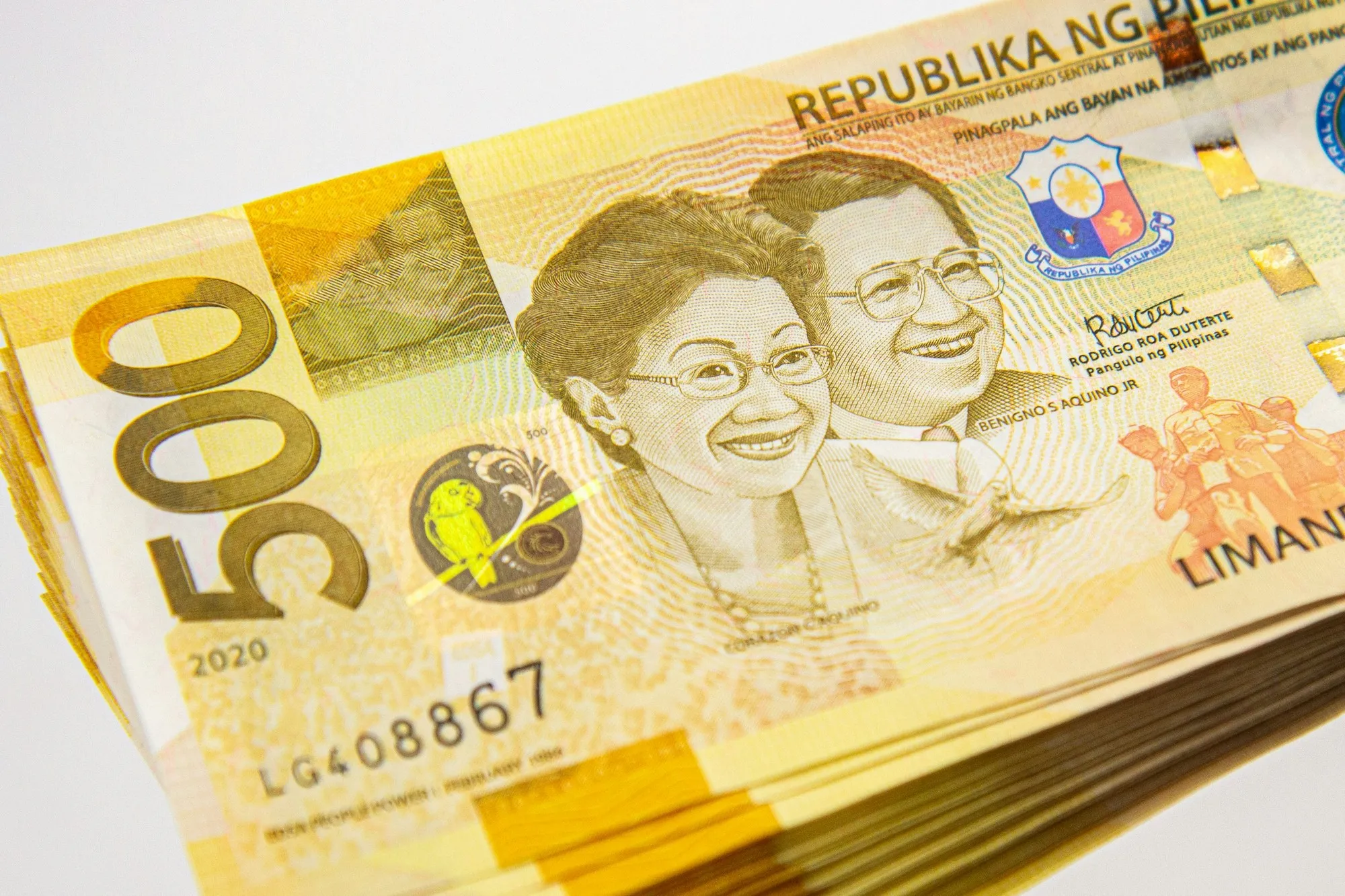
Mir, Visa, and Mastercard cards do not work anywhere in the Philippines. UnionPay cards from Asia-Pacific Bank and Rosselkhozbank work, and you can withdraw cash from them, but terminal payments may not go through. Look for ATMs from BPI (Bank of the Philippine Islands), BDO, and Chinabank. However, withdrawal limits are low (usually 10,000 or 20,000 pesos per transaction), and the local ATM fee is 250 pesos per transaction (plus your bank's commission).
Foreign Visa and Mastercard cards issued in Kazakhstan, Kyrgyzstan, Belarus (non-sanctioned banks), Georgia, or Europe work perfectly. They can be used to pay in hotels, restaurants, and withdraw cash from any ATM.
The most reliable option is to bring cash US dollars or euros. Dollars are accepted more readily, and the exchange rate for them is more favorable. It's best to exchange money in Manila at the airport (the rate there is surprisingly adequate, especially in Terminal 3) or at Palawan Pawnshop / M Lhuillier exchange offices in cities.
Important: banknotes must be of the new series ("blue" dollars), clean, without marks, stamps, or tears. Old or damaged banknotes may be refused for exchange or offered at an exorbitant rate.
How to get to the Philippines from Russia
There are no direct flights between Russia and the Philippines in 2026. You can only reach the paradise islands with a layover. The main hubs are China and the Middle East.
Chinese airlines (China Eastern, China Southern, Air China) often offer the most attractive prices. If you are looking for an economical option, it is worth buying tickets from Moscow to Manila specifically with Chinese airlines. Sales are often found with prices from 45-50 thousand rubles round trip.
A comfortable option is airlines like Emirates, Qatar Airways, Etihad, Oman Air, Gulf Air. High service, convenient connections, the opportunity to stretch your legs in luxurious airports. Emirates and Qatar fly not only to Manila but also to Cebu Island and Clark Airport, which allows you to bypass capital traffic. This is an excellent choice if you want to buy tickets from Moscow to Cebu and immediately go swimming with sharks, bypassing a layover in Manila.
You can fly to Bangkok with Aeroflot or other airlines, and from there take a low-cost flight to the Philippines. This is convenient if you want to combine two countries in one trip. Tickets for the Moscow – Bangkok route are often available, and the Bangkok – Manila flight takes only 3.5 hours.
Customs regulations
In addition to visa rules, remember about customs:
- Currency: the import of foreign cash currency is not restricted, but amounts exceeding 10,000 USD must be declared. The import of local currency (pesos) is limited to 50,000 PHP.
- Tobacco and alcohol: it is permitted to import 2 cartons of cigarettes (400 pieces) or 50 cigars, as well as 2 bottles of alcohol, each not exceeding 1 liter.
- Prohibited: the import of food products (fresh fruits, vegetables, meat, fish) is strictly prohibited due to sanitary regulations. Vapes and electronic cigarettes can be imported, but smoking them in public places is strictly prohibited (fines are huge, up to imprisonment).
The Philippines is worth overcoming a long flight and bureaucratic formalities. The main thing is to have a return ticket, a completed eTravel, and a good mood.