What makes noise on a plane?
An airplane, like many other vehicles, produces a large number of unfamiliar sounds, and under the influence of fear of flying, it seems as if something is wrong with the plane. In this article, we will try to dispel your fears and explain the origin of these sounds and manipulations with the aircraft during takeoff, landing, and the flight itself.

Before the aircraft engines start, the cabin lighting and air conditioning system suddenly turn off, sometimes even for several minutes, and then turn back on.
Don't worry - this is just the power sources switching from an external generator to the onboard generator when the engine starts.
The aircraft engines do not start or start but then unexpectedly stall, and the lights in the plane go out.
As we wrote above, the lights go out when power sources are switched. If the engines stall or do not start, it is most likely due to a failed start for some reason, it is not related to an aircraft malfunction. You can read why this happens in the article "Aviation Basics. Why an aircraft engine doesn't start or stalls"
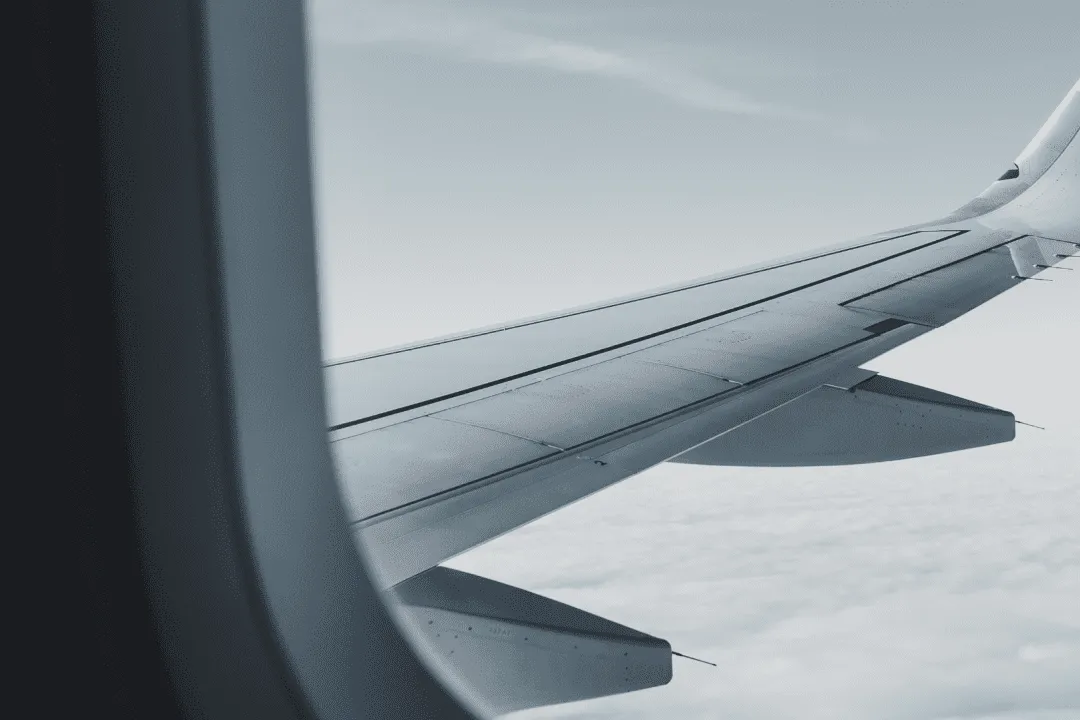
While the aircraft is moving towards its runway, you see parts of the wing moving downwards and backwards.
These are flaps; when retracted, they are a continuation of the aircraft's wing surface, and when extended, they can move away from it, forming gaps. Flaps are necessary to improve the lift capacity of the aircraft wing during takeoff, climb, descent, and landing, as well as during low-speed flight. Once the aircraft has taken off, they are retracted until landing.
During climb and approach for landing, you hear a buzzing sound changing in pitch.
This is the sound of the device that moves the flaps. Many passengers compare it to the sound of a chainsaw :)
You see the wing shaking during strong turbulence.
This is normal. The wing is designed to flex; it is very flexible and built to withstand turbulence loads.
The aircraft wing is full of holes, rivets, and panels.
That's how it should be - it's the wing's mechanization.
During taxiing, you hear three or four chimes.
This is a signal for the flight attendants - it means your plane will start taking off in a few seconds.
Immediately after takeoff, you hear a noise from under the floor.
These are the landing gear; they retract immediately after takeoff.
During climb, the engine sound becomes quieter.
At an altitude of 250-500 meters, the aircraft engines switch to a reduced power mode, and engine thrust decreases. The same happens during landing.
You see flickering light through the windows.
Typically, this is a white strobe light on the wingtip, which reflects off the surrounding clouds.
After landing, you hear a "blowing" sound, and typically, the engine noise increases.
Don't worry - this is just the aircraft engine's thrust reverser; the system directs the jet stream forward, which helps reduce the aircraft's speed. Reverse thrust is used in conjunction with the main braking system, which reduces the load on the main braking system and shortens the braking distance.
After the aircraft lands, you feel sharp braking, which is sometimes accompanied by vibration.
Braking can be both intense and smooth. It all depends on the length of the runway; the shorter it is, the more intense the braking will be. Vibrations come from the aircraft's anti-skid device (like ABS in a car), which prevents the wheels from skidding on a wet runway.
During landing, the plane "thumped" onto the runway.
Most likely, the landing was on wet concrete (during and after rain or snowfall). A firm landing ensures better grip of the landing gear with the concrete.
You see, it's not so scary if you know where everything comes from. What scares you on a plane?