Wineries of Russia: Where to Go?
Domestic tourism is not just ancient churches, forest sanatoriums, and sour cream over a crimson tan. Our guide to Russian wineries confirms this. Here's where to go, how much it costs, and what to take home.

Wine Location
Most Russian wineries are located in the Krasnodar Krai. Therefore, it's more convenient to fly to Sochi, find a base hotel there, and make excursions to nearby vineyards.
It's best to visit wineries with a hotel and parking, because it's foolish to go to a winery and not participate in a tasting. The only thing more foolish is to get behind the wheel after a tasting.
There are quite a few wineries, all of them different, and each with its own story.
About the tourist experience
These are entertainment wineries, where both fermentation and tourists are put on a conveyor belt.
About history and architecture
In such places, they are proud of architectural monuments (studying, restoring, conducting tours) and build new and cool things.
About traditions and innovation in winemaking
Here you'll find both artisanal family wineries, where labels are literally glued by hand, and super-technological wine factories.
About the location
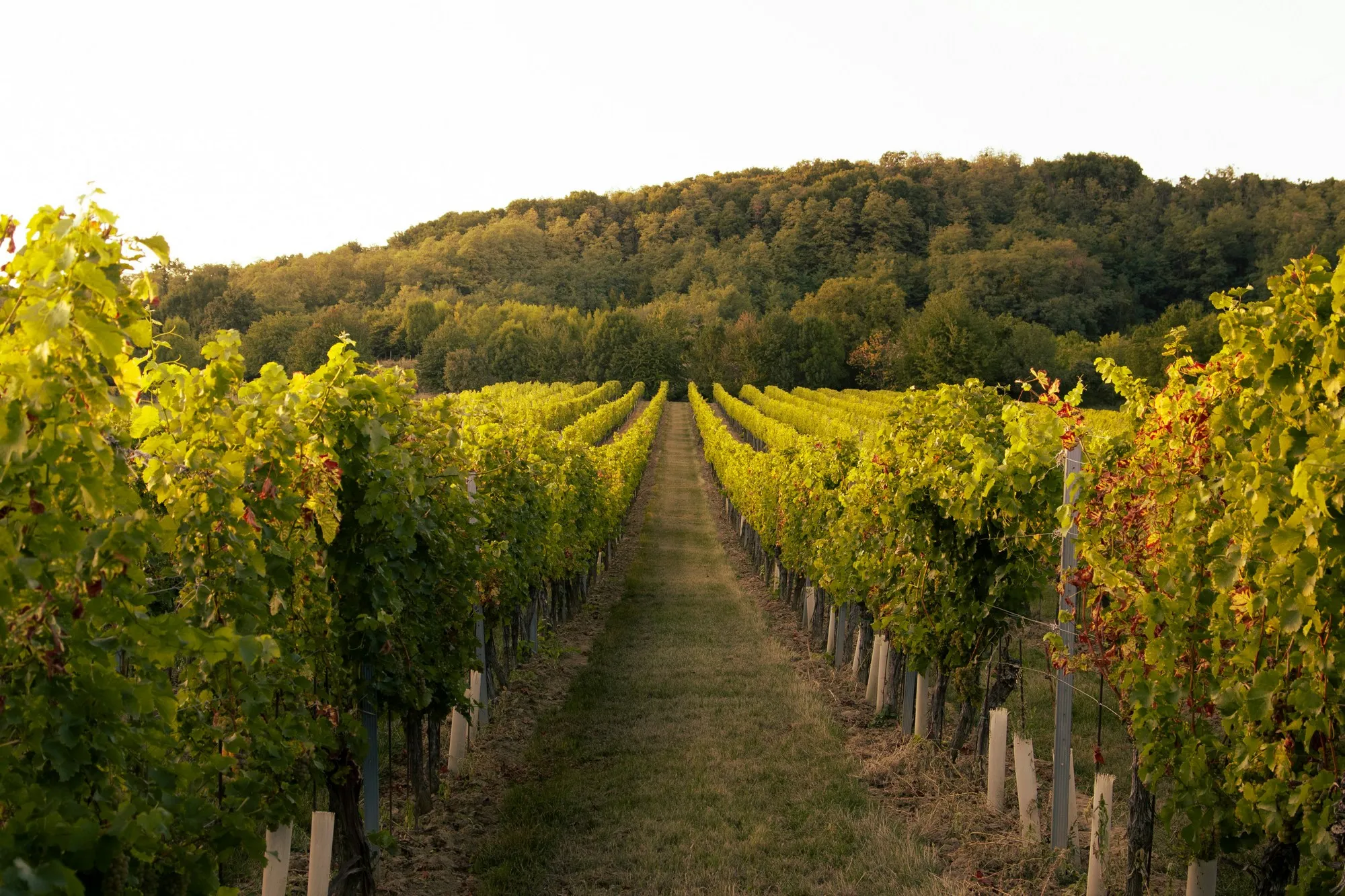
Sometimes it's worth going just for the view and a photoshoot.
About gastronomic delight
Wineries often have fine dining restaurants with local wine.
How to get to the wineries
There are four options.
1. Rent a car
The simplest and cheapest option for a company. Especially if there's a non-drinking driver.
2. By taxi
Yandex.Taxi works perfectly in the region. A bonus will be chatting with the taxi driver, who will warm you up before the main guide (and sometimes vice versa).
3. As part of a group
For example, for 1,800 rubles per person, you can join a bus tour to Abrau-Durso. Without a tasting, though.
4. Hire a driver for the whole day
Such offers can be found on Avito. You can arrange for 3,000 – 5,000 rubles per day and visit several wineries at once.
So, let's go?
Lefkadia
The winery is located in the village of Moldavanskoye, slightly off the standard tourist routes. It's best to stay here for a day or two.
During the season, you can have an amazing photoshoot in the lavender field.

Yes, it's a top wedding venue. It's not only beautiful but also symbolic. On the shore of Lake Gechepsin stands a white-stone rotunda — a temple to the Greek goddess Vesta, patroness of the hearth. An ideal wedding location.

Lefkadia offers excellent service and fulfills any tourist wishes: relaxation, entertainment, activities — any whim. Yet, the winery hasn't become an over-touristed spot where crowds spoil every endeavor.

What about prices:
Hotel room — from 8,000 rubles.
Tours — from 500 rubles, with tasting — from 800 rubles.
An individual tour is not much more expensive — from 1,500 rubles.
If you want to explore at your own pace, an audio guide will be offered for 300 rubles.
Also, in Lefkadia, you can get a set of sparkling wines and, in addition to tasting the best Russian sparkling wine 'Temelion', learn to sabrage, that is, open a bottle with a saber.
Sabrage — from the French sabre, meaning 'saber' — opening a bottle of sparkling wine with a saber strike. This method is often called 'hussar style'.

Among the pleasant tour bonuses, your tasting glass is given to you as a gift.
What to take home from the winery:
You can safely take the entire 'reserve', the older, the better. And the sparkling 'Temelion'.

Kuban-Vino
Kuban-Vino is an umbrella brand, or to put it simply, it's Chateau Tamagne, Aristov, and Vysoky Bereg all in one.
The winery is located in the Temryuk district, near the village of Starotitarovskaya. This large-scale operation was founded in 1956 and remains the largest in the country.

Kuban-Vino is not just several brands, but also several locations: a Wine Club in Krasnodar, an Enology Center, a Classical Winemaking Center, an Industrial Winemaking Center, and a Wine Gastrobar.
• During the season, grape harvests are brought to the Enology Center for processing. Production tours are also conducted here. Additionally, you can visit the educational park and gastrobar.

• The Industrial Winemaking Center offers tours of still wine production and Charmat method sparkling wine production.
The Charmat method is a sparkling wine production technology developed in Italy. Secondary fermentation takes place in large sealed tanks, and then the wine is bottled under pressure and immediately released for sale.
• The Classical Winemaking Center will be interesting for those who are curious about the history of the process.
For those who want to see everything at once and then also attend a tasting, there's a one-day tour from Anapa. It includes a tour of the grape seedling nursery, a picnic, and a wine casino (we haven't figured out what that is yet, but it sounds interesting).

What about prices:
The winery's website is silent on this matter. Apparently, they'll reply in direct messages.
What to take home from the winery:
A bottle from the Chateau Tamagne Fluers du Sud wine series.
Golubitskoye Estate
The winery is located near the village of Golubitskaya. It's a true estate worth visiting for its beauty, tranquility, and solitude (if you're lucky).

In the main building with the blue spire, you can walk through the halls and enfilades, and then be sure to go up to the roof of the old lighthouse — from there, you get a great view of the Azov Sea. The sunset is 100 out of 10.
The winery owners strive to combine the art of wine production with contemporary art on the estate. The 'Golubitskoye' foundation has been established on the territory — it's a new project by the team of the 'Zarya' Center for Contemporary Art (Vladivostok), dedicated to spatial perception. They actively support Russian artists. The foundation also hosts an art residency.

Furthermore, 'Golubitskoye' is an open-access area with a wine bar and, typically, a high-quality exhibition. Across the road is Villa Romanov, a restaurant and hotel by the sea. A swimming pool, white robes, and other luxury amenities are included.
What about prices:
Historical tour without tasting — 500 rubles.
Tour with tasting — 1,000 – 1,300 rubles.
Individual tour — 10,000 rubles for five people.
What to take home from the winery:
Tete de Cheval and pet-nat, which can only be bought at the winery.
Pet-nat is a natural sparkling wine. Essentially, it's an old-fashioned method of producing sparkling wines that was forgotten and then made fashionable again.

Abrau-Durso
The village of the same name is located near Novorossiysk. This is not just a winery — it's a real wine Disneyland: a resort with restaurants, hotels, a sailing club, an equestrian park, camping, master classes, bike rentals, excursions, fairs, and, of course, wine production.
The winery will gladly organize a wedding, corporate event, or active tour for you. Here, tourism is as much a production as wine itself.
It's best to go to Abrau-Durso for a day or two to leisurely explore and try everything.
What about prices:
Hotel room — from 3,500 rubles.
Group tours — from 1,500 rubles (with tasting).
VIP tour — 20,000 rubles for four people.
By the way, on the website, you can not only buy a bottle of wine but also a house with a plot of land. Take a look.
What to take home from the winery:
Imperial Vintage Brut 2017.

Fanagoria
The winery is named after the ancient city on whose site it is located. Fanagoria's unique selling point is its variety: they produce sparkling, still, ice, liqueur wines, cognacs, and grape vodka (chacha). And also — a wide range of premium juices.
They are the only ones who produce their own barrels for wine and cognac.
In addition to the winery, there are two hotels: Fanagoria Hotel Port Zapad and Fanagoria Hotel Port Vostok. These are honest three-star hotels with free parking and good breakfasts.
The restaurant at the winery, like the entire winery, aims to cater to everyone: there's a secluded hall, and a hall with an open kitchen and a children's play area.
After the tasting, you can visit Lermontov's house-museum and Kerch — one of Russia's oldest cities.
Naturally, children under 14 are not allowed on tasting tours. From 14 years old — only with adults.
By the way, there's a 'Wine School' here. The cost of training is 7,900 rubles for 4 meetings of 2.5 hours each.
On the Fanagoria website, you can view the entire assortment and play with various filters: for example, choose a collection, vintage year, dish to pair with the drink, and even the occasion.
What about prices:
Hotel room — from 2,500 rubles.
Group tours without tasting — from 500 rubles, with tasting — from 900 rubles.
Individual tours — 10,000 rubles for a group of up to five people.
What to take home from the winery:
Decanter. And Chardonnay. Collector's edition!
Gai-Kodzor
This young winery is located near Anapa and just five kilometers from the Black Sea. 'Gai-Kodzor' means 'Armenian Gorge' (from Armenian).
The winery compensates for its relatively short existence with centuries-old traditions lovingly brought from France. The world-renowned French winemakers Alain Dugas and Noël Rabot were the ideological inspirers of Gai-Kodzor.
Winemakers from Gai-Kodzor say that their wine consists of four essential elements: mountains, stones, sea, and wind. Simply elemental magic in action.
And, of course, people. At Gai-Kodzor, it's immediately clear that this place is made by people and for people.
At Gai-Kodzor, it's worth trying the aged wines (Horeca) under the general name RED KLЁN. The name is associated with the Canadian maple under which all aging barrels are stored.
Gai-Kodzor quickly became a trendy tourist destination. Now, they are not exactly fighting this reputation, but rather want to slightly change the format, stating: 'Gai-Kodzor winery is a small enterprise, and winemaking does not involve fuss, so you can only visit us by appointment.'
Entry to the winery grounds closes at 18:30.

What about prices:
Tours with tasting — 700 – 900 rubles.
What to take home from the winery:
Viognier, Roussanne, Muscat — wines that have become the winery's calling card. Their dry Muscat, released in 2016, is a technically very complex story. It is considered a benchmark in its category.
Rocky Coast (Côte Rocheuse)
Slogan: gravity + winemaking.
The winery is located just 13 kilometers from Anapa. People come here not only for wine, technology, and incredible views, but also for modern architecture. Its uniqueness lies not only in its visual effect but also in the need to create special conditions for a gravity-flow winery.
A gravity-flow winery is a special winemaking method that eliminates mechanical pumping. Wine moves freely under the force of gravity.
The hillside location is not just for beauty, but also to create the necessary slope. The upper part handles grape reception and processing, while the lower levels are for production and storage.
The vineyard consists mainly of French varieties: Merlot, Pinot Noir, Cabernet Sauvignon, Chardonnay.
What about prices:
The winery offers two tours:
– 'Gravity' — a comprehensive tour of the entire winery (2,500 rubles);
– 'Wine and Stars' — an evening tour with stargazing through a telescope (5,000 rubles).
What to take home from the winery:
The winery's debut wine — Chardonnay, Riesling, or Sauvignon Blanc. Grapes were hand-picked at the end of August 2020. You can't go back to that year, so at least drink the wine.
Chateau Pinot
This is another gravity-flow winery in the southern part of Novorossiysk, near the village of Fedotovka.
Chateau Pinot was formerly called 'Myskhako Estate', although it had no relation to the neighboring 'Myskhako' winery (which, by the way, is also worth a visit).
The entire winery is designed as a tourist attraction in the best sense of the word. Production, restaurant, snail farm, wine bar — all with views of the city, mountains, and sea.
The main feature of Chateau Pinot is wine and snails. Beautiful views, welcoming hosts, and excellent service — as standard.
What else? Also a small car museum, art gallery, and shop.
What about prices:
Hotel room — from 7,500 rubles.
Standard tour (vineyard, gravity production, snail farm, apiary, bird nursery) — from 650 rubles.
Tour with tasting — from 1,450 rubles.
VIP tour — 12,000 rubles for a group of up to four people.
What to take home from the winery:
A bottle from the special #Dich collection with wonderful designer labels.

In summary:
1. All wineries are different — each is good in its own way.
2. Almost all of them have online booking, but it's more reliable to call, arrange verbally, and book.
3. Don't plan more than two tastings a day. A tasting is not just about wine; it's also about interacting with the winemakers. This is included in the price. But if you're unfocused, this part of the event will be irrevocably lost.
4. If you're preparing for a trip, it's worth reading something on the topic. For example, a very easy and п̶и̶т̶к̶а̶я̶ clear book is 'The Wine Snob'.
It's clear that everything will be explained on the tour, but it's better to be prepared, for example, for the concept of 'first nose' and ask really cool questions.
5. Be sure to take a return ticket with luggage. After all, leaving wineries without a few bottles of good wine is simply a crime.
If it's fundamentally important to travel light, then find out the sales points of each winery in your city. To know where and why to go.
Be sure to embark on a journey through Russia's wineries and, while you're at it, bring along your snobby friends who don't believe in good Russian wines. Enjoy both the wine and your friends' genuine surprise.
Breathe deeply — everything will be fine. And let the wine breathe.
*excessive alcohol consumption is harmful to your health!
And don't forget to subscribe to our Telegram channel! There you'll find: selections of cheap tickets, private sales for insiders, the latest news on entry rules to countries worldwide, and simply interesting travel content — travel hacks, guides, and expert advice.