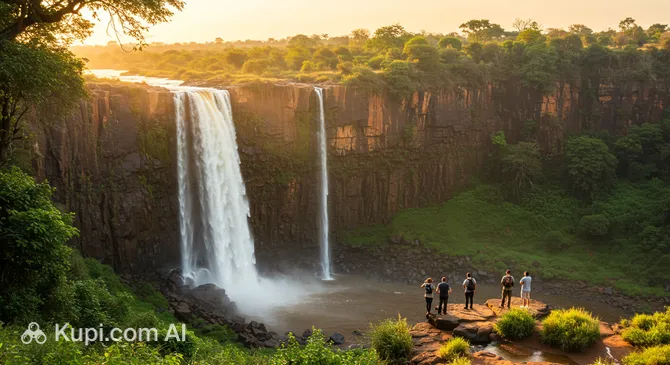
Malanje is a colorful administrative center of the province of the same name, located on a picturesque high-altitude plateau in the northern part of Angola. Situated at an altitude of over 1,100 meters above sea level, the city greets travelers with a milder climate than coastal regions and the quiet, measured atmosphere of a provincial African hub. With a population of over 600,000, the city is an important economic heart of the region, retaining the charm of an agricultural center.
The city was founded by Portuguese settlers in the mid-19th century, and its rich historical heritage is closely linked to the development of the cotton and coffee trade. Walking through its streets, one can see how practical modern buildings coexist with echoes of the colonial past. Malanje serves as an important logistics hub connecting the fertile lands of the plateau with the Atlantic coast.
Malanje. Illustration.
Source: Kupi.com AI
For tourists, the city is primarily attractive as a starting point for exploring the unique natural and historical monuments of the province. While Malanje itself lives at the pace of a large market and industrial center, its surroundings hide the ruins of ancient forts and authentic settlements. Visiting this city is an opportunity to see the real, non-tourist Angola, and to feel its hardworking rhythm and the hospitality of the local people.
Weather Overview
Malanje is dominated by a tropical wet climate, which remains quite moderate and comfortable throughout the year due to the city's high-altitude location (over 1,100 meters). The average annual temperature fluctuates between +20...+25 °C, creating favorable conditions for agriculture and travel. You can check detailed data using the current weather in the city.
Seasonality here is clearly defined: the rainy season occurs from October to April, when the bulk of precipitation falls and air humidity rises. The hottest months are March and April (up to +28 °C), and the coolest is June, when night temperatures can drop to +15 °C. The dry season lasts from June to August, characterized by an almost complete absence of rain and clear skies.
Expect warm summers with occasional tropical downpours and moderately cool, dry winters. The surrounding plateau forests and savannas contribute to a good ecological environment, so the air in Malanje always remains fresh, without the smog typical of megacities. This makes the city a pleasant place to take a break from the exhausting heat of the coastal lowlands.
Average monthly temperature
Average monthly precipitation
Interesting Facts
Cotton Capital: In colonial times, Malanje was the main center for cotton production in Angola, which was the primary reason for building a railway here from Luanda as early as 1885.
Underground Treasures: The region around the city is incredibly rich in minerals: not only are granite and magnesium mined here, but also diamonds and rare radioactive elements.
Multilingual Environment: Although the main local language is Kimbundu, due to the presence of specialists and tourists, one can often hear not only Portuguese but also English or French spoken in Malanje.
City at Height: Malanje is located at an altitude of about 1,155 meters above sea level, making it one of the country's most temperature-comfortable cities.
How to Get There
Transportation to Malanje largely depends on weather conditions and the current state of the road network. The city is connected to the country's capital, Luanda, by road, rail, and air, making it an important link between the coast and the inland regions of Angola. Detailed information on routes can be found in the how to get to the city section.
The main and fastest way to reach the region is by air. Malanje Airport (IATA: MEG) receives regular flights from Luanda. The flight takes about an hour; however, it is worth noting that the airport itself is located about 85 kilometers from the city center, and the subsequent ground transfer can take up to 2-3 hours due to the local terrain and road quality.
A historic railway line connects Malanje with Luanda over a distance of 380 kilometers. Despite its significance, trains run irregularly, and the journey itself can last from 8 to 12 hours. This is an excellent option for those who want to slowly contemplate the changing landscapes of the Angolan plateau, but it requires plenty of time and patience.
Bus services and private taxis from Luanda remain popular options. The car trip takes 5 to 7 hours. Travelers in rental cars should exercise caution: drivers often ignore traffic rules, and roads can have difficult sections requiring mountain driving experience.
Main Attractions
In Malanje itself, the tourist infrastructure is just beginning to develop, so the city retains its original authenticity. One of the main architectural landmarks is the Evangelical Church of Quêssua, which serves as an important spiritual and educational center for the region. Also within the city limits, one can find the ruins of Cacolo, reminding of the colonial period of the land's development.
The main interest for travelers lies in the sites surrounding the city. It is worth noting the historical ruins of Cacumbo, where traces of ancient dwellings remain, and the impressive Fort Pungo Andongo, established as early as 1671. These places allow you to touch the centuries-old history of cultural exchange in the heart of Africa.
For those interested in industrial archaeology, the old Quissol Factory (1820) is a curious site. The landscapes surrounding the city—endless savannas and forests where valuable tree species such as panga-panga and ebony grow—create ideal conditions for eco-tourism and exploring the flora of the high-altitude plateau.
Local Cuisine
The gastronomy of Malanje is a true hymn to the agricultural richness of the region. Here you can try authentic dishes based on products grown on the fertile plateau. The staple of the diet is fufu—a thick porridge made from cassava or corn flour, served as a side dish to hearty meat and vegetable stews.
Thanks to developed livestock farming, local establishments prepare excellent grilled goat and beef. It is also worth trying dishes made from corn and fresh tropical fruits. Coffee holds a special place in the culture: Malanje province is famous for its plantations, so a cup of strong local brew is the perfect way to end any meal.
The dining culture in the city is centered around markets and small family restaurants in the center. There are no fancy establishments, but the food is always fresh and prepared according to traditional recipes. Among drinks, besides coffee, homemade palm wine is popular in rural areas; it has a specific taste and is an integral part of the local flavor.
Travel Tips
Malanje is a hospitable city, but for a comfortable and safe trip, it's worth following a few practical recommendations from experienced travelers.
Clothing and Luggage: Due to the high altitude, evenings can be cool, so bring a light windbreaker or sweater. For walks in the surroundings, sturdy closed-toe shoes are essential, as roads are often unpaved.
Safety: The city is generally calm, but follow basic precautions. It is better to leave valuables and documents in a hotel safe, and when walking on the outskirts or at night, it is advisable to use official taxis.
Health: Drink only bottled water and avoid ice in drinks in small cafes. Don't forget to bring a travel first-aid kit with basic medications.
Finance: Cash is king in Malanje. ATMs can be unreliable, and international cards are rarely accepted. It is recommended to have a sufficient supply of local currency in small bills for market transactions.
Transport: Avoid driving on highways at night due to poor lighting and the unpredictable driving style of local drivers.
Language and Etiquette: The main language of communication is Portuguese. Knowing even simple greetings (e.g., "Bom dia") will help win over locals. When visiting religious sites, choose modest clothing.
Connectivity: For stable internet, it's best to purchase a local SIM card in the city center, as hotel Wi-Fi can be intermittent.
What to Avoid: Do not photograph government buildings, bridges, or military sites—this may cause unnecessary questions from the police.
A trip to Malanje will give you a unique experience of meeting the real Angola if you are open to new things and show respect for local traditions!
Entertainment & Nightlife
Life in Malanje flows slowly, and there is virtually no vibrant nightlife scene typical of large megacities. The main gathering points in the evenings are the central squares and bustling markets, where locals gather to discuss the news over a cup of the famous Angolan coffee. This place is ideal for those seeking solitude and wanting to immerse themselves in the real everyday life of provincial Angola.
The main cultural events of the year in the city are two large dance festivals held in February. During this time, the streets are transformed, filled with the sounds of traditional music and the rhythmic movements of performers in bright costumes. This is a rare chance to see the unique choreographic traditions of the Kimbundu and Ambundu ethnic groups in their natural environment.
At other times, daytime entertainment is limited to walks in the surroundings and getting to know the local nature. Residents and guests of the city often spend time in simple cafes offering national dishes. If you want a more dynamic holiday, keep in mind that the main entertainment centers and concert venues are concentrated in the capital, which can be reached by local transport.
Parks & Museums
In Malanje itself, there are few classic urban parks with the usual infrastructure. However, the city is literally surrounded by "green lungs"—endless savannas and woodlands that start right outside the city limits. This space is actively used by locals for relaxation and walks, allowing them to enjoy the fresh high-altitude air.
While the city currently has no large historical or art museums, the role of culture keepers is played by local markets and community centers. This is where you can see folk crafts, learn about the traditions of cotton and coffee processing, and get acquainted with the lifestyle of the region's ethnic groups. Every walk through the center turns into a kind of open-air excursion.
The natural areas around the city are of great interest to eco-tourism enthusiasts. The plateau relief creates unique landscapes where valuable panga-panga trees rise among the tall savanna grass. The absence of large industrial enterprises in the immediate vicinity of residential areas ensures high air quality, making walks on the outskirts of the city particularly pleasant.
Getting Around
The public transport system in Malanje is primarily represented by private carriers. The main means of transportation for most residents are candongueiros—blue and white minivans that run between key city areas and markets. This is the most budget-friendly but often overcrowded way to get to your destination.
For tourists, the most convenient option for moving within the city is a taxi or motorcycle taxi, which are easy to find on the central streets. Fares are usually not fixed, so it's worth agreeing on the price in advance. The central part of Malanje is quite compact, so many attractions and markets can be easily explored on foot.
If you plan trips to the outskirts or neighboring settlements, it's best to use the services of private drivers or rent a car with a local guide. It is worth remembering that road conditions can change quickly, and spontaneous traffic jams often occur near large markets during peak hours. Navigation in the city is simple, but knowing a few phrases in Portuguese will significantly facilitate communication with drivers.
Accommodation
The choice of accommodation in Malanje is quite specific: small hotels and guesthouses catering to business travelers and transit tourists predominate. Most hotels offer basic amenities corresponding to the middle class and do not feature exquisite design, but are quite suitable for a comfortable rest after a long journey.
For convenience of moving around the city and access to markets, it's best to choose accommodation options in the central part. Here, you are more likely to find English-speaking staff and stable power supply. There are no luxury international-level hotels in the city, so travelers should expect simple and functional service.
Accommodation prices in Malanje can be higher than expected for a provincial city due to limited supply. It is recommended to book rooms in advance, especially if your trip coincides with local festivals or agricultural fairs. The main booking methods are direct contact with hotels or using specialized services.
Nearby Cities
The city of Malanje serves as an excellent starting point for exploring the surroundings and small settlements that reveal the everyday life of provincial Angola to tourists. Most interesting places in the area are related to the unique nature of the plateau and agricultural lands.
Just 29 kilometers away is Kangandala, the surroundings of which are famous for their natural parks. Cities such as Mucari and Cacuso also deserve attention. Trips to these settlements allow you to see endless cotton and coffee plantations, as well as get acquainted with the traditional way of life of local communities.
City
Population
Distance
Cangandala
52 220
29 km
Mucari
30 112
64 km
Cacuso
39 302
67 km
Quela
20 949
87 km
Capanda
—
101 km
Exploring the region around Malanje requires some preparation, as transport links between small towns can be irregular. Nevertheless, such trips provide unforgettable impressions of pristine African landscapes and the sincere hospitality of the province's residents.
Shopping & Souvenirs
Shopping in Malanje is primarily about visiting the bustling markets that have historically been the core of the city's development. There are no huge shopping malls with glass windows, but real life is in full swing here. The city's main markets offer a huge selection of fresh agricultural products, among which local varieties of coffee and corn particularly stand out.
If you are looking for souvenirs, pay attention to the products of local craftsmen. Wooden crafts reflecting local fauna and daily life, as well as high-quality textiles, are popular. Buying a bag of freshly roasted coffee from Malanje province will be the best gift, conveying the aroma and energy of these lands.
Shops and stalls usually operate from early morning until sunset, while keeping in mind a lunch break during the midday hours. Payment is most often made in cash in local currency; bank cards are accepted only in a few large outlets in the center. Bargaining in markets is appropriate and is an important part of the communication process with sellers.