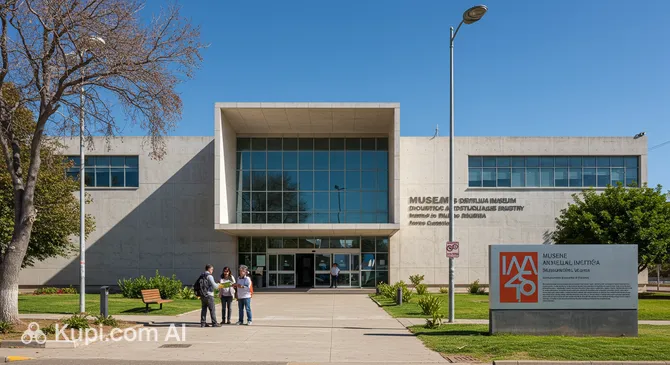
Imagine a place where the energy history of an entire country began. The National Oil Museum (Museo Nacional del Petróleo), located in the city of Comodoro Rivadavia, is a unique open-air industrial complex. It was here, in what is now Argentina, that the first source of "black gold" was discovered in 1907, forever changing the fate of Patagonia.
Petroleum Museum. Illustration.
Source: Kupi.com AI
Traveler photos:
This museum is considered one of the four largest thematic centers of its kind in the world, alongside similar sites in Russia, the USA, and Canada. It is built around the legendary Well No. 2, turning the very site of the historical discovery into a living monument to engineering. Today, the museum is managed by the National University of Patagonia and covers an impressive area.
Visitors can expect a large-scale exhibition ranging from giant drilling rigs in the machinery park to archival documents in the main building. It is not just an equipment display, but a fascinating story of technological progress that has made the National Oil Museum one of a kind in Latin America.
Contacts
To clarify visit details or organize group tours, you can use the official contact channels. The museum actively maintains its social media page, where it publishes current news about cultural events.
Visiting the National Oil Museum is not a boring lecture, but a real immersion into the process of hydrocarbon extraction. Inside the main building, you will find interactive drilling simulators that allow you to feel like a real exploration engineer. Detailed models of oil refineries and infographics clearly explain the complex path of oil from the depths of the earth to the finished product.
The outdoor exhibition deserves special attention. The main star here is the original Fauck Express drilling rig—the very one that extracted the first fountain of oil over a century ago. Strolling through the machinery park, you can see rare artifacts: from the legendary Ford Model T and vintage gas pumps to special protective suits worn by workers in the early 20th century.
For those who appreciate history in detail, there is access to a unique archive and library, which houses original telegrams and exploration maps from 1913. Additionally, the museum grounds often serve as a venue for cultural events, including concerts and temporary exhibitions, making it an important center for the region's social life.
Getting There
The National Oil Museum is located in the General Mosconi neighborhood at Petrolero San Lorenzo N° 250. This is just a few kilometers from the center of Comodoro Rivadavia, a city stretched along the picturesque Atlantic coast in the Chubut province.
The easiest way to get there is by taxi—the ride from the city center takes about 10–15 minutes and is quite affordable. You can also use public transport: several bus routes pass through the area, connecting residential neighborhoods with the university campus and the industrial zone.
For tourists arriving from other regions of Argentina, the nearest transport hub is Comodoro Rivadavia Airport. From there, it is most convenient to rent a car or book a transfer, following the main highways to the northern part of the city, where this unique industrial complex is located.
Nearest city: Comodoro Rivadavia
History & Facts
The history of the National Oil Museum began with a remarkable coincidence. On December 13, 1907, workers drilling for drinking water for the settlement unexpectedly struck a powerful fountain of crude oil. This event became a turning point for the region's economy, and December 13 has since been officially celebrated as National Oil Day in the country.
The museum itself was founded much later, in 1987, by the state company YPF. The project was led by Humberto Beghin, whose father was one of the pioneers of oil production in these parts. Initially, the space was created as a technical center for company personnel, but it quickly grew into a full-fledged educational institution for the general public.
In the 1990s, during the privatization of the oil sector, the museum was transferred to the National University of Patagonia San Juan Bosco. This ensured a scientific approach to heritage preservation and the development of educational programs. In 1997, the site's significance was confirmed at the state level—the museum was granted the status of an object of historical and cultural importance.
Time Needed
To see all the exhibits of the National Oil Museum without rushing, plan to spend 2 to 3 hours here. This time is quite sufficient for a leisurely walk through the outdoor park with heavy machinery, studying the interactive stands in the main building, and getting to know the archival photographs.
If you decide to use the services of a professional guide or explore the unique documentary collection in the library in detail, your visit may last longer. Keep in mind that the scale of the open-air exhibition (nearly 10,000 square meters) requires comfortable walking shoes.
Working Hours
The museum doors are open to visitors throughout the week, except for Monday, which is a day off. From Tuesday to Friday, the exhibition operates on a standard schedule: from 9:00 AM to 5:00 PM.
On weekends, the schedule changes slightly, allowing locals and tourists to visit the exhibition during their free time: on Saturday, the museum welcomes guests from 10:00 AM to 6:00 PM, and on Sundays and public holidays, the exhibition is open from 2:00 PM to 6:00 PM.
Day
Opening hours
Monday
Closed
Tuesday
9:00 – 17:00
Wednesday
9:00 – 17:00
Thursday
9:00 – 17:00
Friday
9:00 – 17:00
Saturday
10:00 – 18:00
Sunday
2:00 – 18:00
Nearby
A walk around the museum's surroundings will allow you to better feel the atmosphere of this port city and see its architectural diversity. Exploring these locations will complement the industrial theme of your visit with a taste of local gastronomy and panoramic ocean views.
Below are the most interesting sites located near the National Oil Museum: