Support

El Pucu Airport

About the Airport

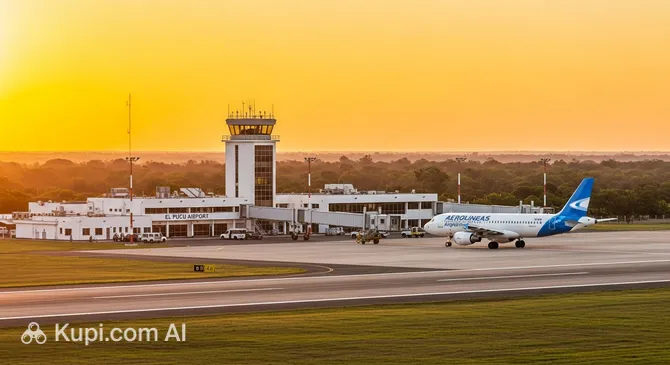
El Pucu Airport. Source: Kupi.com Binoculars

El Pucu Airport serves as the main air gateway to the province, opening the way for travelers to the picturesque wetlands and unique nature reserves of northern Argentina. This aviation hub is distinguished by a calm and measured atmosphere, free from the hustle and bustle typical of metropolises, allowing you to get into a holiday mood from the very first minutes after landing. Thanks to the terminal's compact size and recent modernization, passengers can enjoy modern service and rapid logistics on their way to the city.

IATA Code FMA
ICAO Code SARF
City Formosa
Distance to centre 7 km
Status International (predominantly domestic flights)
Annual Passengers Approx. 134,000 (based on 2023 data)
Schedule Available on the official AA2000 operator website

Features and Advantages of the Airport

Despite its modest size, El Pucu Airport stands out with a number of advantages that make it convenient for passengers. The main benefit is its proximity to the city: the journey to central hotels takes only 15–20 minutes, which significantly saves time and transfer costs.

Following reconstruction, the terminal has acquired a modern look with spacious halls and panoramic glazing that provides plenty of natural light. Navigation here is intuitive, and the speed of procedures — check-in and security screening — favorably distinguishes this regional airport from congested capital hubs. For travelers by car, there is convenient parking located literally a few steps from the terminal entrance.

Contact Information

To obtain current information about flights, services, and regulations at El Pucu Airport (FMA), it is recommended to use the following official contacts:

  • Official Website: Generally, up-to-date information can be found on the official website of the Argentine airport operator, Aeropuertos Argentina 2000: www.aa2000.com.ar/formosa.
  • Help Desk Phone: +54 370 445-0485
  • Airport Address: Ruta Nacional N° 11, Km 1131, (P3600) Formosa, Argentina.
  • Email: For general inquiries, it is recommended to use the contact form on the official website or contact by phone.
  • Lost Luggage Information: If your luggage was lost during the flight, you must immediately contact your airline's representative at the airport. For items forgotten within the terminal building, please contact the Airport Security Police (PSA) office.
  • Passenger Support Service: For consultations and assistance, you can call the main airport help desk number.

How to Get to the Airport

El Pucu Airport (FMA) is located quite close to the city centre of Formosa, just 7 kilometers away, so getting there is effortless. Travelers can choose from several convenient methods depending on their budget, time, and amount of luggage.

Taxi and Transfer — the fastest and most comfortable way to reach the airport. The trip from the city centre will take just 15-20 minutes. In Argentina, besides regular taxis, "remises" services are popular — these are private cars with drivers that operate on a fixed fare and are booked in advance by phone. This is a reliable option, especially if you have a lot of luggage or are traveling with family. It is recommended to confirm the cost of the trip in advance to avoid misunderstandings.

Public Transportthe most budget-friendly option. You can reach El Pucu Airport by city bus. Typically, one of the city routes (for example, line 25) runs to the terminal. While economical, the journey may take longer due to stops along the way and may not be very convenient with bulky luggage. Be sure to check the current schedule and bus route before traveling, as they are subject to change.

Car Rental and Parking. If you have rented a car for traveling around the region, you can easily drive to the airport yourself. The road is well-marked, and a navigation system will easily plot the route. El Pucu Airport provides parking where you can leave your car for both short and long terms. This option ensures maximum flexibility and is particularly convenient for those traveling with a lot of equipment or planning further trips around the surrounding area.

In general, the choice of transport to Formosa airport depends on your priorities. For maximum convenience and speed, choose a taxi or remis. For savings — the city bus, but be prepared for potential inconveniences. And if you have a rental car, the trip will be fast and comfortable, and the car can be left at the airport parking lot.

Terminals and Map

El Pucu Airport (FMA) is a compact regional airport serving the city of Formosa and its surroundings in northern Argentina. Its structure is extremely simple and clear for any traveler, making navigation very easy.

The airport operates with only one terminal, which handles both domestic arrivals and departures. Thanks to its small size, all key zones are within walking distance of each other in the same building. You do not have to worry about transfers between terminals — they simply do not exist here. The terminal layout is intuitive: after entering, you immediately find yourself in the general area where airline check-in counters are located.

Departure and arrival zones are separated but located under one roof. After check-in, passengers proceed to pre-flight security screening, followed by a small waiting hall with boarding gates. The arrival zone is located in another part of the building and includes a baggage claim belt and an exit to the city. All signs are clear and clearly visible.

Completing all formalities usually does not take much time. Flight check-in and baggage drop-off generally proceed quickly, and pre-flight screening takes about 15-20 minutes. Nevertheless, it is recommended to arrive at the airport 1.5-2 hours before departure to go through all procedures without rushing. Due to its compactness and simple navigation, getting lost in El Pucu Airport is practically impossible, making it convenient even for first-time travelers.

Airport History

The history of El Pucu Airport (FMA), the main air gateway of the Formosa province, began in the second half of the 20th century. The airport was officially opened on July 15, 1968, to replace the old airfield and provide the region with modern and reliable air connections. It received its name "El Pucu" from a nearby creek, which means "long and deep" in the Guarani language. Initially, the runway was 1,800 meters long.

One of the most dramatic moments in the airport's history occurred on October 5, 1975. On this day, it became part of a high-profile event known as "Operación Primicia." A group of insurgents used the airport to escape on a hijacked Boeing 737 aircraft following an attack on an army regiment in the city. This event left a notable mark on the history of not only the airport but all of Argentina.

With the arrival of the 21st century, active modernization of El Pucu Airport began. Significant work was carried out to update the infrastructure to meet modern safety and comfort standards. In 2012, a major reconstruction of the passenger terminal was completed, which increased its capacity and improved the quality of service. Additionally, the runway was repaired and improved, and new navigation equipment was installed, including an ILS system, enhancing flight safety in difficult weather conditions.

Today, El Pucu Airport, managed by Aeropuertos Argentina 2000, continues to play a key role in the economic and social life of the province. It ensures stable air connections with the country's capital and other important centers, promoting the development of tourism, business, and logistics in this northern region of Argentina. Its history reflects the journey from a modest regional airfield to a modern transport hub.

Services and Amenities

El Pucu Airport (FMA) is a regional terminal that provides passengers with a basic set of services for a comfortable wait for their flight. Although the infrastructure here is not as extensive as in major international hubs, everything necessary for travelers is available.

Dining and Shopping: The terminal features a small café where you can order snacks, sandwiches, and beverages. There is also a kiosk with newspapers, souvenirs, and items that may be useful on the road.

Waiting Areas and Facilities: A general waiting hall is equipped for passengers. Free Wi-Fi is available throughout the airport, as well as power outlets for charging electronic devices. ATMs for cash withdrawals are installed in the terminal building.

Additional Services: The airport is adapted for passengers with reduced mobility — ramps and specially equipped restrooms are available. For travelers with small children, nursing rooms (mother and child rooms) are provided. In case of necessity, one can contact the medical point for first aid. Specialized VIP lounges, business centres, and hotels are absent within the airport itself; however, a wide selection of accommodation options and conference services is available in the nearby city of Formosa.

Where to Eat

When planning a flight through the airport of Formosa city — El Pucu (FMA), it is worth considering that this is a small regional aviation hub. Dining options here are quite modest but sufficient for a snack before departure or a cup of coffee.

The main and, as a rule, the only dining establishment in the airport is a small café, or as it is called in Argentina, a confitería. It is located in the general hall (landside), before the security check and passport control area, making it accessible to both departing passengers and those seeing them off. This makes it a convenient place for meetings or farewells.

In the menu, you will find a classic selection for a quick snack. This is an excellent opportunity to try local pastries: order traditional empanadas (filled pastries) or medialunas (local sweet croissants). They also usually offer sandwiches de miga — thin crustless sandwiches with cold cuts and cheese. A full lunch selection is not provided here, but it is quite enough for a light breakfast or lunch. Available beverages include coffee, tea, soft drinks, and bottled water.

The café's operating hours are directly linked to the flight schedule — it opens a few hours before the first departure and closes after the last plane leaves. Prices here are somewhat higher than in the city, which is typical for airports, but remain reasonable. Regarding special dietary requirements (vegan, gluten-free, or Halal dishes), their availability is unlikely. Passengers with strict dietary restrictions are advised to bring food with them.

Travel Tips

Traveling through El Pucu Airport (FMA) in the city of Formosa can be an easy and pleasant start or end to your adventure in Argentina if you prepare in advance. To avoid unnecessary rushing, arrive at the airport at least 2–2.5 hours before the departure of a domestic flight. Despite being a small airport, it is better to have a buffer of time in case of unforeseen queues at check-in or security.

To save time, use online check-in if your airline offers this option. This will allow you to proceed directly to baggage drop or, if you are traveling light, to the security zone. The security control procedure here usually proceeds faster than in major hubs, but the rules are standard: be prepared to remove electronics and liquid containers from your hand luggage.

When choosing a seat on the plane, be guided by your preferences: a window seat will offer you beautiful views during takeoff and landing, while an aisle seat allows you to stand up freely without disturbing neighbors. Regarding hand luggage, remember the general rules: liquids are allowed in containers up to 100 ml, packed in a transparent bag. Sharp and cutting objects are prohibited in the cabin. Always check the rules of the specific airline before departure.

If you have a transfer at El Pucu, clarify the boarding gate number for the next flight immediately upon arrival. Check at the registration desk at the departure airport whether your luggage is checked through to the final destination — this is especially important when flying with different airlines. Upon arrival at the airport, baggage claim usually does not take much time, but do not rush to discard your baggage tag. Staff may check it at the exit from the baggage claim area.

To save money, bring an empty water bottle and fill it after passing security control. Light snacks will also be useful, as food choices in small airports may be limited, and prices inflated. A pre-booked transfer to the city often turns out to be cheaper than a taxi taken on the spot.

In case of a flight delay, first contact your airline representative for current information. Depending on the duration of the delay, you may be provided with vouchers for food or drinks. To make the waiting time more comfortable, download movies or books to your devices in advance and carry a portable charger. Calmness and preparedness are your best allies in any unforeseen situation.

Reached the end of the page?

That means the route is fully explored