Support

Santiago Del Estero Airport

About the Airport

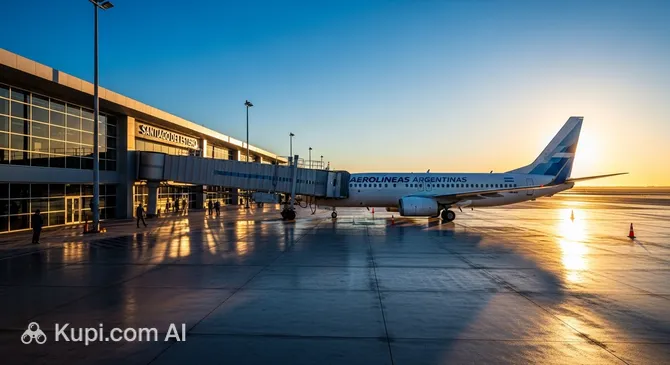
Santiago Del Estero Airport. Source: Kupi.com Binoculars

Santiago del Estero Airport, also known as Vice Commodore Ángel de la Paz Aragonés Airport, serves as the modern aerial gateway to Argentina's oldest city, often referred to as the "Mother of Cities." Completely renovated in 2013, the terminal welcomes travellers with an impressive glass façade that fills the halls with natural light and creates a sense of spaciousness. Thanks to its compact size and well-thought-out navigation, this airport is renowned for its cosiness and lack of the hustle and bustle typical of large international hubs, making the start or end of a journey as peaceful as possible.

IATA Code SDE
ICAO Code SANE
City Santiago del Estero
Distance to centre 6 km
Status Domestic
Passengers per year ~236,000 (2023 data)
Schedule On the official website

Features and Advantages of the Airport

Despite its status as a regional hub, Santiago del Estero Airport offers passengers a high level of comfort, driven by recent modernization. The infrastructure upgrade was timed to coincide with the international MotoGP competitions regularly held in the province, which set a high standard for service quality.

  • Modern Architecture and Comfort: The passenger terminal stands out with its stylish design featuring panoramic glazing. A comfortable climate is maintained inside, and waiting areas are equipped with everything necessary, including access to Wi-Fi and power outlets for charging gadgets.
  • Proximity to the City: The airport is located just 6 kilometres from the centre of Santiago del Estero. A transfer by taxi or rental car takes literally 15–20 minutes, allowing tourists to quickly reach their hotel and start exploring the sights.
  • Service Speed: Thanks to the modest passenger flow, queues for check-in and security are a rarity here. All formalities can be completed in a matter of minutes, saving travellers time.
  • Convenient Parking and Access: The area in front of the terminal is equipped with a spacious parking zone, and access roads are clearly marked, simplifying logistics for those travelling by private or rented transport.

Contact Information

Below is the main contact information for Santiago del Estero Airport (SDE), also known as Vice Commodore Ángel de la Paz Aragonés Airport. The airport is managed by the company Aeropuertos Argentina 2000, so most official contacts lead to their resources.

  • Official Website: All current information on flights, services, and regulations can be found on the airport's official page on the operator's website: www.aa2000.com.ar/santiagodelestero.
  • Information Desk Phone: +54 (385) 431-1699.
  • Airport Address: Ruta Nacional 9, km 1196, (G4200) Santiago del Estero, Argentina.
  • Email: A direct email address for general public use is not provided. For communication, it is recommended to use the feedback form on the official Aeropuertos Argentina 2000 website.
  • Social Media: You can follow general news and updates for all airports in the Aeropuertos Argentina 2000 network via their official accounts, for example, on Twitter (@aa2000oficial) or Instagram (@aa2000oficial).
  • Lost Luggage Information: If your belongings were lost on board the aircraft, you should immediately contact your airline's representative. Regarding items left in the airport terminal, please contact the information desk or the Airport Security Police (PSA) office.
  • Passenger Support Contacts: For general questions and passenger support, please contact the central customer service of Aeropuertos Argentina 2000 via their official website.

How to Get to the Airport

Getting to Santiago del Estero Airport (SDE) from the city centre is quite simple, as it is located just 6 kilometres northwest of Santiago del Estero. A trip by car usually takes no more than 15-20 minutes, making the transfer quick and convenient. The main ways to reach the terminal are by taxi or rental car.

The most popular and reliable method is a taxi or remis (a local equivalent of a private taxi with a fixed fare). A car can be found at designated stands in the city, ordered by phone, or via an app. The estimated cost of a trip from the city centre is several thousand Argentine pesos. It is recommended to confirm the fare in advance, especially when ordering a remis, as they often operate on a pre-agreed price. This is the most convenient option, especially if you have a lot of luggage.

If you value independence and plan to explore the region, car rental is an excellent solution. Several rental agencies operate in the city and directly at the airport. The cost of renting an economy class car usually starts from 30-40 USD per day, but may vary depending on the season and company. By booking a car in advance, you can drive to the airport at your own pace. The airport provides parking for both short-term and long-term stays.

Regarding public transport, direct bus routes to the airport terminal may be limited or non-existent. Unlike major capital airports in Argentina, one should not rely entirely on buses here for timely arrival for a flight. The most predictable and guaranteed way to get to the airport remains a taxi ride or a rental car.

Terminals and Map

Santiago del Estero Airport (SDE), officially known as Aeropuerto Vicecomodoro Ángel de la Paz Aragonés, is a small and modern air station that serves domestic flights. Its structure is as simple and convenient as possible for passengers, making navigation intuitive even for those visiting for the first time.

The airport has just one passenger terminal, which is used for both departing and arriving passengers. Thanks to this, you will not have to worry about complicated transfers or searching for the right building. All key zones are located in one compact building, which significantly saves time and effort.

The terminal layout is very simple. Upon entry, you immediately find yourself in the general area where airline check-in counters are located. After receiving a boarding pass and checking in luggage, passengers proceed to the security screening area, which leads to a small but cosy departure lounge. The arrival area is equally concise: after disembarking from the aircraft, passengers enter the baggage claim hall, and from there — to the airport exit, where taxis and car rental representatives await them.

Check-in and security procedures at Santiago del Estero Airport usually proceed very quickly due to the low passenger volume. Nevertheless, it is recommended to arrive at the airport generally 1.5–2 hours before departure to complete all formalities without rushing. Navigation through the terminal will not cause difficulties: all signs are clear, and staff are always ready to help. Essentially, it is practically impossible to get lost here — everything is within a few minutes' walk.

Airport History

The history of Santiago del Estero Airport (SDE), officially bearing the name Vice Commodore Ángel de la Paz Aragonés Airport, is a vivid example of how infrastructure can develop in response to new challenges and opportunities. The airport has evolved from a small regional hub to a modern aerial gateway, playing a key role in the tourism and economic life of the province.

The airport was officially opened for civil aviation in 1952. It received its name in honour of a distinguished pilot and native of Santiago del Estero province, Ángel de la Paz Aragonés, who tragically died in an air crash a year earlier. In the first decades of its existence, the airport served primarily domestic flights, connecting the northern region of Argentina with the capital and other major cities.

A turning point in the airport's history was the transfer of management to Aeropuertos Argentina 2000 in 1999, which paved the way for future investments. However, the most significant transformation occurred in 2012-2013. A massive reconstruction was carried out, which essentially gave the airport a second life. The old building was demolished, and a completely new, modern complex was erected in its place.

The main stimulus for such radical modernization was a major international event — the hosting of a round of the MotoGP World Championship at the nearby Termas de Río Hondo circuit. To receive thousands of racers, teams, and fans from all over the world, the airport required completely new capacities. The reconstruction was completed in record time, and the renovated airport was inaugurated on July 24, 2013.

As a result of the modernization, the airport received a new passenger terminal, a modern control tower, and its runway was lengthened and strengthened to accommodate larger aircraft. Today, Santiago del Estero Airport is not just a transport hub, but a symbol of regional development, capable of ensuring a comfortable and safe journey for everyone coming to explore Argentina's oldest province.

Services and Amenities

Santiago del Estero Airport (SDE) offers passengers all necessary services for a comfortable wait before departure. The terminal features a café where you can have a snack, drink coffee, or purchase light refreshments. There is also a small shop selling souvenirs, press, and items you might need on the road.

For the convenience of travellers, free Wi-Fi is available throughout the airport. Waiting areas are equipped with power outlets for charging electronic devices. While there may not be specialized VIP lounges at the airport, comfortable conditions have been created in the general waiting hall for all passengers.

ATMs are installed in the terminal building for cash withdrawals. If you need to exchange currency, please check the availability and opening hours of the exchange point in advance, as its services may be limited. In case of feeling unwell, a first aid post operates at the airport.

The airport is adapted for the needs of passengers with reduced mobility: the terminal is equipped with ramps and dedicated restrooms. Airport staff are always ready to assist with boarding and disembarking from the aircraft. For passengers with small children, changing tables are provided in the restrooms.

There are no hotels on the airport grounds, but plenty of accommodation options, from budget to more comfortable ones, are located in the city of Santiago del Estero, just a few minutes' drive away. The airport does not have its own conference rooms or business centres; these services can be found in major hotels in the city.

Dining

When planning a snack or lunch at Santiago del Estero Airport (SDE), it is important to remember that this is a small regional airport. The choice of establishments here is limited, but quite sufficient to grab a coffee and a bite to eat before departure or after arrival.

The main dining spot at the airport is typically a single café, located in the general hall before the security zone (landside). Here, passengers and those seeing them off can relax while waiting for a flight. The menu usually includes a standard selection for a quick snack: coffee, tea, soft drinks, fresh pastries, toast, and various sandwiches. After passing through security control (airside), the selection is usually even more limited or non-existent.

If you want to try something from the local cuisine, look for empanadas — traditional Argentine pastries with various fillings. This is an excellent and filling option for a quick snack. Classic Argentine sandwiches, "sándwiches de miga", are also popular. For a full lunch in the restaurant sense, you are unlikely to find options at the airport, so it is better to count on light food.

Options for passengers with special dietary needs (vegetarian, gluten-free) are extremely limited. Vegetarians will likely be able to find pastries with cheese or a simple sandwich. If you have strict dietary restrictions or require Halal options, it is strongly recommended to bring food with you.

Prices in the airport café are moderate, comparable to other regional airports in Argentina. The establishment's operating hours are usually tied to the flight schedule: it opens a few hours before departure and closes shortly after the last plane departs. This ensures you won't be left without coffee and snacks while waiting.

Travel Tips

To ensure your journey through Santiago del Estero airport goes as smoothly as possible, follow these proven tips. As a small regional airport, many procedures here are faster than in major hubs, but preparation is never wasted.

Arrival Time: For domestic flights within Argentina, it is recommended to arrive at the airport 1.5-2 hours before departure. This time is usually sufficient for a calm check-in, baggage drop, and passing through security control. If you only have hand luggage and have checked in online, you can arrive slightly later, but a time buffer helps avoid unnecessary stress.

Check-in and Security: To save time, use online check-in on your airline's website, which usually opens 24-48 hours before departure. Be ready to present your documents and boarding pass at the airport. During security screening, laptops and other large electronics must be removed from hand luggage, as well as liquids in containers up to 100 ml, packed in a transparent bag.

Seat Selection: If you want to admire the views from above, choose a window seat. If comfort, the ability to stretch your legs, and standing up freely without disturbing neighbours are important to you, your choice is an aisle seat. You can often select a seat in advance when purchasing a ticket or during online check-in.

Hand Luggage: You can take valuables, documents, gadgets, necessary medicines, and fragile items into the cabin. Remember the restriction on carrying liquids: no more than 1 litre in total, in containers of up to 100 ml each. It is strictly prohibited to carry weapons, sharp objects, explosives, and flammable substances in hand luggage.

Connecting Passengers: Santiago del Estero Airport mainly serves direct flights. If you have a complex itinerary with a transfer in another city, for example, in Buenos Aires, clarify at check-in whether you will need to collect and re-check your luggage at the transit point. Always allow sufficient time between connecting flights.

Customs Control: Since most flights from this airport are domestic, customs control is not required. It is mandatory only for passengers arriving from abroad or departing on international flights.

Saving Time and Money: Book flight tickets in advance to get the best price. Use online check-in. To avoid overpaying for drinks and food at the airport, you can bring an empty water bottle (it can be filled after security) and permitted snacks.

Flight Delays: In the event of a flight delay, first contact your airline representative for information. Depending on the length of the delay, the airline may be obliged to provide you with drinks, meals, or even hotel accommodation. Keep a phone charger (power bank), a book, or a tablet with you to pass the waiting time.

Reached the end of the page?

That means the route is fully explored