Support

Bendigo

About the Airport

Bendigo. Source: Kupi.com Binoculars

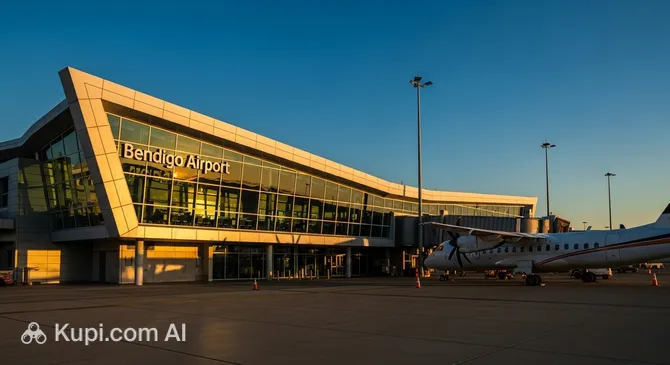
Bendigo Airport is not merely a transport hub, but a modern gateway to the golden heart of Victoria. Located just a few minutes' drive from the historic centre, it offers travellers a unique combination of regional charm and the latest technologies, resulting from a large-scale reconstruction in 2024. There are no endless queues or the bustle of megacities here; instead, there is a feeling that your journey through the Australian outback begins with comfort and a smile. This airport is ideal for those who value their time and wish to immediately immerse themselves in the atmosphere of the region, bypassing the long transfers from Melbourne.

IATA Code BXG
ICAO Code YBDG
City Bendigo
Distance to Centre 5 km
Status Domestic
Passengers per Year Actively growing regional hub
Schedule Online board

Airport Features and Advantages

Bendigo Airport has recently undergone a significant upgrade, opening a brand-new terminal for passengers that is four times larger than the previous one. This has transformed it into an important strategic facility for the region, ensuring a high level of service.

Key advantages for travellers:

  • Modern Terminal: The new building, opened in 2024, is equipped with spacious waiting areas, modern check-in counters, and a convenient baggage claim area. The interior design includes elements inspired by the culture of the indigenous Dja Dja Wurrung people.
  • Convenient Connections: The airport serves direct flights to Sydney (usually operated by QantasLink), allowing tourists and business travellers to save hours by avoiding the trip through Tullamarine Airport in Melbourne.
  • Transport Accessibility: Its location just 5–6 kilometres from the city centre makes the trip by taxi or rental car quick and tireless (about 10 minutes).
  • Parking: An expanded car park with over 180 spaces is available for passengers, solving the eternal problem of finding a spot for a vehicle, which is typical for large hubs.
  • Safety and Emergency Services: The airport serves as an important base for air ambulance and fire services, guaranteeing high standards of safety and runway maintenance.

Thanks to the presence of a business park and the continuous development of infrastructure, Bendigo is becoming an increasingly attractive entry point for exploring the Victoria region.

Contact Information

  • Official Airport Website: www.bendigo.vic.gov.au — current information on flights, services, and airport development on the city council portal.
  • Help Desk Phone: +61 3 5434 6000 (City of Greater Bendigo) or 1300 002 642 (for calls within Australia).
  • Airport Address: 35 Victa Road, East Bendigo VIC 3550, Australia.
  • Email: airportmanager@bendigo.vic.gov.au (Airport Manager) or requests@bendigo.vic.gov.au (General inquiries to the City Council).
  • Social Media: News and updates about the airport are published on the official pages of the City of Greater Bendigo on Facebook and Instagram.
  • Lost Luggage Information: If items are lost on board the aircraft, please contact QantasLink. For items left in the terminal, contact the airport administration via the contacts listed above.
  • Passenger Support Contacts: Support is provided through the City of Greater Bendigo services during business hours.

How to Get to the Airport

Thanks to its convenient location just 5–6 kilometres from the city centre, the journey to Bendigo Airport (BXG) takes very little time. Unlike large megacities, serious traffic jams are rare here, so you can calculate your time with high precision. The main way to get to the terminal is by car or taxi, as the public transport network leading directly to the departure zone is not well developed.

Taxi and Transfer

This is the most convenient and reliable way to get to the airport. A trip from the central part of the city (for example, from the Alexandra Fountain) to the terminal in East Bendigo usually takes 10–15 minutes.

  • Taxi Services: The official Bendigo Taxis service operates in the city. A car can be ordered by phone or found at ranks in the centre.
  • Ride-hailing Apps: Services like Uber and other ride-sharing applications are also active in the region. This is often slightly cheaper than a standard taxi.
  • Cost: The estimated price of a trip from the centre is between 20 and 30 AUD depending on the time of day and tariff.

Public Transport

It is important to note that there are currently no direct city bus or train routes that drop passengers right at the terminal entrance. The nearest PTV (Public Transport Victoria) bus stops are located in the East Bendigo industrial zone, a significant distance from the airport building (about a 15–20 minute walk, which is inconvenient with luggage).

If you are arriving in the city by train from Melbourne, it is best to get off at the Bendigo Railway Station and transfer to a taxi right there.

Car Rental

For travellers planning to explore the Victoria region on their own, renting a car is an excellent choice. Major international rental companies (such as Hertz, Avis, Thrifty) are represented at the airport and in the city.

  • Rental counters may operate according to the flight schedule, so it is recommended to book a car in advance.
  • The road to the airport leads via Victa Road. The route is simple and clear, and navigation systems work perfectly.

Parking

One of the main advantages of Bendigo Airport is accessible parking. Following the reconstruction, the number of parking spaces has increased. The car park is located within walking distance of the terminal — you will not have to wait for a shuttle to get from your car to the check-in counter. Typically, parking here is either free or costs significantly less than at capital city airports.

Alternative Airports Nearby

Bendigo Airport is a regional hub, and the number of flights here is limited (mainly flights to Sydney). If you need more destinations, it is worth considering other air harbours located in relative proximity. The main flow of tourists arrives via Melbourne.

  • Tullamarine (Melbourne): The largest international hub in the region. The distance is about 113 km (approximately 90 minutes by car). A special direct bus, the Bendigo Airport Service, runs from Bendigo to this airport.
  • Avalon: Melbourne's second airport, convenient for low-cost carriers. Located 145 km from Bendigo.
  • Albury Airport: Located 247 km away, serving another major regional centre on the state border.
  • Wagga Wagga Airport: Located significantly further away, at 332 km, but can be useful for complex connecting routes through New South Wales.
  • Mount Gambier Airport: A remote option (333 km), relevant for travel towards South Australia.

Terminals and Map

The terminal complex at Bendigo Airport (BXG) is arranged as simply and logically as possible, which is its main advantage over large hubs. There are no confusing labyrinths of corridors or the need to use trains to move between gates. All infrastructure is concentrated in a single passenger terminal, which serves both departures and arrivals.

Layout and Navigation

The new terminal building, opened after reconstruction, is a compact single-storey structure. Navigation here is intuitive even for those flying for the first time:

  • Entrance Area: Entering the building from the car park, you immediately find yourself in the general area where the check-in counters are located.
  • Check-in Zone: The counters are located directly opposite the entrance. Given the small number of flights, getting lost here is impossible.
  • Security Screening: The security checkpoint is located just a few metres from the check-in counters and leads to the sterile area ("Departure Lounge").

Departure and Arrival Zones

The airport is designed so that passenger flows do not create queues, although due to the compactness of the building, the zones are in close proximity to each other.

  • Departure Lounge: After passing through security, passengers enter a spacious waiting hall. In the updated terminal, it has become significantly more comfortable: there are comfortable seats, access to Wi-Fi, and panoramic windows overlooking the runway. There is only one boarding gate, and it leads directly to the apron.
  • Arrival Zone: Passengers arriving in Bendigo enter the terminal from the airfield and immediately find themselves in the baggage claim area. The entire journey from the aircraft stairs to the airport exit takes no more than 5 minutes.

Terminal Features and Services

Despite its modest size, the terminal is equipped with everything necessary for a short wait. A comfortable temperature is maintained inside, there are modern restrooms (including facilities for people with disabilities), and a small café area where you can buy coffee or light snacks before departure.

Transfers Between Terminals

Since Bendigo Airport has a single terminal, there is no need for transit transport or long walks. The distance from the passenger drop-off zone to the check-in counter is less than 50 metres.

Recommendations on Time and Procedures

The absence of bustle is the hallmark of BXG, but airlines require compliance with standard procedures.

  • Check-in and Baggage Drop: Usually begins 60 minutes prior and closes strictly 30 minutes before departure. It is recommended to arrive at the airport about an hour before the flight departs. This time is ample to drop off luggage and pass through control without rushing.
  • Security Screening: The procedure is very quick, and queues rarely occur. However, as in all Australian airports, security rules are strict: liquids, aerosols, and electronics are subject to inspection.

The main advice for navigating Bendigo Airport: relax. It is impossible to take a wrong turn here. Simply follow the signs from the car park to the entrance, and you will immediately see all the key points of your route.

Airport History

The history of Bendigo Airport (BXG) is an inspiring example of how a small local airstrip can transform into a strategically important transport hub for the region. The journey from a humble aero club to a modern terminal receiving regular flights from Sydney took several decades and required significant efforts from local authorities and the community.

The Birth of Aviation in the Region

Bendigo's aviation history dates back to the 1930s. It was then, in 1934, that the local Bendigo Flying Club was founded, becoming the driving force behind the development of flights in the region. In those days, the site was a simple airfield with a dirt surface, used mainly by light aviation enthusiasts and for postal needs. The official opening of the airfield at its current location occurred later, when the need arose for a more structured infrastructure for the growing city.

The Era of Development and the "Quiet" Years

For most of the 20th century, the airport functioned as a centre for General Aviation. Private pilots were based here, flight crew training was conducted, and charter flights were operated. An important stage was the use of the airfield for the needs of air ambulance and fire services, which secured its status as a critical infrastructure facility for the state of Victoria.

However, for a long time, Bendigo remained without regular passenger service. Locals wishing to travel were forced to drive to Melbourne Airport, as attempts to establish permanent flights in the past did not meet with long-term success.

Modernisation: A New Era

The turning point in the modern history of the airport came in 2016–2017. The City of Greater Bendigo, together with state and federal governments, initiated a large-scale reconstruction project worth about 15 million dollars. The main goal was the construction of a new runway.

  • 2017: Completion of the new 1,600-metre runway. This allowed for the accommodation of larger turboprop aircraft, such as the Dash-8 Q400 used by regional airlines.
  • 31 March 2019: A historic date for the city. On this day, QantasLink launched the first regular commercial flight in over 30 years, connecting Bendigo and Sydney. This event marked the city's return to Australia's passenger aviation map.

Recent History and Terminal Opening

Development did not stop at the launch of flights. Understanding that the old building could not cope with the increased flow and security requirements, the authorities approved a project for a new passenger terminal.

Construction took place in the early 2020s and culminated in the grand opening of the updated complex in 2024. The new terminal has become a symbol of the region's economic growth, offering passengers a level of comfort comparable to major city airports, while retaining a cosy atmosphere.

Interesting Facts

  • Saving Lives: The airport is a key base for Air Ambulance Victoria. Thanks to the modernisation of infrastructure, air ambulances can land and take off in all weather conditions, which helps save hundreds of lives in rural areas annually.
  • Base for Firefighters: During the bushfire season, the airfield turns into a strategic hub for firefighting aviation, where air tankers protecting the Victorian bushland are refuelled and serviced.
  • Business Park: The history of the airport is closely linked to the development of the adjacent business park. It is not just a transport hub, but an economic zone housing hangars for private companies and aviation maintenance enterprises.

Services and Facilities

Bendigo Airport (BXG) is a compact regional hub focused on quick domestic flights. Thanks to the recent reconstruction and the opening of the new terminal in 2024, passengers can expect a modern level of comfort, although the range of services here is significantly more modest than in major international airports like Melbourne or Sydney. Everything here is designed so that the traveller spends minimum time in queues and maximum time in a calm environment before departure.

Restaurants, Cafés, and Shops

Given the small number of flights, the airport does not have an extensive food court zone or a boutique gallery. The catering infrastructure is adapted to the needs of passengers awaiting a short flight:

  • Cafés and Kiosks: A small café-bar operates in the departure zone (after passing security). Here you can order fresh coffee (which is mandatory for the state of Victoria, famous for its coffee culture), soft drinks, sandwiches, and light snacks.
  • Shops: Full-scale shopping is absent at the airport. In the café area, you can purchase basic travel goods: magazines, newspapers, or snacks. There are no souvenir shops or Duty-Free stores (as flights are domestic only).

Waiting Lounges, Wi-Fi, and Charging Stations

The new terminal is designed taking into account the digital needs of modern travellers.

  • Waiting Lounges: There are currently no specialised closed VIP lounges (such as the Qantas Club) at Bendigo Airport. However, the general Departure Lounge offers a high level of comfort comparable to business lounges: panoramic glazing, soft seats, and a calm atmosphere.
  • Wi-Fi: Free wireless internet is available throughout the terminal. The connection speed is sufficient for checking email, messaging apps, and web surfing.
  • Device Charging: Charging stations with power outlets and USB ports are provided in the waiting areas, integrated into seating blocks or located by the walls, allowing you to charge gadgets before the flight.

Financial and Medical Services

  • Banks and Currency Exchange: The airport serves exclusively domestic flights, so currency exchange points are absent. ATMs inside the terminal building may not be available, so it is recommended to withdraw cash in advance in the city, although the café accepts bank cards.
  • Medical Assistance: There is no medical centre with a permanent doctor in the passenger terminal. However, airport staff are trained in first aid, and the building is equipped with first aid kits and defibrillators. In serious situations, emergency services arrive very quickly, as the airport is a base for air ambulance services.

Services for Passengers with Children and Disabilities

Bendigo Airport prides itself on its inclusivity and convenience for all categories of citizens.

  • Barrier-Free Environment: The terminal is single-storey, eliminating the need for lifts or escalators. Entrances, exits, and restrooms are fully equipped for passengers in wheelchairs.
  • Boarding Assistance: QantasLink and airport staff provide assistance with boarding and disembarking the aircraft (special ramps or lifts are used, as there are no aerobridges).
  • For Parents with Children: Fold-down changing tables are provided in the updated restrooms. Thanks to the compactness of the terminal, children do not get tired from long walks.

Hotels and Accommodation

There are no hotels directly on the airport grounds, as it is located very close to the city limits. Passengers requiring overnight accommodation are recommended to stay in the city:

  • The nearest accommodation options (motels and apartments) are located in the East Bendigo area, just a 3–5 minute taxi ride away.
  • Major chain hotels (for example, Quest or Mercure) are located in the historic centre of Bendigo, the journey to which will take about 10–15 minutes.

Business Services

There are no specialised conference rooms inside the passenger terminal. Nevertheless, the airport is located next to the Bendigo Airport Business Park, where various companies are based. If you need to hold a meeting immediately upon arrival, it is better to rent a meeting room in one of the city's business centres or Bendigo hotels in advance.

Where to Eat

It is important to understand that Bendigo Airport (BXG) is a compact regional air hub with one terminal. You will not find gastronomic quarters or chain fast-food outlets here that are familiar in large international hubs. The catering infrastructure here is concise and designed exclusively to brighten up a short wait for a flight.

Main Establishment: Café-Bar in the Departure Zone

The only full-fledged food outlet is located in the "sterile area" (Airside) — that is, in the waiting lounge where passengers enter only after passing security screening.

  • Location: Departure Lounge, immediately after the security checkpoint.
  • Format: This is a classic Australian café kiosk (Coffee & Grab-and-Go). There are no waiters or full-cycle hot kitchens; service takes place at the bar counter.
  • Menu: The assortment includes fresh pastries (muffins, croissants), sandwiches, rolls, toast, yoghurts, and snacks (chips, nuts, chocolate).
  • Beverages: Since the state of Victoria is famous for its coffee culture, you will be offered quality coffee prepared by a barista here. A selection of tea, juices, and carbonated drinks is also available. Please note that alcoholic beverages (wine or beer) are available for purchase before the flight.

Dining in the Public Zone (Landside)

In the public area of the terminal (before passing control), opportunities to have a snack are minimal. Usually, only vending machines with water and basic snacks are available here. Therefore, if you are seeing someone off or have arrived at the airport too early, you should not count on a full meal in the building.

Specialised Nutrition and Dietary Options

Due to the limited café menu, the choice for people with strict dietary restrictions is small:

  • Vegetarians: Cheese and tomato sandwiches or sweet pastries are available.
  • Gluten-Free and Vegan: Specialised dishes are usually few. Fruits, packaged gluten-free snacks, or nuts may be available. If you adhere to a strict diet, it is strongly recommended to bring a snack with you.
  • Halal: Products in the café usually do not have specific Halal certification; choices are generally limited to vegetarian items.

Prices and Payment

The pricing policy corresponds to the average standards of regional airports in Australia — slightly higher than in the city, but without extreme mark-ups.

  • Coffee: 5–6 AUD.
  • Sandwich or Roll: 10–14 AUD.
  • Drinks (Water/Soda): 4–5 AUD.
  • Payment: Both cash and bank cards (Visa, Mastercard, AmEx) are accepted. Cashless payment is preferred.

Opening Hours

The café's operating schedule is fully synchronised with QantasLink's flight schedule.

  • The establishment opens approximately 60 minutes before the first flight departs.
  • Service ceases after passengers board the last departing flight (usually 10–15 minutes before departure).
  • On days when there are no flights, or during breaks between morning and evening flights, the café may be closed.

Recommendations for Travellers

Since Bendigo holds the honorary title of a "UNESCO City of Gastronomy", the best culinary experience awaits you outside the airport.

  • For a Full Lunch: We strongly recommend eating in the city itself before leaving for the airport. There are many magnificent restaurants and cafes in the centre of Bendigo (15 minutes away).
  • For a Quick Snack: The café in the departure zone is perfect for morning coffee with a croissant or a light afternoon snack to pass the time before boarding.

Tips for Travellers

Travelling through a regional airport like Bendigo (BXG) differs significantly from the experience of flying through giant international hubs. Calmness reigns here, but there are nuances related to small aircraft and schedule specifics. Here is a selection of useful tips that will make your departure as comfortable as possible.

Optimal Arrival Time

The main rule of Bendigo Airport is "don't rush, but don't be late". You do not need to arrive 3 hours before departure here, as you would in Melbourne.

  • Recommended Time: Arrive at the airport 60 minutes before departure. This time is perfectly sufficient to calmly drop off luggage, pass security, and have a coffee.
  • Critical Deadline: Check-in and baggage drop counters close strictly 30 minutes before the flight departs. If you arrive later than this time, the airline has the right to refuse carriage, even if the aircraft is still on the runway.

Check-in and Security Screening

Since flights are operated by QantasLink, the process is maximally digitalised.

  • Online Check-in: We strongly recommend checking in via the Qantas mobile app or website 24 hours before departure. This will allow you to select the best seat and simply print a baggage tag (or show a barcode) upon arrival.
  • Documents: Since flights are domestic, you will not need a passport. It is sufficient to have a valid photo ID (for example, a driver's licence) or a digital ID.
  • Security Screening: The procedure is standard for Australia. Laptops and aerosols must be removed from bags. There are practically no queues, and the entire process takes from 2 to 5 minutes.

Seat Selection on the Aircraft (Dash-8 Q400)

Flights from Bendigo are serviced by Bombardier Dash-8 Q400 turboprop aircraft. They have their own specifics worth considering when choosing a seat:

  • 2x2 Configuration: Good news — there are no "middle" seats here. You will sit either by the window or by the aisle.
  • For View Lovers: Choose Window seats. The flight takes place at a lower altitude than jet liners, so in clear weather, stunning views of the Victoria landscapes and the Blue Mountains open up when approaching Sydney.
  • Noise and Landing Gear: Seats under the wing (approximately rows 6 to 10) may have limited visibility due to engine nacelles and landing gear. If you are sensitive to propeller noise, choose seats in the tail section of the cabin — it is quieter there.

Hand Luggage: Important Nuances

This is perhaps the most important point for Dash-8 passengers. The overhead bins in these aircraft are very narrow.

  • Standard Suitcases: A standard cabin-size suitcase that easily fits into a Boeing or Airbus will not fit on the shelf here.
  • Premium Hand Luggage Procedure: If you have a wheeled suitcase, you will be offered the Valet Gate Check service. You take the suitcase to the aircraft stairs, where staff will load it into a special compartment. Upon arrival, you will receive it immediately at the stairs, without going to the baggage carousel.
  • What to Take into the Cabin: Take only soft bags, backpacks, or laptops into the cabin. Valuable items, medicines, and lithium batteries must be removed from the suitcase you hand over at the stairs.

Tips for Transit Passengers

Most passengers fly through Bendigo to Sydney to transfer to an international flight or travel further across Australia.

  • Single Ticket: If your flight is booked as a single reservation (e.g., Bendigo – Sydney – Dubai), your luggage will be checked through to the final destination. You will not need to collect it in Sydney (exception — changing terminals from international to domestic upon return to Australia).
  • Connection in Sydney: Flights from Bendigo arrive at Terminal 3 (Qantas Domestic) of Sydney Airport. If you have a transfer to an international flight, allow a minimum of 2–3 hours for the connection, as you will need to transfer to the international terminal via the T-Bus or train.

Customs and Biosecurity

There is no customs or passport control at Bendigo Airport, as flights are exclusively domestic. However, remember Biosecurity rules when moving between states, although restrictions between Victoria and New South Wales are minimal. The main rule: do not attempt to transport fresh fruit or vegetables if you plan a further flight to states such as Tasmania or Western Australia.

Saving Time and Money

  • Food: Eat in the city. Bendigo is a gastronomic capital, while the choice at the airport is limited to snacks and sandwiches. A delicious lunch in the centre will be cheaper and of higher quality.
  • Water: Bring an empty reusable bottle with you. In the departure zone, there are drinking water fountains where you can fill it for free after passing security.
  • Transport: If you have little luggage, use ride-sharing apps (Uber and similar) instead of calling a classic taxi by phone — this often works out 10–15% cheaper.

What to Do in Case of Flight Delay

Regional flights are sensitive to weather conditions (fog, strong wind).

  • Monitor the App: Install the Qantas app. It reports delays faster than the airport display boards.
  • Don't Go Far: If the flight is delayed for an hour or two, stay in the terminal. The Wi-Fi here is good and free; you can work or watch a movie.
  • Flight Cancellation: In the rare event of a flight cancellation (for example, due to non-flying weather), the advantage of proximity to the city is obvious. You can return to a hotel in the centre of Bendigo in 15 minutes, instead of spending the night in the terminal, as often happens in major hubs.

Reached the end of the page?

That means the route is fully explored