Поддержка

Cobar

About the Airport

Cobar Airport (CAZ) is not merely a runway in the middle of the Australian outback, but a vital artery for the mining town of the same name. Located in the state of New South Wales, it serves as a key transport hub for both local residents and mining industry workers. For travellers, it is the aerial gateway to the heart of the authentic, non-tourist Australia, offering access to unique landscapes and the rich history of the region.
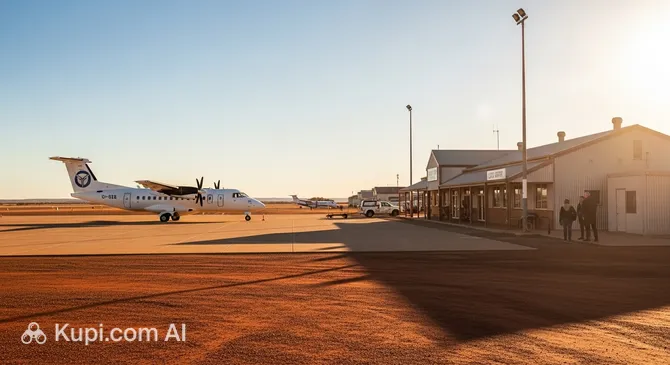
Иллюстрация. Источник: Kupi.com AI
ХарактеристикаЗначение
Код IATACAZ
Код ICAOYCBA
ГородCobar
СтранаAustralia
Часовой поясAustralia/Sydney
РасписаниеОнлайн-табло

The main feature of Cobar Airport is its compactness and functionality. There is none of the hustle and bustle of major international hubs here, making the check-in and boarding process maximally fast and comfortable. The airport is primarily focused on servicing regional flights connecting Cobar with other cities in New South Wales, such as Dubbo.

The primary merit of this air harbour lies in its strategic role for the local economy, particularly for the mining sector. A large portion of passenger traffic consists of charter flights transporting staff to mines on a "fly-in-fly-out" basis. For tourists, however, it is a convenient starting point for exploring national parks, discovering the heritage of the "gold rush" era, and immersing oneself in the atmosphere of the Australian hinterland, far from standard tourist routes.

Contact Information

For the most accurate and up-to-date information about Cobar Airport (CAZ), it is recommended to contact the managing organisation — the Cobar Shire Council, and for flight queries — directly with the airlines. The main contact details are listed below.

  • Official Website: Detailed information about the airport can be found on the official website of the Cobar Shire Council (cobar.nsw.gov.au) in the section dedicated to the airport.
  • Inquiry Service Telephone: +61 2 6836 5888. This is the main phone number for the Cobar Shire Council, which manages the airport's operations.
  • Airport Address: Louth Road, Cobar, NSW 2835, Australia.
  • Email: For general enquiries, you can use the contact email of the Cobar Shire Council: mail@cobar.nsw.gov.au.
  • Social Media: The airport does not have its own official pages. News and updates may be published on the social media pages of the Cobar Shire Council.
  • Lost Baggage Information: For all issues related to lost, delayed, or damaged baggage, it is necessary to contact your airline's support service directly. Airport staff do not process such requests.
  • Passenger Support Contacts: Questions regarding tickets, schedules, changes to bookings, or carriage regulations should be addressed to the carrier airline.

How to Get to the Airport

Cobar Airport (CAZ) is located approximately 4 km southwest of the city centre of the same name, making the journey there quick and convenient. Transport options here suit the needs of a small regional centre in Australia, where the main emphasis is on individual travel.

Taxi and Transfers

The most reliable way to get to or from the airport is by taxi or a pre-booked transfer. A trip from the centre of Cobar will take no more than 10 minutes, and the cost is usually around 15–25 Australian Dollars. It is highly recommended to book a car in advance, especially if you have an early or late flight, as the number of available vehicles may be limited.

Car Rental

For those planning to explore the picturesque expanses of New South Wales, car rental will be the ideal solution. You can collect a car in the city and return it at the airport before departure, ensuring maximum freedom of movement. Rental costs vary depending on the car class, season, and rental company. To secure the best rates and guarantee the availability of the desired model, book your vehicle online in advance.

Public Transport

In Cobar, there are no regular public transport routes to the airport, such as buses or trains. However, some hotels and motels may offer a shuttle service to their guests. We recommend clarifying this possibility when booking your accommodation.

Airport Parking

If you are arriving at the airport in a private or rented vehicle, convenient parking is at your disposal. In such small regional airports, it is usually located right next to the terminal and is often complimentary for both short-term and long-term stays, making travel by car particularly comfortable.

Terminals and Map

Cobar Airport (CAZ) is a small regional airport, so its structure is very simple and straightforward. It consists of one compact terminal that services all flights. There is no separation into domestic and international zones here, as the airport accepts only local flights. All infrastructure — from check-in to the waiting lounge — is located in a single building.

The terminal layout is intuitive. Immediately upon entry, you will see the check-in counters and the security screening area. After passing through them, you will enter a small waiting lounge, from where boarding takes place. The arrival and departure zones are effectively combined in one space, eliminating the possibility of getting lost. Navigation will not cause any difficulties even for those visiting for the first time.

Thanks to the modest size of the airport and low passenger traffic, all pre-flight formalities proceed very quickly. Flight check-in and security screening usually take no more than 15–20 minutes. Nevertheless, it is recommended to arrive at the airport approximately 45–60 minutes before departure to check in luggage and take a seat in the waiting lounge without rushing.

Given that Cobar Airport has only one terminal, the question of transfers between terminals is irrelevant. All infrastructure is located within walking distance. There are basic amenities here: check-in counters, a waiting lounge, and restrooms. Do not expect large shops or a variety of cafes — everything is very compact and functional, as befits a small regional airport.

Airport History

The history of Cobar Airport (CAZ) is a chronicle of conquering the Australian outback and the development of the mining industry. The first steps of aviation in this region were taken back in the 1920s, when the need for rapid delivery of mail and passengers to the isolated mining town became obvious. Officially, the first licensed airfield appeared here in 1921, and by 1938, Butler Air Transport had established regular flights, connecting Cobar with other parts of the country. This became a true breakthrough, reducing multi-day overland journeys to just a few hours.

After World War II, the airport came under the management of the local council, which marked the beginning of its systematic development. A real impetus for modernisation was provided by a new wave of mining activity in the 1960s. The simple dirt strip no longer met the requirements of the time, and it began to be gradually improved to accommodate heavier aircraft. It was then that the airport transformed from a simple airfield into a key infrastructure hub, serving both the needs of the city and the growing industry.

The recent history of the airport is inextricably linked with the concept of rotational work, known as Fly-In-Fly-Out (FIFO). To ensure the rapid rotation of workers at the mines, a large-scale reconstruction was carried out in the 1990s. The runway was paved and lengthened to accommodate turboprop aircraft. The next major stage of modernisation occurred in 2011-2012: new runway pavement was laid, modern lighting equipment was installed for round-the-clock operation, and the passenger terminal was updated, which allowed for a significant increase in capacity.

One of the most important and humanitarian chapters in the airport's history is its long-standing cooperation with the Royal Flying Doctor Service. For decades, the airfield has served as a base for emergency medical aviation, saving lives in one of the most sparsely populated regions of Australia. Today, Cobar Airport is not just a transport gateway, but a symbol of connection, safety, and hope for the entire local community, continuing to play a vital role in the region's economy and social sphere.

Services and Amenities

Cobar Airport (CAZ) is a small regional airport serving the town of the same name in New South Wales. Given its compact size and focus on local flights, the range of services here is basic and designed to ensure essential comfort for passengers before departure. Travellers should plan their visit in advance, as most amenities customary for large airports are absent here.

There are no restaurants, cafes, or shops in the airport terminal. Passengers are advised to bring snacks and beverages with them or to dine in the town of Cobar before arriving at the airport. Furthermore, there are no bank branches or currency exchange points here, so all financial transactions should be completed beforehand.

A general hall is provided for waiting for flights. There are no specialised VIP halls or business lounges at the airport. Opportunities for work are also limited: you will not find conference rooms or business centres here. Access to public Wi-Fi is generally not provided, and the number of power outlets for charging devices may be limited, so it is recommended to carry a portable charger.

The terminal is equipped with basic amenities, including restrooms. Passengers with children and travellers with reduced mobility are advised to contact their airline in advance to organise necessary assistance upon arrival and during boarding. Although there are no dedicated play areas for children, staff are always ready to provide assistance upon request.

There are no hotels within the airport territory itself. The nearest hotels, motels, and other accommodation options are located in the town of Cobar, situated a few minutes' drive from the airport. It is recommended to book accommodation and organise transfers in advance, especially during peak seasons.

Where to Eat

When planning a trip through Cobar Airport (CAZ), it is important to consider that this is a very small regional aviation hub with basic infrastructure. There are absolutely no food outlets in the terminal building — you will find neither restaurants nor cafes, nor even vending machines with beverages or snacks here.

This means that passengers have no opportunity to buy food, coffee, or even bottled water after arriving at the airport. Those who follow a special diet (for example, Halal, vegetarian, or gluten-free) should be particularly attentive, as acquiring suitable meals on-site will be impossible.

We strongly recommend taking care of your meals in advance. The best solution is to have a full lunch or dinner at one of the establishments in the town of Cobar before travelling to the airport. Additionally, it is a good idea to bring your own snacks and beverages to spend your time comfortably while waiting for your flight.

Tips for Travellers

To ensure your journey through Cobar Airport goes smoothly and without hassle, please make use of our tips. This small regional airport mainly serves domestic flights, which makes it quite simple to navigate.

Arrival Time: For domestic flights within Australia, it is recommended to arrive at the airport approximately 60-90 minutes before departure. This time will be sufficient to pass through check-in and security screening without rushing, especially considering the small size of Cobar Airport.

Check-in and Security: Most airlines offer online check-in, which allows you to save time. If you are travelling only with hand luggage, you can proceed directly to the security checkpoint. Security procedures here are standard but usually proceed faster than in major hubs.

Seat Selection: If beautiful views are important to you, especially when flying over the Australian outback, choose a window seat. For those who value the ability to stretch their legs or want to leave the cabin faster after landing, an aisle seat is more suitable.

Hand Luggage: Standard security rules apply here as well: liquids in containers no larger than 100 ml, packed in a transparent bag, and no sharp objects. Also, remember the strict Australian biosecurity rules — do not transport fresh fruits, vegetables, and certain other products between states without special permission.

Connecting Passengers: Cobar Airport is rarely used as a transit hub. If you have a transfer planned at a larger airport, study its map in advance and ensure you have enough time between flights — allow at least 1.5-2 hours.

Customs Control: Since the airport serves domestic flights, international customs control is absent here. However, be prepared for possible quarantine inspection of luggage upon arrival.

Saving Time and Money:

  • Book airline tickets in advance to get the best prices.
  • Check in for your flight online and, if possible, travel light with only hand luggage.
  • Bring an empty water bottle to fill after passing security control, as the choice of shops in the small airport may be limited.

Flight Delays: In the event of a flight delay, contact your airline representative for information on the new departure time and your rights. Bear in mind that infrastructure in small regional airports is limited, so charge your devices and bring a book or download films in advance.

Reached the end of the page?

That means the route is fully explored