Support

Coffs Harbour Airport

About the Airport

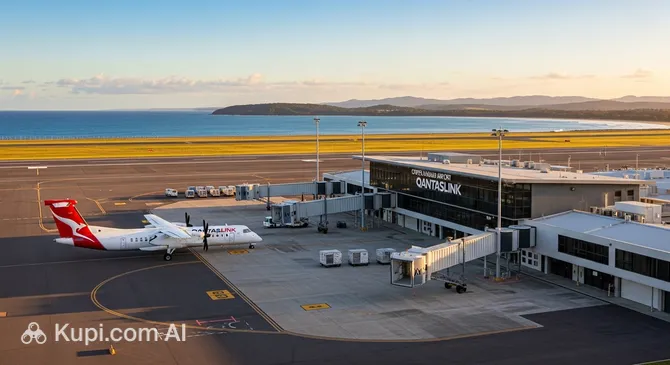
Coffs Harbour Airport. Source: Kupi.com Binoculars

Coffs Harbour Airport serves as the main aerial gateway to the picturesque Coffs Coast, welcoming travelers with a relaxed and friendly atmosphere. It is that rare case where arriving at an air harbour causes no stress, but rather becomes a pleasant start to a holiday thanks to the terminal's compactness and lack of hustle. Located in immediate proximity to the city beaches and the famous "Big Banana," the airport allows you to be in the centre of the action literally minutes after collecting your luggage.

IATA Code CFS
ICAO Code YCFS
City Coffs Harbour
Distance to centre 4 km
Status Regional (Domestic)
Annual Passengers approx. 300,000
Schedule Available on the official website

Features and Advantages of the Airport

Travelers often note Coffs Harbour Airport as one of the most convenient regional aviation hubs in New South Wales. Its infrastructure is designed to minimize the time spent on formalities and maximize passenger comfort.

  • Exceptional proximity to the city: This is one of the few airports located practically within the city limits. The journey to central hotels or beaches takes just minutes by car.
  • No queues: Thanks to efficient organization and moderate passenger flow, check-in and security screening proceed very quickly, allowing you to arrive at the airport a bit later than at major hubs.
  • Clear navigation: A single-story terminal eliminates the possibility of getting lost. Car rental counters, the baggage claim area, and boarding gates are within walking distance of each other.
  • Scenic views: Takeoff and landing here are often accompanied by breathtaking panoramas of the ocean and the mountains of the Great Dividing Range, so a window seat would be an excellent choice.

Contact Information

If you need to contact the administration of Coffs Harbour Airport, please use the following contact information. Please note that for issues related to booking, flight changes, or lost luggage, you should primarily contact your airline.

  • Official Website: www.coffsharbourairport.com.au
  • General Enquiries Phone: +61 2 6648 4800
  • Airport Address: Aviation Drive, Coffs Harbour NSW 2450, Australia
  • Email: admin@coffsharbourairport.com.au (for general and administrative enquiries)
  • Social Media: The airport is present on Facebook, where news and updates are published: facebook.com/coffsairport
  • Lost Luggage Information: For questions regarding lost or damaged luggage, you must contact the representative of the airline you flew with directly. Airline contacts are usually listed on their official websites.
  • Passenger Support Contacts: For general information and support, you can use the main airport phone number or the feedback form on the official website.

How to Get to the Airport

Coffs Harbour Airport (CFS) is located just 5 kilometres south of the city centre of Coffs Harbour, making the journey there quick and convenient. There are several ways to reach the terminal, the choice of which depends on your budget and preferences.

The simplest and most popular option is a taxi or ride-sharing services (such as Uber). The trip from the city centre will take just 5–10 minutes depending on traffic conditions. The cost of a taxi ride is usually between 15–25 Australian dollars. This is the ideal choice for those who value comfort, are travelling with luggage, or are simply in a hurry to catch a flight. You can also pre-book a private transfer, which is particularly convenient for large groups.

For more budget-conscious travellers, there is the option to use public transport. Local bus routes operated by Forest Coach Lines pass near the airport; however, there may not be a direct stop right at the terminal itself, and a short walk might be required. It is recommended to check the current schedule and routes on the carrier's official website in advance to plan your journey. There is no direct rail link to the airport.

If you are travelling along the picturesque coast of Australia by car, getting to the airport will be effortless. The road from central Coffs Harbour is simple and well-signposted. Many tourists use the car rental service, and the airport hosts representatives of all major rental companies (Avis, Hertz, Budget, and others). You can conveniently return your rental car right before departure.

For those arriving at the airport in their own vehicle, convenient parking is provided. There are zones for both short-term and long-term parking located in immediate proximity to the terminal building. This allows you to safely leave your car for the duration of your trip.

Terminals and Map

Coffs Harbour Airport (CFS) is a compact regional aviation hub, typical of many cities in Australia. Its structure is extremely simple and intuitive, making travel through it maximally comfortable.

The airport operates one passenger terminal, which handles all domestic flights — both departures and arrivals. Thanks to this, you won't have to worry about transferring between terminals or searching for the right zone for a long time. All infrastructure is located in a single building, which significantly simplifies navigation.

The terminal layout is very logical. Upon entering, you find yourself in the general area where airline check-in counters are located. Immediately behind them is the security checkpoint leading to the departure zone. The departure lounge is small but cosy, with sufficient seating. The arrival zone with the baggage claim belt is located in another part of the same building, with a separate exit.

Passing through all pre-flight procedures at Coffs Harbour Airport usually takes little time. Due to the moderate passenger flow, queues for check-in and security are typically minimal. It is recommended to arrive at the airport approximately 60-90 minutes before your flight's departure. This time will be more than sufficient to check in luggage, pass security control, and reach the boarding gate without rushing.

The main advice for navigation is simply to follow the signs. The airport is so small that getting lost here is practically impossible. All key areas — from check-in counters to the cafe and boarding gates — are within a few minutes' walk of each other.

Airport History

The history of Coffs Harbour Airport (CFS) is a story of development and connecting Australia's scenic coast with the rest of the country. Early aviation activities in the region began back in the 1930s, but the airfield received official status in 1940. After World War II, its active development began, and by 1947, Butler Air Transport launched the first regular passenger flights, opening a new era for travellers and local businesses.

A significant milestone in the airport's modernization was 1959, when the runway received a paved surface. This allowed for the accommodation of more modern aircraft. A real breakthrough occurred in 1975 with the arrival of jet aviation: East-West Airlines began operating flights on Fokker F28 Fellowship aircraft. This significantly reduced travel time to major cities such as Sydney and made Coffs Harbour even more accessible to tourists.

Passenger growth in the 1980s required further expansion. The runway was lengthened to accommodate popular medium-haul liners, including the Boeing 737. A logical continuation of this development was the opening of a new, more spacious, and modern passenger terminal in 1993, which remains the foundation of the airport's infrastructure today, although it has undergone several stages of modernization.

In the 21st century, the airport continued to improve to meet modern safety and comfort standards. Works were carried out to upgrade navigation equipment and terminal infrastructure. One of the key events in recent history was the long-term lease of the airport to a private company in 2020, which opened new opportunities for investment and further development. Today, Coffs Harbour Airport is one of the busiest regional airports in New South Wales and serves as the key aerial gateway to the Coffs Coast.

Services and Amenities

Coffs Harbour Airport (CFS) is a modern and convenient regional terminal offering everything necessary for a comfortable wait for your flight. Despite its compact size, it provides passengers with a wide range of services. Before departure, you can have a coffee or a snack at one of the cafes, as well as purchase souvenirs, newspapers, and travel goods at local shops.

Throughout the terminal, free Wi-Fi is available for passengers, allowing you to stay connected or work while waiting for boarding. Special charging stations are provided for electronic devices. Eligible passengers can utilize the Qantas Regional Lounge, where snacks, beverages, and comfortable places for rest or work are offered in a quiet atmosphere.

ATMs are installed at the airport for financial transactions. It is worth noting that currency exchange services in regional airports may be limited, so it is better to arrange for Australian dollars in advance. For travellers with small children, special baby care rooms are equipped, making the wait for a flight more convenient for families.

The terminal is fully adapted to serve passengers with reduced mobility. There are ramps, accessible toilets, and parking spaces. To receive special assistance, such as a wheelchair, it is recommended to contact your airline in advance to organize support upon arrival and departure.

There are no hotels or specialized business centres within the airport building itself. However, many excellent options for accommodation and business meetings can be found in the city of Coffs Harbour, which is located just a few minutes' drive from the terminal.

Where to Eat

Coffs Harbour Airport (CFS), being an important regional hub, offers passengers cosy and quality options for a snack or a full meal. The main dining points are concentrated in the main terminal building, making them accessible to both departing and arriving passengers.

The central establishment at the airport is the Art & Spoon cafe. It is located in the general area of the terminal (before security control), so anyone can visit it. Here you will be offered a wide selection of dishes and drinks: from aromatic coffee, fresh juices, and pastries to hearty sandwiches, salads, and hot snacks. For those wishing to relax before their flight, a beverage counter is available.

The cafe is excellent for both a quick snack and a leisurely lunch. If time is limited, grab a coffee and a fresh croissant, but if there are still a couple of hours before departure, order a full hot meal. The price range at the cafe can be described as moderate, which is typical for Australian regional airports. Regarding dietary preferences, vegetarian options are usually available. For Halal, gluten-free, vegan, or other special meals, it is best to check with the staff on site.

The opening hours of Art & Spoon are directly linked to the flight schedule: it opens before the first morning departure and closes after the last evening plane departs. For those who find themselves at the airport outside of operating hours, vending machines with drinks and light snacks are also installed in the terminal.

Travel Tips

To ensure your journey through Coffs Harbour Airport goes as smoothly and comfortably as possible, make use of our tips. These recommendations will help you save time, money, and stress, making the start or end of your trip pleasant.

Airport Arrival Time. Coffs Harbour Airport is regional, so everything happens faster here than at major international hubs. For domestic flights, it is recommended to arrive 60-90 minutes before departure. This time will be sufficient to check in luggage, pass security control, and reach the boarding gate without haste.

Check-in and Security Control. To save time, complete online check-in for your flight on your airline's website. This will allow you to head straight to baggage drop or, if you are travelling with hand luggage only, to the security checkpoint. Security control here usually does not take much time, but be prepared to present your boarding pass and remove electronic devices and liquids from your hand luggage.

Seat Selection. Since Coffs Harbour is located on a picturesque coast, choosing a window seat can offer you delightful views of the ocean and the city during takeoff or landing. If freedom of movement is more important to you, choose an aisle seat.

Hand Luggage. In Australia, strict rules apply to the carriage of liquids, aerosols, and gels (LAGs) in hand luggage. All containers must be no more than 100 ml in volume and packed in a single transparent resealable bag. Sharp objects are prohibited. Be sure to check with your airline regarding current weight and size limits for hand luggage to avoid extra charges.

Connecting Passengers. Coffs Harbour Airport is usually a final destination rather than a transit hub. If you have a connection planned in another city (for example, in Sydney or Melbourne), ensure there is enough time between flights. At check-in, clarify whether your luggage will be transferred automatically or if you need to collect it and check it in again.

Biosecurity Control. As the airport primarily serves domestic flights, there is no passport control. However, Australia has some of the strictest biosecurity rules in the world. If you are arriving from another region, do not carry fresh fruit, vegetables, plants, or animal products to avoid fines.

Saving Time and Money. Pre-book parking or airport transfers online — this is often cheaper. Bring an empty reusable water bottle, which can be filled after passing security control. Prices for food and drinks at airports are traditionally higher, so you can bring light snacks with you.

Flight Delays. In the event of a flight delay, first contact your airline representative for the latest information. Clarify your rights to compensation, provision of meals, or accommodation if the delay is significant. There is a cafe and free Wi-Fi in the terminal to spend the waiting time in comfort.

Reached the end of the page?

That means the route is fully explored