Support

Lord Howe Island

About

Lord Howe Island is a breathtaking crescent-shaped remnant of a volcano in the Tasman Sea, widely regarded as one of the most beautiful islands in the Pacific. This World Heritage-listed paradise offers a unique blend of spectacular terrain and pristine nature, located approximately 600 kilometers off the coast of New South Wales, Australia. Known for its lush forests, sandy beaches, and crystal-clear waters, the island provides an exclusive escape from the hustle and bustle of modern life.

The atmosphere here is distinctly relaxed and intimate, largely due to its small community. With a resident population of around 382 people and a cap on the number of tourists allowed at any one time, the island never feels crowded. The climate is mild and subtropical, making it a year-round destination for outdoor enthusiasts. Visitors can explore the history of Lord Howe Island to learn about its discovery in 1788 and its fascinating evolution from a provisioning stop for whalers to a protected nature reserve.
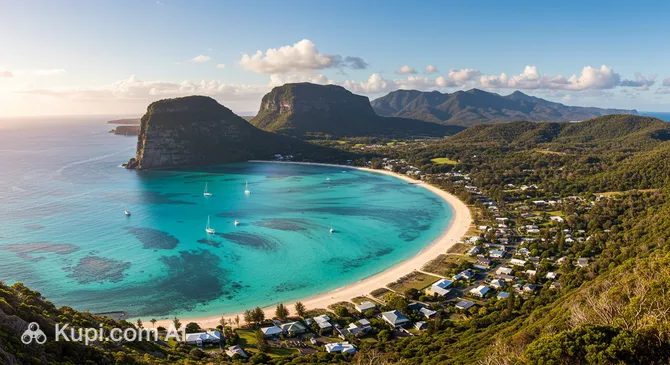
Lord Howe Island. Illustration.
Source: Kupi.com AI

Nature lovers will be captivated by the island's dramatic landscape, dominated by the twin peaks of Mount Gower and Mount Lidgbird. These towering mountains provide a stunning backdrop to the turquoise lagoon, which is home to the world's southernmost coral reef. Whether you are hiking through the Kentia palm forests or snorkeling among colorful fish, the biodiversity here is truly remarkable. Another iconic feature nearby is Ball's Pyramid, the world's tallest volcanic stack, rising majestically from the ocean.

If you are seeking a destination that combines tranquility with adventure, Lord Howe Island is the perfect choice. Its commitment to conservation ensures that the environment remains unspoiled, offering a rare opportunity to connect with nature in its purest form. We invite you to experience the magic of this Australian gem.

Weather Overview

Lord Howe Island is renowned for its pleasant, subtropical climate, making it a welcoming destination throughout the year. The island enjoys mild conditions without extreme heat or cold, largely due to the moderating influence of the surrounding Tasman Sea. Visitors can generally expect warm summers with comfortable breezes and mild winters with frequent showers that keep the landscape lush and green.

During the summer months of December through February, average temperatures typically range from 21°C to 24°C, creating perfect conditions for swimming and snorkeling. While this is the warmest time of year, rain is still possible, with about 6 to 10 wet days per month. For a more detailed breakdown of conditions for your specific travel dates, you can check the current weather in Lord Howe Island.

As the year progresses into winter (June to August), the air cools down, with average temperatures dropping to around 17°C to 18°C. This season tends to be wetter, with the data indicating up to 15 wet days in months like June and August. Despite the higher chance of rain, the climate remains gentle enough for hiking the twin peaks or exploring the forests.

Interesting Facts

Beyond the main attractions and breathtaking views, Lord Howe Island holds many fascinating secrets that make it a truly unique destination in Australia. Here are a few intriguing facts about this isolated paradise that you might not know:

  • A True Digital Detox: There is absolutely no mobile phone reception on the island. While Wi-Fi is available in certain areas, the lack of cell service forces a rare and refreshing break from constant connectivity, encouraging visitors to fully immerse themselves in the natural surroundings.

  • The "Extinct" Insect: While Ball's Pyramid is known as the world's tallest sea stack, it is also the site of a biological miracle. In 2001, scientists rediscovered the Lord Howe Island stick insect—a large, flightless "tree lobster" thought to have been extinct for decades—clinging to the rock's precipitous slopes.

  • The Home of Indoor Palms: If you have a Kentia palm in your home or office, its heritage traces back to this specific island. Lord Howe Island is the only native habitat of this world-famous plant, and for many years, the export of wild palm seeds was the cornerstone of the local economy.

  • An Island of Bicycles: The pace of life here is deliberately slow, with a strict speed limit of just 25 kilometers per hour. There are very few cars, so visitors and locals alike primarily get around by bicycle, adding to the island's tranquil and eco-friendly atmosphere.

How to Get There

Reaching this secluded paradise is an adventure in itself. Since the island is located about 600 kilometers off the Australian mainland, transport options are limited to ensure its pristine environment remains protected and uncrowded. For a complete guide on travel logistics and entry requirements, you can read more about how to get to Lord Howe Island.

The primary and most convenient gateway for visitors is Lord Howe Island Airport (LDH). This small facility is the lifeline of the community, typically welcoming flights from major cities like Sydney and Brisbane. It is situated just 1.7 km from the main settlement area. Given the island's compact size, the transfer to your accommodation is seamless and quick; a taxi or lodge shuttle usually takes just 5 to 10 minutes, allowing you to settle in and start your holiday almost immediately upon landing.

For clarity, here is a summary of the main airport:

AirportPassenger trafficDistance
Lord Howe Island Airport16 0002 km

Main Attractions

The allure of Lord Howe Island lies in its pristine natural environment, offering visitors a range of activities from challenging hikes to serene encounters with marine life. While the island is small, the variety of landscapes ensures that every traveler finds something to marvel at. Here are some of the most captivating places to explore during your stay.

Mount Gower stands as the island's most iconic landmark and offers one of the most highly rated day walks in Australia. Rising 875 meters above sea level, this imposing peak challenges hikers with a steep and rugged ascent that typically requires a licensed guide. The journey takes you through diverse ecosystems, including a rare misty cloud forest at the summit. Reaching the top rewards adventurers with breathtaking panoramic views over the entire island and the sparkling ocean beyond, making the physical effort truly worthwhile.

For a more relaxing but equally memorable experience, Ned’s Beach is a must-visit destination located on the island's eastern side. It is famous for a unique tradition where visitors can wade into the shallows to hand-feed a frenzy of Mullet and Kingfish. The fish are wild but accustomed to humans, swimming right up to your legs in the crystal-clear water. Apart from this interactive experience, the beach is a fantastic spot for snorkeling, with a colorful reef sitting just meters from the shore, easily accessible for swimmers of all abilities.

Just a short boat ride away lies the dramatic Ball’s Pyramid, the world’s tallest volcanic sea stack. Jutting 551 meters straight out of the ocean, this geological wonder is a spectacle to behold from the deck of a tour boat. It is also a premier location for experienced divers, offering the chance to see massive schools of fish and rare species like the Ballina Angelfish. Even if you stay above water, the site is a haven for birdwatchers, as the cliffs teem with seabirds nesting in the jagged rock face.

The Lagoon offers a tranquil contrast to the island's rugged peaks. Protected by the world's southernmost coral reef, this vast expanse of turquoise water is perfect for kayaking, stand-up paddleboarding, and swimming. The calm conditions make it an ideal spot for families or those looking to observe turtles and stingrays gliding over the sandy bottom. Glass-bottom boat tours are also popular here, allowing you to admire the vibrant coral gardens without getting wet.

Local Cuisine

The culinary scene on Lord Howe Island is a reflection of its pristine environment, characterized by a "fresh from the ocean" philosophy that delights seafood lovers. Due to its remote location, the island relies on a combination of high-quality imports and exceptional local produce. The undisputed star of the menu is the Lord Howe Island Kingfish. Caught in the surrounding deep waters, this fish is renowned for its firm texture and sweet flavor. You will find it served in almost every restaurant, prepared in a variety of ways—from delicate sashimi and ceviche to perfectly grilled fillets or traditional beer-battered fish and chips.

A unique aspect of dining here is the island's beloved beach barbecue tradition. Unlike typical picnic spots, the island provides communal wood-fired barbecues at scenic locations such as Ned’s Beach and Old Settlement Beach, complete with chopped wood ready for use. It is a quintessential local experience to pick up a "BBQ pack" of fresh fish and meats from a local store or your lodge and cook your own dinner as the sun sets over the lagoon. This relaxed, open-air dining culture perfectly captures the unhurried pace of island life.

For those looking to sample local libations, the island has a surprising and vibrant craft beverage scene. The Lord Howe Island Brewing Co. produces excellent craft beers, including IPAs and pale ales inspired by local legends and marine life. Similarly, the Lord Howe Island Distilling Co. utilizes endemic botanicals to create unique spirits. Their gins often feature wild lemon and hibiscus foraged directly from the island, offering a distinct taste of the landscape in every sip.

While the number of dining establishments is small, the quality is impressive. Visitors can enjoy everything from casual café lunches at the museum to fine dining experiences within the luxury lodges. "Fish Fry" nights are a popular community event, often held at the local clubs, where tourists and residents mingle over plates of fresh local catch. Whether you are enjoying a gourmet picnic on the sand or a multi-course dinner with a view of Mount Gower, the food here is honest, fresh, and unforgettable.

Travel Tips

Visiting Lord Howe Island is a unique experience that differs significantly from a typical holiday on the mainland. To help you settle into the relaxed rhythm of this isolated paradise and ensure a smooth journey, we have compiled a list of essential practical tips for your stay.

  1. Clothing and Gear: The vibe here is "island casual," so leave the formal wear at home. Pack breathable, lightweight clothing for the day and a light jumper for cooler evenings. Since the weather can be changeable, a good quality rain jacket is essential. If you plan to hike Mount Gower, bring sturdy, broken-in hiking boots; for the water, reef shoes are highly recommended to protect your feet from coral.

  2. Transportation: Forget about public transport, ride-hailing apps, or car rentals—they simply do not exist here for tourists. The primary mode of transport is the humble bicycle. Bike hire is readily available and affordable, and with a speed limit of 25km/h, it is the best way to see the sights. Walking is also popular, and most lodges provide shuttle services for airport transfers and evening dining.

  3. Finances: The local currency is the Australian Dollar (AUD). While credit and debit cards are widely accepted at shops and restaurants, there are no banks and only limited ATM facilities, so carrying some cash is advisable for small purchases or honor-system stalls. Tipping is not mandatory but is appreciated for exceptional service.

  4. Health and Safety: The island is incredibly safe with virtually no crime, allowing you to explore with peace of mind. There is a small hospital and dispensary on the island for medical needs. However, pharmacy supplies can be limited, so it is crucial to bring a sufficient supply of any prescription medications and basic first-aid items like seasickness tablets and insect repellent.

  5. Communication: English is the main language spoken. The most important thing to know is that there is no mobile phone coverage on the island. You will not be able to make calls or use 4G/5G data. Most lodges offer Wi-Fi, and there are public hotspots, but this is the perfect opportunity to embrace a digital detox. Download any maps or reading material before you arrive.

  6. Local Etiquette: The community is small and friendly, and visitors are expected to reciprocate. It is customary to wave to passing cyclists and pedestrians—a gesture known as the "Lord Howe Wave." Patience is key; service is relaxed, matching the slow pace of island life, so don't rush.

  7. What to Avoid: Strictly avoid bringing any fresh fruit, vegetables, flowers, or seeds in your luggage. The island has strict biosecurity measures to protect its unique ecosystem from pests and diseases. Heavy fines apply, so use the amnesty bins at the airport if you are unsure.

  8. Additional Tip: Be very mindful of luggage restrictions. The flights to the island are operated by smaller aircraft (Dash-8s), which often have stricter weight limits (typically 14kg for checked bags) compared to standard domestic flights. Check your ticket details carefully and pack light to avoid excess baggage fees or having your luggage arrive on a later flight.

By keeping these tips in mind, you can avoid common pitfalls and fully immerse yourself in the tranquility of Lord Howe Island. Pack your sense of adventure and get ready to disconnect from the world in one of the most pristine environments on Earth.

Entertainment & Nightlife

Entertainment and nightlife on Lord Howe Island are defined by the same tranquility that characterizes its daylight hours. You will not find neon-lit nightclub districts, thumping discos, or 24-hour party zones here. Instead, the evening scene is intimate, relaxed, and centered around community connection. The "nightlife" is concentrated within the main Settlement area and at the various lodges, where the atmosphere is warm and welcoming. Visitors typically spend their evenings enjoying a quiet drink, sharing stories of the day's adventures, or simply marveling at the spectacular, unpolluted starry skies.

The social hub for both locals and visitors is often the Lord Howe Island Bowling Club. This unpretentious venue offers a genuine slice of island life, serving cold beverages and honest meals in a casual setting. It is the perfect place to mingle with residents and get a feel for the local culture. Similarly, the Lord Howe Island Golf Club is a favorite evening destination, particularly renowned for its "sunset drinks" on the veranda. With views stretching out over the ocean and mountains, it provides a stunning backdrop for a relaxed evening cocktail. Another popular spot is The Crooked Post, a small bar that offers a cozy atmosphere for enjoying a glass of wine or a craft beer.

The dress code across the island is universally "island casual." There is no need for high heels or formal jackets; neat casual attire is perfectly acceptable everywhere, from the clubs to the lodge restaurants. Opening hours are generally conservative, with most venues winding down relatively early compared to mainland cities. The crowd is a mix of relaxed holidaymakers and friendly locals, creating a safe and inclusive environment where conversation flows easily.

Navigating the island at night requires some planning due to the distinct lack of streetlights. It gets pitch black once the sun goes down, so carrying a torch (flashlight) is absolutely essential if you plan to walk. While the island is incredibly safe from a crime perspective, the main "danger" at night comes from the local wildlife. During the summer months, Flesh-footed Shearwaters (Muttonbirds) nest in burrows and often sit on the roads at night. For this reason, cycling after dark is generally discouraged to protect the birds. Most visitors rely on the complimentary shuttle buses provided by restaurants and lodges to get around safely for dinner.

While the focus is often on outdoor adventures, the island offers some low-key daytime entertainment as well. The Lord Howe Island Museum is a cultural treasure trove, featuring historical displays, environmental exhibits, and a visitor center that doubles as a meeting place. It is the go-to spot for learning about the island's unique heritage and biodiversity. Occasionally, the local public hall hosts community events or movie nights, adding a charming, small-town feel to the entertainment options available.

Parks & Museums

Lord Howe Island is unique in that nearly 75% of its landmass is permanently preserved as a marine park and subtropical rainforest, meaning the entire island functions as one vast, living sanctuary. Rather than manicured city parks, visitors here explore ancient forests and protected reserves that have remained largely unchanged for centuries. The cultural heart of the community is small but vibrant, centered around a museum that punches well above its weight in terms of historical and environmental significance.

One of the most enchanting natural areas to explore is the Valley of the Shadows. Located near the middle of the island, this area is famous for its spectacular groves of ancient Banyan trees. These massive fig trees create a cathedral-like canopy with their aerial roots descending from the branches to form new trunks, creating a labyrinth of wood and leaves. It is a cool, shaded retreat perfect for a quiet walk, where the sunlight filters through the dense foliage in mesmerizing patterns.

Another significant green space is Stevens Reserve, situated close to the main settlement. This area offers a gentle, flat walking track that winds through a lush forest of tall Kentia palms and Banyan trees. It is an excellent spot for birdwatching, as the protected canopy is often filled with the calls of the Lord Howe Island Golden Whistler and the Emerald Ground-dove. Unlike the rugged mountain climbs, this reserve provides an accessible way for visitors of all fitness levels to immerse themselves in the island's famous subtropical vegetation.

When it comes to culture and history, the Lord Howe Island Museum is the undisputed focal point. Far more than just a collection of artifacts, this facility serves as the island's social and educational hub. The museum features professionally curated exhibitions that cover everything from the island's volcanic origins and unique biodiversity to its discovery in 1788. Visitors can marvel at the skeletons of extinct horned turtles, learn about the dramatic rescue of the Lord Howe Island stick insect, and explore the "Treasure Chest" of items recovered from historical shipwrecks in the surrounding reefs.

History enthusiasts will appreciate the museum's dedication to the Catalina Flying Boat era. During the mid-20th century, these seaplanes were the primary link between the island and the mainland, landing gracefully in the lagoon. The museum houses a wealth of photographs and memorabilia from this romantic period of aviation history. Additionally, the island's maritime heritage is evident in various monuments and plaques scattered around the settlement, commemorating the brave sailors and settlers who made a life on this remote outpost.

For a truly authentic experience, look out for the evening lectures hosted at the museum. Several times a week, local naturalists and visiting scientists present fascinating talks on subjects ranging from seabird migration to coral reef health. These sessions offer a deeper dive into the science behind the scenery and provide a rare chance to ask experts about the unique ecosystem you are exploring.

Getting Around

Navigating Lord Howe Island is a unique experience that is refreshingly different from visiting a typical city. It is important to understand immediately that there is no public transport system in the traditional sense. You will not find buses, trains, trams, or a metro network here, nor are there any ride-sharing apps like Uber or taxi-hailing services. The island is small, protected, and deliberately keeps traffic to a minimum to preserve its tranquil atmosphere and environment.

The primary mode of "public" transport for visitors is the humble bicycle. Upon arrival, most tourists rent a bike for the duration of their stay, and this becomes their main way of getting around. There are several bike hire depots on the island, often conveniently located near accommodations or in the central settlement area. The terrain is relatively flat in the populated areas, making cycling easy and enjoyable for most fitness levels. A strict speed limit of 25 km/h applies to all vehicles, including bikes, ensuring the roads remain safe and relaxed.

Regarding payment and access, since there is no state-run transport network, there are no travel passes, smart cards, or ticket validation machines. Instead, you simply pay for your bike rental. Rates are typically calculated per day or per week, and payment is usually accepted via credit card or cash at the rental shop or your lodge. It is advisable to arrange your bike hire as soon as you arrive, as demand can be high during peak tourist seasons.

For those who prefer not to cycle or need to travel at night, lodge shuttles are the main alternative. Most accommodation providers offer complimentary or low-cost bus transfers for airport arrivals and departures. Additionally, many restaurants and lodges run courtesy shuttle buses in the evenings to transport guests to and from dinner. There is a very limited local taxi service available for ad-hoc trips, but availability can be sporadic, so it is best to book in advance if strictly necessary.

Walking is another viable and popular option, as many attractions and shops are within a comfortable distance of each other. However, a crucial piece of practical advice for pedestrians and cyclists alike is to carry a torch (flashlight) at night. There are no streetlights on the island to prevent light pollution, meaning it gets pitch black after sunset. Furthermore, you must be vigilant for wildlife, particularly the shearwaters (muttonbirds) that often rest on the roads during the breeding season.

Accommodation

Accommodation on Lord Howe Island is as unique as its environment. Due to the strict limit of 400 visitors allowed on the island at any one time, you will not find high-rise resorts, sprawling hotel chains, or budget hostels here. Instead, the island offers a curated selection of intimate, family-run lodges, self-contained apartments, and exclusive luxury retreats. The style is distinctly relaxed, low-rise, and designed to blend seamlessly with the lush subtropical surroundings, ensuring that nature remains the dominant feature.

Most accommodation options are conveniently located in the main Settlement area on the western side of the island. Staying here places you within easy walking or cycling distance of the Lagoon, the museum, the post office, and essential shops. For those seeking a bit more seclusion, there are properties tucked away near Ned’s Beach on the eastern side or nestled at the base of the mountains, offering tranquility and spectacular views of Mount Gower and Mount Lidgbird.

Booking Tip: Because of the visitor cap, securing accommodation is the most critical part of your travel planning. It is highly recommended to book your stay at least 6 to 12 months in advance, especially if you plan to visit during the peak summer season or school holidays. Importantly, you generally cannot purchase a flight to the island without proof of a confirmed accommodation booking.

The price range for staying on Lord Howe Island typically spans from mid-range to high-end luxury. Since there are no campsites or backpacker hostels for regular tourists, visitors should budget accordingly. Many lodges operate on a full-board or half-board basis, including breakfast and dinner in the nightly tariff, which adds to the convenience given the limited number of restaurants. Booking is usually done directly with the lodges or through specialized travel agents who can arrange comprehensive packages including airfare.

Nearby Cities

For those looking to explore the wider region of New South Wales before or after their island stay, the closest mainland cities offer their own distinct attractions and serve as gateways to the coast:

Port Macquarie is a vibrant coastal town located at the mouth of the Hastings River. It is famous for its high population of koalas and the dedicated Koala Hospital, which is a must-visit for animal lovers. Visitors can enjoy the scenic 9-kilometer Coastal Walk, offering stunning views of rocky headlands and beaches, or explore the historic convict sites that date back to the town's penal colony origins. Its relaxed atmosphere makes it a perfect stopover for those appreciating nature and history.

Coffs Harbour is another major destination on the North Coast, renowned for its banana plantations and the iconic "Big Banana" monument. Beyond the kitsch, it serves as the gateway to the Solitary Islands Marine Park, a haven for divers and snorkelers. The city features a beautiful jetty area, botanical gardens, and Muttonbird Island Nature Reserve, where you can walk up for panoramic views of the coastline and the Great Dividing Range.

These nearby destinations offer a glimpse into the diverse culture and landscapes of the region, providing a wonderful contrast to the secluded island life.

Shopping & Souvenirs

Shopping on Lord Howe Island is a refreshing departure from the commercialized retail experiences found in major cities. There are no high streets lined with international brands or sprawling department stores here. Instead, the shopping scene is small-scale, intimate, and focused on essentials, local produce, and unique island mementos. Visitors will find a handful of general stores and boutiques that cater to both the resident community and tourists, offering a relaxed pace where a chat with the shopkeeper is often part of the transaction.

The main hub for retail activity is located in the Settlement area, particularly along Ned's Beach Road and near the Lagoon. This central part of the island houses the primary general stores where you can purchase groceries, fresh bread, and daily necessities. It is also where you will find the post office and a few specialty boutiques selling clothing, swimwear, and gifts. The area is compact enough to explore on foot or by bicycle, allowing you to easily hop between shops in between your beach visits.

Travelers looking for large shopping complexes will not find them here. There are no shopping malls on Lord Howe Island. The retail environment is strictly low-rise and community-focused, preserving the island's natural charm. The absence of large commercial centers contributes to the peaceful atmosphere, encouraging visitors to focus on the environment rather than consumerism.

While there are no bustling flea markets in the traditional sense, the island does have a strong culture of local produce. You may encounter roadside stalls or "honesty boxes" where locals sell excess fruit, vegetables, or homemade jams. These small, unmanned spots rely on trust, allowing you to pick up fresh ingredients and leave the money in a designated box. It is a charming aspect of island life that highlights the safety and community spirit of the destination.

When it comes to souvenirs, the island offers distinct items that reflect its heritage and environment. The most iconic keepsake is related to the Kentia Palm, which is native to the island; you can often find certified seeds or seedlings permitted for export. Other popular items include locally distilled gin infused with island botanicals, photography prints of the dramatic landscapes, and handmade jewelry. The shop at the local museum is particularly good for books on the island's history, nature guides, and high-quality gifts.

Store opening hours are generally conservative and align with the laid-back lifestyle. Most shops open around 9:00 AM and close by 5:00 PM on weekdays. Weekend hours can be reduced, with some stores closing at midday on Saturdays and remaining closed on Sundays. Payment methods are modern, with credit and debit cards widely accepted at the main stores and boutiques. However, it is wise to carry some cash (AUD) for smaller purchases or for the roadside honesty stalls where electronic payment is not an option.

Regarding tax-free shopping, Lord Howe Island is part of New South Wales, Australia, and standard Goods and Services Tax (GST) applies to purchases. There is no special tax-free status for the island itself. International visitors may be eligible for the Tourist Refund Scheme (TRS) upon their final departure from Australia at an international airport, provided they meet the minimum spend requirements in a single store, but this is processed on the mainland, not on the island.

Reached the end of the page?

That means the route is fully explored