Support

Bois du Cazier

About

Located in the vicinity of the industrial city of Charleroi, the Bois du Cazier complex is an outstanding monument of the industrial era. This former coal mine now functions as a large-scale memorial and open-air museum, serving as a reminder of the hard labor and the lives of the miners who worked in the heart of Belgium.

The name of the site dates back to the early 19th century and is associated with Baron Jean-Baptiste de Cazier, on whose lands rich coal deposits were discovered. Over the years, the mine evolved from a simple enterprise into a symbol of the Wallonia region, and in 2012, it was rightfully included in the UNESCO World Heritage list as part of the country's most significant coal mining sites.
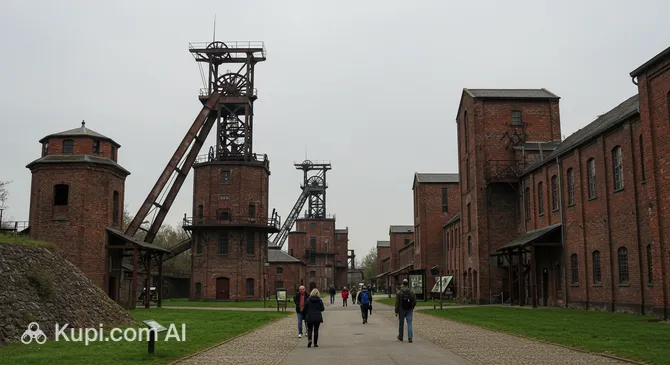
Bois du Cazier
Bois du Cazier. Иллюстрация. Источник: Kupi.com AI

The visual appearance of the complex is striking in its contrast: stark metal structures and brick industrial buildings stand out effectively against the backdrop of reclaimed nature. Today, it is not just a historical site, but a cultural space that bridges the memory of the past with the goal of preserving Europe's industrial heritage for future generations.

Contacts

For more details or to book a group tour, you can use the following contact information:

How to contactContact
AddressRue du Cazier 80, 6001 Charleroi, Belgium
Phone+32 71 88 08 56
Websitewww.leboisducazier.be

What to Do

The memorial grounds offer a rich program divided between three main museums. The first and most significant is dedicated to the 1956 tragedy: here, through personal belongings and documents, the story of the major accident that changed the approach to labor safety throughout Europe is revealed. The second museum invites visitors on a journey through the world of industrialization, showcasing technical achievements and the stages of coal mining development in the region.

Of particular interest is the Glass Museum, which houses unique exhibits demonstrating another important side of the region's industry. For those who want to dive as deep as possible into the context, an audio tour is available. With the help of professional guides in your headphones, you can literally hear the voices of the past and learn about the daily lives of miners, which were full of challenges and heroism.

In addition to the museum halls, be sure to take a walk around the complex itself. Here you can examine the winding towers, old workshops, and powerful machinery that once powered the massive mine. The architectural power of these structures, combined with the silence of the memorial park, creates an atmosphere conducive to reflecting on the value of human life and progress.

Getting There

The mining complex is located in the southern part of Charleroi, approximately 60 kilometers from Brussels. If you are traveling by car from the capital, the journey takes about an hour via the E19 or A8 motorways. Visitor parking is available on-site at Rue du Cazier 80.

For those who prefer public transport, the most convenient way is to take a train to Charleroi-Central station. From the station, regular city buses (such as line 52) run to the museum, dropping you off almost at the entrance within 15–20 minutes.

You can also use local taxis or ride-sharing apps directly from the railway station or anywhere in the city center. A taxi ride is quick and comfortable, which is especially convenient if you are planning a busy day of sightseeing.

Ближайший город: Charleroi

History & Facts

The history of this site is marked by deep sorrow: Bois du Cazier gained worldwide prominence following the terrible tragedy of August 8, 1956. A massive underground fire claimed the lives of 262 miners. This catastrophe remains the largest in the history of the region's mining industry, leaving hundreds of children orphaned and widows across Europe, particularly in Italy, where most of the workers originated.

It was these tragic events that served as a powerful catalyst for a complete overhaul of industrial safety standards across Western Europe. The horrifying consequences of the accident forced authorities to implement much stricter labor protection rules, which eventually became the standard for many industries. The mine itself continued to operate until 1967, after which it was decommissioned.

The site's second birth was made possible by the initiative of former workers and Italian immigrants. In 1985, they began a campaign to preserve the complex as a historical monument and a memorial to their fallen comrades. Thanks to their efforts, the mine was recognized as a technical monument in 1990, underwent restoration, and eventually transformed into the museum complex we see today.

Time Needed

To fully explore the exhibitions and stroll through the complex grounds at a leisurely pace, experienced travelers recommend allocating about 1.5–2 hours. This is sufficient time for a thoughtful audio guide tour and a visit to all three thematic museums.

If you plan to study the archival materials in detail, admire the industrial architecture, and walk through the adjacent natural area, your visit may take up to half a day. In any case, this site is not one to be rushed, as every exhibit here calls for emotional empathy and reflection.

Working Hours

The museum complex welcomes visitors throughout the week, except for Mondays. From Tuesday to Friday, the doors are open from 9:00 AM to 5:00 PM. This is a convenient time for those who wish to view the exhibits in a quieter atmosphere during the weekdays.

On weekends, the schedule shifts slightly: on Saturday and Sunday, Bois du Cazier awaits guests from 10:00 AM to 6:00 PM. Please note that Monday is a day off, so plan your trip in advance to avoid arriving at closed gates.

DayWorking hours
ПонедельникЗакрыто
Вторник9:00 – 17:00
Среда9:00 – 17:00
Четверг9:00 – 17:00
Пятница9:00 – 17:00
Суббота10:00 – 18:00
Воскресенье10:00 – 18:00

Nearby

After visiting the memorial complex, it is worth taking time to see other interesting spots in the area. The city and its surroundings offer both historical monuments and modern entertainment venues that can make your trip even more fulfilling and diverse.

Exploring nearby attractions will help you better understand the cultural landscape of the region and its architectural heritage.

NameDistance
Black & White Burger2.8 km
Manolo Bar3 km
Rive Gauche3 km
Le Cribbi3.2 km
Brunchy's3.5 km
BPS22 Art Museum of Hainaut Province3.9 km
Ville 2 Shopping Center4.2 km

Reached the end of the page?

That means the route is fully explored