Support

Camiri

About the Airport

Camiri Airport, officially named "Teniente Coronel Nestor Rojas", is not just a runway but a true gateway to the heart of the Bolivian Gran Chaco. Located in a city rightfully considered the oil capital of Bolivia, it plays a key role in the transport system of this important economic region. For travelers, this small but strategically important airport serves as a starting point for exploring unique nature and discovering the history and culture of this distinctive land.

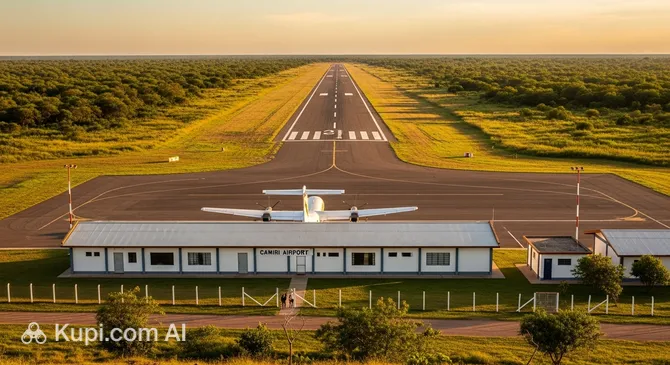
Camiri. Illustration.
Source: Kupi.com AI
PropertyValue
IATA CodeCAM
ICAO CodeSLCA
CityCamiri
CountryBolivia
TimezoneAmerica/La_Paz
ScheduleOnline Timetable

The main advantage of Camiri Airport is its compactness and simplicity. There is no hustle and bustle or long queues typical of major aviation hubs: flight check-in, security control, and baggage claim take minimum time, making the journey more comfortable. The airport serves mainly domestic flights, connecting the region with major cities in the country, such as Santa Cruz de la Sierra. Despite its modest size, it is an indispensable transport hub for locals, oil industry workers, and the few tourists seeking to discover unexplored corners of Bolivia.

Contact Information

  • Official Website: Camiri Airport is a small regional airport and does not have its own separate website. Management is carried out by the national service AASANA (Administración de Aeropuertos y Servicios Auxiliares a la Navegación Aérea), on whose official portal general information can be found.
  • Inquiry Service Phone: There is no direct public phone number for the airport. For all questions related to schedules, booking, and flight status, it is recommended to contact the airline you are flying with directly.
  • Airport Address: The airport is located in the city of Camiri, Santa Cruz Department, Bolivia.
  • Email: There is no specialized email address for passengers. Please use the contact details of your airline for communication.
  • Social Media: Camiri Airport does not maintain official pages on social networks. The most up-to-date flight information is provided by the air carriers.
  • Lost Baggage Information: In case of loss or damage to baggage, you must immediately contact the Lost & Found service of your airline at the arrival airport. The airport does not handle such requests directly.
  • Passenger Support Contacts: Passenger support for all issues, including check-in, boarding, and special services, is provided by airline representatives at the airport.

How to Get to the Airport

Camiri Airport (CAM) is located in the immediate vicinity of the eponymous city in Bolivia, so getting to it is not difficult. The trip from the center of Camiri usually takes just 10–15 minutes depending on the chosen transport and traffic situation. Several convenient options are available to travelers, ranging from budget-friendly to more comfortable ones.

Public Transport is the most economical way to get to the airport. Route taxis, known as "trufis", and small buses called "micros" operate in the city. Although they may not have a specific route directly to the terminal, many pass in the immediate vicinity. You will need to check with the driver which one is heading towards the airport. This option is suitable for travelers with light luggage who want to save money.

Taxis and Moto-taxis are the most convenient and fastest way to reach the airport. In Camiri, as in many Bolivian cities, not only car taxis are popular but also moto-taxis, which are ideal for solo travelers with a backpack. The cost of the trip is low, but it is critically important to agree on the price with the driver in advance, before the trip begins, as taximeters are rarely used. This option ensures that you arrive at the terminal without unnecessary transfers.

For those who prefer maximum freedom of movement, car rental can be a good solution. There are several local rental agencies in the city. Having your own transport will allow you not only to reach the airport comfortably but also to explore the surroundings of the Gran Chaco region. Camiri Airport is equipped with a small parking lot where you can leave your car while waiting for a flight or for a longer period. Given the size of the airport, finding a free space is usually not a problem.

When planning your trip around Bolivia, it is also worth considering larger airports in the region as alternative arrival or departure points. The nearest major air hubs are Juana Azurduy de Padilla International Airport in Sucre and, of course, the country's main hub — Viru Viru International Airport in Santa Cruz de la Sierra, from where you can reach Camiri by bus or domestic flight.

Terminals and Map

Camiri Airport (CAM) is a small regional aviation hub with a structure that is extremely simple and understandable for any traveler. There is one passenger terminal operating here, serving both arriving and departing flights. Its compact dimensions and lack of a complex layout make navigation intuitively easy, even if you are here for the first time.

The terminal is a single-story building where all key zones are within walking distance of each other. Departure and arrival zones are located under one roof, which completely eliminates the need for long walks or the use of shuttles. After disembarking from the aircraft, passengers walk to the baggage claim area, and check-in counters are located right at the airport entrance. It is practically impossible to get lost here.

Flight check-in and security screening procedures at Camiri Airport usually take minimum time thanks to the low passenger flow. As a rule, all formalities can be settled very quickly. Nevertheless, it is recommended to arrive at the airport approximately 1–1.5 hours before departure to check in luggage and pass security control without haste.

The main advice for navigation is simply to follow the signs; although there are few, they clearly lead to the necessary zones. Given the size of the airport, you will easily orient yourself on the spot. This is a typical small airport for domestic flights within Bolivia, where the main focus is on functionality rather than a variety of services.

Airport History

The history of Camiri Airport (CAM) is closely intertwined with the development of the oil and gas industry in Bolivia. The airport was built in the mid-20th century by the state oil company Yacimientos Petrolíferos Fiscales Bolivianos (YPFB), primarily to service its operations. At that time, the city of Camiri was known as the "oil capital" of the country, and air transport played a key role in transporting personnel, equipment, and ensuring logistics for the rapidly developing industry.

In addition to its industrial role, Camiri Airport has witnessed important historical events. In the 1960s, it was used as a strategic military transport hub by the Bolivian army during operations against the guerrilla unit led by Ernesto Che Guevara. The airport ensured the deployment of troops and supplies to the Ñancahuazú region, making it a significant site in the country's history of that period.

Over the decades, the airport has undergone various stages of modernization to meet growing safety and comfort requirements. The most large-scale reconstruction was completed in 2018. As part of this project, a brand new passenger terminal and a modern control tower were built, and the runway and taxiways were significantly improved. This modernization transformed the former departmental airfield into a fully-fledged modern regional airport.

Today, Camiri Airport, managed by the national air navigation service AASANA, serves as an important aerial gateway for the entire Bolivian Chaco region. It not only continues to support economic activity but also ensures reliable passenger connections, linking Camiri with other major cities in Bolivia and contributing to the development of local tourism and business.

Services and Facilities

Camiri Airport (CAM) is a small regional aviation hub serving the city of Camiri in Bolivia. Given its modest size, the set of services here is basic and aimed at satisfying the essential needs of passengers waiting for their flight. When planning a trip through this airport, keep in mind that its infrastructure is significantly simpler than in major international hubs.

The terminal has a general waiting hall. Regarding food and shopping, you will likely find only a small kiosk or cafeteria where you can purchase drinks, sandwiches, and light snacks. Full-service restaurants, duty-free shops, and other retail outlets are absent. There are no specialized VIP lounges or premium comfort halls at Camiri Airport.

Access to Wi-Fi may be limited or absent, so do not rely on it for work or communication. There are also few charging stations for electronic devices — it is recommended to carry a portable power bank. There are no bank branches, ATMs, or currency exchange points in the airport building, so it is best to resolve all financial matters in the city beforehand.

No special play areas or mother-and-child rooms are provided for passengers with children. Passengers with disabilities are recommended to notify their airline in advance about the need for assistance so that airport staff can facilitate boarding and disembarking. Basic medical services can be provided at the first aid point.

There are no hotels, business centers, or conference rooms on the airport territory. All the nearest hotels and venues for business meetings are located directly in the city of Camiri, which can be easily reached by taxi.

Dining

When planning a departure from Camiri Airport (CAM), it is important to consider that this is a small regional air terminal, and the choice of dining establishments here is quite modest. Do not expect a wide variety of restaurants and cafes as found in large international hubs. Nevertheless, passengers have basic options for a snack before their flight.

Typically, a small cafeteria or buffet operates in the main hall of the airport, accessible before passing security control. Here you can purchase light snacks such as sandwiches, pastries, and sweets. If you are lucky, you might try some classic street food of Bolivia, such as empanadas (stuffed pastries) or salteñas. This is a great option for a quick bite. Drinks usually available include coffee, tea, water, and carbonated beverages.

It is unlikely that you will find a full lunch or dinner at Camiri Airport. Therefore, if you have time, it is better to eat beforehand at one of the establishments in the city of Camiri. Options for passengers with special dietary requirements (vegetarian, gluten-free, or Halal meals) are likely unavailable at the airport. In this case, it is most reliable to bring food with you.

The opening hours of the local cafe are usually tied to the flight schedule — it opens a few hours before departure and closes after the last plane leaves. Prices may be slightly higher than in the city, which is standard practice for airports. Thus, Camiri Airport is suitable for having a coffee and a sandwich, but for a more substantial meal, it is better to rely on establishments outside the airport.

Travel Tips

Planning a trip through the airport of Camiri city? To ensure your trip starts smoothly and without stress, consider a few simple tips. Camiri Airport (CAM) is a small regional hub, so there are rarely large crowds here, making it quite convenient for passengers.

Arrival Time and Check-in. It is recommended to arrive at the airport at least 1.5–2 hours before a domestic flight departure. This time will be sufficient to calmly check in luggage, get your boarding pass at the counter, and pass security screening. If your airline offers online check-in, use it to save time.

Seat Selection. For short flights from Camiri, seat selection might seem less important, but it can still add comfort. If you want to enjoy views of the landscapes of Bolivia, especially during takeoff and landing, choose a window seat. If the ability to easily stand up and stretch your legs is important to you, an aisle seat is more suitable.

Hand Luggage. Standard rules usually allow carrying liquids in containers up to 100 ml, packed in a single transparent bag. Always keep electronics, documents, medicines, and valuables with you in your hand luggage. It is strictly prohibited to bring weapons, sharp objects, and flammable substances into the cabin. Before leaving for the airport, do not forget to check the exact rules of your airline.

Connecting Passengers. Camiri Airport serves primarily domestic flights. If you have a connecting flight, it will likely be at a major Bolivian hub, for example, in Santa Cruz (VVI). When checking in luggage, be sure to clarify whether it will be automatically transferred to the next flight or if you will need to collect it and check it in again.

Customs Control. There is no need to pass customs control on domestic flights within Bolivia. Customs inspection procedures are provided only for passengers arriving from abroad, which is rare for Camiri Airport. However, if you are flying internationally into Bolivia, be prepared for standard questions and, if necessary, for declaring imported goods.

Saving Time and Money. To save money, book tickets in advance and compare prices. Traveling light, with only hand luggage, will save you both time and money on baggage fees. Prices for food and drinks at the airport can be high, so bring an empty water bottle to fill after the security zone, and a small snack.

In Case of Flight Delay. If your flight is delayed, first contact the airline representative for up-to-date information. Monitor updates on information screens. For long delays, passengers may be entitled to drinks, meals, or even hotel accommodation. It is useful to have a portable charger and something for leisure, such as a book or a movie on a tablet.
Reached the end of the page?

That means the route is fully explored