Support

Rurrenabaque

About the Airport

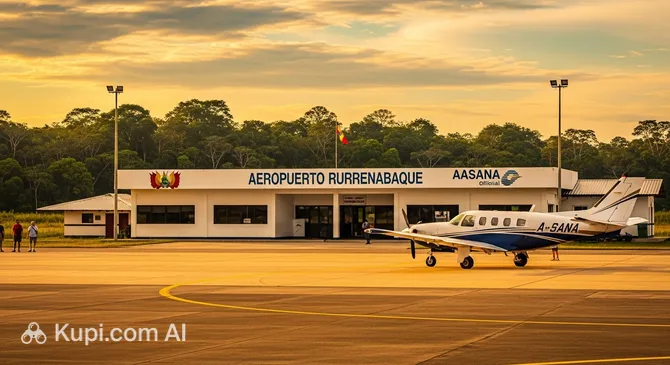
Rurrenabaque. Illustration.
Source: Kupi.com AI

Rurrenabaque Airport is more than just a transport hub; it is a long-awaited portal to the heart of the Bolivian Amazon. Travelers arrive here ready to exchange the noise of big cities for the sounds of the jungle and set off for Madidi National Park or the famous Pampas. The flight itself is often described as a separate excursion, as the view from the window offers a stunning panorama of the transition from mountain ranges to the endless green sea of the tropics.

PropertyValue
IATA CodeRBQ
ICAO CodeSLRQ
CityRurrenabaque
CountryBolivia
TimezoneAmerica/La_Paz
Top AirlinesBoliviana de Aviacion
ScheduleOnline Timetable

Airport Features and Benefits:

  • Scenic Approach: Landing in Rurrenabaque is considered one of the most beautiful in the region, allowing passengers to observe the dramatic change in landscape from the Andean foothills to the dense Amazonian selva.
  • Maximum Accessibility: The airport is located very close to the city; a trip to the center by taxi or local moto-taxi takes no more than 10–15 minutes.
  • No Queues: Thanks to the compact terminal and low passenger flow, check-in and baggage claim procedures are much faster than in major capital airports.
  • Reliability: The presence of an asphalt runway (unlike many other small airfields in the jungle) allows flights to operate year-round, minimizing cancellations due to rain.

Contact Information

Finding current and centralized contact information for small regional airports, such as Rurrenabaque Airport (RBQ), can be challenging. They often do not have dedicated websites or 24-hour help desks. Below is general information and recommendations for finding the necessary contacts.

  • Official Website: At present, Rurrenabaque Airport does not have its own official website. It is recommended to check flight status and airport operation information on the websites of airlines flying to Rurrenabaque, or on the airport administration portal of Bolivia (AASANA).
  • Information Desk Phone: A direct public phone number for the airport information desk is often unavailable. To get information about schedules, delays, or cancellations, it is most reliable to contact your airline directly.
  • Airport Address: The airport is located a few kilometers from the center of Rurrenabaque, in the Beni Department, Bolivia. Exact address: Aeropuerto de Rurrenabaque, Rurrenabaque, Bolivia.
  • Email: A dedicated email address for general passenger inquiries is generally not published. It is recommended to use airline communication channels.
  • Social Media: The airport does not maintain official social media pages. Follow the pages of carriers flying to this region for news and updates.
  • Lost Baggage Information: Issues regarding lost or damaged baggage are handled exclusively by the airline you flew with. Contact your carrier's representative at the airport or reach out to their customer support service.
  • Passenger Support Contacts: Primary support for passengers (assistance with tickets, check-in, special services) is provided by airline representatives. For general navigation questions within the terminal, you can ask any airport staff member on site.

How to Get to the Airport

Rurrenabaque Airport (RBQ) is located just a few kilometers from the city center, so getting there is quick and inexpensive. Rurrenabaque serves as the gateway to the Amazon jungles of Bolivia, and transport links to the airport are primarily oriented towards the needs of tourists.

The most popular and affordable way to get around is by taxi or moto-taxi. The latter are nimble three-wheeled motorcycles with a cabin for passengers and are an integral part of the local flavor. The trip from the city center to the airport will take no more than 10-15 minutes. The cost of a moto-taxi ride is usually very low, while a regular taxi will cost slightly more but offers more space for luggage.

Many travelers use pre-arranged transfers. If you have booked a jungle tour or a hotel room, check if an airport meet-and-greet is included in the price. Most tour agencies and hotels offer this service for the convenience of their clients, eliminating the need to search for transport upon arrival.

There is no conventional public transport, such as city buses with a regular route to the airport, in Rurrenabaque due to its small size. Car rental is also not a common practice in the city itself; tourists usually arrive by plane and then use the services of local carriers. Parking near the airport consists of a small area suitable for short stops, but it is not intended for long-term vehicle storage.

Terminals and Map

Rurrenabaque Airport (RBQ) in Bolivia is a small regional aviation hub distinguished by its simplicity and compactness. You will not have to deal with the complex structure typical of large international airports.

The air terminal consists of just one small terminal that serves both arriving and departing flights. All functional zones are located in a single building, making navigation extremely simple. There is no division into Terminals A, B, C, or domestic and international sectors, as the airport operates primarily with local airlines.

The terminal layout is intuitive. Immediately upon entering, you will see the check-in counters. After checking in and dropping off luggage, passengers move to a small security screening area, followed by the single waiting hall with a boarding gate. The arrival area and baggage claim belt (often just a cart or a designated spot) are also located in the same building, eliminating the need for long walks.

Thanks to the airport's modest size, completing all formalities, including check-in and security, usually takes minimal time. Nevertheless, it is recommended to arrive at the airport approximately 1.5 hours before departure. Sometimes, before the departure of a single flight, many people gather in the small hall, which can lead to queues. It is practically impossible to get lost here — just follow the flow of other passengers, and you will easily find everything you need.

Airport History

The history of Rurrenabaque Airport (RBQ) is a vivid example of how the development of transport infrastructure can radically change the life of an entire region. For a long time, the air gateway to the Bolivian Amazon was nothing more than a simple dirt runway that appeared in the mid-20th century to connect this remote corner of Bolivia with the rest of the world. This airfield was vital, but its operation depended heavily on weather conditions.

A key moment in the airport's history was its complete reconstruction, completed in 2010. Until then, landing in Rurrenabaque, especially during the rainy season, was a real adventure: the dirt strip turned into mud, which often led to flight cancellations and made travel unpredictable. Tourists and locals could be stuck for several days waiting for flying weather.

Modernization completely changed the situation. The main achievement was the construction of a modern asphalt runway, which allowed flights to be received year-round and in more difficult weather conditions. In addition, a new, albeit small, passenger terminal was built, significantly increasing the level of comfort and safety for travelers. This event became a real breakthrough for the region's tourism industry, making access to Madidi National Park and the Pampas more reliable.

Interesting fact: the old dirt strip was notorious among pilots and was considered one of the most difficult in the country. Today, Rurrenabaque Airport is not just a transport hub, but a symbol of progress and a key element of the regional economy, which depends entirely on tourism. Its history is a journey from a risky runway in the jungle to a modern and reliable gateway to the amazing world of the Bolivian Amazon.

Services and Amenities

Rurrenabaque Airport (RBQ) is a small air gateway to the Amazonian part of Bolivia, and the range of services here corresponds to its regional status. Passengers should note that the terminal infrastructure offers only the essentials.

Restaurants, Cafes, and Shops: There are no full-service restaurants or Duty-Free zones at the airport. Travelers have access to a few small kiosks where basic snacks, chips, sweets, bottled water, and soft drinks can be purchased. Simple souvenirs can also be found here. For a full meal, it is better to eat at one of the city's cafes before heading to the airport.

Waiting Areas and Wi-Fi: The standard waiting hall is very compact. There are no VIP lounges or business lounges. Wi-Fi access is generally not provided, and the number of electrical outlets for charging devices is extremely limited. It is recommended to carry a fully charged power bank.

Financial and Other Services: There are no bank branches, ATMs, or official currency exchange points within the terminal. All financial matters should be settled in advance in the city of Rurrenabaque. Specialized services, such as medical points, conference rooms, or business centers, are also absent.

Facilities for Passengers with Special Needs: The airport does not have special mother-and-child rooms or play areas. Passengers with reduced mobility are strongly advised to notify their airline in advance regarding the need for assistance, as the terminal infrastructure is very simple and not always equipped with ramps or special amenities.

Hotels: There are no hotels directly at the airport. All accommodation options are located in the city itself, which is a short taxi or moto-taxi ride away (about 10-15 minutes).

Where to Eat

Rurrenabaque Airport (RBQ) is a small regional aviation hub serving as the gateway to the Bolivian Amazon. It is important to understand that its infrastructure is quite modest, and the choice of dining establishments here is very limited. Travelers should not expect the variety typical of large international airports.

Instead of full-service restaurants and cafes, you will likely find one or two small kiosks or counters in the single airport terminal. The main assortment consists of basic drinks (water, soda, juices) and packaged snacks, such as chips or biscuits. Sometimes you can buy hot coffee or tea.

One cannot count on a full hot lunch. However, if you are lucky, you might find simple local pastries, such as empanadas (filled pastries). This is a good option for a quick snack before the flight. It is strongly recommended to have a substantial meal at one of the numerous cafes or restaurants in the city of Rurrenabaque itself before departing for the airport.

Specialized dietary options, such as vegan, gluten-free, or Halal dishes, are practically impossible to find here. Passengers with strict dietary requirements should bring food with them. Food outlets at the airport are located in the public area before security control and do not operate continuously; they generally open only around the time of flight departures and arrivals.

Travel Tips

When planning a trip through the airport of Rurrenabaque, it is important to remember that this is a small regional hub serving as a gateway to the Bolivian Amazon. To ensure your trip goes smoothly, we advise arriving at the airport approximately 1.5-2 hours before your domestic flight. This time is usually sufficient, as check-in and security procedures here are faster than in major international hubs. However, check-in counters may close strictly according to schedule, so do not arrive at the last minute.

The check-in and screening process at Rurrenabaque Airport is quite simple. Nevertheless, standard security rules apply here as well. You cannot take liquids exceeding 100 ml in your carry-on luggage, nor any sharp objects. Keep in mind that flights are often operated on small aircraft where strict weight and size restrictions for carry-on luggage apply. Always check baggage allowances with your airline before departure to avoid extra charges on site.

One of the best tips for this destination is to try to get a window seat. Flights between La Paz and Rurrenabaque are famous for incredible views: you will see snow-capped Andean peaks give way to the endless green expanses of the Amazonian jungle. This spectacle in itself will be one of the brightest impressions of the trip.

Rurrenabaque is rarely used as a transit hub; most travelers either arrive here or depart from here. If you do have a connection planned in another city in Bolivia, allow for maximum time between flights. Departure delays and cancellations due to weather conditions are not uncommon here. Since most flights are domestic, there is no customs control upon arrival. However, be prepared for possible phytosanitary control — a check of luggage for the import of prohibited plants or animal products to protect the region's unique ecosystem.

Flight delays are perhaps the main challenge for travelers in this region. The reason is almost always the same — weather, especially during the rainy season. If your flight is delayed, stay calm and maintain contact with the airline representative. It is useful to have a book, a charged power bank, and some cash to buy water or snacks, as infrastructure in the waiting area may be limited. The main rule is not to plan important business or a subsequent international departure immediately following your arrival from Rurrenabaque.

To save time and money, book flight tickets in advance, especially during the high tourist season. Travel light to avoid paying for excess weight. It is not always possible to pay by card at the airport and in the city, so be sure to carry a sufficient amount of cash in Bolivianos to pay for airport taxes (if not included in the ticket), taxis, and other minor expenses.

Reached the end of the page?

That means the route is fully explored