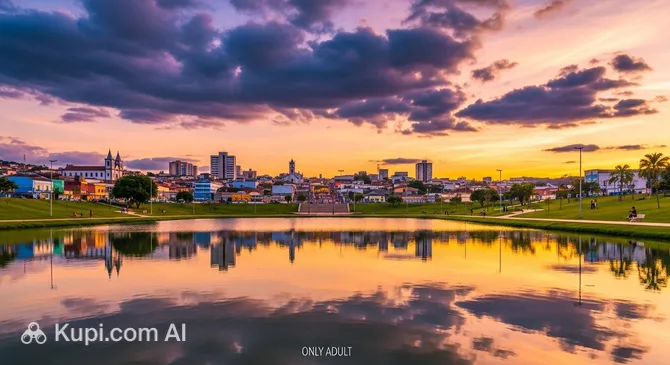
Arapiraca is a dynamic and vital economic center in the heart of the state of Alagoas. Located in the Agreste agricultural region, this city is the second largest in the state after the capital and serves as a key trade hub for the entire region. Brazil knows this city as the unofficial "tobacco capital" due to its historical role in producing high-quality tobacco.
Arapiraca. Illustration.
Source: Kupi.com AI
The city stretches across a wide plain at an altitude of about 265 meters above sea level. Its population exceeds 230,000 people, creating the atmosphere of a bustling yet typically provincial Brazilian metropolis. The history of the city's foundation is closely linked to the name of farmer Manuel André, who in the mid-19th century established a settlement here under the shade of a sprawling arapiraca tree, which gave the future commercial center its name.
Although Arapiraca is primarily focused on business and trade, it attracts tourists with its authenticity and the rhythm of life in the country's interior. Here, you can feel the true spirit of Alagoas, free from coastal tourist polish. It is a great place for those who want to see the "other" Brazil, built on the labor of farmers, noisy regional markets, and the sincere hospitality of the locals.
Weather Overview
The climate of Arapiraca is classified as hot tropical and semi-humid. The city is characterized by high temperatures throughout the year, which is typical for the state of Alagoas. The average annual temperature is about 25 °C, and during the hottest months (December to March), the thermometer often rises above 32 °C.
The rainy season here is not as pronounced as on the coast, but the main precipitation falls between April and July. During this time, the heat subsides slightly, and the air becomes fresher. September and October are usually the driest months, when the sun shines particularly brightly and the sky remains cloudless. You can check the detailed weather forecast in Arapiraca before planning your trip.
Due to its location on an open plain, the city is well-ventilated, making the heat more bearable. However, tourists are advised to plan their main activities for the morning or evening hours to avoid the peak of solar activity at noon.
Average monthly temperature
Average monthly precipitation
Interesting Facts
The city owes its name to the Arapiraca tree (Piptadenia gonoacantha), under which the settlement's founder, Manuel André, rested in 1848.
In the mid-20th century, the city became the leading tobacco producer in the country, earning the proud nickname Capital do Fumo ("Tobacco Capital").
Arapiraca gained the status of an independent municipality on October 30, 1924, successfully separating from the neighboring settlement of Limoeiro de Anadia.
The city is the heart of the Agreste metropolitan area, exerting economic and social influence over a territory with a population of about half a million people.
The city's climate is considered one of the most favorable in the state of Alagoas due to its location on a plain, which provides excellent air circulation.
How to Get There
The transport accessibility of Arapiraca is primarily provided by a developed network of roads connecting the city with the coast and neighboring states. The main hub for travelers is the state capital, from where regular buses depart.
The city has its own Arapiraca Airport (IATA: APQ). Although its passenger traffic is small and it accepts a limited number of domestic flights, the presence of an air gateway emphasizes the city's status as an important business center. Most tourists prefer to fly into Maceió International Airport and then travel the remaining 123 km by bus or rental car, which takes about 2.5–3 hours.
Railway service in the region is currently not developed for passenger transport, so the main methods of travel remain buses and private vehicles. On the detailed page, you can learn more about how to get to Arapiraca from various regions of the country.
Main Attractions
Since Arapiraca is developing primarily as a commercial center, there are few classic tourist attractions, but the city offers interesting places for walking and getting to know the local way of life. The city's central squares serve as the main points of attraction, where you can observe the daily life of the residents and feel the rhythm of this trading hub.
One of the most notable areas is Conciliação Square and its surrounding spaces. City events and fairs are often held here. The Arapiraca tree itself (or its descendants), which gave the city its name, is considered a symbolic place. For residents, it is not just a plant, but an important part of their cultural code and connection to the city's founder, Manuel André.
Those who appreciate modern infrastructure should check out the local shopping districts, which can rival those of the capital in scale. Arapiraca is famous for its markets, where the agricultural products of the Agreste region are presented in all their diversity. Visiting such a market is a full-scale excursion into the world of aromas, flavors, and traditions of the Brazilian hinterland.
Local Cuisine
The gastronomy of Arapiraca is an honest and hearty reflection of the rural traditions of the Agreste region. The cuisine here is based on products from the surrounding farms: cassava, beans, corn, and various types of meat. It is simple but incredibly delicious food that can provide an energy boost for the whole day.
One of the main dishes worth trying is carne de sol (sun-dried meat), served with fried coalho cheese and clarified butter. Also popular are cassava-based dishes such as tapioca with various fillings and the thick porridge pirão. Don't miss the chance to try local buchada — a traditional dish made from offal, considered a delicacy in the interior of the Northeast.
For drinks, locals prefer fresh juices made from tropical fruits like guava, cashew, or passion fruit. Strong coffee (cafezinho) is also popular and often accompanies any meal. The food culture here is closely linked to markets and small family restaurants, where portions are usually very generous and the atmosphere is homey and cozy.
Travel Tips
A trip to Arapiraca will give you a unique experience of getting to know the Brazilian interior. To ensure your trip is comfortable and safe, use these practical tips.
Clothing and gear: It is hot in the region year-round, so choose clothing made of light, natural fabrics. Be sure to bring sunscreen and a hat. If you plan to visit farms, comfortable closed-toe shoes will come in handy.
Transport: To get around the city, it is best to use taxis or ride-hailing apps — this is more reliable and comfortable than buses, especially if you don't know the routes well.
Finance: The official currency is the Brazilian real. Cards are accepted in most stores and hotels, but you will definitely need cash at local markets and in small cafes.
Health and safety: Observe standard precautions: do not display valuables in crowded places and avoid unlit outskirts after dark. Drink only bottled water.
Communication: The main language is Portuguese. English is not widely spoken here, so learn basic phrases or install an offline translator. Locals are very helpful and will try to assist you even with a language barrier.
Local etiquette: Brazilians are very social. Greetings are usually accompanied by a handshake or a light hug (among acquaintances). Be friendly and don't hesitate to smile.
What to avoid: Do not criticize local customs or discuss political topics with people you don't know well. Also, avoid walking alone in deserted warehouse districts of the city.
Additional tip: Be sure to visit one of the local agricultural markets in the morning — it is the best time to see the city in its most vibrant and authentic state.
May your introduction to this hardworking and vibrant city leave only pleasant memories and reveal new facets of Brazilian culture!
Entertainment & Nightlife
Nightlife in Arapiraca is quiet and predominantly family-oriented. The city is not a center for club culture, so locals often head to the state capital for loud parties and large-scale concerts. Nevertheless, you can find cozy bars and restaurants in the city center that become especially lively after sunset, once the daytime heat subsides.
Main activity is concentrated around the central squares, where cafes with outdoor terraces operate. It is customary to spend evenings in leisurely conversation, sampling local snacks and cold beer. The crowd in the establishments is very friendly, and the atmosphere is conducive to relaxation. The dress code in most places is as casual as possible, matching the region's hot climate.
Daytime entertainment in the city includes visiting cinemas in modern shopping centers and strolling through city squares. From time to time, Arapiraca hosts regional festivals and fairs that turn into real celebrations with music and traditional dances, attracting thousands of people from surrounding towns and farms.
Parks & Museums
Green areas in Arapiraca are mainly represented by well-maintained city squares that serve as parks. Due to the high density of urban development, these places become true oases of coolness for residents. One of the best-known recreational areas is the Bosque das Arapiracas — a space with paths for jogging and walking, considered the "lungs" of the city.
The city's cultural life is centered on its squares, where the work of local artisans is often displayed. Although there are no major world-class museums here, the city's history and its tobacco past are reflected in the architecture and monuments dedicated to the founders and workers of the region. A visit to the central districts is like an open-air museum in itself, telling the story of Alagoas' economic miracle.
For nature lovers, the city's surroundings offer typical landscapes of the Agreste region. Here you can see the transition zone from the humid coast to the arid interior. Although the city is heavily urbanized, small groves and farmlands on the perimeter create a picturesque backdrop for those who decide to venture beyond the residential quarters.
Getting Around
The basis of Arapiraca's public transport system consists of bus routes that connect the center with the outskirts and neighboring municipalities. Buses are the most affordable way to get around, but keep in mind that they can be overcrowded during peak hours due to the high population density and the activity of the trading zones.
For faster and more comfortable travel, tourists and business people often use taxis or popular ride-hailing apps. This is especially convenient for trips between hotels and shopping centers. In the central part of the city, many sites are within walking distance, which helps avoid congestion on the main roads.
Bus fares are usually paid in cash to the conductor or driver. The city is quite compact, so renting a car may only be necessary if you plan to explore remote farms or other towns in the state of Alagoas. When driving, keep in mind that traffic in the center can be quite chaotic, especially on the days of major fairs.
Accommodation
The hotel infrastructure in Arapiraca is primarily geared towards business travelers and people visiting the city for commercial purposes. You won't find huge beach resorts here, but you can choose from high-quality mid-range hotels and cozy city guest houses.
Most accommodation options are concentrated in the central part of the city. This is convenient for those who want quick access to banks, offices, and the main shopping areas. Modern hotels with basic amenities — air conditioning, breakfast, and Wi-Fi — predominate in the center, which is vital in the hot tropical climate.
For longer stays, you might consider renting an apartment. During major agricultural exhibitions or regional holidays, it is recommended to book accommodation in advance, as the city attracts many professionals from all over Brazil. Prices for accommodation here are significantly lower than in coastal tourist cities, making Arapiraca an affordable option for budget travelers.
Nearby Cities
Arapiraca is an ideal starting point for exploring the central regions of the state of Alagoas. Small settlements are scattered around the city, each with its own unique rural charm and traditions.
Just 11 km from the center is Lagoa da Canoa — a cozy town offering the quiet atmosphere of the Brazilian province. It is also worth visiting Feira Grande and Limoeiro de Anadia, which are closely linked to the history of the region's development and its agricultural heritage. A trip to these towns will allow you to see endless plantations and get a glimpse into the daily life of local farmers.
City
Population
Distance
Lagoa da Canoa
17 771
11 km
Feira Grande
22 178
16 km
Coité do Nóia
10 643
16 km
Limoeiro de Anadia
28 953
18 km
Craibas
24 309
19 km
For those who miss the ocean, a day trip to Maceió is a great way to change the scenery. The journey to the coast takes about two hours, but the contrast between the industrial Agreste and the azure beaches of the state capital will leave a lasting impression. Exploring the surroundings of Arapiraca reveals the true soul of the Brazilian Northeast to travelers.
Shopping & Souvenirs
Shopping in Arapiraca is one of the main activities for both locals and visitors. As the commercial hub of a vast region, the city offers an impressive variety of goods — from agricultural equipment to modern fashion. Most trading activity is concentrated in the center, where the streets are literally filled with shops and stalls.
Markets hold a special place in the life of the city. Here you can find the high-quality tobacco that made the city famous, as well as products by local artisans: woven baskets, leather goods, and traditional ceramics. The markets of Arapiraca are not just a place to shop, but a living organism where you can experience the full color of Brazilian trade.
For those who prefer comfortable shopping, the city has modern shopping centers with air conditioning and food courts. Shops are usually open from 8:00 to 18:00 on weekdays and close earlier on Saturdays. Cards are accepted in many places, but for purchases at markets or small stalls, it is better to have cash in the local currency — Brazilian reals.