Support

Da Cachoeira

About the Airport

Da Cachoeira. Source: Kupi.com Binoculars

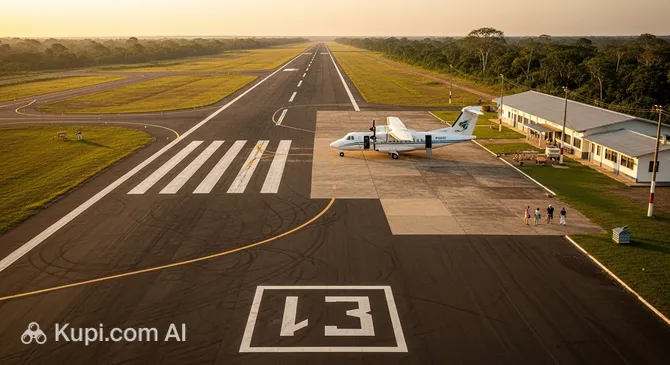
São Gabriel da Cachoeira Airport (SJL) is not merely a transport hub, but a vital artery for the region known as the "Dog's Head" (Cabeça do Cachorro). This air gateway opens the path to the most "indigenous" city in Brazil, where local traditions and languages intertwine with modernity. For tourists, it serves as the starting point to one of the country's main natural sanctuaries — the mysterious and majestic Pico da Neblina, the highest point in Brazil.

AirportDa Cachoeira
IATASJL
ICAOSBUA
CitySao Gabriel da Cachoeira
TimezoneAmerica/Manaus
ScheduleOnline board

Features and Advantages of the Airport:

The importance of this terminal cannot be overstated: land connections with the rest of the country are practically non-existent, and a journey along the Rio Negro river to Manaus can take several days. The airport ensures a fast and reliable link with civilisation, receiving both scheduled flights and charters. Despite its compact size and basic infrastructure, it provides everything necessary for launching scientific expeditions and eco-tours deep into the impenetrable tropical forests of the Amazon.

Contact Information

  • Official Airport Website: sjlairport.com.br (the resource may contain basic reference information; it is also recommended to check data on airline websites).
  • Administration and Information Phone: +55 (97) 3471-1559 / +55 (97) 3471-1343. Please note that support may only be available during airport operating hours.
  • Airport Address: Estrada do Aeroporto, Km 15, São Gabriel da Cachoeira - AM, CEP 69750-000, Brazil.
  • Email: administracao@sjlairport.com.br
  • Airport Social Media: There are no official verified pages. Current news is often published in city communities or on the municipality's pages (Prefeitura de São Gabriel da Cachoeira).
  • Lost Luggage Information: Initial inquiries should be directed to the representative of the airline that operated the flight (Azul Conecta operates most frequently in this region). If no representative is present, you can contact the airport administration via the phone numbers listed above.
  • Passenger Support Contacts: For the prompt resolution of issues, it is recommended to use the administration phone number or speak to staff at the check-in counters before departure.

How to Get to the Airport

São Gabriel da Cachoeira Airport is located approximately 13 kilometres from the city centre. Given the specific nature of the region — the city is situated deep in the Amazon jungle and isolated from the road network of the rest of Brazil — transport options here have unique characteristics. Services common in metropolises, such as Uber or a developed metro network, are absent here, so it is worth planning your trip to the airport in advance.

Taxi and Transfer

The most reliable and popular way to reach the terminal is to use a local taxi service. Cars can usually be found in the city's central squares or ordered via your hotel reception. Since meters are rarely used, it is critically important to agree on the price of the trip before boarding. The cost is usually fixed for certain zones but may vary depending on the time of day and the amount of luggage.

For solo travellers with a light backpack, an exotic and budget-friendly option is available — the mototaxi. This is the most common form of transport in the city. A ride on a motorcycle will cost significantly less than a regular taxi but requires a certain amount of courage and readiness for a breezy ride.

Travel Time

The journey from the city centre to the airport (Estrada do Aeroporto) usually takes between 20 and 30 minutes by car. The road surface on this section is asphalted but can be uneven in places. It is recommended to leave with time to spare, as finding an alternative on the highway in case of a vehicle breakdown will not be easy.

Public Transport

There is currently no regular bus service specifically connecting the city to the airport. Municipal buses run irregularly around the city and most often do not go as far as the terminal itself. Relying on public transport for departure is not recommended, as the risk of missing your flight is too great.

Car Rental and Parking

You will not find classic counters of international rental services (such as Hertz or Avis) in the arrival hall. Transport rental in São Gabriel da Cachoeira is typically an arrangement with private individuals or small local firms, and most often involves SUVs or pickup trucks necessary for local conditions. Parking in front of the airport consists of an open area. It is free of charge but not guarded by specialised services, so leaving valuables in the car is not advisable.

Other Airports in the Region

Given the vast distances of the Amazon, the concept of the "nearest airport" is quite relative here. The closest alternative hubs are hundreds of kilometres away, often in neighbouring Colombia or further down the Amazon River. Here is a list of the nearest airports that may be useful when planning complex routes through the region:

Terminals and Map

Terminal Structure and Navigation

São Gabriel da Cachoeira Airport (SJL) represents a classic example of a regional aviation hub in the Brazilian Amazon. It operates one compact passenger terminal serving all domestic flights. The building is single-storey and has a simple linear layout, making navigation intuitive even for those visiting the region for the first time. Maps and diagrams are not required here: the entire path from the entrance to boarding is visible from practically a single point.

Departure and Check-in Zones

Upon entering the terminal, you immediately find yourself in the general hall where the check-in counters are located. Given the low passenger flow, only a few counters usually operate here. After check-in and luggage drop-off, passengers proceed to the security screening area located a few metres away. The departure lounge (Sala de Embarque) is small, equipped with a basic number of seats and an air conditioning system, which is a critical factor in the tropical climate.

Arrival Zone and Luggage Claim

The arrival zone (Desembarque) is in the same building. A distinctive feature of the airport is the absence of jet bridges. Passenger boarding and disembarkation are carried out in the good old-fashioned way — walking across the tarmac. This gives tourists the opportunity to feel the humid jungle air from the very first minutes and take atmospheric photos against the backdrop of the aircraft and the dense vegetation surrounding the airfield. Luggage delivery is quick, as the distance from the plane to the terminal is minimal.

Processing Time

Thanks to the airport's small size, all pre-flight formalities take minimal time. There are practically no queues at security, except for rare moments when two flights are handled simultaneously. Nevertheless, airlines recommend arriving at the airport 1–1.5 hours before departure. This is not due to queues, but the need to close check-in manifests on time, as flight schedules are strictly adhered to in remote regions.

Navigation and Service Tips

  • Infrastructure: The range of services inside the terminal is minimal. There may be small kiosks with snacks and water, but there are no full-service restaurants or Duty Free shops. It is recommended to carry a supply of water and snacks, especially if travelling with children.
  • Accessibility: Despite its simplicity, the terminal is equipped with basic facilities for passengers with reduced mobility (ramps, wide doors).
  • Toilets: Sanitary facilities are located in the general zone and in the "clean" departure zone.

Airport History

The history of São Gabriel da Cachoeira Airport (SJL) is inextricably linked with the development of the Brazilian Amazon and the defence of national borders. Unlike the commercial air hubs of major metropolises, this airport was created primarily as a strategic facility, vital for connecting the remote "Cabeça do Cachorro" (Dog's Head) region with the rest of the country.

Foundation and Military Roots

The first airstrips in this region appeared in the mid-20th century. Initially, these were dirt tracks used by missionaries and military pilots to deliver food and medicine to isolated indigenous communities. Full-scale infrastructure development began as part of government programmes to integrate the Amazon and protect Brazil's northern borders. For a long time, the airport functioned under the tight control of the Brazilian Air Force (FAB), remaining a key logistics point for military garrisons.

Modernisation Stages

A significant stage in the airport's history was the paving of the runway in the 1980s, which allowed it to receive heavier transport and passenger aircraft, including jet liners. This event brought the city out of transport isolation, reducing the journey to Manaus from several days by boat to one and a half hours of flight.

Current Status and Social Role

In recent history, the airport has come under the management of local municipal authorities. Today, it plays a key social role for the entire Rio Negro region. In the absence of reliable roads, the air harbour provides the only rapid connection to the outside world for local residents, doctors, teachers, and government employees. The airport continues to be a vital hub for air ambulance services and regional supply.

Interesting Facts and Features

  • Logistical Challenge: Keeping the airport running is a real headache for logisticians. Aviation fuel and spare parts for runway maintenance have to be delivered on barges up the Rio Negro from Manaus. In dry seasons, when the water level drops, cargo delivery becomes a critically difficult task.
  • Gateway to the Summit: The airport holds the unofficial status of "base camp" for height conquerors. It is here that all expeditions heading to Pico da Neblina (2,995 m) — Brazil's highest point — arrive. The airport's history is full of encounters with famous mountaineers and biologists from around the world.
  • Linguistic Diversity: This is one of the few airports in the world where indigenous languages (Nheengatu, Tucano, or Baniwa) are heard most often in the waiting hall; these are official languages in the municipality alongside Portuguese.

Today, São Gabriel da Cachoeira Airport continues to write its history, transforming from a strictly military-strategic facility into an important tourist hub, opening up access to the unique culture and pristine nature of the Amazon for travellers.

Services and Facilities

The infrastructure of São Gabriel da Cachoeira Airport (SJL) fully corresponds to its status as a remote regional hub. You will not find the luxury of international hubs here; however, the terminal provides travellers with a basic set of services necessary for a comfortable wait for a flight in the heart of the Amazon.

Dining and Shops

Gastronomic options in the terminal are limited. Usually, a small cafeteria (lanchonete) operates here, where you can buy water, Brazilian coffee, soft drinks, and traditional snacks such as "pão de queijo" (cheese bread) or sandwiches. It is better to plan a full meal in the city before leaving for the airport. Duty Free zones are absent, but occasionally small stalls selling handmade souvenirs from local indigenous communities can be found in the hall, offering an excellent chance to purchase authentic wood or woven items before departure.

Communication and Wi-Fi

Be prepared for a "digital detox". Public Wi-Fi in the terminal often works unstably or is missing altogether. Mobile reception in the airport area is available, but signal quality (3G/4G) depends on your operator (Vivo usually provides the most stable coverage in the region). It is strongly recommended to download all necessary tickets and maps to your phone in advance. There are few charging stations, so having a fully charged power bank is a mandatory condition for travelling to this region.

Financial Services

There are no specialised currency exchange points at the airport. Banking infrastructure is minimal; sometimes one ATM is available, working with major Brazilian banks. However, due to possible connection failures or a lack of cash in the machine, it is critically important for tourists to carry a supply of cash in Brazilian Reals. It is most reliable to withdraw money or exchange currency at bank branches in the city centre (Banco do Brasil, Bradesco, or Caixa).

Comfort and Waiting

There are no separate VIP lounges or business lounges at the airport. All passengers wait for departure in a common hall equipped with seating. Thanks to the air conditioning system, a comfortable temperature is maintained inside the terminal, providing relief from the equatorial heat. Conference rooms and business centres are also absent.

Passengers with Children and Medical Assistance

Services for families with children are basic. Restrooms usually have fold-down changing tables. There are no children's entertainment zones, so parents should arrange their child's leisure in advance. There is no full-scale medical centre in the building, but airport staff are trained in first aid and have access to medical kits. In emergencies, an ambulance is called from the city.

Accessibility

The single-level layout of the terminal makes it quite convenient for passengers with reduced mobility. The absence of stairs and lifts simplifies movement for wheelchair users. Since there are no jet bridges, boarding is carried out using special ambulifts (if the equipment is operational) or with the assistance of airline ground staff, who are always ready to help.

Hotels and Accommodation

There are no hotels within the airport grounds or in immediate walking distance. The nearest accommodation options are located in the centre of São Gabriel da Cachoeira (13 km). Transit passengers or those with an early departure should consider small inns (pousadas) in the city, for example, Hotel Deus Me Deu or other local guesthouses. Transfers to the hotel must be organised independently using a taxi.

Where to Eat

The dining scene at São Gabriel da Cachoeira Airport (SJL) fully reflects its intimate character. Since the terminal serves a small number of flights per day, one should not expect a variety of food courts, fast-food chains, or fine dining establishments here. Catering is organised on a "minimal necessity" basis so that passengers can have a snack before departure.

Cafes and Food Outlets

Typically, one main food outlet operates in the terminal building — a small cafeteria (snack bar) located in the general area (landside) before pre-flight security screening. This is a classic Brazilian lanchonete with a basic set of snacks.

  • Location: General terminal area, near the check-in counters. Accessible for both departing passengers and those seeing them off.
  • In the "Sterile" Zone (Airside): After passing security, catering infrastructure is often absent or limited to a vending machine. Therefore, it is recommended to buy water and snacks before entering the boarding lounge.

Menu and Local Specialities

The cafeteria's assortment is modest but allows you to get acquainted with typical Brazilian "quick" dishes. Local cuisine of the Rio Negro region (such as fish or cassava dishes) is not served here; the focus is on universal snacks.

  • What to try: Be sure to order "pão de queijo" (Cheese bread) — traditional Brazilian cheese buns made from tapioca flour. This is an ideal option for a light breakfast. The assortment usually also includes "coxinha" (chicken croquettes in a teardrop shape) and various sandwiches (misto quente).
  • Drinks: Brazilian coffee (cafezinho) here is typically strong and sweet. For soft drinks, consider choosing a guarana-based soda — a national hit in Brazil.

Dietary Requirements (Vegetarian, Vegan, Halal)

Travellers with strict dietary restrictions will find it challenging to find suitable options at SJL airport.

  • Vegetarians: Cheese buns (pão de queijo) and pastries with cheese are suitable for ovo-lacto vegetarians.
  • Vegans: Options are extremely limited (possibly only fruit if available, or packaged crisps/nuts). It is strongly recommended to bring food with you.
  • Gluten-free: Pão de queijo is made from cassava starch and naturally does not contain gluten, but due to preparation in a shared kitchen, the risk of cross-contamination is high. For people with coeliac disease, eating at the airport is not recommended.
  • Halal and Kosher: There are no specialised certified products. Please note that chicken snacks (coxinha) are generally not Halal-certified in this remote region.

Prices and Opening Hours

Opening hours are strictly tied to the flight schedule. The café opens approximately 2 hours before the first departure and closes shortly after the last flight departs. Service is not provided at night or during hours when there are no flights.

The average price range can be described as moderate. Prices are higher than in the city but significantly lower than in major international hubs like São Paulo or Rio de Janeiro. A light snack (coffee + bun) will cost a reasonable amount.

Recommendations for Passengers

  • For a quick snack: The airport café is perfect for having a coffee and a hot pastry while you wait for check-in to begin.
  • For a full meal: It is categorically recommended to have lunch in the city of São Gabriel da Cachoeira before leaving for the airport. In the city centre, there are restaurants with full menus where you can try Amazonian fish and acai side dishes, whereas in the terminal you will find only dry snacks.

Travel Tips

Travelling to the "heart of the Amazon" via São Gabriel da Cachoeira Airport is a unique experience that differs from standard flights between metropolises. To ensure your trip runs smoothly and leaves only pleasant impressions, we have compiled a number of practical recommendations that take local specifics into account.

Optimal Arrival Time

Although the airport is small and there are practically no queues for security, do not arrive at the last minute. It is recommended to be at the terminal 1 hour 30 minutes before departure. This is due to two factors: firstly, the road to the airport may take longer due to surface conditions or unforeseen transport issues; secondly, check-in for flights in remote regions often closes strictly on schedule, as airlines (most often Azul Conecta) carefully calculate the balance and load of small aircraft.

Check-in and Baggage Allowance

Be prepared for strict baggage weight control. Flights to São Gabriel da Cachoeira are often operated by turboprop aircraft such as the Cessna Grand Caravan. Under these conditions, every kilogram matters. Excess weight can be very expensive or impossible to transport. Weigh your bags in advance, while still at the hotel. Also, keep your documents to hand: in this border region, document checks may be more thorough than on ordinary domestic flights.

Choosing a Seat on the Plane: Best Views

Flying over the Amazon is an excursion in itself. During online check-in (if available) or at the counter, be sure to ask for a window seat (janela).

  • Aircraft flying here often have the wing located at the top of the fuselage (high-wing), which ensures a magnificent view of the ground without obstruction.
  • The view of the winding Rio Negro and the endless "green sea" of the jungle is mesmerising. If you are flying towards Manaus, seats on the left side often open up excellent panoramas of the confluence of rivers and archipelagos (direction may change depending on the wind).

Hand Luggage and Souvenirs

Besides standard bans on liquids and sharp objects, there are specific nuances here. Tourists often buy unique souvenirs from local indigenous craftsmen: wooden bows, arrows, spears, or woven items.

  • Important: Any items imitating weapons (bows, arrows) are categorically prohibited in hand luggage. They must be carefully packed and checked into hold luggage.
  • Also, pay attention to items made from seeds, feathers, or animal bones — ensure you have a receipt or certificate confirming the legality of the purchase to avoid questions from the environmental police (IBAMA).

Tips for Transit Passengers

There are no direct flights to major Brazilian cities (except Manaus) from here. If you have a connection planned in Manaus for a flight to Rio, São Paulo, or abroad, allow at least 3–4 hours for the connection. Weather in the tropics is unpredictable: powerful downpours can delay departure from São Gabriel da Cachoeira by several hours. "Short" connections here are an unjustified risk.

Customs and Sanitary Control

Since the city is located in a border zone and within indigenous territories, random luggage checks by the Federal Police or FUNAI representatives are possible. Behave calmly and amicably. It is also strongly recommended to have insect repellent with you (in hand luggage containers under 100ml) — there may be mosquitoes in the waiting hall and on the airfield.

Saving Time and Money

  • Cash is King: The main tip for saving your nerves — have a sufficient supply of cash in Reals. There are no ATMs in the airport, and taxi drivers rarely accept cards. Without cash, you risk getting stuck at the airport.
  • Cooperation: A taxi to the city costs a fixed but noticeable sum. Try to find fellow travellers among other passengers to split the cost of the trip.
  • Bring Food: Prices for snacks at the airport are higher than in the city, and the choice is modest. Buy water and a snack at a supermarket in the city before departure.

What to Do in Case of Flight Delay

Delays due to weather conditions are not uncommon here. If the flight is postponed:

  • Do not panic; this is done for your safety when flying over the jungle.
  • Save gadget battery: there are few power sockets in the hall, and they may be occupied. Having a powerful power bank is mandatory.
  • Offline Entertainment: Download films, books, or music in advance. The internet may not be sufficient for streaming.
  • Stay close to the information counter, as voice announcements may be hard to hear in the noisy hall.
Reached the end of the page?

That means the route is fully explored