Support

Kapuskasing Airport

About the Airport

Kapuskasing Airport (YYU) is more than just a runway; it is a true aerial gateway to the heart of Northern Ontario, one of the most picturesque regions of Canada. For residents and visitors of the city of Kapuskasing, it serves as a vital transport hub connecting this cosy corner with the province's major cities. It is from here that many unforgettable journeys to the wilderness, lakes, and boundless forests begin.
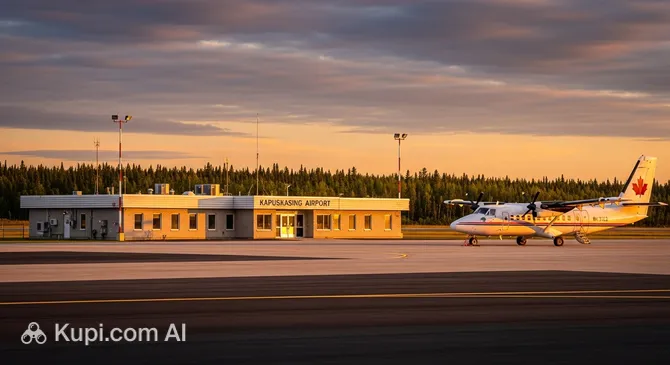
Kapuskasing Airport. Source: Kupi.com Binoculars
IATA Code YYU
ICAO Code CYYU
City Kapuskasing
Distance to centre approx. 3 km
Status Domestic
Annual Passengers Serves several thousand passengers annually, primarily on regional flights
Popular Airlines Bearskin Airlines, Air Creebec

Despite its modest size, Kapuskasing Airport plays a key role in the region's transport infrastructure. Its main advantage is convenience and the absence of the bustle typical of large aviation hubs. Passengers appreciate the speed of completing all formalities, which allows them to save time and avoid stress before their flight.

The airport handles scheduled flights connecting Kapuskasing with cities such as Timmins and Sudbury, from where one can continue their journey across the country. Additionally, it serves as a base for charter transport, air ambulance services, and private aircraft. For tourists eager to explore the natural wealth of Northern Ontario, whether for fishing, outdoor pursuits, or winter sports, the airport of Kapuskasing becomes the ideal starting point.

Contact Information

To obtain the most accurate and up-to-date information regarding the operation of Kapuskasing Airport (YYU), it is recommended to use official communication channels. Below are the main contact details that will help you plan your trip.

  • Official Website: Detailed information about the airport, schedules, and services can be found on the official website of the city of Kapuskasing, in the section dedicated to the airport: kapuskasing.ca.
  • Information Desk Phone: For urgent enquiries, you may contact the airport administration at +1 705-335-8131.
  • Airport Address: 60 Airport Rd, Kapuskasing, ON P5N 2Y3, Canada.
  • Email: For written enquiries, you may use the address airport@kapuskasing.ca.
  • Social Media: The airport does not have its own social media pages. Important announcements and news may be published on the city's official accounts.
  • Lost Luggage Information: If your luggage has been lost or damaged, you must first contact the airline representative of the flight you travelled on.
  • Passenger Support Contacts: For general questions not related to luggage or specific flights, you may contact the main airport telephone number.

How to Get to the Airport

Getting to Kapuskasing Airport (YYU) from the city centre of Kapuskasing is quite simple, as it is located just a few kilometres away. The main methods of transport in this region of Canada are private cars and taxis, as the public transport system is not extensively developed and does not serve the airport directly.

Taxi and Transfer — the most popular and convenient option. A trip from the city centre to the terminal will take no more than 5-10 minutes. Local taxi services operate in Kapuskasing, and it is recommended to book a car in advance, especially for early or late flights. The cost will be modest due to the short distance, but it is best to confirm the fare with the operator when booking. Some hotels may also organise transfers for their guests.

Car Rental — an excellent choice for those who desire freedom of movement and plan to explore the surroundings. You can rent a car from one of the companies with offices in the city or potentially directly at the airport. This allows you not to depend on schedules and to get to the airport at any convenient time. Booking a car in advance via the internet is recommended.

Public Transport does not run to Kapuskasing Airport. There may be local bus routes in the city, but they do not extend to the airport, so tourists should not rely on them. Trains or metro systems are also absent in this part of Ontario.

For travellers with their own or rented vehicles, parking is provided at the airport. Typically, small regional airports offer options for both short-term and long-term parking. Parking prices are usually significantly lower than in major international aviation hubs, making this a very attractive option.

Terminals and Map

Kapuskasing Airport (YYU) is a small regional airport, which defines its simple and convenient structure. It consists of one passenger terminal that handles both departing and arriving flights. Thanks to its compactness, the airport offers passengers quick and hassle-free service without the need to move between different buildings.

The terminal layout is extremely simple and intuitive. All key zones are located in one building a short distance from each other. Immediately at the entrance are the check-in counters, followed by the security screening point, behind which is a small waiting lounge for departing passengers. The arrivals area and baggage claim belt are also part of this same space. There are no transfers between terminals, as all operations are concentrated in a single complex.

Completing all pre-flight formalities at Kapuskasing Airport usually takes significantly less time than at major airports. Check-in and screening proceed quickly due to the low passenger traffic. Nevertheless, it is recommended to arrive at the airport approximately 60-90 minutes before departure to check in luggage and pass through security without haste, especially if you are travelling during peak season.

Navigating the terminal will not cause any difficulties even for first-time visitors. All signs are clear, and staff are always ready to assist. The main recommendation is simply to follow the standard procedure: check-in, security, boarding gate. The compact size of the airport makes it an ideal choice for travellers who value their time and prefer to avoid the stress associated with large and busy aviation hubs.

Airport History

The history of Kapuskasing Airport (YYU) is inextricably linked with the development of the eponymous city and the exploration of the northern part of the province of Ontario in Canada. Although the exact founding date may be vague, its emergence in the mid-20th century was a logical step to support the region's key industries — forestry and pulp and paper. Initially, it was likely a simple airfield, but its importance grew rapidly alongside the city's needs.

A key stage in the airport's development was its inclusion in the regional air transport system. This transformed it from a departmental site into a fully-fledged aerial gateway, connecting Kapuskasing with major cities such as Toronto. In subsequent decades, the airport underwent several modernisations: the runway was improved to accommodate more modern aircraft, and the terminal building was updated for passenger comfort. These renovations ensured the airport met growing safety and service standards.

Although there are no loud global events in the history of Kapuskasing Airport, its role in local history is invaluable. It has served and continues to serve as a base for air ambulance services, saving lives from remote settlements. The airport is also actively used for forest protection needs, especially during fire seasons, and for charter flights delivering workers and equipment to industrial sites.

The airport's main achievement can be considered not passenger traffic records, but its stable and reliable operation over decades. It is a vital artery for the entire region, ensuring not only passenger transport but also the delivery of mail, cargo, and medicines. An interesting fact: for many residents of Northern Ontario, Kapuskasing Airport became the first point of contact with the "mainland", symbolising a connection with the rest of the country.

Services and Amenities

Kapuskasing Airport (YYU) is a small regional airport that provides passengers with basic amenities for a comfortable wait before their flight. Given its size and focus on local transport, the range of services here is basic but sufficient for a short stay before departure. The terminal features a cosy waiting lounge where you can relax and prepare for your journey.

Passengers can utilise free Wi-Fi to stay connected or work. There are also power outlets for charging electronic devices, although their number may be limited. Dining options at the airport are minimal and are generally represented by vending machines with drinks and snacks. There are no full-service cafes or restaurants here, so it is recommended to eat beforehand in the city of Kapuskasing. Banking services, including ATMs and currency exchange points, are absent from the terminal building.

Kapuskasing Airport is adapted to serve passengers with special needs. The terminal is equipped for access by people with reduced mobility, and airline staff are ready to provide assistance with check-in, boarding, and disembarking from the aircraft. For families with children, basic amenities such as changing tables in the restrooms are provided. If you require special assistance, it is best to notify the airline in advance.

There are no hotels, conference halls, or business centres on the airport grounds. The nearest accommodation options are located in the city itself, which is just a few minutes' drive away. The airport's infrastructure is focused on fulfilling its main function — ensuring air connectivity for residents and guests of the northern regions of Canada, offering all the essentials for this purpose.

Dining

When planning a trip through Kapuskasing Airport (YYU), it is important to consider that this is a small regional air terminal. Due to its compact size and focus on local flights, the choice of catering establishments directly within the terminal building is extremely limited.

At present, there are no full-service restaurants, cafes, or dining lounges at the airport. Passengers may only have access to vending machines with beverages and light snacks. Therefore, if you are counting on a full lunch or dinner, it is strongly recommended to eat beforehand in the city or bring food with you.

The city of Kapuskasing itself is located just a few minutes' drive from the airport. There you will find diverse options for a quick snack or a substantial meal: from fast-food chains to cosy family cafes where you can try classic Canadian dishes. This is the best option for those who have time before departure or after arrival.

Travel Tips

Travelling through Kapuskasing Airport (YYU) usually proceeds calmly and without bustle, as it is a small regional hub. To ensure your trip starts smoothly, make use of our tips. For domestic flights, it is recommended to arrive at the airport 1.5–2 hours before departure. This time will be sufficient to complete check-in and security screening without haste.

To save time, check in for your flight online and save the boarding pass on your phone. Security checkpoints in small airports usually operate faster, but be prepared for standard procedures: you will need to present your boarding pass and identification, as well as remove electronics and liquids from your hand luggage. Remember the rules for carrying liquids: containers with a volume of no more than 100 ml are permitted, packed in a single transparent bag. Sharp objects and other prohibited items should be checked in with your luggage.

When choosing a seat on the plane, consider that flights from Kapuskasing are often operated on small turboprop aircraft. Window seats will offer you a beautiful view of the expanses of Northern Ontario, especially in clear weather. Aisle seats provide more convenience if you need to stand up during the flight. Since Kapuskasing is not a major transfer hub, customs control is not conducted here. Passengers on international flights undergo all customs and immigration formalities at the first airport of arrival in Canada, for example, in Toronto or Montreal.

In the event of a flight delay, primarily contact your airline representative for the latest information. Clarify your rights regarding compensation, provision of meals, or accommodation if the delay is significant. Infrastructure at the airport is limited, so it is worth having a book, a charged power bank, or other entertainment with you to pass the waiting time.

Reached the end of the page?

That means the route is fully explored