Support

Pikangikum

About the Airport

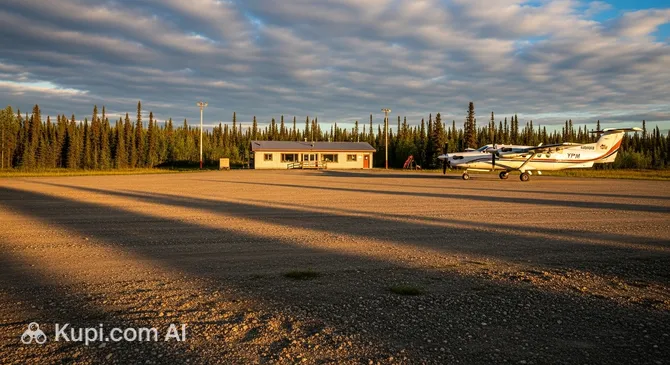
Pikangikum. Illustration.
Source: Kupi.com AI

Pikangikum Airport (YPM) is not merely a transport hub, but a true "lifeline" for the First Nation community of the same name in the province of Ontario. Located amidst the endless forests and lakes of the Canadian Shield, it connects this remote corner with major regional centres, ensuring the delivery of cargo and passenger traffic year-round. A flight here is a unique opportunity to see the rugged and mesmerizing beauty of the Canadian North from a bird's eye view, where nature has been preserved in its pristine state.

PropertyValue
IATA CodeYPM
ICAO CodeCYPM
CityPikangikum
CountryCanada
TimezoneAmerica/Winnipeg
ScheduleOnline Timetable

Pikangikum Airport plays a critically important role in the region's sustenance, as ground connection to the settlement is often limited to seasonal winter roads.

  • Infrastructure: The airfield is equipped with a gravel runway approximately 1,000 metres long, allowing it to accommodate small turboprop aircraft typical of Canadian regional aviation.
  • Destinations: Regular flights connect Pikangikum with cities such as Sioux Lookout, Red Lake, and Winnipeg. These are the main hubs for transfers to long-haul routes.
  • Features: The airport terminal is very compact and offers only a basic set of services necessary for a short wait before departure. Travellers should note that there is no border control here, as the airport exclusively serves domestic flights.

Contact Information

  • Official Airport Website: The airport does not have its own website. It is managed by the Ministry of Transportation of Ontario (MTO). Current schedules and flight status must be checked directly on the airlines' websites (Perimeter Aviation, Wasaya Airways, North Star Air).
  • Information Desk Phone: There is no unified information service at the terminal. For information, use the carrier contacts:
    • Perimeter Aviation (local number in Pikangikum): +1 807-728-2128
    • Perimeter Aviation (toll-free in Canada): +1 800-665-8986
    • Wasaya Airways: +1 877-492-7292
    • North Star Air: +1 844-633-6294
  • Airport Address: Pikangikum Airport, General Delivery, Pikangikum, Ontario, P0V 2L0, Canada.
  • Email: There is no public email for passenger inquiries. Administrative issues are handled by the regional MTO office.
  • Airport Social Media: There are no official accounts. It is recommended to follow the airlines' social media pages for notifications regarding weather delays.
  • Lost and Found Information: There is no separate lost and found office at the airport. In case of lost or damaged luggage, you must immediately contact your airline representative on-site or call their support centre.
  • Passenger Support Contacts: Support is provided exclusively through the air carriers' call centres (see phone numbers above).

How to Get to the Airport

When planning a trip to Pikangikum, it is important to understand the specifics of this region. Since this is a remote community with limited access, standard urban transport schemes do not work here. The airport is located just a few kilometres from the residential zone of the settlement, and logistics here rely on personal arrangements and the help of the local community.

Public Transport

Pikangikum lacks a public transport system in the conventional sense. There are no bus routes, metro, or trains connecting the settlement centre with the airport. Given the short distances (about 2 km from the centre to the runway), many transport issues are solved simply, but require prior planning.

Transfers and Taxis

There are no official taxi services with markings or apps like Uber here. The main way to get to the airport for visitors is:

  • Transfer from the host: If you are flying at the invitation of the community, for work, or as a tourist (for example, for fishing), transport is usually organized by the hosting party. These can be pickup trucks or SUVs.
  • Private transport: Locals often help with rides for a small fee, but such a service needs to be agreed upon on the spot.

Travel time from any point in the settlement to the terminal by car usually takes no more than 5–10 minutes. In winter, snowmobiles become a popular means of transport.

Car Rental and Parking

There are no international car rental desks at Pikangikum Airport itself. The nearest rental points are located in major transport hubs from where flights to Pikangikum originate.

As for parking, there is an open area near the small terminal building. It is not equipped with barriers or CCTV systems, and parking here is generally free. However, leaving a car for a long period without supervision is recommended only upon agreement with local residents or the administration.

Logistics Features: Winter Roads

It is worth noting that during the winter period (usually from January to March), a "winter road" functions—an ice road connecting Pikangikum with the provincial highway network. During this time, the airport can be reached by private vehicle from other cities, but the journey requires driving experience in severe conditions.

Nearest Airports and Transport Hubs

Since Pikangikum is a destination for small aviation, tourists often arrive here via transit through larger regional airports. Knowledge of alternative sites will help plan a complex route if there are no direct flights or if weather necessitates adjustments:

  • Red Lake Airport (YRL) — located approximately 85 km away. This is a key hub for transfers to flights to Pikangikum. It is from here that local airline planes most often depart and cargo is delivered.
  • Sioux Lookout Airport (YXL) — located 239 km away. A large regional hub serving many northern destinations and handling higher passenger traffic.
  • Round Lake Airport (ZRJ) — 220 km away, serving neighbouring territories.
  • Island Lake Airport (YIV) — located at a distance of about 231 km.
  • Sachigo Lake Airport (ZPB) — located approximately 260 km to the north.

When planning your journey, it is recommended to allow extra time for connections, as the schedule of small aviation flights is highly dependent on meteorological conditions.

Terminals and Map

The infrastructure of Pikangikum Airport (YPM) is extremely concise and functional, which fully corresponds to the status of a remote northern airfield. You will not find confusing corridors, jet bridges, or multi-level car parks here. Everything is arranged to ensure the fastest and simplest dispatch of passengers and cargo in harsh climatic conditions.

Number of Terminals and Layout

The airport has one single passenger terminal. It is a small single-storey building that serves simultaneously as a waiting area, check-in zone, and baggage claim area. The terminal is designed to protect passengers from the wind and cold while waiting for the aircraft, providing basic comfort.

Layout and Service Zones

Navigation at Pikangikum Airport is intuitive, and getting lost here is impossible. Inside the building, there is no complex zoning:

  • Check-in Zone: Usually represents a small counter where airline staff check documents and weigh luggage. Unlike major hubs, manual passenger tracking methods are often used here.
  • Waiting Hall: A single space with seating. Here, passengers wait for the boarding call.
  • Arrival and Departure Zones: Since the building is small, passenger flows are separated by time. Arriving and departing travellers often use the same exit to the airfield.

Transfers and Boarding

Boarding is carried out in the most romantic and "northern" way — on foot across the apron. After the boarding announcement, you exit the terminal building and walk to the aircraft, which is usually parked a few dozen metres from the entrance. It is important to remember that there are no telescopic jet bridges here, so passengers board via the aircraft's built-in stairs.

Procedure Times

The absence of long queues and complex security systems makes the departure process very quick:

  • Check-in: It is recommended to arrive at the airport 45–60 minutes before departure. This time is quite sufficient for baggage processing and document checks.
  • Security Check: The screening procedure here is simplified compared to international airports, but basic security requirements are observed. The check takes literally a few minutes.

Features and Navigation Recommendations

Pikangikum Airport is a place where technology gives way to personal communication. Here are a few tips for tourists:

  • Dress for the weather: Since you will have to walk from the terminal to the plane outside, be sure to have a warm jacket with you, even if it is warm inside the building. Winds on the airfield can be piercing.
  • Listen to the staff: There are no electronic display boards with announcements here. All boarding information is conveyed verbally by airline staff or pilots.
  • Amenities: Be prepared for the fact that the terminal may lack a café or shops. It is recommended to bring water and a light snack if you have a wait ahead.

Airport History

The history of Pikangikum Airport (YPM) is inextricably linked with the history of the exploration of the Canadian North and the development of aviation in remote regions of Ontario. Unlike major capital hubs, this airfield began not with a ceremonial ribbon-cutting and concrete runways, but with the vital necessity to ensure the community's connection with the outside world.

The Era of Floatplanes and "Bush" Aviation

Before the appearance of a stationary airfield, aviation connection with Pikangikum was carried out using floatplanes in summer and ski-equipped aircraft in winter. Pikangikum Lake served as a natural runway. Legendary "workhorses" of the north, such as the de Havilland Beaver and Otter, brought mail, supplies, and doctors, landing directly on the water or ice. However, during the transitional seasons (freeze-up and ice melt), the community was completely cut off from the world for several weeks.

Construction and Development of the Runway

A turning point in the history of the region's transport accessibility was the decision to build a stationary gravel runway in the second half of the 20th century. This allowed air traffic to switch to a year-round mode. The airport came under the management of the Ministry of Transportation of Ontario (MTO), which undertook obligations to maintain and service the infrastructure in severe climatic conditions.

Modernization and the Current Stage

Over the past decades, the airport has undergone several stages of modernization aimed at improving flight safety:

  • Navigation Improvement: Modern lighting equipment was installed, which became a critical step for ensuring the possibility of night landings and take-offs, especially for medical evacuation flights (Medevac).
  • Runway Maintenance: The gravel surface is regularly renewed and levelled to accept more modern turboprop aircraft, such as the Dash 8 and ATR 42, which have replaced older machinery.
  • Terminal: The small terminal building was upgraded to ensure basic comfort for passengers waiting for flights in low-temperature conditions.

Interesting Historical Facts

  • Record Load: Despite its modest size and status as a regional airfield, Pikangikum is historically one of the busiest airports in the network of remote northern Ontario airports in terms of take-offs and landings, second only to major hubs.
  • Lifeline: In the airport's history, there have been many cases where it became the only escape route. During forest fires, which often threaten the region, emergency evacuation of vulnerable population groups was conducted precisely through YPM.
  • Unique Logistics: For a long time, fuel delivery for the airport itself and the aircraft was carried out only via the "winter road"—a temporary ice road—since it was impossible to deliver heavy tankers in summer.

Services and Amenities

Given the remote location and specific operations of Pikangikum Airport (YPM), passengers should prepare in advance for the fact that the level of service here differs radically from familiar international terminals. This is a purely functional facility where priority is given to basic logistics needs rather than commercial services.

Restaurants, Cafés, and Shops

The terminal building lacks dining outlets and shops. You will not find coffee shops, snack vending machines, or souvenir stalls here. Travellers are strongly advised to:

  • Take care of food and drinks in advance if a wait for the flight is expected.
  • Carry a supply of drinking water, as there may be nowhere to buy it at the airport.
  • If you are flying from Pikangikum, it is better to have a substantial meal in the community before leaving.

Waiting Halls, VIP Services, and Business Centres

The airport has one general waiting hall. There is no division into business class and economy, nor are there separate VIP lounges or business centres. The space is a small heated area with seats where all passengers wait for boarding together. Conference rooms are absent; the airport is not designed for business meetings.

Communication and Electronics

  • Wi-Fi: A public Wi-Fi network for passengers in the terminal is usually absent or works unstably. It is recommended not to count on the ability to download movies or work online before departure.
  • Mobile Connection: Signal quality depends on your operator. Major Canadian providers operate in the region, but coverage may be patchy.
  • Charging Stations: There are no specialized stands for charging gadgets. Several standard power sockets may be found in the waiting hall, but their availability is not guaranteed.

Financial Services

There are no ATMs or currency exchange points at Pikangikum Airport. Since the airport serves only domestic flights, currency exchange is not required, but carrying Canadian dollars in cash is highly desirable. Cards may not be accepted by local private carriers if you need a taxi or other assistance.

Medical Services

There is no pharmacy or medical point in the terminal. First aid can be provided by airport staff who have undergone basic training, but for serious cases, the resources of the Pikangikum community's Nursing Station are used. It should be remembered that the airport is a key hub for air ambulance (Medevac), evacuating patients to major hospitals in the province.

Services for Passengers with Children

There are no specialized mother-and-child rooms or play areas in the terminal. Travelling with small children requires complete self-sufficiency: everything necessary (food, diapers, entertainment) must be taken with you in your hand luggage.

Accessible Environment

The terminal is single-storey, which facilitates the movement of passengers with limited mobility—there are no stairs or elevators. However, the following points should be considered:

  • Boarding the aircraft is done from outside via the plane's stairs.
  • Airline staff (Perimeter, Wasaya, North Star Air) are usually ready to provide assistance with boarding and disembarking, but special needs must be notified to the carrier in advance when booking the ticket.

Accommodation: Hotels

There are no hotels on the airport territory or in its immediate vicinity. Pikangikum is a small community, and tourism infrastructure here is specific:

  • In the settlement itself, accommodation options are extremely limited and often require prior arrangement with the local administration or the inviting party.
  • Tourists heading for fishing or hunting usually proceed immediately by transfer to specialized lodges located away from the airport.
  • In case of flight cancellation and inability to depart, the issue of overnight stay is resolved on an individual basis with the assistance of the airline or local residents.

Where to Eat

When planning a trip through Pikangikum Airport (YPM), it is important to consider its specifics: it is a remote regional airfield serving a small northern community. The level of service here differs radically from familiar international standards, and the issue of food requires special attention and advance preparation.

Restaurants, Cafés, and Bars

In the single terminal building of the airport, catering outlets are completely absent. There are no restaurants, cafeterias, coffee shops, or bars. Passengers should not count on the opportunity to drink a cup of hot coffee, grab a sandwich, or order a full lunch before departure. Infrastructure is limited to the waiting hall, and commercial spaces for catering are not provided here.

Local Cuisine and Specialties

Since there are no establishments in the airport itself, it is impossible to taste local cuisine dishes immediately before boarding. If you are in the settlement of Pikangikum, it is recommended to eat before leaving for the airport. Local cuisine may include traditional First Nations dishes made from game or fish (e.g., walleye), but these are available only within the framework of local hospitality or at community events in the settlement, not in the terminal.

Options for Vegetarians, Vegans, and Special Diets

Due to the absence of cafés and shops, there is no possibility to purchase specialized food (Halal, gluten-free, vegan) on-site. For travellers with strict dietary restrictions or allergies, it is critically important to take care of a food supply in advance. The airport is in isolation, and there will be nowhere to buy alternative products in case of hunger.

Recommendations for Dining and Preparation

To make the wait for the flight comfortable, use the following tips:

  • For a quick snack: Be sure to take snacks with you in your hand luggage (nuts, energy bars, fruit, crackers). This is especially relevant if the flight is delayed due to weather conditions, which is not uncommon for the north.
  • For a full meal: If you have a long flight with connections, eat a substantial meal before leaving for the airport. If you are flying in transit, plan lunch at hub airports (Red Lake, Sioux Lookout, or Winnipeg), where there are cafés and restaurants.
  • Drinks: There are no drinking fountains or water vending machines in the terminal. It is recommended to have a supply of drinking water in a bottle, as it will be impossible to buy it after arriving at the airport.

Opening Hours and Prices

Concepts like "average bill" or "restaurant opening hours" are not applicable to this airport. Access to the waiting hall opens in accordance with the flight schedule, but no paid catering services are provided during this time. All food expenses are limited to what you buy in advance at village stores (e.g., at the Northern Store) or bring with you.

Travel Tips

A trip to Pikangikum is an experience that differs from familiar flights between metropolises. Here, in northern Ontario, aviation operates according to its own rules, dictated by harsh nature and logistics specifics. To ensure your flight goes smoothly, we have collected key tips to help prepare for a flight through Pikangikum Airport (YPM).

Arrival Time and Check-in

Unlike major international hubs, you do not need to arrive 3 hours before departure here. However, you cannot be late either—the plane will not wait.

  • Optimal Time: Arrive at the airport 45–60 minutes before the departure time indicated on the ticket. This will give enough time for weighing luggage and processing documents.
  • Check-in Procedure: Be prepared that you might be asked to step on the scales together with your hand luggage. For small aircraft, accurate calculation of take-off weight is critically important.
  • Documents: Keep your identification (passport or Canadian ID) at hand. Electronic tickets are best printed out or a screenshot saved on your phone, as internet access in the terminal zone may be absent.

Baggage and Hand Luggage: Strict Rules

The main rule of local aviation is minimalism. Aircraft (Metro, Dash 8, Pilatus) have very limited cargo holds.

  • Hand Luggage: Forget about standard wheeled carry-on suitcases. Usually, only a handbag, backpack, or laptop bag is allowed in the cabin. Anything larger will have to be checked in as luggage.
  • Type of Bags: For travel to the north, it is better to use soft sports bags or backpacks rather than rigid suitcases. They are easier to fit into a tight luggage compartment.
  • Prohibited Items: Besides standard security requirements (weapons, flammable substances), pay special attention to alcohol. Pikangikum is a "dry community" or has strict restrictions on the import of alcohol. Attempting to transport alcohol may lead to its confiscation and legal problems. Be sure to check current rules with the inviting party before departure.

Seat Selection on the Plane

On local airline flights, the principle of "Free Seating" often applies. Seats are not specified on boarding passes.

  • If you want to enjoy views of the endless forests and lakes, try to board among the first to occupy a window seat.
  • In some small aircraft, it is better not to sit in seats near the propellers if you are sensitive to noise.

Tips for Transit Passengers

Most flights to Pikangikum connect in Red Lake, Sioux Lookout, or Winnipeg.

  • Through Check-in: Clarify upon departure from the first point whether your luggage will be registered to the final destination. If you are flying with different airlines (e.g., Air Canada + Wasaya Airways), you will likely have to collect luggage at the intermediate airport and check it in again.
  • Time Reserve: Allow at least 2–3 hours for the connection. Weather in the north is changeable, and a delay of the first flight is a common occurrence.

Customs Control

Pikangikum Airport serves exclusively domestic flights. There is no customs or border control here. If you are an international tourist, you will go through all formalities at the first airport of arrival in Canada (e.g., in Toronto or Winnipeg). In Pikangikum, the check is limited to identity verification and security screening.

Saving Time and Money

  • Food with you: Since no food is served at the airport or on short flights, take sandwiches and an empty water bottle with you (water can be filled before leaving for the airport, but remember liquid restrictions during screening). This will save you money and stress.
  • Cash: Always have Canadian dollars in small bills with you. They may be needed to pay for a taxi or unforeseen expenses, as payment terminals are not available everywhere.

What to Do in Case of Flight Delay or Cancellation

Weather is the main dispatcher in Pikangikum. Fog, blizzards, or strong crosswinds can stop flights for several hours or even days.

  • Stay Calm: Shouting and arguing will not clear the clouds. Airline staff do everything possible for your safety.
  • Stay Connected: Leave your current phone number and email with the airline.
  • Plan "B": Find out in advance the contacts of a local taxi or residents with whom you can stay in case of an evening flight cancellation, as there are no hotels at the airport.

Reached the end of the page?

That means the route is fully explored