Support

Lincang Airport

About the Airport

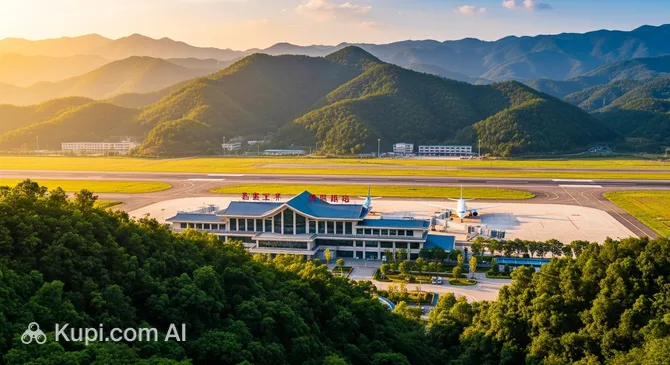
Lincang Airport. Source: Kupi.com Binoculars

Lincang Airport (LNJ), located in the picturesque town of Boshang, serves as the main aerial gateway to one of China's most famous tea regions. This compact yet modern aviation hub is the first to welcome travelers arriving to enjoy the beauty of Yunnan Province and the homeland of Pu'er tea. The airport is distinguished by a calm and cosy atmosphere, allowing passengers to escape the hustle and bustle typical of large metropolises and immediately immerse themselves in the measured rhythm of local life.

IATA Code LNJ
ICAO Code ZPLC
City Lincang
Distance to Centre 22.5 km
Status Domestic
Annual Passengers Over 200,000
Schedule Check with the airline's website

Features and Advantages of the Airport:

Lincang Airport, holding a 4C classification, underwent a major reconstruction in 2017, which significantly improved the quality of passenger service and expanded the terminal's capabilities. The main highlight of the air harbour is its location: the runway is situated on a plateau amidst green hills, guaranteeing breathtaking views during takeoff and landing. Thanks to the terminal's small size, all pre-flight procedures here are conducted as efficiently as possible, and navigation is intuitively clear even for those visiting the region for the first time.

Contact Information

Below is the contact information for Lincang Airport (LNJ). Please note that details, especially phone numbers, may change, and we recommend checking their validity through your airline or travel agent before your trip whenever possible.

  • Official Website: Generally, regional airports in China do not have separate websites. Up-to-date information on flights and services is best verified on your airline's website.
  • Inquiry Service Phone: +86 883 216 8114. This is the most frequently mentioned number; however, it is recommended to verify its validity before calling.
  • Airport Address: Boshang Town, Linxiang District, Lincang, Yunnan, China (China, Yunnan Province, Lincang Prefecture-level City, Linxiang District, Boshang Town).
  • Email: An official public e-mail for passenger communication is not provided. The recommended method of contact is by phone.
  • Social Media: The airport does not maintain official pages on international social networks.
  • Lost Luggage Information: For all issues related to lost or damaged luggage, please first contact the representative office of the airline you flew with.
  • Passenger Support Contacts: For general information and on-site support, you can use the airport inquiry service phone number.

How to Get to the Airport

You can reach the airport in the city of Lincang, located in the scenic Yunnan Province of China, in several convenient ways. The choice of transport depends on your budget, amount of luggage, and personal preferences. The main options include public transport, taxis, and car rentals.

Public Transport is the most economical way to get to the airport. Typically, a dedicated airport shuttle runs between Lincang Airport and key points in the city. Its schedule is often coordinated with flight arrivals and departures. This is a reliable and inexpensive option, although not the fastest due to stops along the way. The shuttle trip from the city centre can take between 40 to 60 minutes. We recommend checking the current schedule and departure point at the bus station or your hotel.

Taxi or Private Transfer is the fastest and most comfortable method. The journey from the centre of Lincang to the airport will take approximately 30-40 minutes depending on traffic conditions. The cost will be higher than the bus but is quite reasonable, especially if you are travelling in a group or with bulky luggage. Ensure the driver uses the meter or agree on the price in advance. Taxi-hailing apps, such as Didi Chuxing, are also widely used in China and can offer competitive rates.

Car Rental offers maximum freedom of movement, especially if you plan to explore the surroundings of Lincang and the beauties of Yunnan Province. Car rental counters can be found at the airport. It is important to remember that foreign nationals typically require a local driving licence to drive in China. An International Driving Permit may not be valid. It is recommended to clarify all requirements in advance and book a car through a verified agency.

For those arriving at the airport in their own or rented vehicle, parking is provided. The facility includes both short-term and long-term parking zones, which is convenient for those seeing someone off as well as those leaving their car for the duration of their trip.

Terminals and Map

The airport of Lincang (LNJ) is a compact and modern aviation hub serving domestic flights within China. Its structure is simple and intuitive, making the experience comfortable even for first-time travellers.

Structure and Navigation

The airport consists of one terminal that handles both departing and arriving flights. Due to the building's small size, it is practically impossible to get lost. All key zones are within walking distance of each other, and moving between them takes minimal time. You will not need shuttles or long walks — everything is located within a single building.

Departure and Arrival Zones

The terminal layout is standard for regional airports:

  • Check-in Hall: Located immediately at the terminal entrance. Airline check-in counters and baggage drop-off points are found here.
  • Security Check: Located after the check-in hall. Once you pass through, you enter the "airside" area.
  • Departure Lounge: Here you will find boarding gates, small waiting areas, a few shops, and cafes.
  • Arrivals Hall: A separate part of the terminal where passengers arrive. The baggage claim belt is also located here.

Procedure Times and Recommendations

Check-in and security procedures at Lincang Airport usually proceed quite quickly. Nevertheless, it is recommended to arrive at the airport approximately 1.5–2 hours before your flight departure. This time will be sufficient to check in luggage, pass security controls, and find your boarding gate without rushing. For navigation, follow the signs, which are typically duplicated in English. Airport staff are also always ready to assist and direct passengers.

Airport History

The Lincang Airport (LNJ), officially known as Lincang Boshang Airport, is a relatively modern air hub whose history is closely tied to the region's economic development. The decision to construct it was made to improve transport accessibility to this remote mountainous area in Yunnan Province, world-renowned for its tea plantations producing the famous Pu'er. Construction works began in February 2000, and by 2001, the airport was officially opened and received its first flights.

Initially, the airport was designed to handle a small passenger flow and a limited number of flights, which met the needs of that time. However, as the popularity of China as a tourist destination grew and business activity in the region increased, the airport's capacity became insufficient. This led to the necessity for extensive modernisation.

A key stage in the airport's history was the major reconstruction and expansion completed in 2017. The project involved building a new, more spacious and modern terminal, as well as lengthening the runway. This allowed for the reception of larger aircraft, such as the Boeing 737 and Airbus A320, and significantly increased the number of passengers served. Thanks to this modernisation, the airport received a 4C classification, confirming its ability to meet modern aviation standards.

Today, Lincang Airport plays a key role in the region's economy and tourism. It not only connects this picturesque corner with major Chinese cities like Kunming, Chengdu, and Guangzhou but also helps promote local tea in domestic and international markets. The airport serves as a prime example of how modern infrastructure can become a catalyst for development and prosperity even in the most remote areas.

Services and Amenities

The Lincang Airport (LNJ) is a compact regional hub providing passengers with a basic set of services necessary for a comfortable wait before their flight. Although the infrastructure here is not as extensive as in major international airports, you will find everything essential for a short stay.

Dining and Shopping. The terminal features several small cafes and eateries where you can have a snack of local cuisine or enjoy a coffee before departure. There is also a small shop offering beverages, snacks, souvenirs, and travel essentials. The selection here is quite modest but sufficient to pass the time.

Waiting Areas and Wi-Fi. General waiting halls are available for all passengers. Typically, the airport provides free Wi-Fi, and there are charging stations for mobile devices. For travellers preferring enhanced comfort, a small VIP lounge with more comfortable seating and beverages may be available.

Financial and Medical Services. ATMs for cash withdrawals are installed in the airport building. However, it is worth noting that currency exchange points are usually absent in small domestic airports in China, so it is better to arrange currency exchange in a major city beforehand. In case of need, a medical point is available at the airport, ready to provide first aid.

Services for Special Categories of Passengers. Mother and child rooms are provided for passengers with small children. The airport is also equipped for the needs of travellers with reduced mobility: there are ramps and specially equipped restrooms. If necessary, you can request an assistance service from the airline in advance.

Business Services and Hotels. Specialised conference rooms or business centres are absent at Lincang Airport. For business meetings, it is better to use the infrastructure of hotels in the city itself. There are no hotels directly on the airport grounds, but in the city of Lincang, which can be quickly reached by taxi, there are many accommodation options for any budget.

Where to Eat

Lincang Airport (LNJ), being a regional hub, offers passengers a basic but sufficient choice of establishments for a snack or a full meal. Dining options are mainly concentrated in the main terminal and are oriented towards Chinese cuisine.

Inside the terminal building, typically before the security check (landside), you can find several small cafes and eateries. They serve simple and filling dishes popular in China: various types of noodles, rice with toppings, and traditional soups. Given the airport's location in Yunnan Province, it is worth paying attention to local specialities. Try the famous Yunnan "Mixian" (米线) rice noodles or enjoy a cup of aromatic Pu'er tea, as the Lincang region is considered its homeland.

For those in a hurry, the best choice would be small kiosks or shops where you can buy packaged snacks, sandwiches, beverages, and sweets. If you have time for a more substantial meal, local cafes offer hot dishes that are prepared quite quickly. Do not expect global restaurant chains — the atmosphere here is more authentic and local.

Specialised menus (vegetarian, gluten-free) are likely absent at the airport. However, in most cafes, you can request a dish prepared without meat, such as noodles or rice with vegetables. Food prices at the airport are moderately high, as in most air hubs around the world. Opening hours are usually tied to the flight schedule, so establishments are open throughout the airport's operational day.

Tips for Travellers

To ensure your journey through the airport of Lincang city goes smoothly, take advantage of these tips. Despite it being a small and modern airport, it is recommended to arrive early. The optimal time is 2 hours before the departure of a domestic flight. This will be sufficient to complete all formalities, check in luggage, and find your boarding gate without rushing.

To save time, use online check-in if available with your airline. Upon arrival at the airport, have your passport and boarding pass ready. Security checks at airports in China can be quite thorough. Be prepared to remove all electronic devices, including power banks, from your hand luggage and take off your outer clothing.

When choosing a seat on the plane, be guided by your preferences. Window seats will give you the opportunity to enjoy views of the picturesque mountains of Yunnan Province during takeoff and landing. Aisle seats are convenient if you want more legroom or plan to stand up during the flight.

Pay special attention to hand luggage rules. The standard limit for liquids is containers up to 100 ml, packed in a transparent bag. Lighters and matches are generally prohibited. A crucial point concerns power banks: they can only be carried in hand luggage, and the device must clearly display a marking indicating its capacity. Devices without markings may be confiscated.

If you have a connecting flight, follow the "Transfers" signs upon arrival. Depending on the airline and route, you may need to collect your luggage and check it in again. In most cases, you will also have to pass security screening again before entering the departure area for your next flight.

Customs control is relevant only for international flights. Since Lincang Airport mainly serves domestic routes, you will primarily encounter security checks. If you are flying from another country with a transfer in a major Chinese hub (e.g., Beijing or Shanghai), you will undergo customs and immigration procedures at the first airport of arrival in China.

To save time and money, check in for your flight online, travel light to avoid paying for excess baggage, and bring an empty water bottle that can be filled after passing security. Instead of taking a taxi on the spot, consider booking a transfer in advance through online services.

In the event of a flight delay, the first thing to do is contact your airline representative at the information desk. Clarify the reason for the delay and the estimated departure time. Depending on the length of the wait, the airline is obliged to provide passengers with beverages, meals, or even hotel accommodation. Stay calm and monitor updates on the information screens.
Reached the end of the page?

That means the route is fully explored