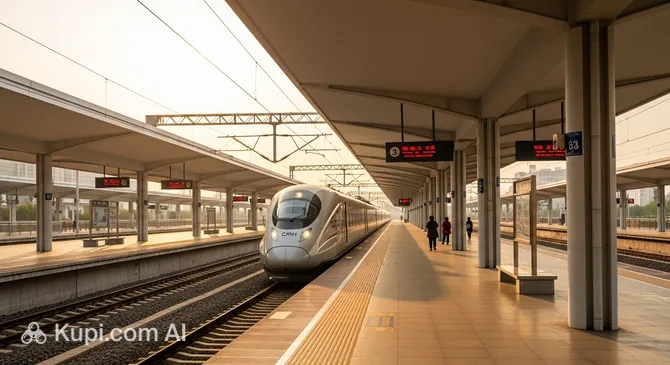
Linhai Railway Station serves as a key transport gateway for travelers wishing to visit this historic city in Zhejiang Province. The station building combines modern architectural solutions with functionality, ensuring comfortable service for passengers of both high-speed and conventional trains. Located on a scenic route, the station is an important stop on the way between major metropolises such as Shanghai, Hangzhou, and Ningbo.
It is important for passengers to know that navigation within the station is intuitive, and signs are duplicated in English. The boarding process is standard for Chinese railways: first, you pass through a security screening at the entrance, then proceed to the waiting hall, and only after the train is announced do you pass through the turnstiles to the platform. Please note that access to the platforms often closes 3–5 minutes before the train's departure, so it is advisable to keep an eye on the information boards.
Contact Information
If you need to contact station representatives or clarify journey details, please use the following contacts:
Official Website: www.12306.cn (the unified portal of China Railways, available in English).
Information Service Phone: 12306 (unified hotline, knowledge of Chinese or English may be required).
Address: Jiangnan Street, Linhai City, Taizhou, Zhejiang Province, China.
Opening Hours: Daily, approximately from 06:00 to 22:00 (depends on the schedule of the first and last train).
Luggage Storage: Usually available in the waiting hall area or near the ticket counters (paid service).
Accessible Environment: The station is equipped with ramps, elevators, and special restrooms for passengers of determination.
How to Get There
You can get to Linhai Station in several ways, depending on your budget and location in the city. The most popular option among tourists is a taxi. A trip from the historic city centre (where the famous Great Wall of Linhai is located) to the station will take about 20–30 minutes, depending on traffic. It is recommended to use official taxis or car-hailing apps (such as DiDi) and show the driver the station name in Chinese.
Public transport is represented by the city bus network. Several routes run to the station (for example, buses No. 102 or No. 211; numbers may change, so please verify on-site), connecting the station with the main districts of the city. The travel time by bus will be about 40–50 minutes. Walking from the centre is not recommended, as the distance is quite significant for a walk with luggage.
Services and Amenities
The infrastructure of Linhai Station offers passengers a necessary set of services for a comfortable wait for their journey. The main building houses a spacious waiting hall with seats, where screens displaying train arrival and departure schedules are also installed. For purchasing and exchanging tickets, both automatic terminals (some of which accept foreign passports) and traditional counters with live operators are available.
Among other amenities, it is worth noting the availability of free dispensers with hot water (boiling water) — an essential feature for travel across China. The station premises have clean restrooms, including cubicles for people of determination. Access to Wi-Fi may require a Chinese phone number for authorization. Charging stations for mobile devices are also frequently found in the halls, but it is recommended to carry a power bank with you.
Dining Options
If you are hungry before your journey, Linhai Station has several options for a snack. Inside the building, small shops usually operate where you can buy snacks, drinks, pastries, and the famous instant noodles. For a more substantial meal, it is worth looking for fast-food establishments, which are often found at large and medium-sized Chinese stations (for example, local chains serving rice and meat dishes).
Near the station square, small private cafes and eateries are often located, offering local cuisine at affordable prices. The average bill for a hearty lunch here will be around 20–40 RMB. If you prefer coffee, it is better to bring it with you from the city or buy ready-made canned coffee from vending machines, as specialized coffee shops may not be available at the station itself.
Station History
The history of railway communication in Linhai is closely linked to the development of the high-speed network in Zhejiang Province. The station became an important part of the coastal high-speed railway Ningbo — Taizhou — Wenzhou, which was put into operation in 2009. The opening of this line significantly reduced travel time to major economic centres and gave a powerful impetus to the development of tourism in the region.
In recent years, the city's transport system has continued to improve. With the launch of the new high-speed line Hangzhou — Taizhou, the role of Linhai Station as a transit hub has only increased. The station building and surrounding infrastructure undergo periodic modernization to cope with the growing passenger flow and meet modern standards of comfort and safety.
Travel Tips
For a hassle-free trip through Linhai Station, it is recommended to arrive at the station at least 45–60 minutes before the train departs. This time is necessary to pass the mandatory luggage screening and personal security checks, where queues can be long on holidays and weekends. Remember that carrying knives, flammable sprays, and certain types of high-capacity batteries is prohibited.
Foreign tourists should keep their passport handy: it will be needed when entering the station and when boarding the train (use the lane for manual document checks if the automatic gates do not read your passport). If you have heavy luggage, look for elevators or escalators; they are available on all platforms. When transferring, carefully follow the Transfer signs to avoid leaving the secure zone and to save time.