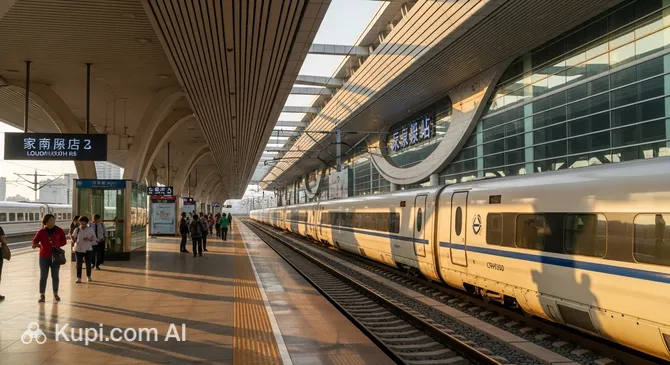
Loudi Railway Station is a crucial transport hub in Hunan Province, playing a key role in the connection between the eastern and western regions of China. This station serves both passenger and cargo transport, linking the city with the country's major metropolises. The station building combines functionality with modern amenities, ensuring a comfortable start to the journey for thousands of tourists daily.
It is important for passengers to know that navigation within the complex is intuitive; however, due to the large flow of people, it is recommended to closely watch the signs on the display boards. Entry to the building is through a security screening area, and exits to the platforms are clearly numbered. The station serves as an important transfer point for those travelling along the Shanghai — Kunming line and other directions.
To plan your trip and clarify details regarding the station's operations, please use the following contact information:
Official Website: It is recommended to use the national China Railway portal (12306.cn) for purchasing tickets and checking schedules.
Inquiry Phone: Unified hotline 12306 (service available in Chinese and English).
Address: Louxing District, Loudi City, Hunan Province, China. The station is located within the city limits, not far from the business centre.
Opening Hours: The station is open 24/7, though ticket counters and some services may have breaks during the night.
Luggage Storage: Available in the main hall, operating from early morning until late evening.
Accessibility: The station is equipped with ramps and special waiting zones for passengers with reduced mobility; please approach staff in uniform for assistance if needed.
How to Get There
Getting to Loudi Railway Station is straightforward, as it is integrated into the urban transport network. The most popular method is city buses. Numerous routes connect the station with various districts of the city; the stop is usually located right on the station square.
If you prefer comfort, use a taxi. Official taxi stands are located at the exit of the arrival terminal. Ride-hailing apps are also popular in China, helping you reach your destination quickly and at a fixed price. The journey time from the city centre by car usually takes about 15–20 minutes, depending on traffic.
For those staying in nearby hotels, a walking route is possible. The area around the station is quite lively, with wide pavements, making it easy to walk to the station if you have light luggage.
Services and Amenities
Loudi Railway Station offers a wide range of services for a comfortable wait for your train. The building houses spacious waiting halls, separated by ticket types, including VIP lounges with soft seating. For purchasing and exchanging travel documents, there are both traditional counters with operators and automatic self-service terminals (please note that some machines only accept Chinese ID cards).
Among other amenities, passengers have access to:
Hot water dispensers: Free and available 24/7, which is traditional for Chinese stations.
Luggage storage: For temporary storage of baggage.
Washrooms: Toilets are located on every floor.
Shops: Small kiosks with press, beverages, and souvenirs.
For passengers with special needs, lifts and dedicated service zones are provided.
Where to Eat
It is difficult to stay hungry within the station grounds and its vicinity. Inside the building, you will find small shops and kiosks where you can buy a quick snack: instant noodles, vacuum-packed snacks, biscuits, and bottled water. This is an excellent option if there is very little time left before departure.
If you have an hour or more to spare, we recommend going out to the station square. Around Loudi Station, there are numerous cafés and restaurants serving local cuisine. Be sure to try Hunan dishes—they are famous for their spiciness and aroma. The average bill in such establishments is quite reasonable. You can also frequently find chain fast-food cafés nearby, offering familiar burgers and coffee.
Station History
The history of Loudi Railway Station is inextricably linked with the development of the city itself. Loudi is often called the city "brought by train," as it was the construction of railways that gave a powerful impulse to its economic growth. The station became an important point at the intersection of strategic main lines, such as the Loudi — Shaoyang line and other branches connecting the north and south of the country.
Over the years of its existence, the station has undergone several stages of renovation and modernisation. From a modest transport point, it has transformed into a modern hub capable of handling a constantly growing passenger flow. Today, the station not only performs a utilitarian function but also serves as a symbol of the region's industrial power and transport accessibility.
Passenger Tips
When planning a trip through Loudi Station, keep several important points in mind. In China, a security check is always conducted at the station entrance, similar to airport security. Therefore, it is recommended to arrive at the station at least 40–60 minutes before the train's departure, especially during holidays.
Foreign tourists should keep their passport at hand: it will be needed not only when buying a ticket but also when entering the building and during boarding (Ticket Check). If you have an electronic ticket, it is often sufficient to simply present your passport at the turnstile. Be attentive with luggage: do not leave belongings unattended and check the list of prohibited items in advance (for example, knives and certain types of aerosols).
In case of waiting overnight or a long transfer, try to stay in the waiting halls where there is security and video surveillance. Watch the display boards: information about the departure platform usually appears 15–20 minutes before the train's arrival.