Support

Qiemo Airport

About the Airport

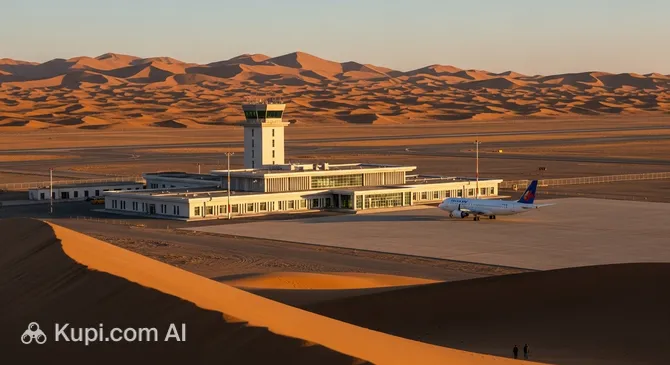
Qiemo Airport. Source: Kupi.com Binoculars

Qiemo Airport (IQM), also known as Qiemo Yudu Airport, is not merely a transport hub, but a true aerial gateway to one of the most enigmatic corners of China. Situated on the edge of the boundless Taklamakan Desert, this modern air facility connects the legendary oasis of the Silk Road with major metropolises. For travellers, arriving here becomes the first impressive introduction to the region: the approach for landing reveals breathtaking views of dunes and mountain ranges, creating an atmosphere of true adventure even before touching the runway.

IATA Code IQM
ICAO Code ZWCM
City Qiemo (Qarqan/Cherchen)
Distance to Centre ~13 km
Status Domestic
Annual Passengers Over 170,000
Schedule Please check official airline websites

Features and Advantages of the Airport

Despite its modest size, Qiemo Airport plays a key role in the life of the region and offers tourists a number of undeniable advantages:

  • Modern Infrastructure. The terminal, opened in 2016, is designed with modern requirements for comfort and safety in mind. The building looks fresh, and cleanliness and order are maintained inside, which favourably distinguishes it from older regional airports.
  • Speed of Service. Thanks to the terminal's compactness, the journey from the aircraft steps to the city exit takes mere minutes. Queues at check-in and security are a rarity here, allowing passengers to save time and avoid stress.
  • Strategic Location. The airport makes travel to Qiemo County accessible, which was previously considered difficult to reach due to remoteness and complex terrain. Now, reaching the famous jade deposits and ancient ruins can be done quickly and with comfort.
  • Scenic Views. The location in a desert area ensures a unique visual experience. In clear weather, a panorama of the majestic desert opens up from the terminal windows and aircraft portholes, which is particularly appreciated by photography enthusiasts.

Contact Information

Finding precise and up-to-date contact information for small regional airports, such as Qiemo Airport (IQM), can be challenging. Below are the most complete details available from open sources, as well as recommendations for communication.

  • Official Website: Currently, Qiemo Airport (IQM) does not have a separate official website. It is recommended to check flight status information on the websites of airlines operating flights to this airport or on global flight trackers.
  • Information Desk Phone: A single public telephone number for the airport information desk is not published. For operational information regarding flights, baggage allowance rules, and other queries, please contact your airline directly.
  • Airport Address: Qiemo County, Bayingolin Mongol Autonomous Prefecture, Xinjiang Uygur Autonomous Region, China.
  • Email: An official email address for general enquiries is not provided.
  • Social Media: The airport does not possess official accounts on popular social networks.
  • Lost Luggage Information: For all issues related to lost or damaged baggage, one should contact the representative office of the airline on whose flight you arrived directly. Airport staff on-site will be able to guide you to your airline's counter.
  • Passenger Support Contacts: The most reliable way to receive assistance or consultation is to contact the support service of the airline whose services you are using.

How to Get to the Airport

Qiemo Airport serves the city of Qiemo and its surroundings in China. Reaching the terminal from the city centre is possible in several ways, the choice of which depends on your budget, time, and personal preferences.

Public Transport. The most affordable option is the bus. Usually, special shuttles run from the city centre to the airport. It is recommended to verify their schedule and route in advance, as they may change. This method is suitable for travellers without large luggage who are willing to spend a little more time on the road. There is no direct rail or metro connection to the airport.

Taxi and Transfer. The most comfortable and fastest method is to order a taxi. The journey from the centre of Qiemo to the airport will take approximately 20-30 minutes. The cost will be higher than the bus, but the gain in time and convenience is obvious. A pre-booked transfer can be an excellent solution for groups or families with children, guaranteeing a fixed price and timely vehicle arrival.

Car Rental and Parking. If you value independence, renting a car will be the ideal choice. This allows you not only to reach the airport with comfort but also to explore the region. Qiemo Airport has a car park where you can leave a vehicle for a few hours or for a longer term.

When planning a trip to the airport, always allow extra time for potential traffic jams and passing through security control. For most travellers, a taxi becomes the optimal choice in terms of price-to-comfort ratio.

Terminals and Map

Qiemo Airport (IQM) is a small regional airport distinguished by a simple and clear structure. It consists of one compact passenger terminal serving all flights — both departures and arrivals. Thanks to this, navigation through the airport is intuitive, and getting lost here is practically impossible. The concept of transfers between terminals is absent due to lack of necessity.

The terminal layout is very logical. Upon entering the building, you immediately find yourself in the general area where the check-in counters are located. After receiving a boarding pass and checking in luggage, passengers proceed to the security screening zone. Beyond it lies a small but functional departure lounge with several boarding gates. The arrival zone is equally simple: passengers from the aircraft enter the baggage claim hall, and from there — to the city exit.

One of the main advantages of Qiemo Airport is the speed of completing all procedures. Due to low passenger traffic, check-in and security screening rarely take more than 15–20 minutes. Nevertheless, the standard recommendation is to arrive at the airport 1-1.5 hours before departure to avoid any rush and wait for your flight calmly.

For navigation, it is sufficient to follow the few signs, which are usually duplicated in English. All key points — from the entrance to the boarding gate — are within a few minutes' walk of each other. The terminal infrastructure is basic and includes the essentials: a waiting area, restrooms, and possibly a small kiosk with beverages and snacks. This airport is created for the quick and efficient dispatch and reception of passengers without unnecessary complexities.

Airport History

The history of Qiemo Airport is a vivid example of the development and modernisation of the entire region. The first airport in Qiemo County was opened in 1978. For many decades, it served as a vital aerial artery connecting this remote corner of China with the rest of the country. However, having been built long ago and finding itself in close proximity to the expanding city, the old class 3C airport eventually ceased to meet modern safety requirements and had no opportunities for expansion.

By the early 2010s, it became obvious that a new, more modern aviation hub was necessary for the further development of the region. The old airport suspended operations in 2011, and in 2014, the construction of a completely new airport at a new location began. The grand opening of the new Qiemo Airport (also known as Qiemo Yudu Airport) took place on 26 December 2016. On the same day, the old airport was officially closed, marking the beginning of a new era in the county's air connectivity.

The new airport became a huge step forward. It was built to class 4C standards, with a runway 2,800 metres long capable of accommodating larger modern aircraft such as the Boeing 737 and Airbus A320. The throughput capacity of the new terminal was calculated for 120,000 passengers and 480 tonnes of cargo per year. This large-scale modernisation radically improved the transport accessibility of Qiemo, giving a powerful impulse to economic development and tourism in this unique region on the edge of the Taklamakan Desert.

Thus, the history of the airport is not just a reconstruction, but a complete replacement of old infrastructure with new. An interesting fact: the new airport was built in just two years, which is an impressive timeframe for such a major project in a remote area. This project became a symbol of the rapid development of China's western regions and its aspiration to make even the most remote corners of the country accessible for travellers and business.

Services and Amenities

Qiemo Airport (IQM) is a compact regional air hub offering passengers a basic set of services necessary for a comfortable wait before departure. Given its small size, the infrastructure here is simple and functional, oriented towards fulfilling the primary needs of travellers.

To have a snack before the flight, a small café or kiosk usually operates in the terminal, where one can purchase beverages, snacks, and basic travel goods. The selection of shops is generally limited, so one should not count on a wide assortment. Enhanced comfort lounges or VIP services are typically not provided in airports of this scale.

For passenger convenience, free Wi-Fi is available within the terminal territory, and there are zones with sockets for charging mobile devices. Financial services here are limited: the presence of an ATM is possible but not guaranteed, and currency exchange points are likely absent. It is recommended to ensure you have the necessary amount of local currency in advance.

Key amenities for safety and comfort are provided at the airport. In case of need, one can turn to the medical point for first aid. For passengers with small children, there is a mother and child room. Travellers with reduced mobility can count on staff assistance and the presence of necessary infrastructure; however, it is recommended to inform the airline of your needs well in advance.

There are no hotels directly on the territory of Qiemo Airport, but travellers can find accommodation options in the nearest city. Specialised business services, such as conference halls, are not provided in the terminal, as it is focused on servicing passenger flights.

Dining

Qiemo Airport (IQM) is a small regional airport, so the choice of catering establishments here is limited and oriented towards the basic needs of passengers. One should not expect a large variety of restaurants and cafés, as found in major international hubs. All dining points are located in the single terminal.

As a rule, before passing security control (in the public area), a small café or buffet is located. Here you can purchase a quick snack: packaged snacks, sandwiches, pastries, as well as hot and cold beverages. For a more substantial meal, simple hot dishes may be offered, for example, noodle soup or rice with meat. After passing control (in the departure zone), the choice is usually even more modest and may be limited to a vending machine or a small kiosk with drinks and snacks.

Although Uyghur cuisine with its famous pilaf and kebabs is popular in the region, you are unlikely to find a wide assortment of authentic dishes at the airport. For true gastronomic impressions, it is better to head into the city of Qiemo itself. Regarding special dietary needs (vegetarian, vegan, gluten-free, or specific Halal dishes), finding them at the airport is practically impossible. Passengers with strict dietary restrictions are strongly advised to bring food with them.

Prices for food and drinks at Qiemo Airport are generally moderate, but may be higher than in the city. The opening hours of catering establishments are directly tied to the flight schedule — they open to serve departing passengers and close shortly after the aircraft departs. Thus, the best option is to have a full lunch in the city, and rely on the airport as a place where you can buy water, tea, or a light snack before the flight.

Travel Tips

Travelling through Qiemo Airport can be a simple and pleasant stage of your trip to China if you prepare in advance. Follow these tips to make your experience at this regional airport as comfortable as possible.

Arrival Time at the Airport. The golden rule is better to arrive early than to be late. For domestic flights within China, it is recommended to arrive at the airport 1.5-2 hours before departure. This will give you enough time for check-in, baggage drop, and passing all pre-flight procedures without haste.

Check-in and Security Control. To save time, use online check-in for your flight if your airline provides such an option. Keep your passport (or other identification document) and boarding pass ready. During screening, be prepared to remove laptops, tablets, and portable power banks from your hand luggage for separate inspection.

Choosing a Seat on the Plane. A window seat is ideal for those who love to admire views, especially when flying over picturesque landscapes. An aisle seat is more convenient if you plan to get up during the flight without disturbing neighbours. Seats in the front of the cabin usually allow for a quicker exit from the aircraft upon arrival.

Hand Luggage. Remember the restrictions on carrying liquids: they must all be in containers of no more than 100 ml and packed in one transparent bag. Pay special attention to the rules for carrying portable charging devices in China: they are permitted only in hand luggage, and the capacity marking must be clearly visible on the casing. Devices without marking may be confiscated during inspection.

Passengers with Connections. If you have a connecting flight at the airport of Qiemo city, clarify at check-in whether you will need to collect and re-check your luggage. Immediately upon arrival, find information about your next flight and the boarding gate number on the display board. The airport is compact, so navigation will not cause difficulties.

Saving Time and Money. Besides online check-in, travelling light with only hand luggage will help save time. To avoid overpaying, take an empty water bottle with you and fill it at drinking fountains after passing security control. Study transfer options from the airport to the city in advance — public transport is often significantly cheaper than a taxi.

In Case of Flight Delay. If your flight is delayed, first contact your airline representative for information. Depending on the duration of the delay, you may be provided with drinks, meals, or even hotel accommodation. Having travel insurance may also cover unforeseen expenses. Use the free time to rest or explore the few shops and cafés in the airport.

Airports in nearby cities

Reached the end of the page?

That means the route is fully explored