Support

Liupanshui Yue Zhao Airport

About the Airport

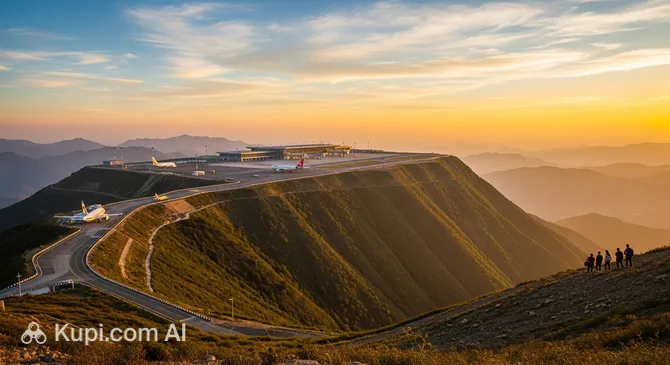
Liupanshui Yue Zhao Airport. Source: Kupi.com Binoculars

Liupanshui Yue Zhao Airport is not merely a transport hub, but a true haven in the sky, carved into the mountains of Guizhou Province. The runway here seems to float amidst the clouds, offering passengers breathtaking views of karst peaks and green valleys even before touching the ground. This modern airport serves as the main aerial gateway to the "Cool Capital of China" — the city of Liupanshui, renowned for its unique climate and picturesque landscapes. The terminal combines functionality with cosiness, ensuring a comfortable start to your journey through the mysterious southwest of the Celestial Empire.

IATA Code LPF
ICAO Code ZUPS
City Liupanshui
Distance to Centre 15 km
Status Domestic
Annual Passengers ~115,000 (2021 data)

Features and Advantages of the Airport:

Yue Zhao Airport is famous for its unique location: to build it in the mountainous terrain, engineers had to shear off the tops of several hills and fill deep gorges, making it a true marvel of construction engineering. Due to its altitude, the airport is often shrouded in a light mist, creating a mystical atmosphere of a "flight in a dream".

The compact yet modern terminal ensures high service speed: long queues are rare here, and navigation is intuitive even for those visiting China for the first time. Travellers appreciate the proximity to the city — the journey to the centre of Liupanshui takes only about 20–30 minutes by taxi or bus, allowing you to quickly reach your hotel and begin exploring local attractions.

Contact Information

To plan your trip and resolve operational queries, we recommend using the contact information for Liupanshui Yue Zhao Airport (LPF) listed below. Please note that English-speaking support in small regional airports in China may be limited, so it is advisable to have a translation app handy or seek assistance from hotel staff for calls.

  • Official Airport Website: Currently, the airport does not have a dedicated separate website with international access. The most up-to-date flight schedules are best tracked via major Chinese aggregators (e.g., Trip.com) or on the Guizhou Airport Group website.
  • Information Desk Phone: +86 858 680 1006 (main line for flight inquiries and general questions).
  • Airport Address: Daba Village, Yuezhao Town, Zhongshan District, Liupanshui City, Guizhou Province, China.
  • Email: A public email address for passengers is not provided.
  • Airport Social Media: Main communication and news are published via the official account on the WeChat app (search for the airport name in Chinese: 六盘水月照机场).
  • Lost and Found Information: There is no specialized direct number; for lost items, please contact the general information desk in the arrivals hall or call the main information phone line.
  • Customer Support Contacts: +86 858 662 8888 (administration/complaints and suggestions line).

How to Get to the Airport

The transport accessibility of Liupanshui Yue Zhao Airport (LPF) is one of its key advantages. Located just 15 kilometres from the city centre, it allows tourists to reach their destination quickly. The road passes through scenic mountainous terrain, so the drive itself can become a mini-excursion. Due to the relief features, there is no metro system in this region, but ground transport operates reliably.

Taxi and Transfer

This is the most popular and convenient method for international tourists. Mobile ride-hailing apps are widely used in China (e.g., DiDi), which often feature built-in address translators. A taxi ride from the city centre to the terminal will take approximately 25–35 minutes depending on traffic. The estimated cost is 30–50 CNY. Regular city taxis are also stationed at train stations and hotels, but it is recommended to have the airport name written in Chinese characters to show the driver.

Public Transport: Buses

Special Airport Shuttle Buses run between the airport and the city centre. Routes are usually coordinated with flight arrival and departure times.

  • Route: The main line connects the airport with Liupanshui Railway Station and several major hotels in the centre.
  • Travel Time: About 40–50 minutes.
  • Cost: The ticket is very reasonably priced — around 10–15 CNY. Payment is most often made in cash or via WeChat/Alipay upon boarding.

Car Rental

Car rental counters can be found in the arrivals hall. However, it is important to remember the specifics of driving in China: International Driving Permits (IDP) are not valid here. To rent a car, one must obtain a temporary Chinese driving licence, which can take time. A more convenient option for tourists is to hire a car with a driver for the whole day, which saves you from the difficulties of navigating mountain switchbacks.

Parking

An open-air parking lot for short-term and long-term parking is equipped in front of the terminal building. Spaces are usually available as passenger traffic is moderate. Rates start from approximately 5 CNY for the first hour, with a daily maximum of around 30–50 CNY (prices are subject to change).

Alternative Airports Nearby

If you cannot find a convenient direct flight to Liupanshui, it makes sense to consider flying into neighbouring cities, from where you can travel by ground transport. The Guizhou region and neighbouring provinces possess a developed network of regional airports.

The closest alternative is Weining Caohai, located in Biandanshan, at a distance of about 69 km. Another convenient option is Bijie Airport (83 km), which handles a larger number of flights. Also within a 100 km radius is Anshun Huangguoshu Airport, convenient for those wishing to visit the famous waterfall.

For travellers willing to undertake a slightly longer journey by land, Zhaotong Airport (about 145 km) and Xingyi Airport (about 168 km) are available. These transport hubs may offer more flexible schedules or better prices on flights from major Chinese metropolises.

Terminals and Map

The terminal complex of Liupanshui Yue Zhao (LPF) is designed with maximum convenience and functionality in mind, typical of small regional hubs. The airport consists of one passenger terminal that serves all domestic flights. Thanks to the compact size of the building, navigation here is intuitive, and passengers do not need to cover long distances or use intra-airport transport.

Terminal Layout and Zoning

The interior space of the terminal is organized logically and simply, eliminating the risk of getting lost even for those who do not speak Chinese (main signs are duplicated in English).

  • Check-in and Departure Zone: Upon entering the terminal, passengers find themselves in a general hall where check-in counters are located. Immediately behind them is the security control zone. After passing inspection, travellers enter the sterile area with boarding gates. The waiting lounge is equipped with panoramic windows offering views of the mountains and the airfield.
  • Arrival Zone: The flows of arriving and departing passengers are separated. After disembarking from the aircraft, the route leads to the baggage claim area (usually one or two belts operate), and then to the exit into the city, where taxi stands and bus stops are located.

Features and Amenities

The terminal features a modern design with elements of ethnic style characteristic of Guizhou Province. Despite its modest size, it has everything necessary for a comfortable wait for a flight:

  • Dispensers with free hot and drinking water (boiling water is available around the clock, so tourists are recommended to carry a thermos mug or empty bottle).
  • Small shops offering local specialities (tea, snacks) and souvenirs.
  • Clean restrooms and mother-and-child rooms.
  • Charging stations for mobile devices in the waiting hall.

Time Recommendations

The main advantage of Liupanshui Airport is the absence of long queues. Check-in, baggage drop, and pre-flight security procedures are very swift. Usually, the entire journey from the building entrance to the seat at the gate takes 20–30 minutes. Nevertheless, to avoid unforeseen situations, it is recommended to arrive at the airport 1.5 hours before the departure time indicated on your ticket.

Airport History

History and Development Stages

The history of Liupanshui Yue Zhao Airport is a relatively new but impressive chapter in the development of Chinese civil aviation. Its emergence is linked to the desire to open up the hard-to-reach mountain regions of Guizhou Province to the world and transform the city of Liupanshui into a popular tourist destination. This is one of those projects that demonstrate the incredible capabilities of modern engineering in complex geological conditions.

Chronology of Creation and Opening

The idea of building an air harbour in this region arose in the late 2000s as a response to the region's growing need for high-speed connections. The implementation of the ambitious project began on 26 September 2011, when the foundation of the future airport was laid. Construction proceeded at a rapid pace: in just three years, workers managed to turn the complex mountain terrain into a level airfield.

A significant milestone was June 2014, when a test flight was successfully conducted here. The official opening and commissioning took place on 28 November 2014. The first flight to land on the new runway was a China Southern Airlines aircraft arriving from Guangzhou. This event marked a new era for the city, significantly reducing travel time for tourists and business travellers.

Engineering Feat and Construction Features

Yue Zhao Airport has not undergone classic "renovations" in the usual sense, as it is a modern facility. However, the process of its creation itself can be considered a grand modification of the landscape. Construction was carried out in high-altitude conditions and karst rock formations, which required unique technical solutions.

To accommodate a runway 2,800 metres long, engineers literally had to reshape the mountains. The tops of numerous hills were sliced off, and deep gorges and valleys were filled. This method, known as "cut-and-fill", allowed for the creation of a flat plateau where there were previously only cliffs and precipices. The scale of the moved earth was so vast that the project is often cited as an example of Chinese infrastructure construction in difficult conditions.

Interesting Facts and Achievements

Despite its youth, Liupanshui Airport has already gained fame due to its unique characteristics and facts related to its history:

  • Airport in the Clouds: The air harbour is located at an altitude of about 1,975 metres above sea level. Because of this, pilots often land aircraft in low cloud conditions, requiring high skill and modern navigation equipment.
  • Development Strategy: The opening of Yue Zhao became part of a large-scale plan by Guizhou Province to provide every county with its own airport, making this mountainous region one of the most aviation-infrastructure-dense in China.
  • Climate Record Holder: The airport serves a city called the "Cool Capital of China". Even at the height of summer, temperatures here rarely exceed comfortable values, making the destination extremely popular immediately after flights launched.
  • Connection to the World: While at the time of opening, flights were operated only to key destinations (Beijing, Guangzhou, Kunming), the route network now covers more major cities in China, making travel to picturesque Liupanshui accessible and comfortable.

Services and Facilities

Services and Amenities at Liupanshui Yue Zhao Airport (LPF)

Despite its compact size, Liupanshui Yue Zhao Airport offers passengers a set of basic services sufficient for a comfortable wait for departure. Since the airport is regional and focused on domestic flights, one should not expect luxury boutiques or fine dining restaurants here, but everything necessary for a short stay is provided.

Restaurants, Cafes, and Shops

The terminal's gastronomic zone is small but cosy. Several food outlets operate here, offering simple but hearty Chinese dishes: noodles, rice with side dishes, as well as traditional hot snacks. This is a great opportunity to get acquainted with local flavours before flying. For those in a hurry, small kiosks with packaged snacks, drinks, biscuits, and instant noodles are available.

Retail outlets are mainly focused on selling local souvenirs and specialities of Guizhou Province. Travellers can purchase famous high-mountain tea, dried meat, handicrafts, and gift sets. There are no Duty Free shops here, as the airport serves only domestic routes.

Wi-Fi and Device Charging

Free Wi-Fi is available within the terminal. International tourists should keep in mind the specifics of connecting to the internet in China: authorization on a public network often requires entering a Chinese mobile phone number to receive an SMS code. Special charging stations with sockets and USB ports are installed in the waiting hall, allowing you to stay connected throughout your journey.

Lounges and VIP Service

For passengers who value enhanced comfort, the airport provides a VIP Lounge (First Class Lounge). Access is usually granted to business class passengers and holders of elite airline loyalty cards. The lounge offers a calm atmosphere, comfortable soft chairs, fresh press, beverages, and light snacks. This is the best place in the terminal to rest from the hustle or work in silence.

Financial Services

An ATM is installed in the terminal where you can withdraw cash Yuan (CNY). Please note that the device may primarily service cards of the Chinese UnionPay system. There are generally no currency exchange bureaus at the airport, so international tourists are strongly advised to arrange for cash in advance — at major international transfer airports or city banks.

Services for Passengers with Children and People with Disabilities

The airport infrastructure is designed taking into account the needs of all groups of travellers:

  • For Families with Children: The terminal is equipped with a mother-and-child room where you can change or feed a baby in privacy.
  • Barrier-Free Environment: The building is equipped with ramps, lifts, and special restrooms for people with disabilities. Airport staff are ready to provide escort and assistance during boarding/disembarking (it is recommended to book the assistance service in advance through the airline).

Medical Assistance

A medical post operates in the terminal building, equipped to provide first aid in emergency situations. If you feel unwell, contact any airport staff member or the information desk to summon a medic.

Hotels and Accommodation

There are no hotels directly inside the airport building or in the transit zone. Due to the proximity to the city (about 15 km), passengers requiring overnight accommodation usually travel to Liupanshui. The taxi ride to the centre takes only 25–35 minutes, where a wide selection of hotels for any budget is available.

Business Services

Specialized conference halls or business centres with meeting rooms are not provided in the terminal due to its small area. To resolve work issues, passengers can use the quiet zone in the VIP lounge, but for holding meetings, it is better to choose one of the business hotels in the city.
Dining

The gastronomic map of Liupanshui Yue Zhao Airport (LPF) corresponds to its status as a small regional hub. You will not find an extensive network of international food courts or dozens of restaurants here, as there is only one passenger terminal and it is quite compact. However, the catering system is well organized: travellers can count on quality hot local dishes and a basic set of snacks. The main emphasis is on fast service and the authentic flavours of Guizhou Province.

Restaurants and Cafes: What and Where to Find

Most food outlets are concentrated in the public area (landside) before passing pre-flight security. The main airport restaurant is located here, operating on a bistro principle. The menu is dominated by set meals: rice with stewed meat and vegetables, various types of noodles, and soups. In the sterile departure area (airside), after security control, the choice is more modest: there is a small cafe and kiosks where you can buy drinks, tea, coffee, and packaged sandwiches. If you plan a substantial lunch, it is better to do so before passing special control.

Local Delicacies: The Taste of Liupanshui

Even if you have only half an hour before departure, do not miss the chance to try the region's main gastronomic calling card — Mutton Rice Noodles (Shuicheng Yangrou Fen). Liupanshui is famous throughout China for this dish. At the airport, it is prepared according to traditional recipes: a rich aromatic broth, tender slices of meat, and rice noodles seasoned with local hot pepper and herbs. This is an ideal option for a "warming" meal before a flight above the clouds.

Dietary Needs and Special Requests

Travellers with strict dietary restrictions should be prepared for limited choices:

  • Vegetarians and Vegans: Specialized items are usually absent from the menu. Available options include boiled rice, vegetable snacks, or noodles (please clarify if they are cooked in meat broth). It is recommended to carry your own snacks (nuts, fruits).
  • Halal: Muslim communities reside in Guizhou Province, so mutton dishes are often prepared observing traditions. However, the presence of an official "Halal" certificate in the airport kitchen is not guaranteed. Look for signs with green symbols or inquire with the staff.
  • Gluten-Free Food: Finding guaranteed gluten-free food is difficult due to the widespread use of soy sauce. Rice and boiled eggs are the safest options.

Prices and Opening Hours

The pricing policy at Yue Zhao Airport is moderate and only slightly exceeds city rates. A full hot lunch (for example, a large bowl of noodles with meat) will cost on average 35–55 CNY. Tea, bottled water, or light snacks cost from 5 to 15 CNY. Establishments open 90 minutes before the departure of the first morning flight and close after the departure of the last aircraft, adjusting to the current flight schedule.

Recommendations for Passengers

For a quick snack, small shops with local snacks are perfect: try dried beef with spices or spicy tofu in vacuum packaging — it is filling and convenient to take with you. Also, the airport has 24-hour access to boiling water, so many locals brew their own instant noodles. For a full lunch, head to the restaurant in the public zone immediately upon arrival at the airport to enjoy hot food without rushing.

Travel Tips

Liupanshui Yue Zhao Airport is a compact high-altitude hub that has unique features distinguishing it from the huge international airports of Beijing or Shanghai. To ensure your journey goes smoothly, we have prepared a list of practical tips taking into account Chinese aviation security rules and local specifics.

Arrival Time Recommendations

Despite the airport being small and rarely crowded, one should not arrive at the last minute. The optimal arrival time is 1.5 hours (90 minutes) before departure. This is quite sufficient to pass check-in and security without haste. If you are flying during holidays (for example, Chinese New Year or the Golden Week in October), it is better to add another 30 minutes as a buffer.

Check-in and Security Features

Chinese aviation security standards are among the strictest in the world. Be prepared for the following:

  • Documents: International tourists must present a passport during check-in and security screening. Keep it handy.
  • Lighters and Matches: There is a total ban in China on carrying lighters and matches in both carry-on and checked luggage. They will be confiscated at security. Do not attempt to hide them — scanners are very sensitive.
  • Electronics: Laptops, tablets, cameras, and umbrellas must be removed from bags and placed in separate trays.

Carry-On Rules: The Power Bank Regulation

The most frequent stumbling block for tourists is external batteries (Power Banks). Strict rules apply in China:

  • Power banks can be carried only in carry-on luggage. Checking them in luggage is strictly prohibited.
  • The device must have a clear factory marking indicating the capacity. If the inscriptions have worn off, the battery will be confiscated.
  • Permissible capacity: up to 100 Wh — without restrictions; from 100 to 160 Wh — only with airline permission; over 160 Wh — prohibited.

Tips on Choosing a Seat on the Plane

A flight to or from Liupanshui is a true excursion. The airport is located at an altitude of nearly 2,000 metres, amidst karst mountains. We strongly recommend choosing a Window seat. During take-off and landing, fantastic views open up of mountain peaks, drifting clouds, and green terraces that are impossible to see from an aisle seat.

Recommendations for Transfer Passengers

Yue Zhao Airport mainly serves direct point-to-point flights or acts as a final destination. If you have a complex itinerary with a connection, remember:

  • Baggage: Most often, you will have to collect your luggage in Liupanshui and re-check it for the next flight, unless both segments are operated by the same airline on a single ticket. Clarify this at the check-in counter at the departure airport.
  • Connection Time: Do not plan connections that are too short (less than 2–3 hours), as weather conditions in the mountains can cause adjustments to the schedule.

Tips for Saving Time and Money

  • Water: Do not buy water before passing security control; it will have to be discarded. Bring an empty bottle or thermos mug. There are dispensers with free hot and cold drinking water in the waiting hall.
  • Food: Prices at the airport are higher than in the city. If you want to save money, have lunch in the city before leaving or buy snacks (noodles, biscuits, fruit) in a regular supermarket and bring them with you.
  • Internet: Download an offline translator on your phone in advance. English is poorly understood in the region, and having ready phrases in Chinese (for example, "Where is my boarding gate?") will save you a lot of nerves and time.

What to Do in Case of Flight Delay

Due to its high-altitude location, Liupanshui Airport is subject to fog and cloudiness, especially in the morning and evening hours. Flight delays due to weather conditions happen here.

If your flight is delayed:

  • Listen carefully to announcements (they may be in Chinese only) or watch the display boards. If in doubt, show your boarding pass to a uniformed staff member.
  • Airlines in China usually provide meals (lunch boxes) during long delays. Do not hesitate to approach the counter at the gate and ask about food and water using a translator.
  • Have a Plan "B". In case of flight cancellation, you can reach major hubs (Guiyang or Kunming) by high-speed train from Liupanshui Station, but you will need to take a taxi to get there.

Reached the end of the page?

That means the route is fully explored