Source: Kupi.com AI
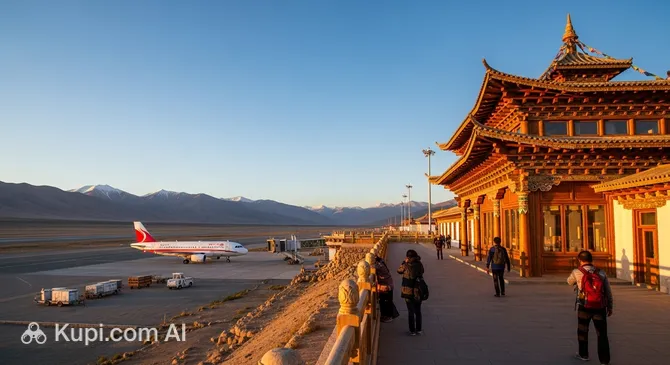
Ngari Gunsa Airport is not merely a transport hub, but a true celestial gateway to the "Roof of the World". Situated amidst the rugged and majestic landscapes of the Tibetan Plateau, it transforms a long and exhausting overland journey into a short yet breathtaking flight. Landing here is an adventure in itself: the aircraft manoeuvres between mountain peaks, revealing fantastic views of the Himalayas to passengers that are impossible to forget.
| Characteristic | Value |
|---|---|
| IATA code | NGQ |
| ICAO code | ZUAL |
| City | Gar |
| Country | China |
| Time zone | Asia/Shanghai |
| Schedule | Online timetable |
Features and Advantages of the Airport
Ngari Gunsa is unique due to its location and the engineering solutions dictated by extreme operating conditions.
- Extreme Altitude: Situated at an altitude of 4,274 metres above sea level, this airport is among the four highest civilian airports on the planet. Due to the thin air, an unusually long runway—4,500 metres—has been constructed here, which is necessary for the safe take-off and landing of airliners.
- Access to Sacred Sites: For tourists, this is the main starting point to the sacred Mount Kailash and Lake Manasarovar. The opening of the airport reduced the pilgrims' journey from several days of exhausting travel to a single day of comfortable transit.
- Health Considerations: Given the risk of altitude sickness, the terminal is equipped with modern oxygen supply systems. Passengers can utilise special oxygen cushions or masks right in the waiting hall to ease acclimatisation.
- Scenic Views: From the terminal windows and during the landing approach, a panorama of the Transhimalayan ranges opens up. In clear weather, visibility extends for tens of kilometres, allowing one to enjoy the rugged beauty of the Earth's "Third Pole".