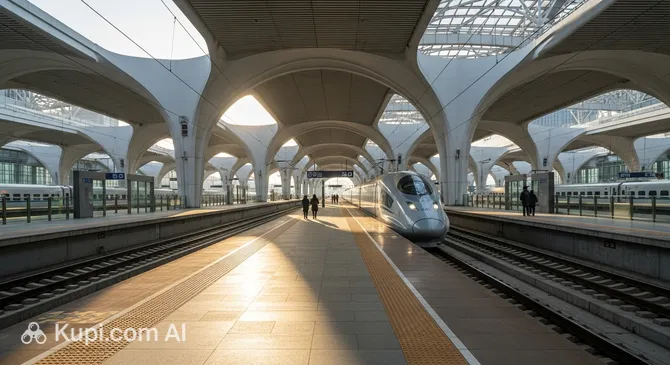
Tianjin Economic-Technological Development Area Railway Station. Illustration.
Source: Kupi.com AI
Tianjin Economic-Technological Development Area Railway Station (often referred to simply as TEDA Station) is a vital transport hub in the Binhai district, connecting the business centre with the rest of the metropolis and neighbouring regions. This modern terminal serves both local residents and business travellers visiting one of the most dynamic economic zones in China. The station is integrated into the urban transport network, providing convenient access to the light rail line linking the area with downtown Tianjin.
It is important for passengers to know that the station features simple and clear navigation. Signs are duplicated in English, which makes orientation easier for international guests. Platforms are typically located on the elevated level, while ticket offices and exits are on the lower level, allowing for the efficient separation of arriving and departing passenger flows.
Official Website: 12306.cn (unified portal of China Railways).
Information Phone: +86 12306 (national railway service hotline).
Address: Tianjin Economic-Technological Development Area (TEDA), Binhai New Area, Tianjin.
Opening Hours: Daily, in accordance with the train schedule (usually from 06:00 to 23:00).
Luggage Storage: Available in the waiting hall or near the ticket offices (paid service).
Accessibility: The station is equipped with ramps and elevators for People of Determination (passengers with reduced mobility).
How to Get There
You can reach the station in the TEDA zone in several ways, the most popular of which is Line 9 of the Tianjin Metro (Binhai Mass Transit). This line directly connects Tianjin Central Station with the Binhai district. A trip from the city centre will take about 50–60 minutes, allowing you to avoid traffic jams and enjoy views of the urban landscape.
City taxis and ride-hailing services (such as DiDi) are also available. A car journey from central Tianjin will take approximately 45 minutes with light traffic, though the cost will be significantly higher than the metro. For those already within the TEDA zone, the station can easily be reached on foot or by local buses circulating through the business district.
Services and Amenities
The station offers a standard range of services for a comfortable wait before your journey. The building houses spacious waiting halls with seating where you can rest before boarding. For ticket purchases, there are both automatic terminals (most accept only Chinese ID cards) and traditional counters, where international tourists can purchase tickets using a passport.
Among other amenities, it is worth noting the availability of free hot water (a traditional service at Chinese stations suitable for tea or instant noodles), washrooms, and mobile device charging zones. Wi-Fi operates on the premises, though a Chinese phone number may be required to connect. For passengers with special needs, dedicated elevators and priority service zones are provided.
Where to Eat
If you need a bite to eat before your journey, there are several options within the station and in its immediate vicinity. Inside the terminal, you can often find small shops selling drinks, snacks, and pre-packaged meals. This is an excellent option for a quick and budget-friendly snack, as the average cost here is minimal.
For a more substantial meal, it is recommended to head out into the city. Since the station is located in a developed economic zone, shopping centres and streets with restaurants are situated nearby. Here you can find popular fast-food chains (such as KFC or McDonald's) as well as establishments serving authentic Chinese cuisine, offering noodles and dumplings. Please note that Halal options may vary by establishment, so it is advisable to check locally. Coffee is best sought at nearby chain coffee shops, as the selection at the station itself may be limited.
Station History
The history of railway connections in this area is inextricably linked with the development of the Tianjin Economic-Technological Development Area (TEDA) itself, founded in 1984. As the area transformed from salt flats into a thriving industrial and residential hub, an urgent need arose for reliable transport links with central Tianjin and Beijing.
The station and the light rail line became important milestones in integrating the Binhai district into the general transport system of the agglomeration. Over the past decades, the infrastructure has been repeatedly modernised to meet the growing passenger flow and the high standards of modern China. Today, it is not just a station, but a symbol of the region's dynamic economic growth.
Passenger Tips
When planning your trip, please consider that a security screening system operates at all stations in China. It is recommended to arrive at the station at least 30–40 minutes before the train departs to calmly pass through luggage checks and personal screening. Be sure to keep your passport with you — it will be required both for entering the station and for boarding the train.
If you are travelling with large suitcases, please use the elevators, as escalators can be congested during peak hours. Train tickets are now predominantly electronic, so it is not necessary to print a paper form; it is sufficient to present your identification document. Please be attentive: boarding for the train closes 5 minutes before departure.