Support

Xiangyang Airport

About the Airport

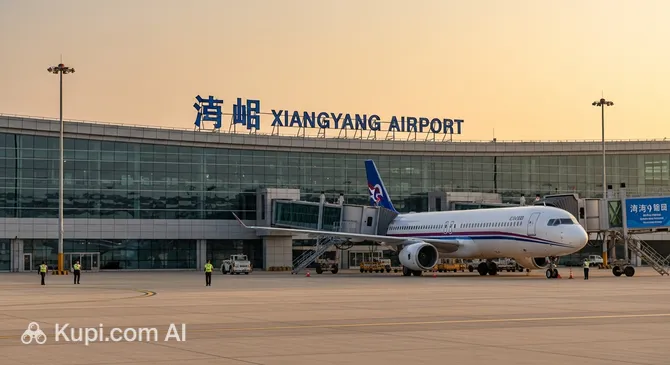
Xiangyang Airport. Source: Kupi.com Binoculars

Xiangyang Liuji Airport (XFN) is not merely a transport hub, but an aerial gateway to one of China's most legendary historical regions. Located in the very heart of Hubei Province, it serves as a starting point for travellers wishing to touch the era of the Three Kingdoms and visit ancient shrines. Despite its modest size compared to the giants of Beijing or Shanghai, this airport captivates with its cosy atmosphere and efficiency, allowing tourists to immerse themselves in Chinese culture immediately upon landing.

IATA Code XFN
ICAO Code ZHXF
City Xiangyang
Distance to Centre ~18 km
Status International
Annual Passengers ~1.79 million (2023)

Airport Features and Advantages:

Xiangyang Liuji Airport, although regional, plays a vital role in the transport system of Hubei Province. Its compactness becomes a major plus for passengers: there are practically no long queues here, and passing through all formalities takes a minimum amount of time.

The main advantage of this air harbour is its favourable location. The airport is located just 18 kilometres from the city centre, allowing you to reach your hotel or the business district by taxi or bus in less than 40 minutes. This is particularly valuable for tourists planning a packed programme of sightseeing.

Furthermore, Xiangyang Liuji serves as an ideal hub for accessing the famous Wudang Mountains and the historic Gulongzhong area. The airport is actively developing its route network, offering convenient connections with major Chinese metropolises such as Beijing, Shanghai, and Guangzhou, ensuring stable connectivity between the region and the rest of the world.

Contact Information

There are several ways to contact representatives of Xiangyang Airport. Below are the main contact details that travellers may require.

  • Official Website: The airport is part of the Hubei Airport Group; current information on flights and services can be found on their portal www.hbairport.com. Please note that the site may be presented primarily in Chinese.
  • Information Desk Phone: For operational information regarding flights, services, and terminal operations, please call: +86 710 372 8888.
  • Airport Address: Xiangyang Liuji Airport (XFN), Xiangzhou District, Xiangyang City, Hubei Province, China.
  • Email: A dedicated email address for general enquiries is generally not published. It is recommended to use the telephone for communication.
  • Lost Luggage Information: In case of loss or damage to luggage, you should first contact your airline's representative office. You can also contact the airport baggage tracing service by phone: +86 710 372 8833.
  • Passenger Support Contacts: For all questions related to your stay at the airport, you can contact the general information service.

How to Get to the Airport

Getting to Xiangyang Airport (XFN) from the centre of Xiangyang can be done in several ways, each having its own advantages depending on your budget, time, and preferences. The airport is located approximately 20 kilometres northeast of the city centre, and the journey usually takes between 30 to 50 minutes.

Public Transport is the most economical option. Dedicated airport shuttle buses are the most popular choice. They operate on several routes, connecting the airport with key points in the city, including the railway station and major hotels. The fare is low, and the schedule is usually coordinated with flight arrivals and departures. This is a reliable and budget-friendly method that we recommend to most tourists.

Taxi or Transfer offers maximum comfort and speed. You can easily find a taxi anywhere in the city or book a car via apps popular in China, such as Didi Chuxing. A taxi ride to the airport will cost more, but it is an excellent choice if you have a lot of luggage or are travelling in a group. Always ensure the driver has switched on the meter, or agree on a price in advance. You can also book a private transfer through your hotel or an online service for complete peace of mind.

Car Rental provides complete freedom of movement but can be complex for foreign tourists. Driving in China may require a local driving licence, and navigation in an unfamiliar city can be difficult. This option is better suited for experienced travellers familiar with local traffic regulations. For those arriving at the airport in their own or a rented vehicle, there is convenient parking on the airport grounds, offering both short-term and long-term parking options.

Terminals and Map

Xiangyang Airport (XFN) is distinguished by a simple structure that is easy for passengers to understand. It consists of one main terminal that serves all flights — both domestic within China and international. This compact organisation significantly simplifies navigation and makes the stay at the airport comfortable, eliminating the need to move between different buildings.

The terminal layout is intuitive and follows the classic two-level model. The Ground Floor is entirely dedicated to the arrivals area. Here, passengers collect their luggage from the conveyor belts and pass through customs control. The First Floor is the departure area. It houses check-in counters, baggage drop-off points, and the main security checkpoint, after which passengers enter the secure area with boarding gates.

Thanks to the relatively small size of the airport, all pre-flight procedures generally proceed quite quickly. It is recommended to allow about 1.5-2 hours for check-in and security screening before a domestic flight. Small queues are possible during peak hours, but overall, the staff work efficiently. All boarding gates are located in one hall after the security zone, which eliminates confusion and long walks.

For convenient navigation throughout the terminal, signs in Chinese and English are installed everywhere. Since there is only one terminal, you will not have to worry about transfers or finding the right building — all services, from check-in counters to boarding gates, are located in one building. Simply follow the "Departures" or "Arrivals" signs to easily find the zone you need.

Airport History

The history of Xiangyang Liuji Airport (XFN) began in the late 1980s when an urgent need arose to create a modern air harbour for the rapidly developing region. Construction was completed in record time, and the airport was officially opened for operation on 14 December 1989. Notably, it became one of the first airports in China built primarily with local funds rather than centralised state funding, which testifies to its immense importance for the local community.

In the first decades of its operation, the airport served predominantly domestic flights, gradually increasing its route network and passenger traffic. It became a catalyst for the economic growth of the city and the entire northern part of Hubei Province, ensuring transport accessibility and attracting investment. Over time, the old infrastructure ceased to cope with the growing volume of transport.

A key stage in the modern history of the airport was a large-scale reconstruction and expansion. In 2014, construction began on a new, more spacious, and modern passenger terminal, T2. This ambitious project was completed, and on 29 October 2017, the new terminal welcomed its first passengers, while the old terminal T1 was taken out of service. As part of the modernisation, the runway was also extended, allowing for the accommodation of larger aircraft.

The results were immediate: already in 2018, just a year after the opening of T2, Xiangyang Airport set a historical record by serving more than 2 million passengers in a year. Today, it is a modern regional aviation hub that continues to develop dynamically, improving service quality and opening new destinations for travellers and businesses.

Services and Amenities

Xiangyang Airport (XFN) offers passengers all the necessary services for a comfortable wait for their flight. Before departure, you can have a snack in one of the cafes or restaurants serving both local cuisine and familiar fast food. In the airport shops, you will find souvenirs, travel goods, and press. For many travellers, the ability to stay connected is important, so free Wi-Fi is available within the terminal, and charging stations for electronic devices are installed in the waiting halls.

For a more comfortable rest, there are premium lounges and VIP halls offering a secluded atmosphere, snacks, and beverages. Bank branches and currency exchange points are operating within the airport territory, where necessary financial transactions can be made. ATMs are also available for passenger use.

The airport is equipped for the needs of travellers with children: there are mother and child rooms where you can take care of your baby in a quiet environment. For passengers with reduced mobility, a barrier-free environment has been created, including ramps, special restrooms, and the ability to request staff assistance for escorting through the terminal and boarding the aircraft.

In case of necessity, a medical centre operates around the clock at the airport, ready to provide first aid. Business centres or conference rooms may be available for business travellers. If you have a long layover or an early departure, hotels are located in the immediate vicinity of the airport where you can rest in comfort.

Where to Eat

Xiangyang Airport (XFN) offers passengers several options for a snack or a full meal, consistent with its status as a regional aviation hub. The choice of establishments here is not as vast as in international giants, but you certainly won't go hungry. The main dining points are concentrated in the main terminal, both in the public area before security control and in the "sterile" departure zone.

Travellers wishing to discover local cuisine should pay attention to small cafes offering dishes from Hubei Province. This is an excellent opportunity to try authentic noodles or other regional specialities before departure. Besides local dishes, the airport generally has establishments offering more familiar options: coffee shops with pastries and sandwiches, as well as kiosks with drinks and packaged snacks. Steamed baozi buns or a cup of aromatic tea are perfect for a quick bite. For a more substantial lunch, one of the cafes in the public area is best suited, where the selection is usually wider.

Regarding special dietary requirements, finding options for vegans, vegetarians, or dishes marked "gluten-free" or "Halal" may be challenging. It is recommended to carry suitable snacks with you or use translation apps to clarify the ingredients of dishes with cafe staff. Prices at the airport are traditionally higher than in the city but remain at an acceptable level for a transport hub. Most catering establishments operate according to the flight schedule — opening early in the morning and closing after the departure of the last aircraft.

When planning your time, please note that the main selection of restaurants and cafes is located in the public area (landside), before passport control and security check. After passing through control (airside), the choice is usually more limited and reduced to a few small cafes and vending machines with drinks and snacks. Therefore, if you have enough time, it is better to eat before you enter the departure zone.

Travel Tips

When planning a departure from the airport in Xiangyang, allow sufficient time. For domestic flights within China, it is recommended to arrive 2-2.5 hours before departure, and for international flights — at least 3 hours. During national holidays and morning peak hours, queues may be longer, so it is better to add another half hour. To save time, complete online check-in for your flight if your airline provides this option. This will allow you to proceed directly to the baggage drop counter or security check if you are travelling light.

Security services at Chinese airports operate very thoroughly. Be prepared to remove laptops, tablets, and power banks from your hand luggage for separate scanning. Particular attention is paid to portable chargers (power banks): the capacity rating must be clearly visible on them, otherwise, they may be confiscated. Standard rules for carrying liquids (in containers up to 100 ml, packed in a transparent bag) also apply. It is strictly forbidden to carry lighters and matches in hand luggage — they will most likely be confiscated at the security check.

When choosing a seat on the plane, be guided by your preferences: window seats will offer beautiful views during take-off and landing, while aisle seats allow you to stand up and stretch your legs freely. If you have a connecting flight, clarify in advance whether you need to collect and re-check your luggage. Allow at least 2 hours for the transfer, especially if it involves changing terminals and passing through security control again.

Before your trip, familiarise yourself with the customs regulations of the PRC. If you are importing or exporting cash exceeding the established limit, expensive electronics, or art objects, they must be declared. Honest completion of the customs declaration will help avoid misunderstandings and fines. Keep all receipts for valuable purchases made during your journey.

To make your journey more economical, bring an empty reusable bottle with you, which can be filled with drinking water after passing through security. Light snacks brought from home will help avoid spending on expensive food at the airport. To save time, study the airport map in advance to easily orient yourself and quickly find the boarding gates, cafes, or shops you need.

In the event of a flight delay, first contact your airline representative for current information. Depending on the duration of the delay, you may be provided with vouchers for meals or even hotel accommodation. Ensure that your phone is fully charged and carry a portable charger. This will help you stay in touch with loved ones and, if necessary, promptly resolve issues related to your onward journey.

Reached the end of the page?

That means the route is fully explored