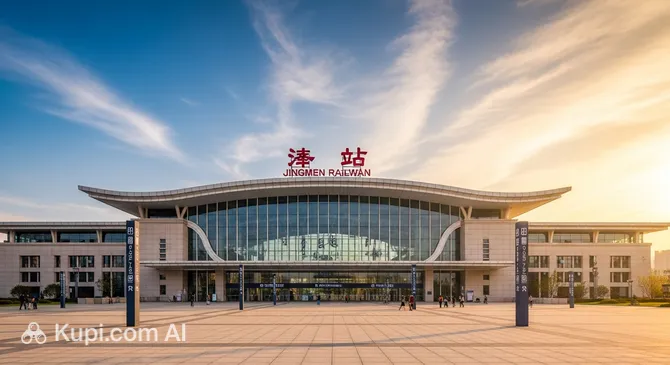
Jingmen Railway Station, located in the city of Zhongxiang, is a vital transport hub in Hubei Province. The station ensures stable connections with other regions of China, playing a significant role in both passenger and freight transport. The station building combines functionality with modern service standards, providing travellers with comfortable conditions to begin their journey.
Passengers should note that a strict control system is in place at the station. To enter the waiting area and access the platforms, you must present a ticket and passport. Navigation within the terminal is intuitive, with many signs duplicated in English. The main passenger route passes through the security checkpoint into the main hall, and then through the turnstiles to the trains.
Contact Information
Official Website:www.12306.cn (Unified portal of China Railways)
Helpline: 12306 (Hotline, support available in Chinese and English)
Address: Zhongxiang, Hubei Province, China
Opening Hours: 24 hours (Ticket office hours depend on the train schedule)
Luggage Storage: Available within the station building (paid service)
Accessibility: The station is equipped with ramps and specialised restrooms; assistance services for passengers with reduced mobility are available.
How to Get There
There are several convenient ways to reach the railway station in Zhongxiang. The most budget-friendly option is city buses. The route network is well-developed, and buses heading to the station usually have corresponding signage. Bus stops are located in the immediate vicinity of the terminal entrance.
For those who prefer speed and comfort, a taxi is the optimal choice. A trip from the city centre will take on average 20–30 minutes, depending on traffic. It is recommended to use official metered taxis or book a car via mobile apps. Walking is only convenient if your hotel is located in the station district.
Services and Amenities
The station offers a standard range of services for a comfortable wait before your journey. Spacious waiting halls with seating and, typically, air conditioning are available to passengers. Tickets can be purchased or exchanged at the ticket counters, or by using self-service machines (it is important to remember that many of these accept Chinese ID cards only).
Wi-Fi and charging points for mobile devices are usually available within the terminal. Dispensers providing free hot water are an essential feature of Chinese stations, allowing passengers to prepare tea or noodles. Restrooms and luggage storage facilities are also available.
Where to Eat
Inside the station, dining options are often limited to small kiosks and shops. Here you can buy water, soft drinks, snacks, and instant noodles, which are popular in China. Given the availability of free hot water, this is the most common way for local travellers to have a quick meal.
If time permits, it is worth exploring the establishments on the station square or in neighbouring buildings. There are often small cafes serving hot dishes of local cuisine: rice with toppings, dumplings, or soups. The average bill in such places is quite affordable, and the service is prompt.
Station History
The history of railway transport in Zhongxiang is closely intertwined with the industrial and social development of the region. The station was built to improve logistics and connect Hubei Province with the central mainlines of China, which gave a powerful boost to the city's economy.
Over the course of its existence, the station has undergone repeated renovations. Modernisation efforts included upgrading platforms, implementing modern security systems, and improving conditions in the waiting halls. Today, the station continues to develop, adapting to the growing flow of passengers.
Travel Tips
The main advice for passengers is to arrive at the station in advance, preferably 40–60 minutes before departure. In China, the entry procedure includes mandatory luggage screening and document checks, which can create queues, especially during public holidays.
Always keep your passport with you, as it is required to pass through the turnstiles and board the train. Watch the information screens carefully: boarding usually closes 5 minutes before the train departs. If you have heavy luggage, look for lifts in advance, as not all platform exits may be equipped with escalators.