Support

Archaeological Museum Suamox

About

Imagine a place where legends of the "People of the Sun" come to life. The Suamox Archaeological Museum is more than just a repository of antiquities; it is a true portal into the world of the Muisca culture, one of the most advanced pre-Columbian civilizations. Founded in 1942 in the city of Sogamoso, this museum complex is considered one of the most important research centers in Colombia.
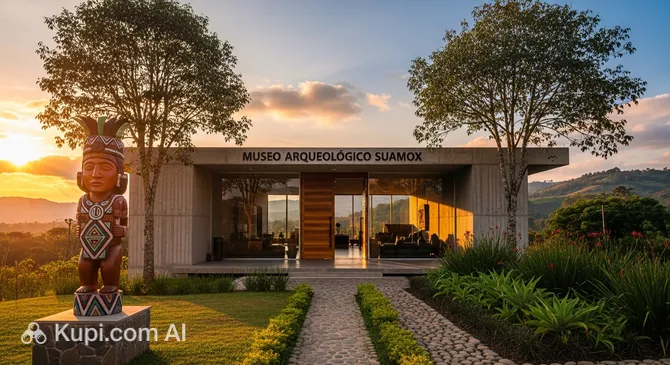
Suamox Archaeological Museum
Suamox Archaeological Museum. Иллюстрация. Источник: Kupi.com AI

The heart of the museum is the grand reconstruction of the Temple of the Sun (Templo del Sol), which was the primary religious center of the region in ancient times. The entire complex is spread across the sacred archaeological reserve where the settlement of Suamox once stood. Here, scientists discovered unique burials and everyday objects that now form the basis of the museum's rich collection.

Visitors can see thousands of artifacts, from delicate ceramics and stone statues to rare mummies and ancient textiles. A walk through the grounds includes visiting not only the exhibition halls but also the archaeology park, where traditional indigenous dwellings have been recreated, surrounded by gardens with authentic plants. This site rightfully holds a high position among the cultural landmarks of Latin America.

Contacts

To plan your visit, it is worth checking the museum's official details in advance to confirm any changes in the schedule or visiting rules. You can contact the administration by phone or find additional information on their website.

Below are the current contact details for the Suamox Archaeological Museum:

How to contactContact
AddressCl. 9a #6-45, Sogamoso, Boyacá, Колумбия
Phone+57 608 7703122
Websitemuseosuamox.wordpress.com

What to Do

The highlight of your visit will be seeing the majestic Temple of the Sun. This circular structure, reconstructed with incredible precision, allows you to grasp the scale of ancient Muisca rituals. Inside the halls, you will see unique exhibits: mummies, ritual gold figures, stone idols, and intricate textiles that reveal the beliefs and social structure of these people.

Be sure to walk through the archaeological and ethnobotanical park. Here, you can enter bohíos — traditional circular huts with thatched roofs and walls made of reed and mud. The surrounding gardens feature crops cultivated by indigenous people hundreds of years ago. Special attention should be given to the monument of the last chief (cacique) Sugamuxi and the ancient burials left in situ (at the site of their discovery).

For those who want to dive deeper into history, the archives and documentation center are open. The museum is also known for hosting the HUAN festival, dedicated to the sacred Conchucua spring, where high priests performed ritual washings in ancient times. It is an ideal spot for those seeking not just visual impressions but also profound knowledge of the region's anthropology and ethnography.

Getting There

Reaching this cultural center is easy, as it is located at Cl. 9a #6-45. If you are already in the center of Sogamoso, the walk to the museum takes only 10–15 minutes, allowing you to enjoy the atmosphere of the Boyacá department along the way. You can also take a taxi or a local bus, which will quickly bring you to the gates of the archaeological reserve.

The city is a major transport hub in the region, so it is easily accessible from other large centers. From Bogotá, the bus trip takes about 4–5 hours (from the Salitre terminal), and from Tunja, it’s only about an hour. Roads in this part of the country are scenic and well-maintained, making the trip comfortable for tourists.

For those traveling by private or rental car, parking is available near the museum. The El Sol sector, where the site is located, is considered safe and pedestrian-friendly. You can also look for public buses running along Calle 9a, with stops located in the immediate vicinity of the entrance.

Ближайший город: Sogamoso

History & Facts

In ancient times, the territory of the modern museum was known as Suamox, which translates from the Chibcha language as "Dwelling of the Sun." According to legends, this place was chosen by the god Bochica as the residence for high priests. This was the site of the magnificent Temple of the Sun — the wealthiest and most sacred sanctuary of the Muisca people, where pilgrims from across the region gathered to worship the celestial body.

The modern history of the museum began in 1942, when the distinguished archaeologist Eliécer Silva Celis discovered an ancient necropolis in this area. His research revealed burials of the nobility and remains of traditional dwellings, which allowed the exact location of the legendary temple to be determined. Based on the records of Spanish conquistadors and local oral traditions, the scholar dedicated his life to reconstructing this unique complex right on the ruins of the ancient settlement.

Since 1953, the museum has been managed by the Pedagogical and Technological University of Colombia (UPTC), turning it into a major research center. In 2007, the institution was officially named after its founder, Eliécer Silva Celis. Today, it houses not only Muisca artifacts but also relics from other pre-Columbian civilizations, covering a vast period of the Cundiboyaca plateau's history.

Interestingly, large beams (vigas) from the Casanare region were used to build the replica of the Temple of the Sun to reproduce the scale and power of the original structure as accurately as possible. This painstaking work has allowed modern generations to witness firsthand the greatness of a culture that was almost entirely erased by time.

Time Needed

To fully experience the atmosphere of the ancient civilization and carefully study all the exhibits, visitors are recommended to set aside about 2–3 hours for the tour. This is plenty of time to walk through the inner halls without rushing, look inside the reconstructed huts, and stroll through the park area.

About one hour is usually spent exploring the main archaeological collection, including the famous mummies and ceramics. A second hour should be dedicated to viewing the Temple of the Sun and walking through the ethnobotanical garden, where you can see plants that the Muisca used in daily life and medicine. If you enjoy photography or like to study information boards in detail, you should budget a little extra time.

Working Hours

The museum welcomes visitors on a specific schedule, which should be considered when planning your trip to Sogamoso. Usually, from Tuesday to Friday, the doors are open from 09:00 to 12:00 and, after a lunch break, from 14:00 to 17:00. On weekends (Saturday and Sunday), the museum operates without a break but closes earlier — at 15:00. Please note that Monday is a closing day.

Since the schedule may change on holidays or due to special events, we strongly recommend checking the official website or confirming details via the contact phone number before your visit.

DayWorking hours
понедельникЗакрыто
вторник09:00–12:00, 14:00–17:00
среда09:00–12:00, 14:00–17:00
четверг09:00–12:00, 14:00–17:00
пятница09:00–12:00, 14:00–17:00
суббота09:00–15:00
воскресенье09:00–15:00

Nearby

The museum's location in a historical district allows tourists to go beyond a single site and explore nearby local attractions and recreation areas. The walking distance to many interesting spots makes exploring the surroundings easy and pleasant.

Here is a list of noteworthy places located nearby:

NameDistance
Cathedral of Saint Martin of Tours0.6 km
Iwoka Shopping Center1.6 km
Parque Recreacional del Norte1.9 km
La Popa Restaurant2.2 km
La Gran Parrillada Boyacense3.1 km

Reached the end of the page?

That means the route is fully explored