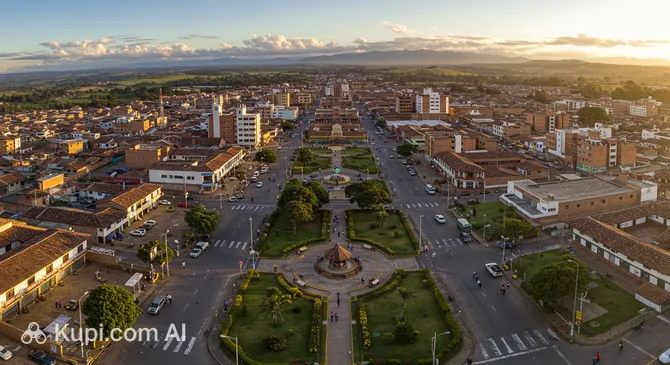
Located in the heart of the fertile Cauca River Valley, Tuluá deservedly bears the poetic nickname "Corazón del Valle" (Heart of the Valley). This vibrant city in Colombia is an important economic and industrial hub for the region. Despite its predominantly business and agricultural character, the city attracts travelers with its authentic atmosphere, where everyday life is closely intertwined with traditions and a passion for dance.
Tuluá's geographical location at the foot of the Andes determines its strategic importance as a transport crossroads. With a population of approximately 220,000 residents, the city is the fourth largest in the Department of Valle del Cauca. Exploring the history of the city, one can trace its journey from a small 17th-century settlement to a modern commercial center that maintains deep respect for its roots and cultural heritage.
Tulua. Illustration.
Source: Kupi.com AI
One of Tuluá's unique features is its status as one of South America's salsa centers. Here, this dance is not just entertainment, but a way of life. Tourists will find it interesting to visit the local Botanical Garden or stroll through the lively squares to feel the true Colombian rhythm. Tuluá is a place for those who want to see the "real" country hidden behind the glossy tourist facades.
Weather Overview
The climate in Tuluá is typical for tropical areas at the foot of the Andes: it is warm and humid throughout the year. The average daily air temperature fluctuates between 24–28°C, remaining virtually unchanged from month to month. This stability makes the city accessible for visiting at any time, although the high humidity should be taken into account.
Precipitation is a characteristic feature of the region, and there are significantly more rainy days than dry ones. The heaviest downpours usually occur during the spring and autumn months, although a brief shower can start on any day. If you want to know more about the current weather in Tuluá, we recommend checking local forecasts before heading out for a walk.
The terrain of the Cauca Valley provides the city with natural ventilation, but during windless periods, the heat can feel quite intense. When packing for your trip, be sure to bring light clothing made from breathable fabrics and high-quality sunscreen, as the sun at these latitudes is very strong even on cloudy days.
Average monthly temperature
Average monthly precipitation
Interesting Facts
The name of the city Tuluá translates from one of the local indigenous dialects as "easy land," emphasizing the exceptional fertility of the soil in this part of the Cauca Valley.
Although the city received official municipal status only in 1825, its documented history dates back to 1639, when the settlement was first mentioned in letters from landowner Juan de Lemos y Aguirre.
The city is widely known in South America as a salsa hub; it regularly hosts festivals and dance marathons that attract the region's top performers.
Tuluá is an important transport node: from here, it is almost equally convenient to reach the Pacific coast in Buenaventura or the department's capital, Cali.
The city is home to the unique Botanical Garden named after scientist Juan María Céspedes, which is considered one of the primary guardians of the natural biodiversity of the Cauca Valley.
How to Get There
Tuluá's transport accessibility makes it a convenient stop when traveling through the western part of the country. The city is located at the intersection of major road arteries, making it easy to reach by both bus and plane. If you are planning a visit, useful information about how to get there can be found on the region's official transport resources.
The main air hub is Faride Salazar Airport (IATA: ULQ), located in the immediate vicinity of the city. It handles domestic flights, connecting Tuluá with Bogotá and other major centers. A flight from the capital takes only about an hour, and a taxi transfer to the city center takes no more than 15–20 minutes.
Passenger rail service is currently not developed, so buses remain the primary land transport. From Cali, a trip along the Pan-American Highway takes 1.5 to 2 hours, depending on traffic. Tuluá's central bus station serves many destinations, providing connections to 15 neighboring municipalities and major port cities.
Station
Passenger traffic
Distance
Usaquen station
1
248 km
Main Attractions
Although Tuluá is primarily known as a commercial hub, it has several iconic sites worth visiting. The city's main religious landmark is the majestic Iglesia de San Bartolomé. Located in the very center, this church impresses with its architecture and serves as an important gathering place for locals, preserving the spirit of colonial traditions.
For those seeking peace and nature, the Juan María Céspedes Botanical Garden (Jardín Botánico Juan María Céspedes) is a must-see. It is one of the largest research zones in the region, showcasing the rich flora of the Cauca River Valley. A walk among exotic plants and centuries-old trees allows you to momentarily forget the city's noise and bustle.
The city's cultural life centers around venues such as Teatro Sarmiento and the Casa de la Cultura. These spots frequently host exhibitions by local artists and theatrical productions. Another interesting point is Parque de la Guadua — a cozy green area where you can see structures made of giant bamboo (guadua), typical of this region. If you are traveling through, be sure to dedicate a few hours to these quiet corners of the "Heart of the Valley."
Local Cuisine
The local cuisine of Tuluá is a true celebration of the flavors of the Cauca Valley. The diet is based on fresh products: corn, beans, pork, and an abundance of tropical fruits. The main dish you must try is bandeja paisa — a hearty platter of rice, red beans, ground beef, chorizo, fried plantains, and avocado.
Equally popular is the thick soup sancocho, which is prepared here according to a special recipe with several types of meat and local root vegetables. For a quick snack, arepas — corn cakes with cheese sold on almost every corner — are perfect. The region's warm climate makes refreshing drinks very popular: try the juice of the lulo fruit or guava, as well as the famous Colombian coffee grown on nearby plantations.
The city's gastronomic life is concentrated in markets and small restaurants in the center. For a more informal dinner, you can visit BBC Bodega El Parque, which serves typical snacks and drinks. Despite the lack of fine dining, the food in Tuluá is characterized by an honest homemade taste and very democratic prices.
Travel Tips
A trip to Tuluá will give you a unique chance to see Colombia from the inside, without the tourist crowds. To make your journey comfortable and safe, use our practical tips.
Clothing: Tuluá has a warm and humid tropical climate. Choose light clothing made from natural fabrics, but be sure to bring an umbrella or raincoat — rain can be sudden and heavy here.
Transport: Within the center, it is convenient to move around on foot; for longer trips, use official taxis or apps like Uber/InDrive. For safety reasons, we do not recommend using private motorcycle transport.
Finances: The main currency is the Colombian peso (COP). ATMs are available in shopping centers, but small shops and markets only accept cash. Always carry small bills with you.
Safety: Follow standard precautions: do not wear expensive jewelry openly and avoid walking on the outskirts of the city after sunset. The city center is quite safe during the day.
Language: The main language is Spanish. English is not widely spoken, so it is worth learning a few basic phrases or installing an offline translator.
Etiquette: Locals are very friendly. A greeting like "¡Buenos días!" or "¡Buenas tardes!" will help you win over your interlocutor.
Health: Drink only bottled water and use insect repellent, as the proximity to the river and the tropical climate contribute to insect activity.
Specifics: If you are in the city over the weekend, be sure to visit places where people dance salsa — it is the best way to feel the soul of the "Heart of the Valley."
May your acquaintance with this vibrant region be filled with only positive emotions and interesting discoveries!
Entertainment & Nightlife
Nightlife in Tuluá is inextricably linked with music and movement. The city has a reputation as an important salsa center, so most evening entertainment revolves around dance floors. On weekends, locals gather in the clubs and bars of the city center to enjoy fiery rhythms and live performances.
One popular spot for relaxation is BBC Bodega El Parque, where you can try local craft beer in a casual setting. Generally, establishments in the city are geared toward a local crowd, which creates a very sincere and welcoming atmosphere. The dress code is usually casual, but for popular dance clubs, it is worth dressing up a bit more.
For those who prefer a quieter evening, there are cozy cafes and small restaurants along the main streets. During the day, entertainment can be found in city parks or by attending cultural events at the Casa de la Cultura. If you crave a large-scale show or major nightclubs, you can always take a short trip to the nearby city of Cali, which is only about an hour and a half away.
Parks & Museums
Parks and green areas in Tuluá play an important role in city life, offering a respite from the tropical heat. The main natural gem is the Jardín Botánico Juan María Céspedes. This botanical garden is a must-visit, featuring unique collections of plants characteristic of the Cauca River ecosystem. It is not just a park but an important scientific center with scenic trails.
In the city itself, Parque de la Guadua is very popular. Its name comes from a local species of bamboo — guadua — which is widely used in construction and decor. This space is ideal for leisurely walks under the shade of trees. Also worth mentioning is Parque Carlos, which serves as a meeting place and everyday relaxation spot for the residents of this energetic city.
As for cultural sites, the main center of attraction is the Casa de la Cultura. While it doesn't have classic museum halls with dusty exhibits, it frequently hosts live exhibitions and cultural forums reflecting the modern life of the region. Literature lovers and those seeking quiet should visit the Biblioteca Comfandi Chiminangos, which functions as both a library and a community space for creative meetings.
Getting Around
The public transport system in Tuluá is mainly represented by a network of buses and minibuses that connect the city center with its outskirts and neighboring settlements. The central bus station is a key hub from which trips depart to 15 different districts and municipalities. Buses run regularly, which is convenient for daily travel.
For getting around the central part of Tuluá, tourists most often use taxis or popular ride-hailing apps. Distances in the center are short, so many attractions and shops can be reached on foot. It is worth noting that during peak hours, traffic jams often occur on the city's main roads, which is typical for such an active industrial center.
Motorcycles and bicycles are very popular among locals, allowing for faster maneuvering through city traffic. Bike rentals are not as widely developed as in large metropolises, but renting a bicycle is possible through private arrangements. Bus fares are paid in cash to the driver, so always keep small denominations of Colombian pesos with you.
Accommodation
The hotel infrastructure in Tuluá is primarily focused on business travelers and those passing through the city. Most accommodation options are mid-range hotels and apartments offering basic comfort at very affordable prices. There are few luxury five-star complexes, as the city retains its status as an industrial and commercial center.
The most convenient area to stay is the city center, especially around Carrera 25. This area is home to major shops, cafes, and administrative buildings, making it easy to navigate the city on foot. Hotels located near the airport or along main transport interchanges are also popular, which is convenient for those planning early departures.
When planning your trip, it is recommended to book accommodation in advance, especially during local salsa festivals. Most hotels can be found on popular international booking platforms, but keep in mind that small family-run guesthouses may only accept Colombian pesos in cash.
Nearby Cities
Thanks to its location, Tuluá is an excellent starting point for exploring the surroundings of the Valle del Cauca department. Within a radius of several dozen kilometers, there are charming towns, each with its own unique character and traditions.
Just 9 kilometers away is the cozy Andalucía, known for its pastries and calm pace of life. It is also worth visiting San Pedro, located 11 kilometers from Tuluá. A trip to these towns takes no more than 15–20 minutes by car or bus, making them ideal destinations for a short stroll.
City
Population
Distance
Andalucia
18 132
9 km
San Pedro
18 128
11 km
Riofrio
14 716
13 km
Bugalagrande
20 970
14 km
Trujillo
18 142
20 km
For those ready to spend a bit more time on the road, a trip to Riofrío or larger centers like Cali is an excellent choice. Don't miss the opportunity to explore the picturesque coffee plantations and small farms that this region is so rich in.
Shopping & Souvenirs
Shopping in Tuluá is practical and affordable. The main commercial activity is concentrated along Carrera 25, where you'll find chain stores, pharmacies, and small clothing boutiques. This is the perfect place to buy everyday goods or get acquainted with local Colombian brands.
If you are looking for something special, check out shopping centers like BBC Bodega El Parque or visit the local markets. The markets are where you can find the freshest agricultural products for which the fertile Cauca Valley is famous. The atmosphere here is always lively, and the prices are pleasantly surprising for their affordability.
Popular souvenirs from Tuluá include high-quality coffee from surrounding plantations, guadua (bamboo) handicrafts, and musical accessories related to salsa culture. Shops are usually open from early morning until 7:00–8:00 PM, but keep in mind that many small shops may close for a lunch break (siesta). Major outlets accept cards, but you should always have cash pesos with you for the markets.