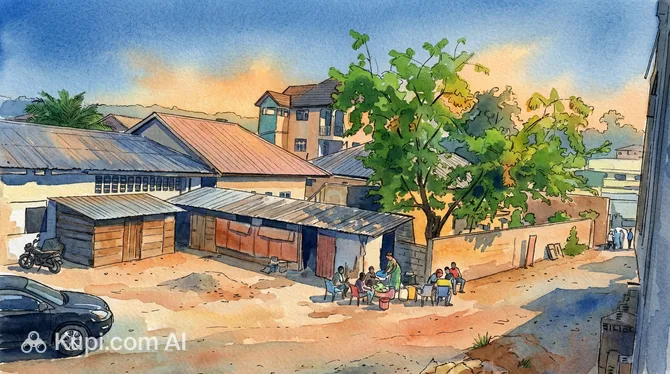
Kikwit is the largest city and a dynamically developing administrative center of the Kwilu Province, located in the southwestern part of Congo (DRC). Sprawled along the banks of the navigable Kwilu River, the city serves as a vital link between rural areas and the country's capital. Founded during the colonial era as a trading post, it has maintained its status as a key logistical hub through which flows of palm oil and rubber pass.
Kikwit. Illustration.
Source: Kupi.com AI
The city's geographical location largely defines its atmosphere: life here revolves around the river and bustling markets. With a population of about 458,000, Kikwit is a true melting pot of cultures, where the modern rhythm of life intertwines with the deep traditions of local peoples. If you are interested in the history of the city, it is worth noting its role in the region's economic development and its significance as a transshipment point for goods heading downriver.
One of Kikwit's most striking features is the ethnographic heritage of the Bapende people. Their famous traditional dances, performed in masks and costumes made of palm leaves, are a spectacle that attracts cultural researchers from around the world. Although the city is not a typical tourist destination, it offers an authentic look at life in provincial Congo, where local hospitality blends with the vibrant character of an African trading hub.
A visit to Kikwit will be an unforgettable experience for those seeking adventure off the beaten path and wanting to feel the true pulse of Central Africa. This is a place where you can see the everyday life of Congolese people without embellishment, enjoy river landscapes, and encounter unique cultural rituals that have survived through the centuries.
Weather Overview
The climate in Kikwit is typical for the equatorial zone of Congo (DRC): an eternal summer with high humidity prevails here. Throughout the year, air temperatures fluctuate within a comfortable but hot range from 24°C to 32°C. The proximity of the Kwilu River creates a specific microclimate that contributes to frequent morning fogs and supports lush vegetation around the city.
When planning your trip, consider the distinct seasonality of rainfall. The rainiest periods are April, October, and November, when tropical downpours can be very intense, sometimes making travel on unpaved roads difficult. If you want to know more about the weather in Kikwit before your flight, keep in mind that the most favorable time for a visit is considered the dry season from June to August.
During this period, the rains virtually stop and the sky more often remains clear, which is ideal for exploring markets and ethnographic trips. However, even in the dry months, humidity remains quite high, so travelers are recommended to bring light clothing made of natural fabrics and always carry a supply of drinking water.
Average monthly temperature
Average monthly precipitation
Interesting Facts
Kikwit is a city with a unique character that can surprise even experienced travelers with its hidden features and history.
River Outpost: Kikwit was founded in colonial times as a strategic commercial post on the Kwilu River, which quickly turned it into a major port for exporting rubber and palm oil to Kinshasa.
Ethnographic Treasure: The region is home to the Bapende people, whose traditional dances in fearsome masks and palm fiber costumes are recognized as one of Central Africa's most impressive cultural phenomena.
Six-Hour Journey: Despite the distance from the capital, Kinshasa, being about 257 kilometers, the car trip takes at least six hours due to the local landscape and traffic conditions.
Capital Status: As the largest settlement and the capital of Kwilu Province, the city serves as the main logistical bridge between the country's agricultural areas and major consumer markets.
A City Without "Gloss": Unlike many other cities in the region, Kikwit has almost no typical tourist attractions, making it an ideal destination for those seeking absolute authenticity.
How to Get There
Kikwit is an important transport hub for the Kwilu Province, but getting here can be a challenging task that requires careful planning. Road travel remains the primary and most popular way to connect with the outside world. Most travelers arrive from Kinshasa, covering a distance of 257 kilometers. The trip usually takes about 6 hours, and it is recommended to leave early in the morning to avoid congestion when exiting the capital.
The city is served by Kikwit Airport (IATA: KKW). Despite the presence of a runway, regular flights are currently limited and often depend on charter flights or small local airlines. Flying saves significant time but requires checking the schedule directly before the trip. More detailed information about transport hubs can be found in the section on how to get to this region.
There is no rail service in this part of the country, so the main alternative remains river transport along the Kwilu River. Historically, this was the primary route for moving cargo, and today barges and boats continue to ply the river, although they are rarely geared toward comfortable passenger transport. From neighboring cities like Bandundu, Kikwit can be reached by intercity buses or bush taxis, with travel times ranging from 4 to 6 hours depending on the season.
Main Attractions
Kikwit is not a classic tourist destination with an abundance of architectural monuments; however, it draws travelers with its authentic atmosphere as a trading city on the Kwilu River. The main "attraction" here can be considered the life of the region itself, centered at the River Port. This is the heart of the city's logistics, where you can observe the loading of goods and the daily hustle that defines the rhythm of life for the entire province.
An essential part of the cultural landscape is the Central Markets. These are not just places to shop, but true hubs of social interaction. Here, tourists can get acquainted with local life, see a variety of agricultural products, and find unique handmade items reflecting the ethnographic richness of the region.
Of particular interest to researchers are the cultural traditions of the Bapende people. While there are no permanent exhibitions in the city itself, Kikwit often serves as a starting point for trips to neighboring settlements like Gungu, where famous masked dance festivals are held. In Kikwit itself, during holidays or official events, you can also see performances by traditional groups dressed in palm leaf costumes.
For those who appreciate administrative architecture, the provincial government buildings may be of interest as they stand out against the general cityscape. Overall, Kikwit offers tourists a unique chance to see Congo "from the inside," where the primary attractions are the nature of the Kwilu River and the living traditions of local communities.
Local Cuisine
A gastronomic journey to Kikwit is an introduction to the traditional flavors of Congo (DRC), where products gifted by the Kwilu River and the fertile lands of the province play the leading role. The staple of the local diet is fufu—a thick porridge made from cassava flour, which is served with almost every dish and serves as an excellent side for hearty sauces and stews.
Be sure to try freshly caught river fish, which is expertly prepared here: it is grilled over coals, smoked, or stewed with aromatic palm oil. Another characteristic dish is pondu (cassava leaves), cooked with spices. Kikwit's cuisine is functional and simple, and can be found in small diners near markets or at street stalls where food is prepared right in front of passersby.
Among drinks, traditional palm wine, known as mafuta, and local banana beer, which has a unique sweet-and-sour taste, hold a special place. The city's gastro scene lacks tourist polish, allowing guests to try truly authentic dishes in the same setting where the locals eat. Visiting local markets is the best way to see the full variety of spices, vegetables, and fruits that form the foundation of the Congolese table.
Travel Tips
A trip to Kikwit promises to be an exciting immersion into authentic Congolese life, and these practical tips will help make your journey as comfortable and safe as possible.
Clothing and Essentials: Choose light clothing made of natural fabrics, as the city is hot and humid. Be sure to bring comfortable closed shoes for walking on unpaved roads and sun protection accessories. If you plan to visit official institutions, stick to a modest style.
Transport: Within the city, the most convenient way to get around is by moto-taxi. For travel between cities, it is better to rent a car with a driver or join an organized group, as roads can be in poor condition.
Finances: The main currency is the Congolese franc. ATMs are extremely scarce, and international cards are practically not accepted, so always carry a sufficient supply of cash.
Health and Safety: A yellow fever vaccination certificate is mandatory for entry. Drink only bottled water and use repellents. Avoid walking alone at night, especially in remote areas.
Communication: The primary languages are French and local dialects. Knowing basic French phrases will significantly simplify your life. It is best to buy a SIM card immediately upon arrival in Kinshasa or in the center of Kikwit.
Local Etiquette: Congolese people are very friendly. Greet others politely, show respect to elders, and always ask for permission before photographing people or their property.
What to Avoid: Do not discuss political topics and avoid filming strategic objects (bridges, government buildings) to prevent issues with local authorities.
Seasonality: Plan your visit for the dry season (from June to September), when road travel is most predictable and humidity is lower.
Kikwit is a place for those who are ready for a simple lifestyle for the sake of authentic discoveries. Be open to new experiences, and this city will show you its unique soul!
Entertainment & Nightlife
Entertainment in Kikwit is predominantly local and low-key, as the city focuses on trade and administrative tasks. You won't find flashy nightclubs in the European sense or large-scale concert venues here, yet the city's evening life has its own charm. Most activity after sunset is concentrated in small local bars and eateries, where residents gather to discuss the day's news to the sound of Congolese rumba.
The crowd in local establishments is friendly, and the atmosphere is as relaxed as possible. There is no formal dress code, but for comfort and safety, it is better to choose modest clothing. The main points of interest are in the central part of the city and near the Kwilu River embankment. Here, you can find cozy spots offering cold drinks and simple local dishes. Prices in such establishments are very affordable, allowing you to feel like part of the local community.
During the day, entertainment involves exploring local markets and walking along the river. There are virtually no museums or theaters in the city, so cultural leisure is often limited to attending traditional festivities if they coincide with your travel dates. For more active nightlife, travelers usually head to Kinshasa, while Kikwit remains a place for quiet observation of authentic provincial Congolese life.
Parks & Museums
In Kikwit, you will not find classic museums or manicured city parks with alleys, which is typical for many provincial cities in the region. The urban environment here is closely intertwined with the natural landscape, and the primary recreation areas for locals are the banks of the Kwilu River. These natural spots, though lacking formal landscaping, are hubs for walking and informal socializing, offering picturesque views of the water and passing barges.
The absence of traditional museums is compensated for by the living culture permeated through the city's very air. Instead of galleries, tourists can head to the central squares or markets, where ethnographic groups perform during festivals. In the city's outskirts, one can find natural areas that residents use as public spaces. Greenery here is represented mainly by natural vegetation and agricultural land surrounding Kikwit in a dense ring.
For those seeking a deep immersion into history and art, Kikwit may seem like a challenging place, but its charm lies in the lack of artificial barriers between the viewer and the culture. The role of an "open-air museum" is played here by the daily life of the Bapende people and the commercial bustle of the river port, which tell the story of the region better than any static exhibit.
Getting Around
The public transport system in Kikwit reflects the specifics of a provincial Congolese city: it is simple, chaotic, but effective in its own way. The backbone of movement consists of bush taxis (minibuses) and numerous motor rickshaws. Minibuses usually run between markets and the outskirts, departing once they are full. Fares are fixed and very low, but be prepared for crowding during peak hours.
For faster and more individual trips, it is best to use moto-taxis. This is the most popular mode of transport, allowing for easy maneuvering on partially unpaved roads, which can become difficult to traverse after heavy rains. You should always negotiate the price of a motorcycle ride with the driver in advance. Bicycles are also widespread among local residents and are an excellent way to travel short distances within the compact city center.
There is no official system of transit passes or transport apps in Kikwit—payment is always made in cash with Congolese francs. Car rental is possible, but it is recommended to hire a car with a local driver who is familiar with the road conditions and traffic rules. Walking is convenient in the central part, especially near the embankment, where the main business and commercial activity is concentrated.
Accommodation
Accommodation options in Kikwit are quite limited, as the city primarily caters to trade representatives and administrative staff. Travelers should expect basic living conditions: small guesthouses and apartments predominate here. Most properties are concentrated in the central part of the city and along the Kwilu River shoreline, which is convenient for proximity to transport links and markets.
High-end hotels do not exist in Kikwit, so even the city's best offerings fall into the mid-range or budget segments. When choosing accommodation, it is important to look for the presence of a generator and water reserves, as utility services in the region can be unstable. For those planning an extended stay, renting an apartment might be a more cost-effective option.
It is recommended to book accommodation in advance, as the number of decent rooms is small, and they may be occupied during official events or trade conventions. Payment is most often made in cash using local currency. Since Kikwit is not a tourist-oriented city, do not expect full online booking services; sometimes the best way to find a place to stay is by contacting administrators directly on-site or through local guides.
Nearby Cities
Kikwit serves as an important hub in the Kwilu Province, and its surroundings offer travelers the chance to see authentic Congolese provincial life. The region is rich in traditions, and small nearby towns can be the destination for interesting trips that reveal the ethnographic diversity of this part of the country.
One of the key destinations is the town of Idiofa, located about 90 kilometers away. This is a relatively large settlement that allows for a deeper dive into local culture. Another must-visit place is Gungu—the center of attraction for those interested in the heritage of the Bapende people. It is here that you can see the unique masks and rituals that have made this region famous among anthropologists.
City
Population
Distance
Idiofa
61 056
90 km
Gungu
23 893
96 km
Dibaya Lubwe
38 933
155 km
Basongo
—
193 km
Oshwe
22 576
200 km
For those ready for longer journeys, Dibaya-Lubwe or a trip to the banks of the Kasai River toward Basongo may be of interest. Although infrastructure in these areas is poorly developed and the roads require patience, exploring the surroundings of Kikwit will reward you with views of untouched nature and warm encounters with local residents who are always happy to welcome guests to their land.
Shopping & Souvenirs
Shopping in Kikwit is a vibrant and noisy adventure that takes place not in shopping malls, but in colorful city markets. The main commercial activity is concentrated near the banks of the Kwilu River. There are no standard boutiques here, but the markets offer everything needed for life in the region: from the freshest produce and famous palm oil to traditional African fabrics with incredible patterns.
If you are looking for unique souvenirs, look for the handicrafts of the Bapende people. Kikwit is famous for its carved wooden masks and elements of ritual costumes made from palm leaves and fibers. Such items will be more than just a gift; they will be a true symbol of your journey into the heart of Congo. Bargaining at local markets is not only possible but encouraged—it is part of the communication culture.
Most stalls operate from early morning until sunset, following the daylight hours. It is important to remember that payment is accepted exclusively in cash, preferably in local francs, as using bank cards here is virtually impossible. Shopping in Kikwit is the best way to feel the city's energy and take home a piece of its unique culture.