Tshikapa is a dynamic industrial hub located in the heart of the Kasai Province in Congo (DRC). Having grown from a small working settlement in the early 20th century, today the city is a major administrative center with a population of over 730,000. Its character and rhythm of life are inextricably linked to the "diamond fever" that once turned this region into one of the world's leading gemstone mining centers.
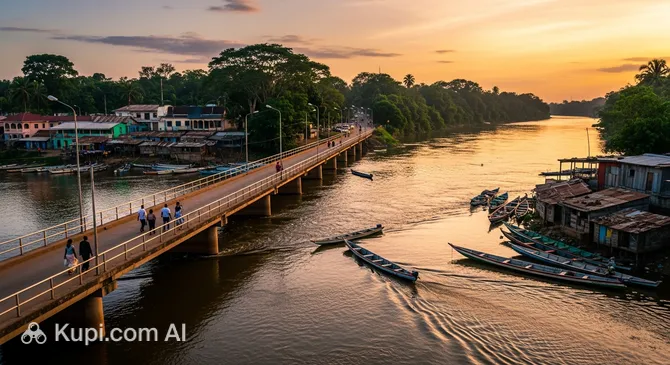
The city's geographic position is strategically unique: it sits at the confluence of the Tshikapa and Kasai rivers, just a few dozen kilometers from the border with Angola. Tshikapa. Illustration.
Source: Kupi.com AI
Although not a typical tourist destination, its rugged industrial aesthetic and the history of its founding by the Belgian company Forminière attract explorers wishing to see the authentic, unpolished side of Central Africa.
A visit to Tshikapa is an opportunity to experience a city where the economy and daily life revolve around resource extraction. There are no glitzy avenues here, but there is a special atmosphere of the African frontier, lively riverbanks, and a heritage of colonial architecture harmoniously integrated into the modern industrial landscape.

Weather Overview
A typical tropical climate prevails in Tshikapa, with clearly defined wet and dry seasons. The temperature remains stable throughout the year: average daily figures hover around +26...+31°C. High humidity, caused by the proximity of the Kasai and Tshikapa rivers, makes the heat feel more intense, especially during periods of calm winds.
The wettest months are November and December, when the maximum amount of precipitation falls. In contrast, June and July are considered the driest—during this time, rain almost entirely stops, and nights become noticeably cooler (minimum around +19°C). If you are planning a trip, be sure to study the detailed climate of the city to choose the most comfortable time for your visit.
The optimal time for a visit is considered the period from May to September. During these months, the risk of prolonged downpours is minimal, which significantly eases travel along the province's roads, many of which are unpaved. The savannah surrounding the city provides good natural ventilation during the dry season, making outdoor activities more pleasant.
Average monthly temperature
Average monthly precipitation
Interesting Facts
Tshikapa was founded in 1907 specifically due to the discovery of some of the richest diamond deposits in Africa, which triggered a major economic boom.
The city is an important transport hub on National Road No. 1, which connects it to Kinshasa; the distance to the capital is an impressive 842 kilometers.
The metal bridge across the Kasai River is considered one of the most significant engineering structures in the region, providing a strategic link between the north and south of the province.
The city's name is often associated with "diamond fever," and even today, a large part of the population is involved in the gemstone mining sector in one way or another.
Tshikapa is located just 65 kilometers (about 40 miles) from the border with Angola, making it an important point for cross-border trade.
How to Get There
The accessibility of Tshikapa is defined by its distance from the capital and the specifics of the region's road infrastructure. The main land artery is National Road No. 1, linking the city with Kinshasa. A journey by car or bus along this route can take anywhere from 12 to 20 hours, depending on the season and the condition of the road surface, which often suffers from tropical rains.
For those who value their time, air travel remains the most convenient way to reach the city. The local Tshikapa airport (IATA: TSH) handles domestic flights, mostly from the capital. The flight from Kinshasa takes about 1.5–2 hours, which is significantly faster and more comfortable than the overland route. Detailed information on routes can be found in the section describing the city's transport links.
There is no classic railway service in the city, so the main flow of goods and passengers relies on road transport and aviation. River transport along the Kasai River is used primarily for industrial cargo; however, this route is rarely the primary choice for tourists due to the lack of regular passenger lines and the significant duration of the trip.
Main Attractions
In Tshikapa, traditional tourist attractions can be hard to find, as the city was established and developed as an industrial hub. Nevertheless, the main architectural landmark is the famous metal bridge over the Kasai River. This engineering marvel not only connects parts of the city but also serves as a favorite spot for observing the busy river traffic and the daily lives of local residents.
The Tshikapa Cathedral is an important cultural and spiritual center. This building, designed in a traditional style, stands out against the industrial backdrop and serves as a gathering place for the townspeople. The architecture of the city's administrative quarters still bears traces of the colonial era, a reminder of the times when the Belgian company Forminière laid the foundations of the local infrastructure.
For those willing to venture outside the city limits, the Mai-Munene Falls, located about 36 kilometers away on the Kasai River, are a true discovery. During the dry season, these 6–8 meter high cascades are an impressive sight. The Kasai River itself, with its powerful current and picturesque banks, remains the region's primary natural attraction, providing cool air and serving as the lifeblood for the entire province.
Local Cuisine
The gastronomy of Tshikapa is a vibrant reflection of the traditions of Congo (DRC). The staple of the local diet is fufu—a thick porridge made from cassava or corn flour, served with almost every meal. Thanks to the city's location at the confluence of rivers, one of the main delicacies here is fresh fish caught in the Kasai, which is usually grilled over charcoal or stewed in a spicy sauce with palm oil.
It is also worth trying dishes made from mpunda (game meat, when available at legal markets), prepared with aromatic spices and herbs. Traditional cuisine is known for being simple and filling, while the use of local vegetables like cassava leaves (pondu) gives the dishes a unique flavor. Popular drinks include fresh palm wine and local beer, which help quench thirst on a hot afternoon.
The food culture in the city centers around bustling markets and small street stalls where food is prepared right in front of you. In the administrative center, you can find several permanent restaurants catering to officials and businesspeople, but to experience the true taste of Tshikapa, it is better to head to the places where the locals eat. Fresh fruits like mango and papaya make an excellent finish to any meal.
Travel Tips
A trip to Tshikapa is a true adventure that requires careful planning and an understanding of the region's specifics. These practical tips will help make your stay in the "diamond capital" of Kasai comfortable and safe.
Clothing and Essentials: Choose light clothing made from natural fabrics, as the climate here is tropical and humid. Don't forget sunglasses, a hat, and sturdy closed-toe shoes for walking. A high-quality raincoat or umbrella is essential during the rainy season.
Transport: Moto-taxis are the primary means of transport. Always agree on the price beforehand. For longer trips outside the city, it is better to rent an SUV with an experienced local driver.
Finances: The main currency is the Congolese franc, but US dollars are accepted everywhere. Carry a sufficient supply of cash in small bills, as ATMs are very rare in the city, and cards are almost never accepted.
Health: Yellow fever vaccination is mandatory. It is recommended to take malaria prophylaxis and always use repellents. Drink only bottled water and avoid ice in drinks.
Communication: The official language is French; local languages Chiluba and Lingala are also common. Knowing basic French phrases will significantly ease communication. SIM cards can be purchased at the central outlets of operators Vodacom or Airtel.
Local Etiquette: Greet people politely; a handshake is highly valued here. Before taking photos of people or administrative buildings, be sure to ask permission—this will help avoid misunderstandings.
What to Avoid: Do not visit remote areas of the city or diamond mining zones without being accompanied by local guides. Avoid walking in unlit areas after dark.
Additional Tip: Check the status of the roads in advance if you plan to drive to Kinshasa—the path can be blocked during the rainy season.
May your introduction to Tshikapa reveal new facets of the amazing Congo, and may these tips serve as a reliable guide on your journey!
Entertainment & Nightlife
The entertainment industry in Tshikapa is primarily geared towards local residents and professionals working in the mining sector. Nightlife here is informal and concentrated in the central districts, where small bars and open-air venues with music open after sunset. The atmosphere in such establishments is simple and relaxed, with a crowd consisting mainly of workers and government employees.
During the day, central squares and markets become the main social hubs. Here, you can feel the true rhythm of the city by watching the trade and interactions of the townspeople. The cultural program is often limited to church holidays or spontaneous performances by local musical groups that hold concerts right on the streets or near the river piers.
Travelers looking for more sophisticated entertainment, theaters, or large nightclubs usually head to the capital. However, in Tshikapa itself, it is worth taking a walk along the banks of the Kasai. In the evening, you can find cozy spots to relax where locals gather to discuss the day's news to the accompaniment of African rhythms drifting from nearby radios.
Parks & Museums
The park infrastructure in Tshikapa is currently in its developmental stages, with natural landscapes serving as the main green zones. The banks of the Kasai and Tshikapa rivers are the primary spots for walking and outdoor recreation. The savannah surrounding the city provides natural ventilation and offers the chance to enjoy views of untouched African nature just beyond the urban sprawl.
There are currently no specialized museums in the classic sense in the city. However, the history of Tshikapa itself, captured in its industrial architecture and colonial-era administrative buildings, can be viewed as an open-air museum. For those interested in the history of diamond mining, visiting the old districts built by the Forminière company offers a fascinating dive into the region's past.
Despite the lack of organized parks, city authorities are paying attention to the greening of central streets. Future plans include the development of riverside recreation zones that can combine the natural wealth of the riverbanks with the growing population's need for cultural leisure.
Getting Around
The public transport system in Tshikapa is primarily represented by private carriers that ensure population mobility in an industrial city setting. The most popular way to get around is by moto-taxi. They are maneuverable, inexpensive, and able to navigate narrow streets or roads with poor surfaces, which is especially important during the rainy season.
Mini-buses, known as "taxi-bush," run between districts. They depart as they fill up and connect the center with the outskirts and industrial zones. There is usually no fixed schedule, but transport runs quite frequently during daylight hours. The metal bridge over the Kasai River is the main transport hub where the primary city routes intersect.
For getting around within the central quarters, many residents prefer walking, as the main administrative buildings and markets are located fairly close together. Tourists are recommended to use the services of trusted taxi drivers or arrange trips through hotel staff. Fare is always paid in cash, and it is best to discuss the price in advance, before the trip starts.
Accommodation
The accommodation market in Tshikapa is specialized and primarily focused on those visiting the city for diamond-related business or government missions. There are virtually no luxury five-star hotels here, but decent mid-range options and private guesthouses can be found in the administrative center and near the Kasai River.
When choosing a hotel, it is best to look in the central districts, where basic infrastructure is better developed and dining options are easier to find. Most hotels offer the minimal set of amenities needed for resting after a workday. Long-term apartment rentals are also available for foreign specialists and expats, often providing a higher level of comfort and security.
It is recommended to book accommodation in Tshikapa in advance, especially if your trip coincides with major administrative or business events in the province. Keep in mind that credit cards are rarely accepted, so it is better to confirm payment methods with your chosen hotel beforehand and carry a sufficient supply of cash.
Nearby Cities
Tshikapa can serve as an interesting starting point for exploring border territories and neighboring provinces. Although the region does not abound with well-trodden tourist routes, trips to nearby towns allow for a deeper understanding of life in Central Africa and show how the landscape changes when crossing from Congo into Angola.
One of the most significant destinations is the city of Dundo, located in Angola. This is an important regional center, reached via a road that passes through picturesque savannahs. Also worth noting is Mbulungu, a small settlement where a visit allows you to see the traditional rural way of life in the Kasai region. These places can be reached by "taxi-bush" or private transport.
Exploring the outskirts of Tshikapa requires some preparation and a readiness for travel on roads of varying quality, but the reward is unique views of river valleys and the chance to see remote corners of the country hidden from the eyes of mass tourists.
Shopping & Souvenirs
Shopping in Tshikapa primarily involves visiting the vibrant and noisy local markets, which are the heart of the city's economy. The main trading areas are located near the river piers and in the central part of the city. Here you can find almost everything: from the freshest river fish and exotic fruits to textiles with traditional African prints and essential goods.
If you are looking for unique souvenirs, look for the works of local artisans. Since Tshikapa is the capital of diamond mining, you can often find souvenirs thematically related to gemstones, though the sale of the actual gems is strictly regulated. Popular items include wooden figurines, woven household utensils, and jewelry made from natural materials created by the craftsmen of the Kasai province.
There are no large Western-style shopping centers in the city, and most shops operate from early morning until sunset. Payments are made mainly in cash—Congolese francs and US dollars are both in use. Do not forget that bargaining is expected at the markets; it is not just a way to save money, but an important part of local etiquette and social interaction.