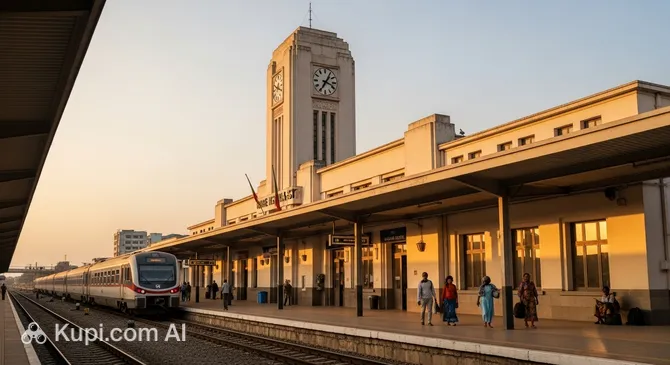
Kinshasa Central Railway Station (Gare centrale de Kinshasa) is not merely a transport hub, but an important historical link connecting the capital of the Democratic Republic of the Congo with the port city of Matadi. Located in the bustling Gombe district, the station serves as a departure point for travelers wishing to see the picturesque landscapes of the Kongo Central province. The station building, which has preserved features of colonial architecture, is one of the recognizable symbols of the city.
It is important for passengers to know that navigation at the station can be intuitive, but sometimes chaotic due to the large flow of people. The main entrance is located on the side of the station square, where taxis usually gather. Platforms are located immediately behind the station building; access to them opens after ticket inspection. If you are planning a transfer, keep in mind that train schedules may change, and it is better to allow a significant buffer of time.
Contact Information
Address: Place de la Gare, Commune de Gombe, Kinshasa, Democratic Republic of the Congo.
Official Website: A single up-to-date website is often missing or works intermittently; it is recommended to verify information through local SCTP (Société Commerciale des Transports et des Ports) offices.
Inquiry Phone: A unified call center may be unavailable; it is better to obtain information directly at the station ticket counters.
Opening Hours: The station opens 1–2 hours before the departure of the first train (usually early in the morning) and operates until the arrival of the last train. Ticket counters may close earlier.
Luggage Storage: Specialized automatic lockers are absent; the possibility of leaving luggage should be clarified with the station duty officer (the service may be unofficial).
Accessibility: Infrastructure for passengers with limited mobility is limited; ramps and elevators may be absent, so traveling with a companion is recommended.
How to Get There
You can get to Kinshasa Central Railway Station in several ways, however, the heavy traffic in the city center should be taken into account.
Taxi: This is the most reliable and safe method for tourists. Use official yellow taxis or trusted apps if they are available. A trip from other districts of Kinshasa can take from 30 minutes to 1.5 hours depending on traffic jams (the famous Kinshasa embouteillages).
Public Transport: Local minibuses and buses ("fula-fula" or "esprit de mort") are often overcrowded and can be difficult for orientation without knowledge of French or Lingala. The stop is located in the immediate vicinity of Place de la Gare.
On Foot: If you are in the Gombe district (the business center), you can walk to the station in 10–20 minutes. Use the beginning of the Boulevard du 30 Juin as a landmark, which is the main artery of the city and leads towards the station.
Services and Amenities
The range of services at Kinshasa Central Station is quite basic, so travelers should prepare in advance.
Ticket counters are located in the building, where tickets are purchased primarily for cash (Congolese Francs or US Dollars). The waiting hall is a covered space with seats, however, during peak hours there may not be enough free seats. Wi-Fi and public outlets for charging gadgets are generally absent.
Toilets are available but may be paid and have a modest level of comfort. Specialized rest zones for passengers with reduced mobility or mother and child rooms are currently not provided. It is recommended to carry small cash for paying for incidental services.
Where to Eat
Directly inside the station, the choice of establishments is limited to small kiosks or vendors offering water, soda, and simple snacks (biscuits, bread, local snacks).
For a full meal, it is better to go out into the city. Since the station is located in the Gombe district, decent cafes and restaurants can be found within a 10–15 minute walk:
Quick Bite: Street food (skewers, fried bananas) is often sold on the station square, but tourists should try it with caution, observing hygiene.
Cafes and Restaurants: Along Boulevard du 30 Juin there are establishments with European and Lebanese cuisine, where you can drink good coffee and have lunch in a comfortable setting. The average bill there will be higher, but food quality and safety are guaranteed.
Station History
The history of Kinshasa Central Station is inextricably linked with the construction of the legendary Matadi-Kinshasa railway, which was vital for bypassing the impassable rapids of the Congo River (Livingstone Falls).
Construction of the line was completed at the end of the 19th century (1898), which allowed connecting the ocean port with the navigable part of the river. The station building became a symbol of the industrial development of the region in the colonial era. Throughout the 20th century, the station experienced various periods: from the flourishing of freight and passenger transport to the decline of infrastructure at the end of the century.
In recent years, attempts have been made to modernize the tracks and rolling stock to restore regular service, and the station continues to play the role of the historic gateway to the capital, reminding us of the importance of transport arteries in such a vast country.
Passenger Tips
Traveling from Kinshasa Central Station requires certain preparation and vigilance.
Safety: The station and the surrounding area are places with large crowds of people. Watch your luggage and pockets carefully, do not display expensive gadgets or large sums of money. Avoid being at the station alone after dark.
Tickets and Boarding: Purchase tickets only at official counters inside the building. It is recommended to arrive at least 60–90 minutes before departure, as check-in and boarding procedures can drag on.
Schedule: Be prepared for trains to be delayed or for the schedule to change without prior notice. Patience is the main quality of a traveler in the Congo.
Luggage: Try to travel light or with sturdy bags that are easy to carry yourself, as the help of porters can be intrusive and requires payment.