Support

Mbuji-Mayi

About

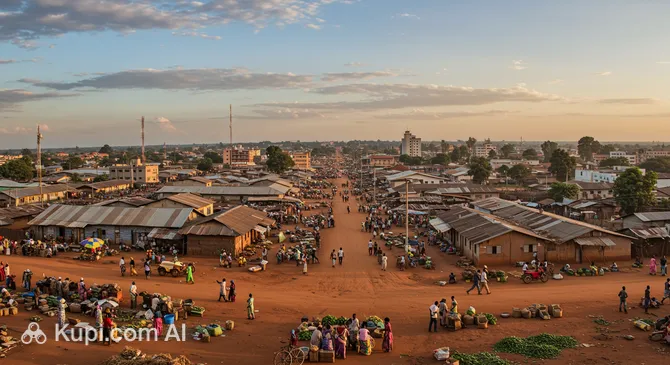
Welcome to Mbuji-Mayi, a vibrant metropolis that serves as the capital of the Kasaï-Oriental province. Often referred to as the "Diamond Capital" due to its rich mineral deposits, this bustling city is a major economic engine within the Congo Democratic Republic Of. It offers a unique glimpse into the industrial and cultural heartbeat of the nation, characterized by its energetic atmosphere and the resilience of its people.

Mbuji-Mayi. Source: Kupi.Binoculars

Geographically, the city is situated on the banks of the Bushimaie River (also known as the Mbuji-Mayi River) in the south-central region of the country. It is one of the largest urban centers in the nation, with a population exceeding 2.6 million residents. While the city is modern in its rapid expansion, the history of Mbuji-Mayi reveals its origins as a mining settlement formerly known as Bakwanga, which grew exponentially throughout the 20th century to become the regional powerhouse it is today.

Travelers visiting Mbuji-Mayi can experience the authentic local culture of the Luba people, which is deeply woven into the daily life of the city. The bustling markets are a highlight, offering a sensory experience of sights and sounds where one can find local crafts and produce. The nearby Bushimaie River provides a scenic backdrop and spots for quieter moments away from the busy city streets. Whether you are here for business or exploration, Mbuji-Mayi invites you to discover the dynamic spirit of this central African hub.

Weather Overview

Mbuji-Mayi enjoys a consistently warm tropical climate year-round, making it a destination where heavy winter clothing is rarely needed. Average temperatures remain quite stable, generally hovering between 25°C and 27°C. The city experiences a distinct dry season from June to August, during which rainfall is virtually non-existent, and the sun shines brightly. During these months, while daytime highs can reach up to 33°C, the nights are comfortable and slightly cooler, with minimum temperatures dipping to around 19°C.

The rest of the year is marked by a significant increase in humidity and precipitation frequency. The period from November to January is particularly active, with data showing up to 25 wet days per month, although the overall climate remains warm. For a more precise breakdown of what to expect during your specific travel dates, it is helpful to consult the detailed guide on the weather in Mbuji-Mayi. Generally, visitors can expect hot, sunny spells interspersed with regular showers during the rainy season, while the mid-year months offer dry and hot conditions.

Interesting Facts

Beyond the main attractions, Mbuji-Mayi holds many fascinating secrets that reveal the depth of its local heritage and unique origins. Here are some interesting facts about this dynamic city:

  • The Name's Literal Meaning: In the local Tshiluba language, "Mbuji-Mayi" translates to "Goat Water." The name is said to derive from the large herds of goats that historically gathered along the riverbanks to drink, highlighting the region's agricultural roots before the mining boom.

  • Built on Treasure: Unlike many cities that grew from trade routes, Mbuji-Mayi was essentially built on top of diamond deposits. The city's location was determined by the discovery of these precious stones, and there have been instances in its history where buildings were relocated simply to access the diamonds lying beneath the soil.

  • A "City Within a City": There is a distinct historical division in the urban layout known as the "Ville MIBA." This planned residential area was originally constructed exclusively for the mining company's employees and features organized infrastructure that contrasts sharply with the sprawling, energetic metropolis that grew rapidly around it.

  • Industrial Powerhouse: While diamonds are often associated with jewelry, the region around Mbuji-Mayi is historically one of the world's largest sources of industrial diamonds. These stones are vital for global manufacturing and heavy industry, making the city a key player in the international economy of the Congo Democratic Republic Of.

How to Get There

Reaching this major urban center in the Congo Democratic Republic Of is most commonly achieved by air, given the vast distances and road conditions in the region. For a detailed overview of travel routes and logistics, you can read more about how to get to Mbuji-Mayi.

The primary entry point for visitors is Mbuji-Mayi Airport (IATA: MJM). It is situated very close to the heart of the city, with a distance of only about 3.2 km to the center. Due to this proximity, the journey by taxi or private transfer is quick, typically taking around 25 minutes. The airport serves as a vital link for the province, handling a significant volume of domestic traffic connecting to Kinshasa and other regional hubs.

For clarity, here is a summary of the main airport:

Airport Name City Passenger Traffic Km from City
Mbuji-Mayi Mbuji-Mayi Medium 3.2

Main Attractions

While Mbuji-Mayi is primarily known as an industrial and mining powerhouse rather than a traditional holiday destination, it possesses a unique charm and several landmarks that offer insight into the local culture and history. Visitors to the city can explore a mix of religious architecture, natural features, and vibrant community hubs that define the daily life of this major metropolis in the Congo Democratic Republic Of.

One of the most prominent landmarks in the city is the Cathedral of Saint-Jean-Baptiste de Bonzola. As the seat of the local diocese, this imposing structure is not only a place of worship but also a central meeting point for the community. Its architecture stands out against the city skyline, and for many tourists, attending a service here offers a profound look into the spiritual life and musical traditions of the local population. The atmosphere during Sunday mass is particularly spirited, filled with song and a strong sense of community.

For those seeking a connection with nature, the banks of the Bushimaie River provide a scenic escape from the bustling city center. The river, from which the city derives its name (meaning "Goat Water"), is the lifeline of the region. Visitors can find spots along the river to observe the rushing waters and the lush vegetation that lines its course. It is a popular spot for locals to gather, and it offers a calmer perspective on the region's geography, away from the noise of the mining operations.

To truly understand the heartbeat of Mbuji-Mayi, a visit to the Central Market is essential. This sprawling marketplace is a sensory experience where the city's commercial energy is most palpable. Here, travelers can browse through a colorful array of goods, from vibrant fabrics and local crafts to fresh tropical fruits. It is an excellent place to interact with friendly locals, practice a few words of French or Tshiluba, and witness the entrepreneurial spirit that drives the local economy.

Another area of interest is the historic Ville MIBA district. Although access to specific mining facilities is restricted, this planned residential zone offers a fascinating contrast to the rest of the city. Originally built to house the employees of the diamond mining company, the area features distinct urban planning with organized streets and colonial-era style bungalows. Walking through or driving past this district provides a glimpse into the city's rapid development and its deep-rooted history with the diamond industry.

Local Cuisine

The culinary scene in Mbuji-Mayi is a hearty reflection of the Kasaï region's agricultural abundance and riverine geography. The local diet is deeply rooted in tradition, focusing on filling, starchy staples accompanied by rich, savory sauces. For travelers, dining here is less about haute cuisine and more about authentic, home-style flavors that sustain the energetic population of this diamond-mining capital.

No meal in the city is complete without Fufu, a thick, dough-like porridge that serves as the base for almost every lunch or dinner. In this region, it is often made from a mixture of cassava and corn flour, giving it a slightly yellow tint and a distinct texture. It is traditionally eaten with the hands and used to scoop up sauces. One of the most beloved accompaniments is Poulet à la Moambe (Moambe Chicken), a national favorite where chicken is slow-cooked in a creamy, aromatic sauce made from the pulp of palm nuts. The result is a savory, earthy dish that perfectly complements the mild taste of the fufu.

Given the city's location on the Bushimaie River, freshwater fish plays a significant role in the local diet. A must-try preparation is Liboke, a cooking method where fish—often catfish or tilapia—is marinated with peppers, onions, and local spices, then wrapped in banana leaves and steamed or grilled over an open fire. This technique locks in the moisture and infuses the fish with a subtle herbal aroma. Another popular dish is Tshomba, a stew made from cassava leaves, often flavored with smoked fish or peanut butter, offering a nutrient-rich and flavorful green side.

For a taste of the local street food culture, look for vendors selling Kamundele. These are skewers of marinated meat, typically goat or beef, grilled over charcoal braziers on street corners. Given that "Mbuji-Mayi" translates to "Goat Water," it is fitting that goat meat remains a popular protein source in the area. These skewers are often enjoyed with Makemba (fried plantains) or roasted corn, making for a quick and delicious snack while exploring the city.

To wash down these rich meals, locals often turn to Palm Wine, a traditional alcoholic beverage tapped from palm trees. It is milky, sweet, and mildly potent, best consumed fresh. For non-alcoholic options, Tangawisi is a widely available ginger juice that is spicy, refreshing, and invigorating. While there are formal restaurants in the city center, the true spirit of Mbuji-Mayi's food culture is found in the "Ngandas"—informal open-air bars and eateries where people gather to eat, drink local beers like Simba or Tembo, and socialize in a relaxed atmosphere.

Travel Tips

Traveling to Mbuji-Mayi offers a raw and authentic experience of the Congo's industrial heartland, but it differs significantly from typical tourist destinations and requires some specific preparation. To help you navigate the "Diamond Capital" with confidence and ease, we have compiled a set of essential guidelines for your journey.

  1. Clothing and Gear: Given the tropical climate, pack lightweight, breathable fabrics like cotton or linen to handle the heat and humidity. However, leave the delicate sandals at home; sturdy, closed-toe shoes or boots are essential for navigating unpaved streets that can become dusty or muddy depending on the season. A compact umbrella or rain jacket is a must, especially if visiting between November and January.
  2. Transportation: Public transport in the traditional sense is virtually non-existent. The most common way locals get around is by motorcycle taxis known as wewas, but these can be risky for visitors unfamiliar with the traffic flow. The safest and most comfortable option is to hire a 4x4 vehicle with an experienced local driver who knows the road conditions and the city layout.
  3. Finances: The economy is heavily cash-based. While the Congolese Franc (CDF) is the official currency, US Dollars are widely accepted and often preferred for larger transactions. Ensure your dollar bills are dated 2013 or later and are in pristine condition, as notes with tears or ink marks are often rejected. Credit cards are rarely accepted outside of a few top-tier establishments, so carry sufficient cash.
  4. Health and Safety: Malaria is a concern in this region, so bring ample insect repellent and consider taking prophylaxis after consulting your doctor. Drink only bottled or purified water and avoid ice in drinks. Pharmacies are available in the city center, but specific prescription medications may be hard to find; it is best to bring a well-stocked personal medical kit.
  5. Communication: French is the primary language for business and administration, while Tshiluba is the local mother tongue. English is not widely spoken, so downloading an offline French dictionary or learning basic phrases is highly recommended. For connectivity, purchasing a local SIM card (Vodacom or Airtel) is easy and provides affordable data, which is often more reliable than hotel Wi-Fi.
  6. Local Etiquette: Greetings are taken seriously here; a quick "Bonjour" or a handshake is expected before asking a question or starting a transaction. Showing respect to elders is culturally important. If you want to connect with locals, learning the word "Moyo" (Hello/Welcome in Tshiluba) will go a long way in earning smiles and goodwill.
  7. What to Avoid: Be extremely cautious with photography. Taking pictures of government buildings, police officers, the airport, or any mining infrastructure (MIBA facilities) is strictly prohibited and can lead to serious legal trouble or confiscation of equipment. Always ask for explicit permission before photographing people.
  8. Power and Utilities: Electricity supply can be intermittent in Mbuji-Mayi. It is a smart "life hack" to carry a high-capacity power bank and a small flashlight or headlamp to ensure you are never left in the dark during a power cut.

With these practical preparations in mind, you are ready to explore the bustling markets and vibrant culture of Kasaï-Oriental without unnecessary stress. Embrace the adventure, respect the local customs, and enjoy the warm hospitality that defines this unique corner of the globe.

Entertainment & Nightlife

The nightlife in Mbuji-Mayi offers a raw and energetic experience that centers heavily on music, dance, and social connection. Unlike the polished cocktail lounges found in some capital cities, the evening scene here is driven by the vibrant culture of "Ngandas"—informal open-air bars and terraces where locals gather to unwind. The atmosphere is typically loud and lively, dominated by the infectious rhythms of Congolese Rumba and Soukous blasting from large speakers. For visitors, it is a chance to see the city let its hair down, with cold local beers like Simba or Tembo flowing freely and the scent of grilled goat meat filling the air.

Most of the action takes place in the central communes of Kanshi and Diulu, as well as along the main arteries like Boulevard Laurent-Désiré Kabila. These areas are where the city comes alive after dark, with neon lights buzzing and music spilling out onto the streets. The crowd is generally welcoming and festive, but it is important to remember that this is a working city, not a tourist resort. The dress code is casual but neat; locals take pride in their appearance when going out, so avoiding overly scruffy attire will help you blend in.

For those looking for specific places to experience the local vibe, Hotel Gloria offers a more relaxed and secure setting. It is a popular spot for expatriates and business travelers to enjoy a drink in a comfortable environment. If you are seeking a more intense dance experience, the Kascade Club is one of the city's well-known nightclubs where the party often goes on until the early hours of the morning. Another notable venue is New Number One, located on the main boulevard, which serves as a restaurant by day and a lively social hub by night, offering a mix of food, drink, and music.

When planning a night out, safety and logistics should be your top priority. The streets are not well-lit, so walking around at night is strongly discouraged. Always arrange for a trusted taxi or a private driver to take you from door to door; while motorcycle taxis (wewas) are everywhere, they are less safe for night travel. Bring enough cash (Congolese Francs or small denomination US Dollars) for the entire evening, as credit cards are virtually useless in nightlife venues. Prices are generally affordable, with a large beer costing just a few dollars.

While the nights are for dancing, daytime entertainment in Mbuji-Mayi offers a different kind of excitement. Football is a religion here, and catching a home match of the local team, SM Sanga Balende, at the city stadium is an electrifying experience. The passion of the supporters provides an intense window into the local community spirit. For a quieter afternoon, visitors can explore the local markets or visit the few cultural centers in the Ville MIBA district, though options like traditional museums or amusement parks are limited compared to larger tourist hubs.

Parks & Museums

As an industrial powerhouse primarily focused on diamond mining, Mbuji-Mayi is not characterized by the manicured botanical gardens or grand national museums found in more tourist-centric capitals. However, visitors willing to look beyond the urban grit will find that the region possesses a raw, natural beauty and a deep cultural history that is lived rather than exhibited behind glass. The city’s green spaces are often wild and functional, serving as community lifelines, while its history is etched into the architecture and the stories of its people.

While the city center is densely built, the banks of the Bushimaie River serve as the primary natural escape for the local population. This is not a park with paved paths and benches, but rather a lush, riverine environment where the vegetation is thick and the air is cooler. Walking along the safer sections of the riverbank offers a break from the dusty streets and a chance to see the city from a different perspective. It is a place where nature asserts itself against the industrial landscape, offering spots for quiet contemplation and a glimpse of the region's original geography.

For a true immersion in nature, most locals and visitors head out of the city to Lake Mukamba. Located roughly 70 kilometers from Mbuji-Mayi, this stunning freshwater lake is the premier recreational spot for the province. Surrounded by dense forests and local legends, the lake is known for its serene, clear waters which are perfect for swimming and relaxation. Although it requires a day trip, it is considered the "garden" of the region, offering a tranquil contrast to the frenetic energy of the mining capital.

In terms of museums, Mbuji-Mayi does not currently host a dedicated public museum or art gallery. The cultural heritage of the city is instead best experienced through its Living History. The traditions of the Luba people, who make up the majority of the population, are preserved through oral storytelling, vibrant music, and traditional ceremonies rather than static exhibits. Visitors interested in culture should look to the local craft markets and the spirited church services, which function as living repositories of the community's artistic and spiritual life.

The closest experience to an open-air museum is the Ville MIBA district. This area acts as a historical time capsule, showcasing the colonial-era planning and architecture associated with the early days of the diamond boom. The ordered streets, distinct housing styles, and old mining administrative buildings tell the story of the city's rapid transformation from a cluster of villages to a global diamond hub. While access to operational mining sites is strictly prohibited, the residential and administrative zones of this district offer a tangible connection to the industrial past that built the city.

Getting Around

Navigating Mbuji-Mayi requires an adventurous spirit, as the city does not possess a formal public transport infrastructure like a metro, tram, or scheduled municipal bus network. Instead, the transportation system is highly informal, decentralized, and driven by private operators. For a visitor, understanding how this chaotic yet functional network operates is essential for getting around, though it differs vastly from the organized systems found in many other major cities.

The undisputed kings of the road are the motorcycle taxis, locally known as wewas. They are ubiquitous and serve as the primary mode of transport for the vast majority of the population. These drivers can navigate the often unpaved and uneven streets much faster than cars. You will find them at almost every street corner, market entrance, and busy intersection. While they are convenient and affordable, they prioritize speed over safety, and helmets for passengers are rarely provided.

For those preferring four wheels, shared taxis and minibuses operate on specific, albeit unmarked, routes along the main avenues. These vehicles do not run on a fixed timetable; they depart only when they are full—often exceedingly so. They are generally slower than motorcycles due to traffic congestion and frequent stops to pick up or drop off passengers. While this is the cheapest way to travel, it can be uncomfortable and confusing for tourists unfamiliar with the local landmarks used as stop names.

The payment system across all forms of public transport is exclusively cash-based. There are no travel cards, passes, or mobile apps for ticketing. Fares are paid directly to the driver or the conductor (in minibuses) upon reaching your destination. Prices are generally low but are not fixed; for motorcycle taxis, you must negotiate the fare before getting on the bike. It is crucial to carry small denominations of the local currency, as drivers often lack change for larger bills.

Practical advice for using this system centers on safety and clarity. If you choose to take a wewa, try to select a driver who looks older and calmer, and clearly state your destination and agreed price upfront to avoid disputes later. Transport availability decreases significantly after sunset, and it is not recommended to use public options at night due to safety concerns and poor street lighting. Always travel during daylight hours if you are relying on these services.

Given the challenging road conditions and the chaotic nature of local traffic, the most recommended alternative for tourists is hiring a private vehicle with a driver. A sturdy 4x4 is the ideal choice for navigating the city's terrain comfortably. While significantly more expensive than a motorcycle taxi, this option offers air conditioning, security, and a local expert who knows the routes. Car rentals without a driver are practically non-existent, so booking a car-and-driver package through your hotel or a local contact is the standard approach.

Accommodation

Accommodation in Mbuji-Mayi is primarily geared towards business travelers, mining consultants, and government officials rather than leisure tourists. As a result, the options are functional and practical, with a focus on security and basic comfort. Visitors will not find sprawling luxury resorts or international hotel chains here. Instead, the city offers a selection of independent hotels, guesthouses, and smaller lodges that range from budget-friendly to mid-range by international standards.

The most desirable area to stay is often within or near the Ville MIBA district. This area was historically planned for the mining company's employees and tends to be quieter, greener, and more secure than the bustling city center. Alternatively, staying in the central business districts of Kanshi or near the main boulevards offers easier access to administrative offices, banks, and the limited restaurant scene, though it comes with higher noise levels from the energetic street life.

For those planning a trip, the booking process requires a proactive approach. Online booking platforms are rarely used or updated by local establishments. The most reliable method to secure a room is to contact the hotel directly via telephone or to have a local contact or host make the reservation on your behalf. It is highly recommended to book well in advance, especially if your visit coincides with major business conferences or government delegations, which can fill up the limited inventory of quality rooms quickly.

Regarding costs, travelers should be prepared for prices that may seem high relative to the amenities provided. Due to the logistical challenges of operating in the region, including the reliance on generators for electricity, a comfortable room with air conditioning and a private bathroom generally falls into a mid-range to high price bracket. Payment is almost exclusively expected in cash, either in US Dollars or Congolese Francs, as credit card facilities are scarce at reception desks.

Nearby Cities

For those looking to explore the surroundings, Mbuji-Mayi serves as an excellent base for day trips to several interesting nearby locations:

One of the most notable nearby towns is Mwene-Ditu, located approximately 98 kilometers to the south. Known primarily as a vital railway hub, it serves as a key commercial link connecting the Kasaï region to the southern provinces. A visit here offers a fascinating look at a busy transit town where goods and travelers constantly flow through, providing a different perspective on the local economy compared to the mining focus of Mbuji-Mayi.

To the east lies Kabinda, the capital of the Lomami Province. Situated roughly 99 kilometers away, this city is steeped in local history and tradition. It offers a slightly calmer atmosphere and is a great destination for those interested in seeing the administrative and cultural heart of the neighboring province. The journey itself provides an opportunity to view the changing landscapes of the central Congo.

For a much shorter excursion, the town of Tshilenge is just over 20 kilometers from the city center. Its close proximity makes it an easy destination for a quick morning or afternoon trip. Visiting Tshilenge allows travelers to step away from the urban density of the capital and experience the more rural, agricultural lifestyle that characterizes the communities surrounding the diamond mines.

City Population Distance (km)
Kananga 1,971,704 133
Tshikapa 732,000 312
Kabinda 244,000 99
Mwene-Ditu 195,622 98
Tshilenge 84,651 21

These nearby destinations offer a glimpse into the diverse culture and landscapes of the region, ranging from bustling transport hubs to quieter rural communities.

Shopping & Souvenirs

Shopping in Mbuji-Mayi offers a raw and authentic experience that is far removed from the polished retail therapy found in major global tourist hubs. Instead of high-end fashion boutiques and sprawling mall complexes, the city’s commercial life revolves around bustling open-air marketplaces and independent traders. For visitors, this is an opportunity to dive into the local economy, interact with energetic vendors, and discover goods that reflect the vibrant culture of the Congo Democratic Republic Of.

The primary commercial activity is concentrated along the city's main arteries, particularly Boulevard Laurent-Désiré Kabila. This central thoroughfare serves as the spine of the city's business district, lined with a variety of small shops, pharmacies, and hardware stores. Walking down this street or exploring the busy districts of Diulu and Kanshi, travelers will find a mix of imported goods and local necessities, with music often blaring from storefront speakers to attract customers.

Travelers looking for a Western-style shopping experience will find options limited, as there are no large modern shopping malls in the conventional sense. However, the city does host several well-stocked supermarkets and "alimentations." These establishments are vital for tourists, offering imported food items, toiletries, bottled water, and other comforts in a clean, air-conditioned environment. They are the most reliable places to restock on supplies during your stay.

The true heartbeat of shopping in Mbuji-Mayi is found in its markets, with the Central Market (often referred to as the Grand Marché) being the most prominent. This is a sensory labyrinth where the spirit of the Luba people is on full display. Amidst the noise and color, you can wander through narrow aisles stacked high with fresh produce, dried fish from the river, and household wares. It is a chaotic but fascinating place where bargaining is not just expected, but a way of life.

When it comes to souvenirs, the best items to bring back are undoubtedly the colorful Pagne fabrics (wax prints). These textiles are central to Congolese fashion and are sold in dazzling patterns and colors throughout the markets. Buying a few yards of high-quality fabric is a lightweight and culturally significant gift. While the city is the "Diamond Capital," purchasing precious stones is fraught with legal complexities and risks for tourists; it is far safer and more rewarding to focus on local handicrafts, such as wood carvings or traditional masks, if you can find them.

Business hours generally run from 8:00 AM to 5:00 PM, Monday through Saturday, with many smaller shops closing for a lunch break. Markets are liveliest in the morning. Cash is the absolute rule for almost all transactions. Credit cards are rarely accepted outside of top-tier hotels, so it is essential to carry sufficient Congolese Francs or US Dollars (in small denominations) for your shopping excursions.

Visitors should note that there is no tax-free shopping or VAT refund scheme available for tourists in Mbuji-Mayi. The prices you negotiate are the final prices you pay. Approach shopping here with patience and a smile, and you will find it to be a rewarding cultural interaction rather than just a transaction.
Reached the end of the page?

That means the route is fully explored