Support

Mbuji-Mayi

About the Airport

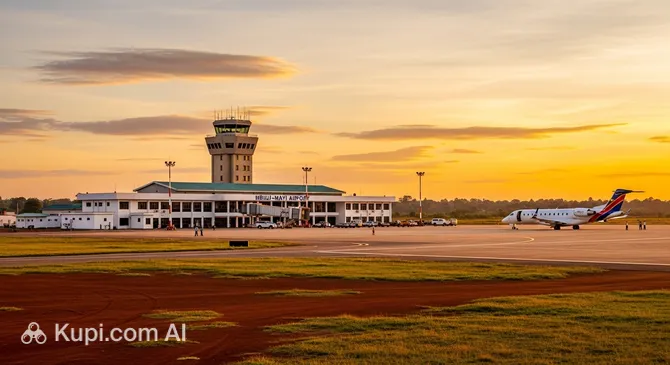
Mbuji-Mayi. Illustration.
Source: Kupi.com AI

Mbuji-Mayi Airport (MJM) is not merely a regional transport hub, but a true aerial gateway to the heart of the "diamond capital" of the Democratic Republic of the Congo. As a key artery for the Kasai-Oriental province, it welcomes daily travelers heading to this economically active and resource-rich region. For many tourists and business people, their introduction to the city's local color and dynamics begins right here, on a runway surrounded by the unique landscapes of Central Africa. Despite its compact size, the airport plays a critically important role in connecting the region with the outside world, providing necessary logistics where ground routes are often difficult.

PropertyValue
IATA CodeMJM
ICAO CodeFZWA
CityMbuji-Mayi
CountryCongo Democratic Republic Of
TimezoneAfrica/Lubumbashi
ScheduleOnline Timetable

Mbuji-Mayi Airport possesses a number of unique features that make it a vital infrastructure facility for the region. First and foremost is its strategic location: the air harbour is situated practically within the city limits, allowing passengers to reach the center and key business districts in just 15–20 minutes. This is particularly appreciated by business travelers for whom time is a priority.

In recent years, the airport has set a confident course for modernization. The country's authorities have initiated large-scale reconstruction projects aimed at upgrading the runway and building a modern terminal. These changes are designed to improve flight safety and passenger comfort, bringing the infrastructure in line with international standards and opening new opportunities for accommodating larger aircraft.

Another important characteristic is its role as an economic hub. As the main gateway to a region rich in diamond deposits, the airport facilitates not only passenger transport but also critical cargo flow. Life is always bustling here, and the atmosphere is filled with entrepreneurial energy, giving this place a distinct business rhythm that sets it apart from purely tourist airports.

Contact Information

Finding accurate and up-to-date contact information for regional airports, such as Mbuji-Mayi Airport (MJM), can be challenging. Most flight-related issues are resolved directly through the airlines. Below is the most complete information available.

  • Official Website: Currently, Mbuji-Mayi Airport does not have its own official website. It is recommended to check all information regarding flights, regulations, and services on the websites of the airlines operating at this airport.
  • Information Desk Phone: There is no publicly available telephone number for the airport inquiry service. For operational information, please contact your air carrier directly.
  • Airport Address: Mbuji Mayi Airport, Mbuji-Mayi city, Kasai-Oriental province, Democratic Republic of the Congo.
  • Email: An official email address for contacting the airport administration is not published.
  • Social Media: The airport does not maintain official pages on social networks.
  • Lost Luggage Information: If your luggage has been lost or damaged, you must contact the Lost & Found service of the airline you flew with. Airport staff do not handle these issues directly.
  • Passenger Support Contacts: Assistance for passengers, including special requests and support for persons with disabilities, is provided by the airlines. Please notify them of your needs when booking your ticket.

How to Get to the Airport

Getting to Mbuji-Mayi Airport (MJM) from the city center is quite simple, as it is located very close by. Although familiar public transport, such as a metro or regular city buses, is absent here, travelers have several alternative ways to reach their flight. The main options are taxis, moto-taxis, and pre-booked transfers. The trip from the center of Mbuji-Mayi to the airport usually takes 15 to 30 minutes, but it is always wise to allow extra time in case of traffic jams.

The most common mode of transport is the taxi. You can choose from several options. A private taxi is the most comfortable and safe choice, especially if you are traveling with luggage. It is critically important to agree on the fare with the driver before the journey begins, as taximeters are not used here. For solo travelers without bulky suitcases, a moto-taxi ("wewa") is suitable—this is a fast and very cheap method that allows for easy maneuvering in traffic. The most budget-friendly but least comfortable option is the shared minibus taxi, which can be overcrowded and makes many stops.

For maximum convenience and safety, we recommend booking a private transfer. This service is often provided by hotels or local tourism companies. Although this is the most expensive option, it guarantees you a fixed price, reliability, and peace of mind. Another possibility is car rental, however, in the conditions of the Congo (DRC), it is much more practical and safer to rent a car with a driver. This saves you from the need to navigate unfamiliar roads and search for parking.

Regarding costs, a trip on a moto-taxi or shared taxi will be the cheapest. A private taxi will cost more, while a transfer or car rental with a driver will be the most expensive options. It is recommended to carry small denominations in Congolese Francs (CDF) or US Dollars for payment. There is parking on the airport grounds, which is convenient for quick drop-offs or picking up passengers, but for long-term vehicle storage, it is better to choose other ways to get to the airport.

Terminals and Map

Mbuji-Mayi Airport (MJM) is a small regional aviation hub with a structure that is quite simple and intuitive for travelers. It consists of one main terminal that serves both domestic and a limited number of international flights. Thanks to its compact size, getting lost here is practically impossible, and moving between different zones takes minimal time.

The terminal is functionally divided into two main parts: the departure zone and the arrival zone. The airport layout is linear and straightforward. Upon entering the building, passengers find themselves in a general hall where check-in counters are located. After receiving a boarding pass and checking in luggage, one must proceed to the security screening area, beyond which lies a small waiting hall with a boarding gate. The arrival zone includes a baggage claim belt and customs and passport control counters. Since there is only one terminal, no special transfers or shuttles between terminals are required.

The features of the terminal lie in its functionality and lack of frills. You will not find large Duty-Free shops or a variety of restaurants here. The infrastructure typically includes basic amenities: seats in the waiting area, restrooms, and perhaps a small kiosk with drinks and snacks. Navigation is aided by signs, which are primarily in French—the official language of the Congo (DRC).

Regarding processing times, they can vary. On days with low traffic, check-in and screening may take no more than 30-40 minutes. However, to avoid any unforeseen situations and delays, it is recommended to arrive at the airport at least 2 hours before departure for a domestic flight and 3 hours before an international one. The main advice for navigation is to follow the signs, and if any questions arise, do not hesitate to ask airport staff who will help you find your way.

Airport History

The history of Mbuji-Mayi Airport (MJM) is inextricably linked to the region's main wealth—diamonds. The exact date of its founding is unknown, but it was built in the mid-20th century, during the period when the Congo (DRC) was a Belgian colony. Its creation was a direct consequence of the rapid development of the diamond mining industry led by the Société minière de Bakwanga (MIBA). Initially, the airfield served to transport personnel, equipment, and, of course, precious stones, becoming a key link in the logistics chain connecting the richest deposits with the rest of the world.

Over the years, the airport transformed into the main air gateway not only for the city but for the entire Kasai-Oriental province. Given the underdeveloped road network in the region, its strategic importance is hard to overestimate. For decades, it ensured passenger traffic, cargo delivery, and humanitarian aid. However, over time, the airport infrastructure, especially the runway, fell into disrepair, creating serious flight safety risks and limiting its potential.

A turning point in the airport's history was the large-scale modernization launched in the 2010s. The project involved completely reconstructing the runway, building a new modern passenger terminal, erecting a new control tower, and installing modern air navigation equipment. This update allowed the airport to align with international standards and significantly increase the level of safety and comfort for passengers.

One interesting fact about Mbuji-Mayi Airport is that it consistently ranks among the busiest airports in the country in terms of domestic traffic volume, second only to the capital's air hubs. This clearly demonstrates the economic activity of the city, which remains the "diamond capital" of the Congo. Today, the renewed airport continues to play its vital role, opening a new, safer, and more modern chapter in its history.

Services and Amenities

Mbuji-Mayi Airport (MJM) is an important regional transport hub in the Congo (DRC) and offers passengers basic amenities necessary for a comfortable wait for their flight. It is important to understand that this is a small airport, and the range of services here differs from large international hubs.

Within the terminal, you will find several small kiosks and cafes where you can buy simple snacks, soft drinks, and water. The selection is limited, so if you follow a special diet, it is better to bring food with you. Shops, including Duty-Free, are generally absent.

Specialized high-comfort lounges or VIP halls may not be available here. Business-class passengers are advised to check the availability of such services with their airline. Wi-Fi access at the airport is typically limited or non-existent, and the number of power outlets for charging electronic devices may be insufficient. It is strongly recommended to carry a portable charger (power bank) with you.

Currency exchange facilities and banking services at the airport are extremely limited, so it is better to take care of exchanging money beforehand in the city of Mbuji-Mayi. A first aid station may be available at the airport for emergency cases.

Special services for passengers with children (such as mother and child rooms) or for travelers with disabilities may not be provided to a high standard. If you require assistance, it is extremely important to contact your airline in advance to organize support. There are no hotels on the airport grounds; the nearest accommodation options are located in the city. Conference rooms and business centers are absent at the airport.

Dining

Mbuji-Mayi Airport (MJM) is a regional aviation hub, so the choice of dining establishments here is quite limited and focused on basic passenger needs. Do not expect a wide variety of restaurants and cafes as found in major international airports. All available food outlets are concentrated in the single terminal.

Typically, inside the airport building, you can find a small snack bar or cafe located in the general area before security control (landside). Here, travelers can purchase drinks, such as bottled water, sodas, and coffee, as well as light snacks—sandwiches, pastries, or local sweets. Full-service restaurants with hot meals and waiter service are absent here.

Although there are no specialized restaurants with national cuisine at the airport, simple Congolese snacks can sometimes be found on the menus of local cafes. This might be a good opportunity to try something authentic before departure, however, the assortment is heavily limited. Opening hours are usually tied to the flight schedule—they open a few hours before the first departure and close after the last plane leaves.

For passengers with specific dietary needs (vegetarians, vegans, as well as those looking for gluten-free or Halal dishes), finding suitable options will be extremely difficult. The assortment is very basic, and special product labeling is generally absent. The most reliable solution is to bring food with you. In general, the airport is suitable for a quick snack, but if you are counting on a full lunch or dinner, it is better to do so in the city of Mbuji-Mayi before traveling to the airport.

Travel Tips

Traveling through the airport of Mbuji-Mayi, an important transport hub in the Democratic Republic of the Congo, requires a little preparation. Given that this is a regional airport, processes here may differ from major international hubs. It is recommended to arrive at the airport well in advance: 2-3 hours before a domestic flight departure. This will give you enough time to calmly complete all formalities, which can sometimes take longer than expected.

When going through check-in and security control, keep all documents ready: your passport, airline ticket, and, particularly important for this region, your Yellow Fever vaccination certificate. Procedures may not be fully automated, so please be patient and polite with the staff. Clearly following the instructions of security personnel will help speed up the process.

Regarding hand luggage, standard international rules apply: liquids in containers up to 100 ml and no sharp objects. However, considering the limited services at the airport, it is wise to bring a small supply of water and snacks, as well as a portable phone charger. When choosing a seat on the plane, a window seat will offer you the chance to see the region's impressive landscapes from above, while an aisle seat will allow for a quicker exit upon arrival.

Customs control upon entering the country requires filling out a declaration. Honestly declare all valuables and cash to avoid misunderstandings. Upon departure, customs officers may check luggage for the illegal export of minerals (especially diamonds, for which the region is famous) and other prohibited items. If you are traveling with a connection, check with the airline at check-in whether you will need to collect and re-check your luggage at the intermediate airport.

To save time and money, try to check in for your flight online if your airline provides such an option. Also, arrange a transfer from the airport to the city in advance to avoid inflated taxi prices upon arrival. Keep a small amount of local currency (Congolese Francs) for minor expenses, as card payments may not be available everywhere.

In case of a flight delay, be prepared for modest waiting facilities at the airport. A pre-downloaded book, movie, or music will help pass the time. Maintain contact with your airline representative for the latest information on flight status. The main thing is to remain calm and keep a positive attitude, as travel is always an adventure.

Reached the end of the page?

That means the route is fully explored