Support

Drake Bay

About the Airport

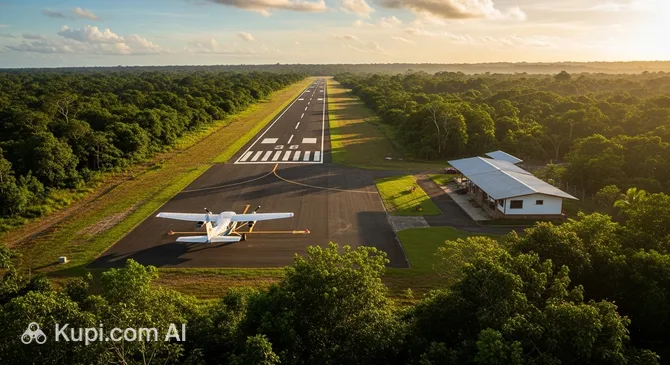
Drake Bay. Illustration.
Source: Kupi.com AI

Drake Bay Airport is not merely a transport hub, but a breathtaking prologue to your journey through the wildlife of Costa Rica. Here, where the runway seems carved into the dense jungles of the Osa Peninsula, landing turns into a genuine aerial excursion. Instead of noisy halls and endless queues, you are greeted by the sounds of the rainforest and a fresh ocean breeze, instantly immersing you in the atmosphere of one of the planet's most bio-diverse corners.

PropertyValue
IATA CodeDRK
ICAO CodeMRDK
CityDrake Bay
CountryCosta Rica
TimezoneAmerica/Costa_Rica
ScheduleOnline Timetable

Airport Features and Benefits

The main advantage of Drake Bay Airport is the colossal saving of time and unique accessibility. Traveling by land from the capital can take over 7 hours, including difficult road sections and a boat crossing, whereas the flight lasts only about 50 minutes. The airport provides quick access to the famous Corcovado National Park, even for those whose holiday is limited to a few days.

Arrival at Drake Bay is considered a separate attraction in itself. The approach for landing passes over the picturesque Pacific coast and the thick canopy of the jungle, offering passengers views worthy of nature documentaries. Despite its modest size, the airport possesses the necessary basic infrastructure: following a recent reconstruction, a convenient terminal has appeared here, making waiting for a flight comfortable and safe.

Contact Information

Drake Bay Airport (DRK) is a small regional airport serving the Osa Peninsula in Costa Rica. Management and information support in such airports are often handled not directly, but through the airlines operating the flights. Below is the main contact information available for travellers.

  • Official Website: Drake Bay Airport does not have its own official website. Up-to-date information on flights, schedules, and carriage rules should be sought on the websites of airlines flying to Drake Bay (for example, Sansa Airlines).
  • Information Desk Phone: There is no direct public phone number for the airport. For all operational questions related to your flight, it is recommended to contact your airline's call centre directly.
  • Address: Aeropuerto de Bahía Drake, Agujitas de Drake, Puntarenas Province, Costa Rica.
  • Email: There is no official email address for general enquiries at the airport. Use air carrier support channels for communication.
  • Social Media: The airport does not maintain official pages on social networks. News and updates can be tracked on airline pages.
  • Lost Luggage Information: The airline whose services you used is responsible for tracing lost or damaged luggage. Contact the relevant department of your carrier immediately upon arrival.
  • Passenger Support Service: Comprehensive passenger support (assistance for people with disabilities, flight information, booking changes) is provided by your airline.

How to Get to the Airport

Getting to the small Drake Bay Airport (IATA: DRK), located in one of the most secluded and beautiful corners of Costa Rica, is part of the adventure itself. It is important to understand that Drake Bay is a remote region, and transport infrastructure here differs significantly from city standards. Planning your route to the airport in advance is key to a calm journey.

Taxi and Transfer

This is the most common and reliable way to get to the airport from your hotel or lodge. Local taxis are typically four-wheel drive SUVs (4x4), capable of navigating the region's dirt roads. The trip from the main hotel zone to the airport takes just 10-15 minutes. It is recommended to book a transfer in advance through your hotel, as they cooperate with trusted drivers. The cost of the trip is usually $10-20 USD, but always confirm the price before boarding.

Public Transport

Public transport in the conventional sense, such as city buses or trains, is absent in Drake Bay. Sometimes you can find a collective taxi ("colectivo"), which might be slightly cheaper, but it has no clear schedule, and one should not rely on it if you have a scheduled flight.

Car Rental and Parking

Renting a car to move around Drake Bay is an option for experienced drivers. The roads here are predominantly dirt tracks, and during the rainy season (from May to November), they can be difficult to traverse and may involve fording rivers. If you do decide to rent a car, ensure it is a reliable 4x4 SUV. Regarding parking, Drake Bay Airport has no official guarded car park. Options to leave a car are very limited and informal, so this option is not recommended.

Key Recommendations

  • Book in advance: Always arrange a transfer to the airport at least a day before departure, especially during the high season.
  • Use hotel services: This is the simplest way to organise a reliable transfer.
  • Cash: Have enough cash with you to pay for the taxi, as not all drivers accept cards.
  • Be ready for adventures: The roads may be uneven, but the surrounding views more than compensate for any inconvenience!

Terminals and Map

Drake Bay Airport (DRK) is a small regional airstrip rather than a large airport complex. It is important to understand its scale to properly plan your trip. There is no complex structure, multitude of gates, or long walkways here, making it very simple and convenient for navigation.

The airport operates one small terminal, which is a simple building serving all flights. This single structure combines all zones: check-in counters, a small waiting hall, and the arrival area. The division between departure and arrival zones is quite nominal — passengers disembark from the aircraft and walk to the building where they collect their luggage, which is usually unloaded directly from the plane.

The airport layout is extremely simple: a runway and one building. It is impossible to get lost here. Since there is only one terminal, there is no need for transfers between terminals. Everything is located in one place, a couple of steps from each other.

Check-in and security procedures are very quick due to low passenger traffic and the small size of the aircraft. Usually, it is sufficient to arrive at the airport 30-45 minutes before departure, but it is always better to check your airline's recommendations. The main advice for navigation is not to worry. The entire process from arrival at the airport to boarding the plane is intuitive and takes minimum time, allowing you to start your adventure on the Osa Peninsula without unnecessary stress.

Airport History

The history of Drake Bay Airport (DRK) is not a chronicle of massive construction projects and records, but a tale of how a small airstrip became the gateway to one of the most biologically diverse regions on the planet. Its development is inextricably linked to the growth of eco-tourism on the Osa Peninsula in Costa Rica, making the remote and inaccessible Drake Bay a popular destination.

The exact date of the airport's founding is unknown, as it appeared organically, most likely as a simple dirt strip for the needs of local residents and the first eco-lodges. The main stage of its development was the modernisation carried out by the Directorate General of Civil Aviation of Costa Rica in the 2010s. During the works, the runway was paved and a small but functional terminal with a waiting area was erected. This transformation turned a simple landing strip into a proper aerodrome capable of receiving regular domestic flights.

The main achievement in the airport's history lies not in numbers, but in its strategic role. It shortened the journey from San José to Drake Bay from many hours by land and water to a 45-minute scenic flight. This made visiting Corcovado National Park and whale and dolphin watching accessible to a much larger number of travellers, which, in turn, supported the local economy focused on nature conservation.

Interesting fact: the flight and landing at Drake Bay itself is already part of the adventure. The plane flies over an endless green carpet of jungle, and the strip appears literally at the last moment amidst the dense vegetation. Such an arrival immediately tunes you into the spirit of exploring wildlife and gives unforgettable first impressions of this amazing place.

Services and Facilities

Drake Bay Airport (DRK) serves as a small aerial gateway to one of the most secluded and biologically diverse corners of Costa Rica. It is important to understand that this is essentially an airstrip with a tiny terminal, so the range of services here is minimal and corresponds to the status of a regional aerodrome in a remote area.

Restaurants, Shops, and Wi-Fi: There are no restaurants, cafes, or duty-free shops at the airport. Occasionally, a small kiosk selling drinks and light snacks may be operating, but one should not rely on this. Passengers are advised to carry water and something to eat. Wi-Fi access is generally unavailable, so it is better to download all necessary information to your devices in advance.

Financial Services and Lounges: There are no banks, ATMs, or currency exchange points within the terminal. All financial matters should be settled before arriving in Drake Bay. The waiting hall consists of a simple room or canopy with seating. VIP halls or business lounges are not provided here.

Special Services: Facilities for passengers with children (such as mother and child rooms) or for people with disabilities are extremely limited. If you require special assistance, you must contact your airline in advance to clarify support possibilities. Medical assistance is limited to basic first aid supplies.

Accommodation and Business Services: There are no hotels, conference rooms, or business centres at the airport itself. Its primary function is delivering tourists to the numerous lodges and hotels scattered along the Drake Bay coast, representatives of which usually meet their guests upon flight arrival.

Where to Eat

When planning a flight through Drake Bay Airport (DRK), it is important to remember that this is a very small regional airport serving a remote corner of Costa Rica. Infrastructure here is minimal, and the choice of dining establishments corresponds to its size, so do not expect food courts or restaurant chains as seen in major international hubs.

Typically, all opportunities for a snack are concentrated in one single place — a small kiosk or local cafe, often called a "soda". It is located right in the main and only terminal building or in its immediate vicinity. There is no separation into zones before and after security control in the usual sense, so access to food is available to everyone at the airport.

What can be found on the menu:

  • Quick Snacks: The assortment usually includes packaged crisps, biscuits, chocolate, as well as soft drinks and bottled water.
  • Local Dishes: Sometimes you can order simple but filling Costa Rican dishes. These might be empanadas (stuffed pastries), gallo pinto (rice with beans), or fresh fruit. It is highly recommended to try batidos — thick smoothies made from fresh tropical fruits.
  • Full Lunch: The possibility of having a full lunch is highly limited. If the cafe offers hot food, it might be a casado — a traditional set meal of rice, beans, salad, fried plantains, and a portion of meat or fish.

Regarding special dietary needs, finding certified vegan, gluten-free, or Halal dishes here is practically impossible. Vegetarians can count on rice with vegetables or fruit. If you have strict dietary restrictions, it is most reliable to bring food with you. Prices at the airport may be slightly higher than in town but remain within reasonable limits. Opening hours of establishments are directly linked to the flight schedule: they open shortly before departure and close after the last plane departs.

Tips for Travellers

Travelling through Drake Bay Airport is a unique experience, as it serves as the gateway to one of the wildest and most beautiful regions of Costa Rica. To ensure your flight goes smoothly, use these tips.

Arrival Time at the Airport: Drake Bay Airport is very small; essentially, it is a runway with a small building. There are no long queues or complex navigation. It is recommended to arrive 1–1.5 hours before departure. This time will be more than sufficient for check-in and boarding.

Check-in and Security: Procedures here are simplified to the maximum. Check-in is quick, and security screening is basic. The entire process takes mere minutes. Most flights are operated by small local airlines, such as Sansa Airlines, which have their own check-in counters.

Seat Selection on the Plane: Flights to and from Drake Bay are operated on small propeller planes. Be sure to choose a window seat! Views of the tropical forests, the Pacific coast, and Corcovado National Park are simply breathtaking. This is not just a flight, but a real aerial excursion.

Hand Luggage: This is a critically important point. Local airlines have very strict restrictions on weight and size for both hand luggage and checked baggage. Usually, the total allowable weight for all luggage per passenger is about 12-15 kg. Be sure to clarify the exact rules on your airline's website before travel to avoid extra charges or refusal of carriage.

Passengers with Connections: Most travellers fly to Drake Bay with a connection in San José. Allow sufficient time between flights (at least 2-3 hours), especially if you are arriving on an international flight. Weather in Costa Rica can be unpredictable, and domestic flights may be delayed.

Customs Control: Customs and passport control take place at the international airport of arrival (for example, in San José). At Drake Bay Airport, being a domestic terminal, there are no customs procedures.

Saving Time and Money: To save money, book tickets in advance, especially during the high season (from December to April). The surest way to avoid extra costs is to travel light so as not to pay for excess baggage, which is expensive on local airlines.

In Case of Flight Delay: Bear in mind that there is practically no infrastructure at Drake Bay Airport — neither cafes nor shops. Delays, most often due to weather, are quite possible. In this case, bring water, a snack, a charged power bank, and a book with you. Stay calm and enjoy the sounds of the jungle around you.

Reached the end of the page?

That means the route is fully explored