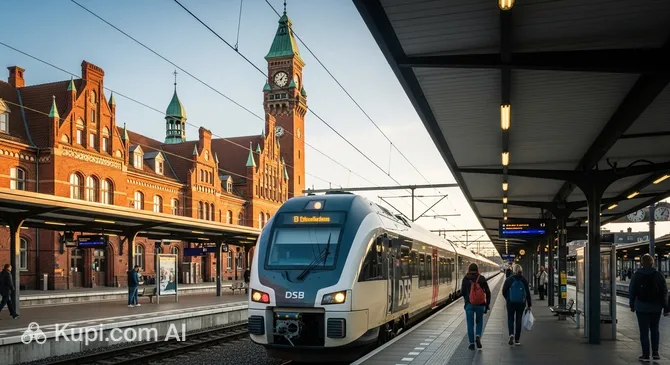
Esbjerg Railway Station (Esbjerg Banegård) is a key transport hub in West Jutland and the gateway to Denmark's fifth-largest city. The station building, which is a listed architectural monument, combines the historic charm of the early 20th century with modern functionality, serving trains of the national operator DSB and regional lines of Arriva. From here, travellers depart for Copenhagen, Aarhus, and other parts of the country, as well as the popular island of Fanø.
It is important for passengers to know that navigation within the station is intuitive. The main hall leads to an underpass connecting the building to the platforms; lifts are available everywhere for convenience when moving with luggage. The station is located in the immediate vicinity of the city centre, making it a convenient starting point for walks immediately upon arrival.
Contact Information
If you need to contact the administration or clarify details of your trip via Esbjerg Railway Station, please use the following contacts:
Official website: dsb.dk (national carrier) or rejseplanen.dk (route planner).
DSB Information Service Phone: +45 70 13 14 15 (daily from 7:00 to 20:00).
Address: Jernbanegade 35, 6700 Esbjerg, Denmark.
Waiting Room Hours: usually open from 05:00 to 00:30 (please check the current schedule before travelling).
Luggage Storage: automatic lockers for luggage of various sizes are available at the station (access is paid, payment by card).
Accessibility: the station is equipped with lifts, ramps, and special toilets for passengers with reduced mobility; an escort service is available (must be booked 12 hours before the trip).
How to Get There
Getting to the station in Esbjerg is very simple, as it is located in the very heart of the city.
On foot: The station is located at the end of the main shopping street, Kongensgade. From the central square, Torvet, the walk takes just 5–7 minutes at a leisurely pace.
Public Transport: The city's main bus station (Esbjerg Rutebilstation) is located next to the railway station, where city and regional buses arrive. This makes transferring from train to bus as quick as possible.
Taxi and Car: The taxi rank is located right at the main entrance on the Jernbanegade side. Parking is provided for private vehicles (please pay attention to time limit signs; a parking disc is often required). If you are coming from the Fanølinjen ferry, you can walk (about 15–20 minutes) or take a bus.
Services and Amenities
Esbjerg Railway Station offers passengers the necessary range of services for a comfortable wait for their train. In the central hall, there are DSB and Arriva ticket machines (accepting cards and cash), as well as ticket counters for those who need operator assistance.
For the convenience of travellers, the following are provided:
Waiting Room: an indoor heated space with seating.
Wi-Fi: free internet access (often requires registration via SMS).
Luggage Storage: lockers for suitcases and bags.
Toilets: located in the station building (entry may be subject to a fee).
7-Eleven Store: here you can buy essential goods, press, and snacks.
For passengers with reduced mobility, barrier-free access to all platforms is provided via lifts.
Where to Eat
If you are hungry before your journey, a 7-Eleven store operates within the station itself. This is a classic option for Danish stations: here you can grab fresh coffee, pastries, sandwiches, famous Danish hot dogs, and beverages. It is an ideal choice for a quick snack; the average bill will be around 50–80 DKK.
For a more substantial meal, simply exit the station building. Thanks to its location in the centre, literally within a 2–5 minute walk on Kongensgade street and Torvet square, you will find many cafes, pizzerias, and restaurants to suit every taste — from fast food to cosy Danish establishments.
Station History
The history of railway communication in Esbjerg is inextricably linked with the development of the city itself and its port. The first station was opened in 1874 when the line to the town of Lunderskov was laid, connecting the new port with the rest of the country.
The current majestic station building was built in 1904 according to the design of the renowned architect Heinrich Wenck, who also designed Copenhagen Central Station. The building is executed in the National Romantic style and is distinguished by characteristic brickwork and turrets. Over its history, the station has undergone several renovations aimed at modernising infrastructure and electrifying the tracks, but it has preserved its historic appearance, remaining an important architectural monument of the city.
Travel Tips
To ensure your trip via Esbjerg Railway Station goes smoothly, follow a few simple tips:
Arrival Time: Arrive 15–20 minutes before train departure, especially if you need to buy a ticket from a machine or leave luggage in storage.
Tickets and Rejsekort: If you use the transport card Rejsekort, do not forget to "Check-in" at the blue stands when entering the platform and "Check-out" at the end of the trip.
Luggage: Keep an eye on your belongings. Although Denmark is a safe country, it is not recommended to leave bags unattended at stations.
Night Waiting: The station building closes at night (usually after the last train around 00:30–01:00) and opens early in the morning. It is not possible to stay overnight at the station.
Transfers: If you are travelling to Copenhagen, please note that some services may require a transfer in the city of Fredericia or Odense, although direct InterCity trains are also available.