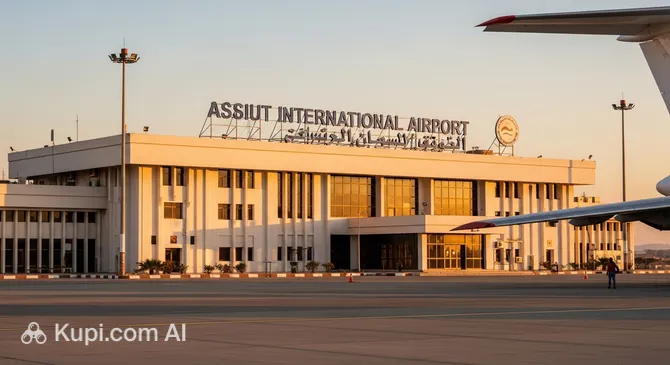
Assiut International Airport is not merely a transit point, but the main aerial gateway to Middle Egypt, connecting the ancient Nile Valley with the outside world. Situated amidst desert landscapes, this airport serves as a vital bridge for travellers heading to the region's historical monuments and for those flying to the Gulf countries. Following a massive reconstruction, it has transformed into a modern and convenient hub where traditional hospitality combines with functionality, allowing passengers to avoid the hustle and bustle of congested capital hubs.
| Characteristic | Value |
|---|---|
| IATA code | ATZ |
| ICAO code | HEAT |
| City | Asyut |
| Country | Egypt |
| Time zone | Africa/Cairo |
| Popular airlines | Air Arabia Abu Dhabi, Jazeera Airways, Air Arabia, Flyadeal, Air Cairo |
| Schedule | Live departures board |
Airport Features and Advantages
The main advantage of Assiut Airport is its compactness and efficiency. Because the passenger terminal is relatively small, all procedures—from check-in to boarding—are completed significantly faster than in the large airports of Cairo or Hurghada. This is particularly appreciated by those who prefer a calm start to their journey without long queues.
The airport has undergone serious modernisation, resulting in a renovated passenger terminal now capable of serving over a million people per year. The building is equipped with modern air conditioning systems, which is critically important in the region's hot climate, and offers a basic range of services, including duty-free shops and comfortable waiting areas.
Its strategic location makes it an ideal entry point for exploring Upper Egypt. From here, it is convenient not only to reach the city of Assiut itself but also to plan trips to lesser-known yet impressive temples and monuments along the Nile, avoiding standard tourist routes.
