Support

Hurghada International Airport

About the Airport

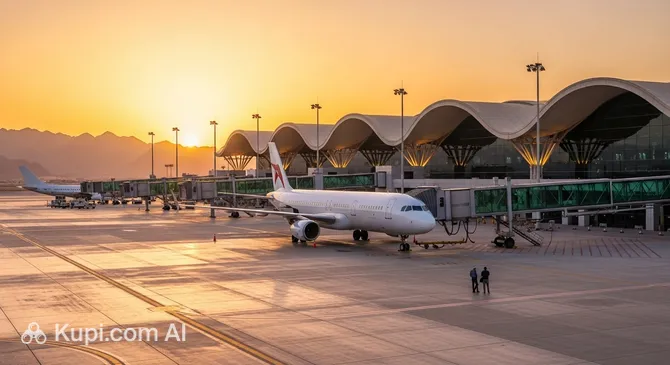
Hurghada International Airport. Source: Kupi.com Binoculars

Hurghada International Airport is not merely a transit point, but the main "gateway to the sun," opening the path to the endless beaches of the Red Sea. The architecture of the complex combines modern technology with subtle oriental motifs, reminiscent of the proximity of the desert and Bedouin traditions. Even in the arrival halls, tourists are enveloped in a warm resort atmosphere, promising the start of an unforgettable Egyptian adventure.

IATA Code HRG
ICAO Code HEGN
City Hurghada
Distance to Centre 5 km
Status International
Annual Passengers Over 8.5 million
Schedule Available on the online board

Airport Features and Advantages

Modern Infrastructure. The airport serves travellers through two terminals, the key one being the new Terminal 1. This spacious three-level building is equipped with the latest security systems and comfortable waiting areas, allowing it to handle high tourist traffic without unnecessary bustle.

Exceptional Location Convenience. A huge advantage of this air hub is its proximity to the resort zone. The journey to most popular hotels takes only 10–15 minutes, and the historic city centre, the El Dahar district, is about 5 kilometres away. This allows tourists to be on the beach almost immediately after passing through passport control.

Tourist Services. The airport provides everything for a comfortable start to your holiday. The arrival zones feature 24-hour currency exchange points and counters for local mobile operators, where you can quickly obtain a SIM card with internet access. Before departure, guests can visit the extensive Duty Free area, known for its good selection of perfumes and traditional Egyptian souvenirs.

Contact Information

For the most up-to-date and accurate information regarding flights, services, and airport regulations, we recommend contacting official channels directly. Below are the main contact details for Hurghada International Airport (HRG).

  • Official Website: Generally, current information can be found on the website of the managing company, Egyptian Airports Company (EAC): eac-airports.com.
  • Inquiry Service Phone: For information about flights and airport services, you can call: +20 65 341 4213.
  • Airport Address: Hurghada International Airport, Hurghada, Red Sea Governorate, Egypt.
  • Email: For general enquiries, you can contact: info@eac-airports.com.
  • Social Media: Official social media pages for the airport may not be available. It is recommended to check information on the official website.
  • Lost & Found: In case of lost luggage, you should first contact your airline's representative. If your belongings were lost within the terminal, contact the airport's lost and found service via the general inquiry phone number.
  • Passenger Support Service: For consultations regarding your stay at the airport, please use the inquiry service phone number.

Getting to the Airport

Getting to Hurghada International Airport (HRG) from the resort zone or the city centre is quite simple. The airport is located just a few kilometres southwest of the centre of Hurghada, so the trip won't take much time. On average, the journey from hotels in the central part of the city to the terminal takes 15-25 minutes, depending on traffic conditions.

Taxi and Transfer

The most popular, convenient, and reliable way to get to the airport is by taxi or a pre-booked transfer. Most hotels and tour operators offer a transfer service, which eliminates the need to negotiate the price. If you take a taxi on the street, make sure to agree on the fare before getting into the car. Also, ride-hailing apps operate in Egypt (such as Uber and Careem), where the price is fixed in advance, which is very convenient. The cost of a taxi ride from central Hurghada usually varies but remains quite affordable.

Public Transport

A more budget-friendly but less comfortable option is local microbuses. They run along the main streets of the city and can take you to the road leading to the airport, from where you will have to walk a short distance. This method is suitable for experienced travellers without heavy luggage who speak Arabic or are ready for an adventure. Microbuses do not have a strict schedule and can be overcrowded. The fare is symbolic, but for tourists, this option may prove difficult to navigate.

Car Rental and Parking

If you have rented a car for your holiday, you can easily drive to the airport yourself. The roads in Hurghada are quite good, and the signs to the airport are clear. Hurghada Airport has both short-term and long-term parking where you can leave your car. This is a convenient option for those who value independence in their movements.

Terminals and Map

Hurghada International Airport (HRG) consists of two main passenger terminals that serve both international and domestic flights. It is important to check in advance which terminal your flight departs from or arrives at, as they differ in specialization and comfort levels.

Terminal 1 (New Terminal): This is a modern and spacious building that serves the majority of international flights, including scheduled and charter flights from Europe and other regions. The main infrastructure is concentrated here: numerous Duty Free shops, cafes, restaurants, and relaxation zones. Arrival and departure areas are clearly separated. Navigation is intuitive thanks to signs in English and Arabic.

Terminal 2 (Old Terminal): Historically, this was the airport's main terminal. Today, it is primarily used for domestic flights within Egypt, as well as some international and charter flights. It is significantly smaller than Terminal 1, and the range of services here is more modest. During peak hours, it can get quite crowded.

The terminals are located in separate buildings but are in close proximity to each other. Walking between them takes a few minutes. The airport layout is quite simple: upon arrival, you pass through passport control, then collect your luggage and go through customs inspection. In the arrival hall, tour operator representatives usually meet you. In the departure zone, you first enter the general hall with check-in counters, after which you proceed to security screening and passport control, entering the "secure area" with shops and boarding gates.

To complete all formalities (check-in, baggage drop, security screening, and passport control), it is recommended to arrive at the airport at least 2.5-3 hours before an international flight. In high season, queues can be long, so extra time won't hurt. Always check your terminal number (T1 or T2) carefully on your ticket to avoid confusion and unnecessary rushing.

Airport History

The history of Hurghada International Airport (HRG) is inextricably linked to the transformation of a small settlement on the Red Sea coast into one of Egypt's most popular resorts. Initially, this facility was not intended for tourists and began its history as a military airfield. Its strategic location attracted military attention, and only later was its potential for civil aviation fully realized.

A key turning point in the airport's history occurred in the 1980s, when the Egyptian government set a course for developing tourism in the region. The airfield was opened to receive international charter flights, which became a catalyst for hotel construction and infrastructure development in Hurghada. In the early years, it was a modest terminal, barely coping with the growing flow of travellers eager to see the beauties of the Red Sea.

The rapid growth of the resort's popularity in the 1990s and 2000s presented new challenges for the airport. The old terminal no longer met international standards and could not provide comfortable service for millions of tourists. This led to the decision for a radical modernization and the construction of a new, modern complex. The most large-scale reconstruction in the airport's history was completed in December 2014 with the opening of the new spacious terminal.

The new terminal increased the airport's capacity to 13 million passengers per year. New runways, modern jet bridges, spacious waiting halls, shops, and restaurants were built. Today, Hurghada Airport is the second busiest in Egypt after Cairo and serves as a clear example of how the intelligent development of transport infrastructure can completely transform an entire region, turning it into a world-class tourism gem.

Services and Amenities

Hurghada International Airport (HRG) offers passengers a wide range of services to make waiting for a flight as comfortable as possible. Whether you are arriving at the resort or preparing to fly home, you will find everything necessary for a pleasant time in the terminals.

For those wishing to have a snack or go shopping, the airport provides many opportunities. There are numerous cafes and restaurants offering both international cuisine and local delicacies. In the spacious Duty Free area, you can purchase perfumes, cosmetics, and confectionery at attractive prices, and in souvenir shops, you can buy authentic Egyptian gifts for loved ones.

For a more comfortable wait, the airport features VIP lounges where passengers can relax in silence, enjoy snacks and beverages, and utilize business services. Wi-Fi is available throughout the terminal (terms of access may vary), and special stations are equipped for charging gadgets. This allows you to stay connected and handle work matters right before departure.

To handle financial matters, bank branches and currency exchange offices operate within the airport building, where you can exchange money upon arrival or before departure. In case of need, a medical centre is on duty 24/7 at the airport, ready to provide first aid.

The airport caters to all categories of travellers. Mother and child rooms are equipped for passengers with children, where you can feed and change a baby in a calm environment. Passengers with reduced mobility are provided with all necessary assistance: from special parking spaces and ramps to accompaniment during boarding. It is recommended to notify the airline in advance if such services are required.

Although there are no hotels directly on the airport grounds, several hotel complexes are located in the immediate vicinity, which can be quickly reached by taxi. For business travellers, basic business services, such as internet access and photocopying, are usually available in the premium lounges.

Dining

In Hurghada International Airport (HRG), travellers will find plenty of options for a snack or a full meal before their flight. Food and beverage outlets are located in both terminals, but the main selection is concentrated in the departure areas after passing passport control and security (airside). Terminal 1, being newer, offers a wider and more modern range of cafes and restaurants.

Quick Snacks and Coffee. If you are short on time, look out for the numerous coffee shops, such as Costa Coffee, and fast-food outlets. Here you can order sandwiches, pastries, pizza, or burgers. This is an ideal option to quickly refresh yourself, have a coffee, or take food on board if permitted by the airline. Such establishments exist both before and after the security zone.

Full Meals. For those who prefer a leisurely meal, restaurants with à la carte service operate in the departure zones. They typically present international cuisine. Some establishments also offer adapted versions of local Egyptian dishes. This is a great opportunity to try something national without leaving the airport. Look for shawarma, kebabs, or traditional mezze appetizers.

Special Dietary Needs and Prices. Since Hurghada is in Egypt, virtually all meat products at the airport are Halal. Options are also available for vegetarians: vegetable salads, cheese sandwiches, hummus. It is worth checking the ingredients with the staff. Prices at the airport are expectedly higher than in the city, so be prepared for this. Most establishments operate around the clock or adjust their schedule to flight times, so you won't go hungry even during a night departure.

Travel Tips

To ensure your journey through Hurghada airport goes as smoothly as possible, it is worth considering a few specifics. We recommend arriving at the airport in advance: at least 3 hours before an international flight and 2 hours before a domestic one. There are several stages of security checks at the airport, including a check at the building entrance, which can create queues, especially during the high tourist season.

Keep your passport and boarding pass handy when going through check-in and security control, as you may be asked to show them several times. The screening process is standard but can be more thorough than in some other airports. Remain calm and follow the staff's instructions.

Regarding hand luggage, international rules apply: liquids up to 100 ml in transparent packaging, no sharp objects. However, there is a local specific: it is strictly forbidden to take corals, shells, and sea urchins out of Egypt (even those found on the beach). Violation of this rule threatens a serious fine and problems at customs. Buy all such souvenirs only in official shops and be sure to keep the receipt.

When choosing a seat on the plane, if you are flying during the day, window seats will give you stunning views of desert landscapes and the turquoise waters of the Red Sea. Aisle seats provide more comfort and the ability to stand up freely during the flight. To save time, check in for your flight online if your airline offers this option.

Passengers with transfers should check in advance whether they need to collect their luggage and check it in again. The airport is not very large, but it is better to immediately find information on the board about your next flight and the boarding gate number. Food and drink prices in the "secure area" are quite high, so it is better to have a snack before arriving at the airport or take an empty water bottle with you to fill it after passing security control.

In case of a flight delay, first contact your airline representative. Depending on the length of the wait, you may be provided with drinks, meals, or even hotel accommodation. Follow updates on information boards and keep all receipts for unforeseen expenses if they arise.

Reached the end of the page?

That means the route is fully explored