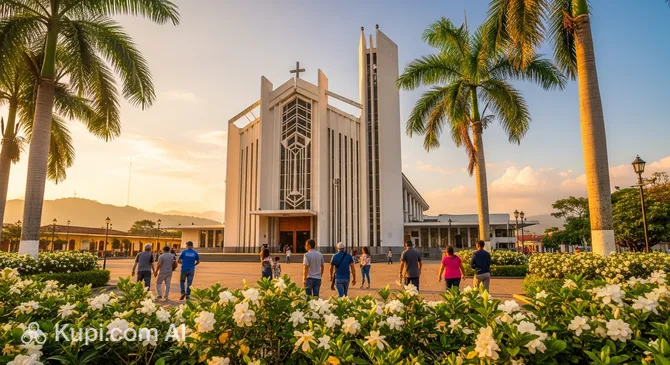
Coatepeque is a vibrant and energetic city located in southwestern Guatemala in the department of Quetzaltenango. Its unusual name, which translates from Nahuatl as "snake hill," is owed to ancient legends about the god Mixcoatl. Today, it is an important regional center with a population of about 300,000 people, playing a key role in the region's trade and agriculture.
Coatepeque. Illustration.
Source: Kupi.com AI
The city was founded in 1765, and its rich historical heritage is closely intertwined with the culture of the indigenous Maya-Mam people and later Creole traditions. Although Coatepeque is not a typical tourist destination, it charms visitors with its authenticity. Here, you can experience the real, unpolished life of the Guatemalan provinces, where bustling markets sit side-by-side with the quiet streets of residential neighborhoods.
Travelers are drawn to Coatepeque primarily for the opportunity to immerse themselves in the atmosphere of a busy and industrious city. Surrounded by fertile lands, the city is famous for its agribusiness and the hospitality of its local residents. Visiting this place is an excellent experience for those who want to see Guatemala from the inside, far from the standard tourist routes.
Weather Overview
The weather in Coatepeque is shaped by its tropical location and proximity to the mountains. A consistently warm and humid atmosphere remains throughout the year. The average daily temperature fluctuates between +23...+25°C, but daytime highs in March and April can reach +30...+32°C, creating rather hot conditions.
The city's climate has a pronounced rainy season that lasts from May to October. During this time, frequent downpours can be expected, especially in the afternoon, which contributes to the lush growth of tropical greenery. The wettest month is June, when rainfall significantly increases.
For the most comfortable visit, it is best to choose the period from December to February. During these months, Coatepeque experiences dry and sunny weather with moderate humidity, ideal for walking and exploring the city. Winds in the region are usually light, adding a sense of stability to the local weather conditions.
Average monthly temperature
Average monthly precipitation
Interesting Facts
The name of the city Coatepeque comes from the words "COAL" (snake) and "TEPEC" (hill), which in indigenous mythology symbolizes the god Mixcoatl.
The city was founded in 1765 by an indigenous resident named Juan Bernardo, making it one of the oldest settlements in the region.
The local Israel Barrios Stadium features a natural grass pitch and rivals the stadiums of much larger cities in terms of capacity.
Coatepeque is administratively divided into 8 zones, each with its own unique character and micro-neighborhoods.
The city's economy stands firmly on the "four pillars" of agriculture: corn, beans, rice, and a variety of tropical fruits are grown here.
How to Get There
Coatepeque is an important transport hub in southwestern Guatemala, making it easily accessible for travelers exploring the region. The journey to the city typically takes you through the picturesque mountain and lowland landscapes of the Quetzaltenango department.
The primary way to reach Coatepeque is by road. Buses run regularly from the capital, Guatemala City. The trip of about 200 km usually takes between 3.5 and 4.5 hours, depending on traffic conditions. Regional connections with neighboring cities are also well-developed; the roads are mostly paved and maintained in good condition.
The city does not have its own airport for major passenger flights. Travelers are recommended to use La Aurora International Airport (GUA) in the capital and then transfer to a bus or a rental car. The smaller aviation hubs closer to the city are used primarily for private and technical flights.
Railway service in this region is currently not developed for regular passenger transport. The transport system focuses heavily on an extensive network of highways and private carriers that connect the city with the rest of the country.
Station
Passenger traffic
Distance
Estación de Tapachula
3
48 km
Main Attractions
While Coatepeque is primarily a commercial and business center, there are several notable sites worth visiting. Religious buildings form the foundation of the cultural landscape. Iglesia Monte Sion (Mount Zion Church) and the Chapel of Santa Hilaria are important spiritual centers for locals and stand out architecturally against the city's skyline.
It is also worth visiting the Central American Lighthouse of Light Church and Elim Church. These buildings reflect the deep religiosity of the population and serve as landmarks in the city's layout. Strolling between them allows you to feel the rhythm of local life and see how traditions intertwine with modernity in the daily lives of the citizens.
The main "living" attraction of the city, however, is considered to be its markets and trading quarters. This is where the true action unfolds: the exchange of goods, social interaction, and the vibrant colors of local produce and textiles. For a tourist, this is the best opportunity to get acquainted with the culture of the Mam region and see Guatemala as it truly is.
Local Cuisine
The gastronomy of Coatepeque is the quintessence of the flavors of Guatemala's western highlands. The foundation of local cuisine consists of corn, black beans, and rice. Be sure to try traditional tortillas, which are served with almost every dish here, as well as tamales — corn dough with filling wrapped in leaves. The food here is hearty, spicy, and very homey.
Among meat dishes, chicken in various sauces (such as pepián) and grilled beef are popular. Meals in local comedores (small diners) are often accompanied by fresh vegetables and avocado. This is a great chance to try authentic food at very affordable prices in the company of locals.
As for drinks, Coatepeque is famous for its coffee, as the region is one of its production centers. It is also worth trying hot chocolate and refreshing fruit juices made from papaya or pineapple. In the evening, you can order local beer or traditional cold drinks based on rice and cinnamon.
Travel Tips
Preparing for a trip to such a unique city as Coatepeque requires attention to detail. These practical tips will help you feel confident and enjoy your journey to the fullest.
Clothing and Essentials: Choose lightweight clothing made from natural fabrics, as it can be quite hot in the city. In case of sudden rain (especially from May to October), be sure to carry a compact umbrella or raincoat. When visiting churches, it is best to choose modest clothing that covers the shoulders and knees.
Transport: It is most convenient to get around within the city by taxi. If you decide to use a microbus, keep an eye on your belongings and confirm the route with the driver in advance.
Finance: The main currency is the quetzal. Cards are accepted in large stores and hotels, but for markets and transport, you will definitely need cash. It is best to exchange currency at bank branches in the city center.
Health and Safety: Drink only bottled water. In the evenings, stick to well-lit central streets and avoid walking alone in unfamiliar areas.
Communication: The main language is Spanish. English is not widely spoken here, so learn a few basic phrases or download an offline translator. Locals will appreciate your effort to speak their language.
Local Etiquette: It is customary to say hello ("Buenos días" or "Buenas tardes") when entering a shop or cafe. Guatemalans are very polite and value the same treatment in return.
What to Avoid: To avoid attracting unnecessary attention, do not openly display expensive electronics or large sums of money. Also, refrain from taking photos of locals without their prior consent.
Extra Tip: Visit the markets as early as possible in the morning — this is when life is most active, the goods are freshest, and the midday heat has not yet set in.
Coatepeque is a city with true character, and your respectful attitude toward its traditions will make your visit truly memorable!
Entertainment & Nightlife
Entertainment in Coatepeque is primarily local in character, offering guests a chance to relax alongside the residents. The main center of attraction for sports fans is the Israel Barrios Stadium. This impressive structure holds 24,000 spectators and is the home of the local football club, Deportivo Coatepeque. Attending a match is a great way to experience the passion Guatemalans have for football.
Evening life is centered in small bars and discos where popular Latin American music plays. These establishments cater to a local crowd, so the atmosphere is as relaxed as possible. There are no specific "tourist" nightclubs in the city, but cozy spots can be found in the center to enjoy a refreshing drink and listen to music.
For those who prefer a quieter pastime, there are several cinemas in the city. During the day, shopping centers and walks through the central squares are popular. If you are looking for more sophisticated entertainment, such as theaters or large concert halls, locals usually head to nearby Quetzaltenango.
Parks & Museums
Coatepeque's urban layout is quite dense, so public parks serve as vital oases of tranquility. The main spot for residents to relax is the central park, located in front of the municipal building. This is the heart of the city, where you can sit in the shade of the trees, watch passersby, and enjoy the atmosphere of a provincial center.
There are virtually no specialized museums within the city itself; however, the local churches take on the role of history keepers. Their interiors and religious artifacts are often true works of art and tell the story of the spiritual journey of the region's inhabitants. The city's cultural life is also reflected in the architecture of the old quarters and the design of public spaces.
The natural beauty of Coatepeque is best revealed beyond its borders. The surroundings offer a picturesque mountain landscape where agricultural land alternates with patches of tropical vegetation. A walk on the outskirts of the city will allow you to appreciate the beauty of Guatemalan nature and see majestic panoramas of the highlands.
Getting Around
The transport system in Coatepeque is perfectly adapted to the needs of local residents and is highly mobile. The main form of public transport here is the microbus (minibus), which runs along all major streets and connects the center with the outskirts. They are very inexpensive, though you should be prepared for them to be quite crowded during peak hours.
For more comfortable trips, tourists often choose taxis. Cars can be found at stands near the markets and the central square, or called through mobile apps. It is recommended to agree on the price beforehand, as meters are rarely used. Motorcycles and bicycles are also popular among residents, allowing for quick maneuvering through heavy traffic.
The roads in the city center are quite narrow, which sometimes causes congestion, so plan your movements with a little extra time. Walking through the central part of the city is also a great option, as most key sites (markets, banks, churches) are within walking distance of each other.
Accommodation
The hotel stock in Coatepeque is primarily oriented toward business travelers and those visiting for trade. You won't find massive international resorts here, but you can choose from many cozy and functional options. Most hotels offer a basic set of services necessary for a comfortable rest after a busy day.
Small private hotels and budget hostels are concentrated in the city center. This is a convenient place to stay, as it provides easy access to markets, banks, and transport terminals. Accommodations are simple, but cleanliness and traditional Guatemalan hospitality are guaranteed.
For those planning a longer stay, the apartment rental sector is well-developed. This often proves to be a more cost-effective and convenient option. If your trip coincides with local holidays or major fairs, it is strongly recommended to book your accommodation in advance, as rooms fill up quickly during these periods.
Nearby Cities
Coatepeque serves as an excellent starting point for exploring the southwestern region of Guatemala, where unique and colorful settlements can be found within an hour's drive.
Very close by is Flores Costa Cuca, a small town immersed in the region's agricultural life. It is also worth visiting El Quetzal and Colomba — these places allow you to see the traditional way of life surrounded by coffee plantations. For those seeking larger urban centers, Quetzaltenango (also known as Xela), the cultural capital of the highlands, is just 50 km away.
City
Population
Distance
Flores Costa Cuca
24 888
7 km
El Quetzal
25 888
9 km
Colomba
56 487
14 km
Pajapita
23 171
18 km
El Asintal
43 281
19 km
Exploring the surroundings of Coatepeque will give you many impressions from the changing landscapes: from hot plains to cool mountain slopes. Each of the neighboring destinations, such as Pajapita or El Asintal, adds its own touch to the overall picture of this multifaceted region.
Shopping & Souvenirs
Shopping in Coatepeque is first and foremost about visiting its colorful markets. The Central Market (Mercado Central) is the main trading hub, where life bustles from early morning. Here you can find everything: from the freshest exotic fruits to traditional textiles created by Maya-Mam artisans. This is the best place to feel the local flavor and try your hand at bargaining.
Most shops and stalls are concentrated around the central square and along the city's main streets. These sell clothing, electronics, and daily essentials. There are not many large Western-style shopping centers in the city, but small commercial plazas sufficiently meet the needs of residents and visitors.
As souvenirs from Coatepeque, it is worth bringing back local coffee — it is of excellent quality and very fresh. Also, look out for handmade items: textile bags, scarves, and wooden figurines. Shops usually operate from morning until early evening, and cash (Guatemalan quetzals) is the most common form of payment, though credit cards may be accepted at larger outlets.