Support

Hong Kong International Airport

About the Airport

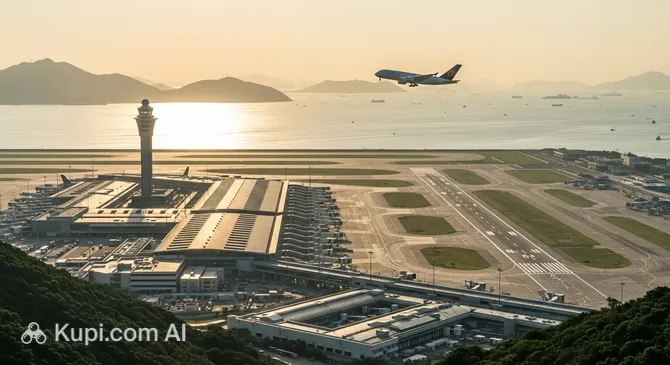
Hong Kong International Airport. Illustration.
Source: Kupi.com AI

The Gateway to Asia, a futuristic hub built on a man-made island — this is Hong Kong International Airport, also known as Chek Lap Kok. It is not merely a transport node, but an entire city where technology and comfort meet to make the start of your journey to Hong Kong or your transit as pleasant as possible. Opened in 1998, it quickly earned a reputation as one of the best and busiest airports in the world, receiving numerous international awards. It serves as a vital hub for passenger and cargo transport, connecting Hong Kong with mainland China and Southeast Asian countries.

Below is key information about the airport in a convenient format:

PropertyValue
IATA CodeHKG
ICAO CodeVHHH
CityHong Kong
CountryHong Kong
TimezoneAsia/Hong_Kong
Top AirlinesChina Airlines, Hong Kong Airlines, Air China, Shanghai Airlines, China Eastern
ScheduleOnline Timetable

Hong Kong International Airport is renowned for its well-thought-out infrastructure and wide range of services. Terminal 1 is one of the largest in the world and offers passengers everything they might need: from numerous shops and restaurants to free shower cabins and relaxation zones. For entertainment before your flight, the airport features a cinema and the SkyPlaza aviation centre. The airport is connected to the city around the clock by the high-speed Airport Express train, which takes you to the centre in just 24 minutes, as well as an extensive network of bus routes. Additionally, travellers have access to free Wi-Fi, luggage storage, ATMs, currency exchange points, and even an on-site hotel.

Contact Information

For your convenience, we have compiled the essential contact information for Hong Kong International Airport (HKG).

  • Official Website: www.hongkongairport.com. On the website, you will find the most up-to-date information regarding flights, services, and airport regulations.
  • Inquiry Hotline: +852 2181 8888. The hotline is available 24/7 to answer any passenger questions.
  • Address: 1 Sky Plaza Road, Chek Lap Kok, Hong Kong.
  • Email: A direct email address for general inquiries is not published. It is recommended to use the dedicated contact form on the airport's official website for communication.
  • Social Media: You can follow news and updates on the airport's official pages on popular social networks such as Facebook, Instagram, and X (formerly Twitter).
  • Lost & Found: If you have lost your luggage, please contact your airline first. If items were lost within the terminal, contact the airport's Lost & Found office. Contact details and an online enquiry form can be found in the relevant section of the official website.
  • Customer Service: For all questions related to your stay at the airport, you can contact the 24-hour phone line at +852 2181 8888.

Getting to the Airport

Getting to Hong Kong International Airport (HKG) from anywhere in the city is easy and convenient thanks to one of the most developed transport systems in the world. Travellers have access to various options — from high-speed trains to budget buses and comfortable taxis. The choice depends on your budget, amount of luggage, and point of departure.

Airport Express is the fastest and most comfortable way to get to the airport. The train departs from the central stations, Hong Kong and Kowloon, and reaches the terminal in just 24 minutes. Carriages are equipped with special luggage racks, and the in-town check-in service is available at city stations, allowing you to check in for your flight and drop off luggage in advance. The fare is higher than other modes of transport (about 115 HKD from Hong Kong station), but the speed and convenience justify the price. This is the ideal choice for those who value time and comfort.

For a more budget-friendly journey, the Cityflyer buses (routes marked with the letter "A") are excellent. They operate throughout Hong Kong, covering most districts, and stop right at the terminals. The journey takes from 45 to 90 minutes depending on the route and traffic conditions. The fare is significantly lower than the express train, approximately 20-50 HKD. There are also night routes (marked with "NA"). The bus is a great option if you want to save money or are travelling from an area far from Airport Express stations.

Taxi is a convenient "door-to-door" option, especially if you are travelling with family, a large amount of luggage, or at night. A trip from central districts like Central or Tsim Sha Tsui will take about 30-45 minutes (excluding traffic jams) and will cost approximately 300-400 HKD, including tolls for bridges and tunnels. In Hong Kong, taxis are colour-coded for different territories (red for the city, green for the New Territories). Additionally, you can book a private transfer in advance via online services to fix the price and ensure maximum comfort.

Although car rental is available, it is not the most popular method for tourists to get to the airport due to heavy traffic, left-hand traffic, and high parking costs. If you still decide to use a car, several car parks are provided at the airport (Car Park 1, 4, SkyCity) with hourly and long-term payment options. This may be justified if you plan to travel extensively by car around the surrounding areas.

The most economical, but also the longest route, is to take the MTR subway to Tung Chung station, and from there transfer to bus S1 or S56, which will take you to the airport in 10-15 minutes. The entire route will cost just 20-30 HKD. Overall, for most tourists, the Airport Express remains the gold standard for speed and convenience, while buses offer an excellent budget alternative.

Terminals and Map

Hong Kong International Airport (HKG) is one of the most modern and busiest in the world, known for its intelligent structure and efficiency. The main passenger flow is handled in Terminal 1, one of the largest terminal buildings on the planet. Terminal 2 is currently closed for major renovation as part of the airport expansion project, with its reopening expected in the future. All check-in, security, and boarding procedures are currently concentrated in Terminal 1 and its satellite concourses.

The airport layout is logical and intuitive. Terminal 1 has a recognisable Y-shape. Levels are clearly divided by function: the Arrivals Hall (including baggage claim and customs) is on Level L5, and the Departures Hall (check-in counters and passport control) is on Level L7. Navigation is significantly simplified thanks to numerous signs in Chinese and English, as well as interactive information kiosks. Two additional structures are also used to service flights: the North Satellite Concourse and the Midfield Concourse.

To move between the main part of Terminal 1 and distant gates in the satellite concourses, a free automated train (Automated People Mover, APM) is used, running at short intervals. Furthermore, Terminal 1 and the North Satellite Concourse are connected by the SkyBridge, a 200-metre covered pedestrian bridge with a panoramic view of the airfield, equipped with travelators. This allows passengers to choose the most convenient way to reach their gate.

Despite the high efficiency of airport services, it is recommended to allocate sufficient time for all formalities. Arrive at the airport at least 2-3 hours before an international flight. Time for check-in and security may vary, but the main reason to allow a buffer is the sheer size of the terminal. The journey from the security zone to some boarding gates, especially in the Midfield Concourse, can take up to 20-25 minutes, including the APM train ride. Immediately after passing security control, check your gate number on the screens and follow the signs to reach your gate without rushing.

Airport History

The history of Hong Kong International Airport (HKG) is a story of ambition, innovation, and impressive engineering prowess. It was built to replace the old and overcrowded Kai Tak Airport, which was located in the densely populated Kowloon district and was considered one of the most difficult airports for landing in the world. The decision to build a new air harbour was part of a massive infrastructure development programme.

The airport, often referred to by the name of the island Chek Lap Kok on which it is located, became one of the largest construction projects of the 20th century. To create it, two small islands were levelled and joined through massive land reclamation works, resulting in a large artificial island. The official opening took place on July 6, 1998. The move from the old airport to the new one, known as the "Great Relocation," was carried out overnight and became a model of logistical planning.

Since opening, the airport has constantly evolved. Initially, it operated with one terminal and one runway. A second runway was soon put into operation. Key expansion stages included the opening of Terminal 2 in 2007 (initially for check-in, not boarding), as well as the construction of the additional Midfield Concourse, which opened in 2015 to increase capacity. Currently, a grand project to create a Three-Runway System (3RS) is being implemented, which includes the construction of a new runway and a huge passenger terminal, further cementing its status as a leading global hub.

Throughout its history, HKG has repeatedly set records and received prestigious awards. It has been recognised as the "World's Best Airport" by Skytrax for many consecutive years and held the title of world leader in air cargo volume for a long time. The airport successfully managed challenges such as serving guests during the 2008 Olympic Games and implementing strict sanitary control measures that became an industry standard. Its efficiency, cleanliness, and thoughtful navigation make it one of the most favourite airports among travellers from all over the world.

Services and Amenities

Hong Kong International Airport (HKG), also known as Chek Lap Kok, is one of the most modern and convenient airports in the world, offering passengers a wide range of services for a comfortable journey. All conditions have been created here to ensure that waiting for a flight passes unnoticed and pleasantly.

Restaurants and Shops: The airport terminals house a vast number of restaurants, cafes, and food courts, offering both Asian cuisine and popular international chains. Shopping at HKG is a distinct pleasure: from luxury boutiques of world brands to electronics and souvenir shops. Duty Free zones offer a wide assortment of goods at competitive prices.

Lounges and VIP Service: In addition to standard waiting areas, the airport has many premium lounges belonging to airlines, as well as paid VIP lounges (Pay-in Lounges) available to all passengers. In these, you can relax in silence, take a shower, have a snack, and use business services.

Connectivity and Facilities: Free Wi-Fi is provided throughout the airport. Numerous stations with power outlets and USB ports are equipped for charging gadgets. Banks, currency exchange points, and ATMs operating 24/7 are also at passengers' disposal.

Additional Services:

  • Medical Assistance: A medical clinic and pharmacies operate round-the-clock at the airport.
  • For Passengers with Children: Play areas are equipped, as well as nursery rooms with changing tables and everything necessary for infant care.
  • Passengers with Reduced Mobility are provided with comprehensive assistance, including ramps, elevators, specially equipped restrooms, and escort services.
  • Hotels and Business Centres: The Regal Airport Hotel is located directly on the airport grounds, along with several nearby hotels accessible via shuttle buses. For business travellers, conference rooms and business centres with a full range of office services are available.

Dining

Hong Kong International Airport (HKG) is a true paradise for gourmets, offering a huge selection of establishments for every taste and budget. Here you can have a quick snack before departure or enjoy a full lunch or dinner at a world-class restaurant. Most establishments are concentrated in Terminal 1, both in the public area (landside) and the departure area (airside).

Local Cuisine and What to Try

When in Hong Kong airport, be sure to try Cantonese dishes. Do not miss the opportunity to enjoy famous dim sum, wonton soup, or aromatic noodles. Branches of famous city restaurants operate in the airport. For example, at Ho Hung Kee, which holds a Michelin star, you can order classic wonton noodles. The restaurant Tsui Wah offers a wider range of Hong Kong dishes in a "Cha Chaan Teng" (local cafe) format, including the famous milk tea. And at Crystal Jade La Mian Xiao Long Bao, excellent Xiao Long Bao dumplings and handmade noodles await you.

Options for Every Taste and Budget

Besides local cuisine, a wide range of international chains and restaurants are represented at the airport. For a quick and inexpensive snack, McDonald's, Burger King, or coffee shops like Starbucks and Pacific Coffee, located both before and after passport control, are suitable. In the mid-price segment, you can find restaurants serving Asian and European cuisine. If you are looking for something more refined, pay attention to the restaurants in the departure zone offering fine dining and an excellent view of the runway.

Special Dietary Needs and Opening Hours

Most restaurants offer vegetarian options, which are usually marked on the menu. Information regarding Halal or gluten-free dishes is best clarified directly at the establishment. Many cafes and fast-food restaurants in the departure area (airside) work 24/7 or until the last flight, which is very convenient for passengers on night and morning flights. Establishments in the public area (landside) usually close earlier, around 22:00-23:00.

Travel Tips

To ensure your journey through Hong Kong International Airport (HKG) goes smoothly, make use of our tips. This is one of the largest and most modern aviation hubs in the world, so a little preparation will help you save time and reduce stress.

Arrival Time and Check-in. We recommend arriving at the airport at least 3 hours before the departure of an international flight. This will give you enough time for check-in, baggage drop, and passing through controls. To speed up the process, check in for your flight online in advance. Numerous self-service kiosks for check-in and baggage drop (self bag-drop) are also available at the airport.

Security Control and Hand Luggage. Screening procedures at Hong Kong airport are organised efficiently, but queues are possible during peak hours. Standard rules for hand luggage apply here too: liquids are permitted in containers up to 100 ml, packed in a single transparent bag. Laptops and other large electronics must be removed from bags for separate scanning. It is strictly forbidden to carry sharp objects and flammable substances.

Seat Selection and Transits. If you want to enjoy a breathtaking view of the city and the South China Sea during takeoff or landing, choose a window seat. For those who value freedom of movement, an aisle seat is better suited. For transit passengers, Hong Kong airport is a real paradise. It has everything for a comfortable wait: from shops and restaurants to rest zones and free Wi-Fi. Signs for transit passengers are very clear, so you will easily find the way to your next flight.

Customs Control. Upon arrival in Hong Kong, you will need to pass through customs control. If you have no goods to declare, follow the "Green Channel". If you are carrying items exceeding established limits (for example, alcohol or tobacco products), you must declare them in the "Red Channel". An arrival card is usually required; keep your passport and boarding pass handy.

Saving Time and Money. The fastest way to get to the city is the high-speed Airport Express train, which will take you to the centre in just 24 minutes. It is beneficial to purchase an Octopus card to pay for transport and small purchases. Inside the airport, you can save on food by choosing one of the food courts instead of expensive restaurants. Also, there are drinking water fountains throughout the area where you can fill your bottle for free.

In Case of Flight Delay. If your flight is delayed, first contact your airline's counter for information and instructions. For long delays, airlines often provide meal vouchers. Fortunately, there is plenty to do at Hong Kong airport: there are many 24-hour establishments, comfortable seats for resting, and stations for charging gadgets.

Reached the end of the page?

That means the route is fully explored