Support

Raufarhofn

About the Airport

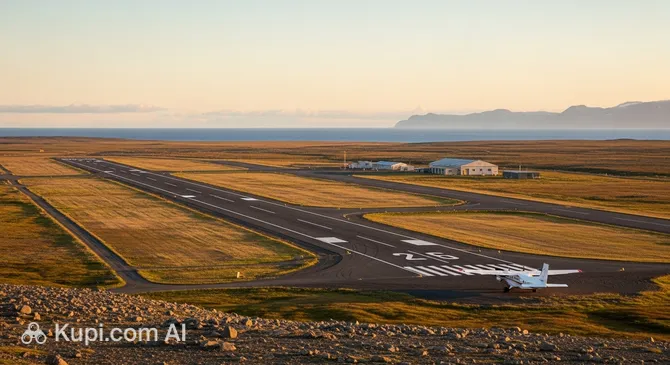
Raufarhofn. Illustration.
Source: Kupi.com AI

Raufarhöfn Airport is not merely a transport hub, but a true gateway to the northernmost part of mainland Iceland, located literally a step away from the Arctic Circle. Although you will not find bustling terminals or duty-free shops here, this airstrip serves as a vital link for a remote fishing village surrounded by harsh and beautiful tundra. Landing here offers a unique opportunity to view the wild ocean coast and the mysterious "Arctic Henge" from a bird's-eye view, allowing you to experience the atmosphere of the true edge of the world.

PropertyValue
IATA CodeRFN
ICAO CodeBIRG
CityRaufarhöfn
CountryIceland
TimezoneAtlantic/Reykjavik
ScheduleOnline Timetable

Airport Features and Highlights:

  • Northernmost on the Mainland: The airport serves the northernmost settlement of mainland Iceland, making arrival here a small geographical achievement for the traveller.
  • Scenic Approach: Due to its location in an open area right by the ocean, the approach offers breathtaking views of the rugged coastline and the famous "Arctic Henge" monument.
  • Vital for Safety: Despite the lack of regular commercial flights, the airport plays a critical role for medical evacuation and private aviation, ensuring the connection of this remote region with the rest of the country in emergencies.

Contact Information

  • Official Airport Website: www.isavia.is (Isavia operator page)
  • Information Service Phone: +354 424 5000 (Isavia ANS Air Navigation Services)
  • Airport Address: Raufarhöfn Airport, 675 Raufarhöfn, Iceland
  • Email: isavia@isavia.is (General enquiries to the operator)
  • Social Media: Facebook, Instagram (Official Isavia accounts)
  • Lost Luggage Information: Since the airport does not handle regular flights, matters regarding lost luggage must be addressed directly to your air carrier or charter company.
  • Passenger Support Contact: +354 424 4000 (Isavia Head Office, Reykjavik)

How to Get to the Airport

Since Raufarhöfn Airport does not accept regular commercial flights and is used primarily for medical aviation, private flights (General Aviation), or charters, standard transport infrastructure is absent here. There are no taxi stands, bus stops at the terminal, or car rental offices directly on the strip. Travellers should take these features into account when planning logistics.

By Car and Taxi

The most reliable way to reach the airstrip is by car. The airport is located approximately 3 kilometres south of the centre of Raufarhöfn village. The drive takes just 4–5 minutes along a gravel road leading from the main highway. Due to the short distances, taxi services in the traditional sense are not developed in the village. If you require a transfer to a private aircraft, it is recommended to arrange this in advance with the owners of your guesthouse or hotel.

Public Transport

There is no direct bus service to the airport. However, the village of Raufarhöfn itself can be reached via the Strætó public bus network. This is a complex route with transfers, usually relevant for those travelling around the north of the country without a car. From the bus stop in the village centre to the airfield, one can walk (about 40 minutes) if the weather permits, but this would be difficult with luggage.

Car Rental

There are no rental company offices in Raufarhöfn itself. The nearest rental points are located in the major towns of the region where main flights arrive. It is recommended to rent an SUV, as roads in the extreme north of Iceland can be challenging, especially during the winter period.

Parking

There is no specialised guarded parking with markings at the airport. However, there is ample space near the runway where a vehicle can be left. Parking is free of charge, but you leave your car at your own risk, as the area is practically not staffed on a permanent basis.

Nearest Transport Hubs

Since Raufarhöfn does not receive passenger liners, tourists usually fly into larger airports in Iceland, rent a car there, and set off on a journey along the "Diamond Circle" or the Arctic Coast Way, stopping by this remote corner.

  • Akureyri Airport (AEY): Located approximately 130 km away (in a straight line; the road journey is significantly longer). This is the "northern capital" of Iceland and the main hub for travel in the region.
  • Egilsstadir Airport (EGS): Located 143 km away and serves the eastern part of the country. Convenient for those travelling from the east.
  • Keflavik International Airport (KEF): The country's main air gateway, where all international flights arrive. The distance is over 400 km, so the trip will require a full day or an overnight stopover.
  • Also at a significant distance are Reykjavik Airport (domestic flights) and Isafjordur Airport, located in the Westfjords.

Terminals and Map

The infrastructure of Raufarhöfn Airport (RFN) differs strikingly from what tourists are accustomed to seeing in international air hubs. It is a typical "rural airfield" for remote corners of Iceland, where functionality and simplicity come first. There are no complex architectural designs, confusing corridors, or noisy waiting halls here.

Number of Terminals and Their Purpose

In fact, the airport does not have a passenger terminal in the conventional sense of the word. The entire airport complex is replaced by a small service building used by technical staff (when present) or medical aviation crews. For passengers of private flights or charters, the concept of a "terminal" is nominal here: all activity is concentrated directly on the apron by the runway.

Airport Layout and Navigation

Navigating Raufarhöfn is extremely simple. The airport layout is elementary:

  • Access gravel road leading from the main highway.
  • Small area for car parking.
  • Perimeter fence separating the flight zone.
  • Runway and apron for aircraft parking.

It is impossible to get lost here: upon arriving at the parking area, you will immediately see the aircraft waiting for you. The distance from the car to the steps is only a few dozen metres.

Departure, Arrival, and Transfer Zones

Since the airport does not handle regular commercial flights, there is no separation into departure and arrival zones, nor are there any "airside" zones or transit corridors. Boarding and disembarking of passengers take place on the same section of the apron. The issue of transfers between terminals is irrelevant here due to the absence of terminals themselves.

Formalities

Travelling through Raufarhöfn offers the unique experience of a lack of bureaucracy, characteristic of General Aviation flights:

  • Check-in: There are no check-in counters or luggage belts. The pilot of your charter or private aircraft will meet you personally. Document checks (if necessary) take place right at the aircraft side.
  • Security Check: There are no classic metal detector frames or X-ray machines here. Security control is carried out visually by the crew, according to the rules of the specific carrier.
  • Timing: All procedures take literally 5–10 minutes. You do not need to arrive 2 hours before departure; usually, it is sufficient to arrive at the time agreed with the pilot.

Recommendations for Navigation and Comfort

Given the spartan conditions of Raufarhöfn Airport, tourists should keep a few important points in mind:

  • Dress for the weather: Since there is no indoor waiting hall or airbridges, waiting for departure and boarding the aircraft take place outdoors. Strong winds from the ocean often blow in this region, so a windproof jacket is mandatory even in summer.
  • Facilities: Do not count on the presence of toilets, cafes, or vending machines at the airport. Take care of snacks and visiting the washroom in advance, while still in the village or at your hotel.
  • Communication with the Pilot: As there are no information boards, the only source of information about flight status is your pilot or airline. Keep your phone charged to stay in touch in case of changing weather conditions.

Airport History

The history of Raufarhöfn Airport is inextricably intertwined with the period Icelanders call the "Herring Era" or "Herring Adventure". In the mid-20th century, this remote village was one of the busiest export ports in Iceland, where thousands of seasonal workers and fishing industry magnates flocked. It was the economic boom and the acute need for rapid logistics between the capital and the northern coast that became the main reason for the establishment of air connections here.

Foundation and Golden Years

The airfield began to develop actively in the post-war years when sea routes could not ensure sufficient speed for transporting people and urgent cargo. At that time, Raufarhöfn was so important to the country's economy that having its own runway was considered not a luxury, but a necessity. During its heyday, the airport regularly received flights from national carriers, delivering shifts of workers to fish factories and transporting specialists. For many locals, the hum of propellers was the sound of prosperity and connection with the outside world.

The Decline of Regular Flights

A turning point in the airport's history was the sudden disappearance of herring in the waters of the North Atlantic in the late 1960s. Following the economic downturn and population outflow, the need for regular air service began to decline. Gradually, the number of flights was reduced until they ceased completely. From a busy transport hub, the airport turned into a "dormant" infrastructure facility maintained by the state.

Modernisation and Current State

Despite losing its commercial status, the airport was not abandoned. It passed under the management of the state company Isavia, which carried out a series of works to maintain the runway in working order. Unlike many gravel airfields in Iceland, the runway in Raufarhöfn has an asphalt surface, which is a legacy of its "golden age". Significant terminal expansions were not carried out here, as the development strategy shifted to preserving the facility as a site for emergency services.

Interesting Historical Facts:

  • Lifeline: Historically, the airport has more than once become the only way to evacuate the sick and injured in winter, when land roads to the village were blocked by snow for several days or even weeks.
  • Battling Fog: Pilots flying here in the last century noted the treachery of the local weather. The location on the cape often led to the sudden appearance of thick sea fog, requiring the highest skill from pilots during visual approaches.
  • Geographical Status: Throughout its history, the airport has held the status of the northernmost equipped runway on the main part of the island (excluding Grímsey Island), located just a few kilometres from the Arctic Circle.

Services and Amenities

For travellers planning a flight to Raufarhöfn (RFN), it is important to understand the specifics of this location. Since the airport is an unserviced runway without a terminal or permanent staff, the level of service here corresponds to the concept of "wild nature". Expectations should be adjusted in advance: this is an access point to Arctic beauty, not a commercial centre.

Restaurants, Shops, and Lounges

The airport territory is completely devoid of cafes, restaurants, Duty-Free shops, or even water vending machines. There are no buildings where one could buy groceries or souvenirs. Travellers are strongly advised to stock up on food, drinking water, and all necessities in advance. The nearest grocery store and cafe are located in the village of Raufarhöfn itself, about 3–4 kilometres from the strip.

Business Services and Connectivity

The concept of VIP lounges or business centres is not applicable to this airfield. There are no enclosed waiting areas, Wi-Fi networks, or public sockets for charging gadgets. If you need to be connected or work, you should rely only on mobile internet (coverage in this area is usually stable but depends on your operator) and battery charges for your devices, prepared beforehand.

Financial and Medical Services

There are no ATMs, currency exchange points, or bank branches at the airport. Take care of cash Icelandic króna before departure, although cards are accepted almost everywhere in the village itself. There is also no medical post on the strip; the airport itself serves as a point for medical evacuation. In case of health problems, help can be obtained at the local healthcare centre in the village.

Services for Passengers with Children and Special Needs

Infrastructure for passengers with reduced mobility and parents with small children is not provided at the airfield. There are no ramps, specially equipped toilets (there are no toilets at all), or mother and child rooms. Boarding and disembarking take place directly on the apron, the surface of which may be uneven. Organising assistance when boarding a private aircraft falls entirely on the shoulders of the pilot and accompanying persons.

Accommodation: Hotels near the Airport

There are no hotels directly on the airport territory. However, given the proximity of the village, you can reach accommodation in 5 minutes by car. Accommodation options in Raufarhöfn are few but cosy:

  • Hótel Norðurljós: The main hotel of the village, located by the harbour. It offers comfortable rooms, a restaurant with local cuisine, and an ocean view. It often serves as a base for those arriving to see the "Arctic Henge".
  • Guesthouses and Hostels: There are several B&B type options in the village (for example, Nest Hostel), which are suitable for more budget-friendly accommodation.
  • Camping: In the summer period, an equipped camping site with all necessary amenities (shower, kitchen) operates in Raufarhöfn, which is popular with independent travellers.
Where to Eat

Dining at the Airport: Important Information

Travellers heading to Raufarhöfn (RFN) should be prepared for a complete lack of catering services directly on the runway. Since the airport does not have a passenger terminal, there are no restaurants, cafes, bars, or even coffee machines here. The concepts of "airside" and "landside" are nominal here and do not imply the presence of any commercial infrastructure.

If you face a wait for a flight, the only option to have a snack on the spot is to bring food and drinks with you. A thermos with hot tea or coffee would be an excellent idea, given the windy weather on the coast.

Nearest Restaurants and Cafes (Raufarhöfn Village)

Although the airfield itself is devoid of amenities, just 3–4 kilometres away (about a 5-minute drive) lies the village of Raufarhöfn, where you can find options for a full lunch or a quick snack before departure.

Restaurant at Hótel Norðurljós

This is the main and practically the only establishment in the area offering full restaurant service. The interior is simple but cosy, overlooking the harbour.

  • Type of Food: Icelandic and European cuisine, seafood, breakfasts.
  • Average Bill: Above average (standard for Iceland), a main course costs from 3500 to 5500 ISK.
  • Opening Hours: Depend on the season. In summer, the restaurant is open daily for breakfast and dinner (usually from 18:00 to 21:00). In winter or the off-season, it is recommended to call in advance, as the kitchen may work only by pre-order for hotel guests.

Kaupfélagið Shop (Local Supermarket)

The centre of village life, where you can buy groceries or quick fast food.

  • Type of Food: Sandwiches, pastries, yoghurts, snacks. Often there is a grill zone here where famous Icelandic hot dogs are prepared.
  • Average Bill: Budget-friendly. A snack will cost 1000–1500 ISK.
  • Opening Hours: Usually from 10:00 to 18:00 on weekdays, with a reduced schedule on weekends.

What to Try: Local Cuisine

Despite its remoteness, Raufarhöfn is famous for the freshness of its produce. If you decide to dine at a local restaurant before departure, pay attention to the following dishes:

  • Fresh Fish: Cod or Arctic Char, caught by local fishermen literally on the day of serving. This is the region's calling card.
  • Icelandic Lamb: A traditional dish prepared simply here, but very deliciously — usually served with potatoes and sauce.
  • Kjötsúpa (Meat Soup): A hearty lamb soup with vegetables — the perfect choice to warm up before boarding the plane.

Special Dietary Needs

Considering that Raufarhöfn is a tiny fishing village, the choice for people with special diets is extremely limited here.

  • Vegetarians: The hotel restaurant usually has 1–2 vegetable options (soup, salad, or pasta).
  • Vegans: Finding a full vegan hot dish can be difficult. It is recommended to rely on the shop's assortment (fruits, nuts, bread).
  • Gluten-Free: Fish and meat dishes in the restaurant may be suitable, but the risk of cross-contamination in a small kitchen exists. It is better to check the composition of sauces with the staff.
  • Halal: Local establishments do not hold specific Halal certification. It is recommended to choose fish or vegetarian dishes.

Final Recommendations

  • For a Quick Snack: Stop by the Kaupfélagið shop on the way to the airport, buy sandwiches, skyr (Icelandic yoghurt), and water. There will be nowhere to buy this at the airport.
  • For a Full Lunch: Plan a visit to Hótel Norðurljós at least 1.5–2 hours before departure. This will allow you to enjoy your meal without rushing.
  • Water: Be sure to fill your bottles with drinking water in the village. Tap water in Iceland is pure and delicious, but access to it at the airport itself may not be available.

Tips for Travellers

Travelling through Raufarhöfn Airport is an experience far removed from standard flights on commercial airlines. There is no hustle, long queues, or strict schedules of major hubs here. However, the specifics of light aviation and the harsh conditions of northern Iceland dictate their own preparation rules.

Arrival Time Recommendations

Unlike international airports, the "two-hour" rule does not apply here. Since there are no check-in and security procedures in the usual form, arriving too early makes no sense — there will simply be nowhere for you to wait in the warmth. The optimal arrival time is 15–20 minutes before the departure time agreed with the pilot. This is enough to unload things from the car and walk to the aircraft.

Check-in and Safety Features

The departure process is simplified to the maximum. You will be met personally by the pilot of your charter or private flight. Formalities are usually limited to checking your passport (keep it handy) and a brief safety briefing. There are no shoe scanners or bans on carrying water, however, the pilot has the full right to visually inspect your luggage for flight safety.

Seat Selection on the Plane

In small aircraft flying to Raufarhöfn, the concept of "seat selection" often depends on the aircraft's weight balance. The pilot may assign you a specific seat for even weight distribution. If the choice is left to you:

  • Sit by the window — the views of the rugged coastline and the "Arctic Henge" from a low altitude are simply fantastic.
  • In light aviation, every seat is both an "aisle seat" and a "window seat" simultaneously, so there are simply no bad seats here.

Hand Luggage and Baggage

A critical point for light aviation is weight and dimensions.

  • Soft Bags: Instead of rigid suitcases on wheels, it is better to use backpacks or sports bags. They are easier to fit into the limited luggage compartment of a small plane.
  • Weight Limits: Strictly observe the agreed limit. Excess weight of even a couple of kilograms may be unacceptable for takeoff from a short runway.
  • What to Take in the Cabin: A camera and sunglasses (the sun at altitude can be very bright, especially in winter, reflecting off the snow).

Recommendations for Transit Passengers

Raufarhöfn is the endpoint of the route, and there are no direct connections here. If you are flying further, the transfer will take place at Akureyri or Reykjavik airports. Note that luggage is not automatically checked through to the final destination. You will have to collect your belongings at the aircraft side and transport them to the next flight yourself.

Customs Control

The airport serves exclusively domestic flights. There is no customs or border control here. If you arrived in Iceland from abroad by private flight, you must clear all formalities at the international airport of arrival (usually Keflavik or Akureyri) before flying to Raufarhöfn.

Tips for Saving Time and Money

  • Transfer: Arrange a transfer with your accommodation hosts in advance. Calling a taxi "on the spot" is impossible here, and walking with suitcases on gravel will take a lot of time and effort.
  • Food and Drinks: Buy snacks and water at the village shop. At the airport, food prices are not just high — there is no food at all.
  • Clothing: Put on a warm jacket immediately before getting out of the car. Windproof clothing will safeguard your health, as boarding the plane takes place in an open, wind-swept space.

What to Do in Case of Flight Delay

The weather in northern Iceland is changeable, and delays in light aviation flights are common due to fog or strong winds.

  • Do Not Leave the Hotel: If the weather turns bad, contact the pilot before leaving for the airport. It is better to wait for news in the warm lobby of the hotel or guesthouse than in a car by the runway.
  • Have a Backup Plan: Always build a reserve day into your schedule or be ready to reach the "mainland" by rented car if the sky is closed for a long time.

Reached the end of the page?

That means the route is fully explored