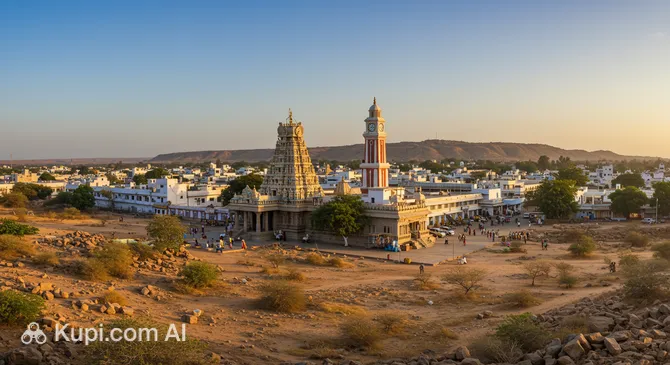
Anantapur (officially known as Ananthapuramu) is an important administrative and transport hub located in the southern part of India, in the state of Andhra Pradesh. The city is situated in the arid Rayalaseema region on the strategically important National Highway 44, which connects the country's largest metropolises. Although it is not a typical tourist destination, Anantapur has a quiet provincial atmosphere and serves as a gateway to the amazing historical treasures of the surrounding area.
The city's geographical position on a plateau determines its semi-arid landscape and dry climate. The population of Anantapur is about 267,000 people, and life here centers around agriculture and trade. The city's rich history dates back to the era of the Vijayanagar Empire, and during the British period, it served as an important military headquarters, preserving the spirit of the past in its old quarters.
Anantapur. Illustration.
Source: Kupi.com AI
The city attracts tourists not with grand sights, but with its authenticity and proximity to unique temple complexes such as Lepakshi. In Anantapur itself, it is worth paying attention to the Clock Tower and modern spiritual centers, including the ISKCON temple. Visiting this city is a great opportunity to see the real India, unspoiled by mass tourism, and enjoy the hospitality of the local residents.
Weather Overview
Anantapur is characterized by a semi-arid climate, which typically features hot, dry periods and moderately warm winters. The city is located in one of the driest regions of the country, so the sun shines here almost year-round. Nevertheless, weather in Anantapur is clearly divided into seasons, each with its own characteristics for travelers.
Summer months (from March to May) can be very difficult for walking: the average maximum temperature often exceeds 37–40°C. During this period, the air becomes dry and dusty, which is characteristic of the Rayalaseema plateau. Winter (from November to February), on the contrary, brings long-awaited relief—temperatures at this time fluctuate within a comfortable range of 20–30°C during the day, and nights become pleasantly cool.
Precipitation in the region is scarce, with an annual average of only about 381 mm. Most rains occur during the monsoon period from June to October, with humidity typically peaking in July and September. During these months, short but intense downpours are possible, which bring freshness but can temporarily hinder movement on the city's dusty roads.
Average monthly temperature
Average monthly precipitation
Interesting Facts
Anantapur holds many curious stories and geographical records that make exploring it even more interesting.
The city's name comes from the word "Anaatasagaram," which translates to "Infinite Ocean". This was the name of a huge body of water around which the first settlements began to grow.
The city was founded by the wife of a dewan of the medieval Vijayanagar kingdom and later became a strategically important point for the British army during World War II.
Anantapur district is the largest in terms of area in the state of Andhra Pradesh, covering a territory of over 19,000 square kilometers, which is comparable to the size of some small countries.
Despite the region's arid climate, six rivers flow through the district, including the Penna and Chitravathi, which have historically nourished the local lands.
Anantapur serves as a vital link between India's two largest IT hubs—Hyderabad and Bengaluru—lying almost on a direct line between them.
How to Get There
Anantapur is an important transport hub in the state of Andhra Pradesh, making it easily accessible for travelers coming from major South Indian metropolises. The city is located on National Highway 44 (NH44), which features good road quality and heavy traffic. Detailed information on routes is available on the how to get to Anantapur page.
The city itself does not have its own airport for regular commercial flights. The nearest major air hub is Kempegowda International Airport in Bengaluru (BLR), located about 190 kilometers to the south. From there, Anantapur can be reached by taxi or regular bus in 3–5 hours. Also, 120 kilometers away is the Puttaparthi regional airport, which handles private and charter flights.
Rail travel is one of the most convenient and budget-friendly ways to reach the city. Anantapur Railway Station receives trains from Hyderabad, Bengaluru, Mumbai, and New Delhi. The station is conveniently located in the central part of the city, allowing for a quick trip to most hotels by auto-rickshaw.
For trips from neighboring cities like Kurnool (130 km), state-run APSRTC buses are frequently used. They run regularly, but keep in mind that during peak hours, congestion can occur at the city entrances and on NH44 due to the large volume of freight transport.
Main Attractions
While Anantapur is often perceived as a transit point, there are several places in the city and its immediate surroundings that deserve travelers' attention. One of the central points of the city is the Clock Tower, which has become a symbol of Anantapur and a landmark for all guests. Architecture and spirituality enthusiasts should visit the ISKCON temple, which stands out for its cleanliness and peaceful atmosphere amidst the city bustle.
For those seeking a bit of nature within the city limits, the National Park is open. This place offers an opportunity to take a break from the hot Indian sun and street noise, although it should be noted that due to the region's arid climate, the vegetation here may look more modest than in the country's tropical zones. Nevertheless, the park remains a popular place for local residents to walk.
The region's main treasures are hidden a bit further away: in the vicinity of Anantapur are the historical Gooty and Penukonda forts, built as early as the 14th century. These massive hilltop fortifications offer not only an immersion into the history of the Vijayanagar Empire but also breathtaking panoramic views of the valleys. A trip to Anantapur would be incomplete without a visit to the Lepakshi temple, famous for its unique frescoes and giant statue of the Nandi bull.
Local Cuisine
The gastronomic scene in Anantapur is a feast of flavors from the Rayalaseema region, known for its love of spices and healthy grains. The basis of the local diet consists of millet and sorghum, from which thick, nutritious porridges such as jaggery or ragi sangati are prepared. These dishes are perfect for the hot climate, providing energy for the whole day. Peanuts hold a special place in the cuisine—they are added to pulao and used to make spicy pastes and snacks.
If you want to try an authentic version of Indian pilaf, be sure to visit Naidu Gari Kunda Biryani. They serve the famous biryani cooked in clay pots, which gives the dish a special aroma and keeps it juicy. For a more classic lunch in a comfortable setting, the Hotel Rajahamsa is suitable, where the menu features both regional Telugu dishes and popular North Indian curries.
To refresh yourself on a hot day, try the local buttermilk (majjiga) with added spices and curry leaves, or order fresh juice made from the famous local mangoes. The food culture here is simple and honest: the best flavors are often found in small "darshinis"—local eateries where the city's residents themselves eat. Street food at the markets also deserves attention, especially the crispy dosas and spicy pakoras cooked right in front of you.
Travel Tips
A trip to Anantapur will be a pleasant and predictable experience if you familiarize yourself with the peculiarities of local life and infrastructure in advance. Here are some practical tips to help you feel confident in this region of India:
Clothing and Dress Code: Choose light clothing made from natural fabrics, as it is almost always hot in the city. When visiting temples, be sure to cover your shoulders and knees; modesty in dress is highly valued here.
Transport: To move around the city, it is best to use auto-rickshaws, but don't forget to agree on the price beforehand. For intercity travel, choose APSRTC buses or trains.
Finance: The official currency is the Indian Rupee (INR). Cards are accepted in large stores and hotels, but you will need cash for markets and rickshaws. ATMs are frequently found in the city center.
Health: Drink exclusively bottled water and avoid ice in street drinks. In hot months, be sure to use sunscreen and repellents.
Communication: The main language is Telugu, but young people and hotel staff usually understand English. Learn a few phrases in Telugu, such as "Namaskaram" (greeting), to win over the locals.
Local Etiquette: Always remove your shoes when entering homes and temples. Use the traditional namaste gesture (folded palms) for greetings.
What to Avoid: You should not walk alone on the outskirts and in remote areas after sunset. Also, refrain from criticizing local traditions or religious customs.
Best Time to Visit: Plan your trip for the period from October to March, when the extreme heat subsides and the weather becomes comfortable for excursions.
Following these simple rules will help you enjoy your trip and discover the hospitable soul of the state of Andhra Pradesh!
Entertainment & Nightlife
Nightlife in Anantapur is very restrained and conservative, which is typical for provincial cities in South India. You won't find noisy night clubs with DJs or large dance floors here. Evening leisure for locals and guests usually centers around restaurants at major hotels or in small bars. A popular spot for dinner and quiet relaxation is the Masineni Bar & Restaurant, where you can spend time in a comfortable setting.
Another option for those who want to unwind at the end of the day is the Bar at the Masineni Grand Hotel. Establishments of this type usually offer a selection of drinks and local cuisine, attracting business travelers and tourists staying in the city overnight. The atmosphere here is calm, and the service is oriented toward creating a cozy environment for conversation.
Daytime and early evening entertainment in the city includes trips to cinemas showing Bollywood hits and Telugu-language films, as well as walks through lively markets. If you crave real club entertainment and a vibrant nightlife, you should plan a trip to Bengaluru, located 190 kilometers to the south, which is rightfully considered the "pub capital" of India.
Parks & Museums
Greenery in Anantapur is limited due to the dry semi-arid climate, so every green zone here is worth its weight in gold. One of the few places for quiet outdoor relaxation is Kumbhakkarna Park, although it is not very large. City residents also frequently visit the Sri Krishnadevaraya University campus, located south of the center, where the grounds are better maintained and provide shade for walking under the trees.
For those interested in local history and culture, an important site is the Clock Tower. This is not just an architectural monument but also a historical center around which the city's public life was built for decades. Another iconic spot is the NTR Memorial Hall, dedicated to the outstanding state figure N.T. Rama Rao, whose legacy is revered in Andhra Pradesh.
If you are traveling with children or just want to see something unusual, you can check out Fish Hut Aquarists. This is a small space showcasing various fish species and aquarium arrangements. Despite the lack of classic large museums, the cultural role in Anantapur is fulfilled by numerous temples, which are true guardians of the traditions, art, and history of the Rayalaseema region.
Getting Around
The public transport system in Anantapur is simple and functional, though it may seem chaotic to the unprepared tourist. The core of city transport is the APSRTC state buses. They connect various city districts and suburbs, though their schedules aren't always followed to the minute, and during peak hours, the buses can be overcrowded.
The most popular and convenient way to travel short distances is by auto-rickshaw. They literally flood the city streets and are ready to take you anywhere. The price of the trip should always be negotiated in advance, as meters are rarely used. This is an inexpensive and colorful way to move around, allowing for quick maneuvering in traffic.
Due to the heavy transit traffic on National Highway 44 and the narrowness of some city streets, traffic jams often occur in the center, especially near the markets. Online ride-hailing services work limitedly here, so many travelers prefer to rent a car with a driver for trips to out-of-town attractions. There are no metros or trams in the city, so walking combined with rickshaws remains the primary scenario for exploring the center.
Accommodation
The hotel stock in Anantapur is primarily oriented toward transit travelers, pilgrims, and business people. Budget hotels and guest houses (lodges) offering basic amenities at affordable prices predominate here. Most of these accommodation options are concentrated along National Highway 44 and near the railway station, which is convenient for those making a short stop in the city.
For more discerning tourists, mid-range hotels offering air-conditioned rooms, restaurants, and quality service are available. A good example of quality accommodation is the Hotel Rajahamsa, which is popular due to its location and level of comfort. Prices in such hotels usually range from 1,500 to 3,500 rupees per night.
There are also options for long-term stays in the city, such as apartments and furnished flats in residential areas, often chosen by expats or employees of international companies. If you plan to visit during major holidays or festivals in neighboring Puttaparthi, it is recommended to book accommodation in advance, as the demand for quality rooms during this period increases sharply.
Nearby Cities
Thanks to its location at the intersection of important transport arteries, Anantapur serves as an excellent starting point for exploring interesting places in Andhra Pradesh and neighboring Karnataka. The city's surroundings are rich in spiritual centers and historical ruins that are perfect for day trips.
Just a few kilometers from the center is Bukkarayasamudram, a small settlement with historical roots closely linked to the founding of Anantapur itself. Also very nearby is the town of Papampeta, where a visit will allow you to see typical life in the Indian hinterland. For history buffs, the forts in the towns of Kakkalapalle and Gooty, where ancient fortifications have been preserved, are a must-see.
City
Population
Distance
Bukkarayasamudram
22 000
4 km
Papampeta
12 084
5 km
Kakkalapalle
16 654
7 km
Narapala
18 982
23 km
Battulapalle
12 697
26 km
One of the most popular pilgrimage destinations is Puttaparthi (about 50 km), home to the ashram of Sathya Sai Baba. And if you miss the bustle of a metropolis, the expressway will take you in a few hours to Bengaluru—the high-tech capital with its magnificent parks, shopping malls, and restaurants. Exploring the surroundings of Anantapur will allow you to see a multifaceted and contrasting India.
Shopping & Souvenirs
Shopping in Anantapur is primarily about getting acquainted with the local flavor and traditional goods of the Rayalaseema region. There aren't many huge glass malls, but street trade and colorful markets thrive. Main shopping activities are concentrated in the area of the Clock Tower and near the railway station, where you can find everything from everyday clothing to aromatic spices and fresh fruit.
If you are looking for a modern shopping format in comfortable conditions, you should visit the Dress Circle Mall. This is one of the few places in the city where ready-made clothing departments, accessories, and textiles are gathered under one roof. Here you can purchase both traditional Indian attire (saris, kurtas) and Western-style clothing.
As souvenirs from Anantapur, people most often bring back items made by local artisans, high-quality cotton, and agricultural products that the district is famous for—such as select peanuts or millet. Shops usually operate from 10:00 to 21:00, and bargaining is common in markets, especially if you are buying souvenirs or fabrics. Card payments are accepted in shopping malls, but for market purchases, it's always best to have a supply of cash rupees with you.